Description
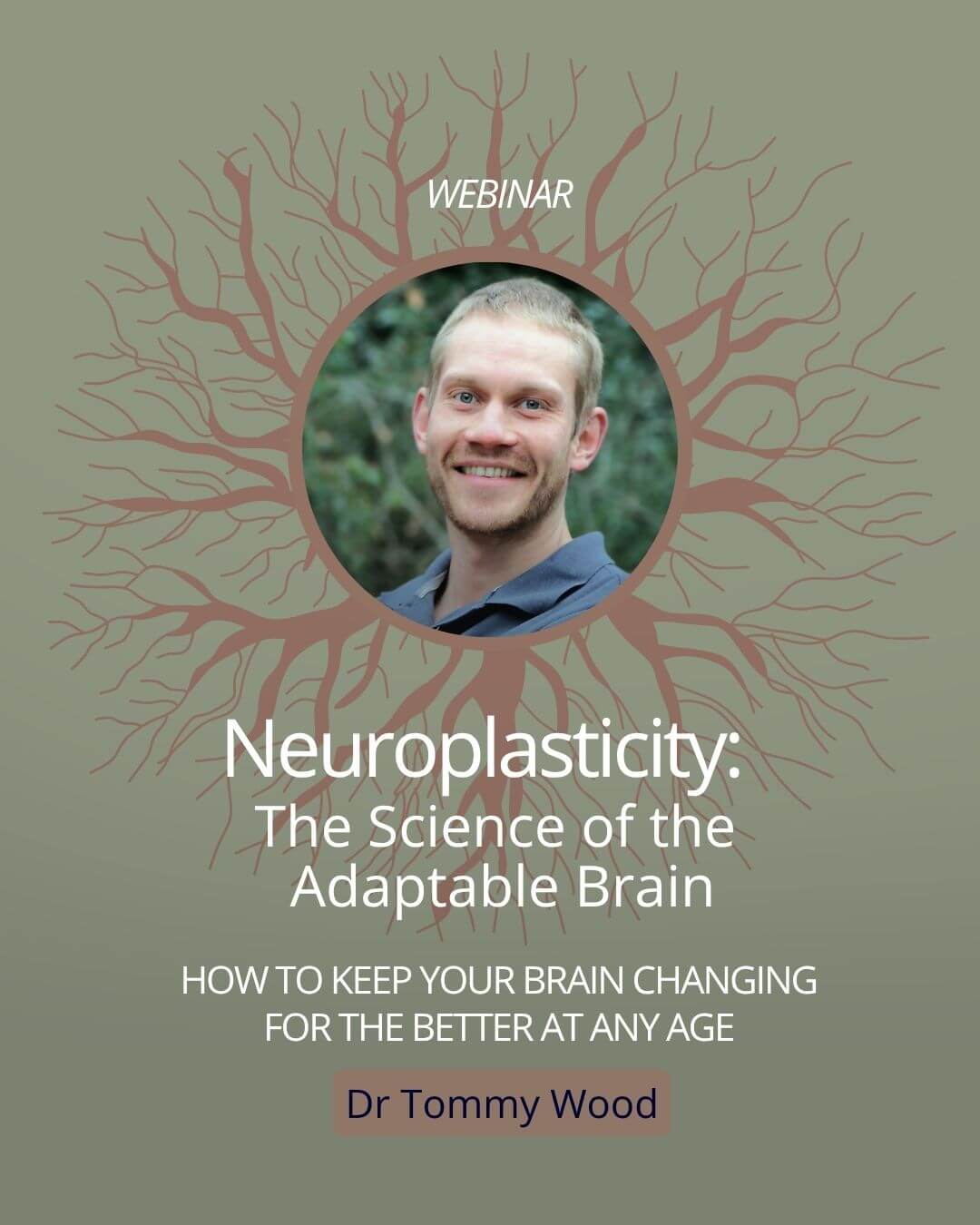
What if the moments your brain struggles are exactly when it’s getting stronger?
According to neuroscientist Tommy Wood, a brain that is challenged is a brain that adapts. Supporting it isn’t about an expensive pill or a rigid biohacking routine, itt comes down to how we challenge, rest and nourish our brains every day.
Your brain is built to adapt. When it meets something it can’t yet do, such as a new language, an unfamiliar dance step, or a route without the sat nav, it rewires itself to rise to the challenge. Connections strengthen, networks reorganise, and over time you build mental “headroom”: extra capacity that helps your brain keep adapting as you age. This is neuroplasticity in action, and it continues throughout life.
In this webinar, you will learn:
- What neuroplasticity is, and how the brain physically adapts to challenge at any age
- Why the brain needs to struggle, and why the right kind of difficulty matters more than simply keeping busy
- Which activities appear to stretch the brain most, from learning a language or instrument to dance and other skill-based movement
- How Stimulus, Supply, and Support work together to support the brain’s ability to adapt
- How to build mental headroom through realistic changes, and why fixing just one thing can have a compounding effect
This session is ideal for anyone who wants to:
- understand how the brain changes and adapts throughout life
- keep learning new skills and challenging their brain at any age
- reduce their lifetime dementia risk through realistic, evidence-based habits
- move beyond brain-training myths to what the research actually suggests
- support a family member by understanding the science of prevention
Details
- Date: Thursday 18th February 2027
- Time: 6pm UK time | 1pm EST
- Format: Live online webinar, with a recording made available afterwards