Your brain needs the right nutrients to function at its best, and omega-3 fatty acids are among the most important. In particular, DHA and EPA play essential roles in brain cell structure and function, making them important nutrients for maintaining brain health throughout life.
But are you getting enough omega-3? And if you don’t regularly eat oily fish, could a supplement help?
Not all omega-3 supplements are created equal. The amounts of DHA and EPA they contain, their quality, their source and how well they meet your individual needs can vary considerably.
At Food for the Brain, we believe that understanding your nutritional needs is an important step towards taking a proactive approach to long-term brain health.
In this guide, we explore what the science tells us about omega-3 supplements, how much you may need, how to choose a quality product and why understanding your omega-3 status could be useful.
Omega-3 fatty acids are essential fats that play important roles throughout the body, particularly in the brain, eyes and cardiovascular system.
There are three main types of omega-3:
ALA is an essential fatty acid that must come from the diet. The body can convert some ALA into EPA and DHA, but this process is limited, particularly for DHA.
This is why foods and supplements containing EPA and DHA can be useful sources of these long-chain omega-3 fatty acids.
Omega-3 supplements are available as fish oil, algae oil, krill oil and cod liver oil. The best choice depends on your dietary preferences, nutritional needs and the amount of EPA and DHA each product provides.
The brain is particularly rich in fats, which contribute to the structure and function of its cells.
DHA is an important component of neuronal membranes and helps maintain the physical properties needed for normal communication between brain cells.
EPA and DHA are also involved in producing signalling molecules that influence inflammatory processes and other physiological functions.
Researchers have therefore investigated whether omega-3 intake and blood levels are associated with cognitive performance, brain structure and the risk of age-related cognitive decline.
Research suggests that omega-3 fatty acids, particularly DHA and EPA, play important roles in maintaining brain health. A 2023 systematic review and meta-analysis published in the American Journal of Clinical Nutrition found that higher omega-3 intake and blood levels were associated with a lower risk of dementia and cognitive decline in prospective studies [1].
Other research has explored whether omega-3 supplementation can support memory and cognitive function, with some studies reporting benefits, particularly in specific groups of older adults. However, results from clinical trials have been mixed, and more research is needed to establish whether supplementation can prevent dementia.
At Food for the Brain, we believe understanding the relationship between nutrition and brain health is an important part of taking a proactive approach to healthy ageing.
Explore the research: Omega-3 and B Vitamins for Brain Health
Different omega-3 supplements provide different amounts and forms of EPA and DHA.
Understanding these differences can help you make an informed choice.
Fish oil is one of the most widely available sources of EPA and DHA. It is commonly produced from oily fish such as anchovies, sardines and mackerel. However, the amount of EPA and DHA varies considerably between products. For example, a capsule containing 1,000 mg of fish oil may provide only 300 mg of combined EPA and DHA. This means the total amount of fish oil is not necessarily the most useful number on the label.
What to look for: The individual amounts of EPA and DHA per recommended daily serving.
Algae oil provides a plant-based source of DHA and, in some formulations, EPA, making it a useful alternative to fish oil for vegetarians, vegans and those who prefer not to consume fish-derived supplements. Interestingly, fish obtain much of their omega-3 from algae and other organisms in the marine food chain. By choosing algae oil, you can obtain these important fatty acids directly from their original source. Research suggests that algae-derived EPA and DHA can be absorbed as effectively as those from fish oil when equivalent doses are compared. However, not all algae supplements contain the same amounts of EPA and DHA, so checking the label is essential.
At Food for the Brain, we encourage people to consider both the quality and quantity of omega-3 they consume, rather than focusing solely on the source.
Want to know more? Read our article, Algae Oil vs Fish Oil for Brain Health: What’s the Difference?, to explore the research and understand which option may be right for you.
Krill oil contains EPA and DHA, with some of these fatty acids associated with phospholipids. Although this has generated interest in potential differences in absorption, there is insufficient evidence to conclude that krill oil is consistently better than fish oil for brain health. The actual EPA and DHA content remains an important consideration.
Cod liver oil provides EPA and DHA but may also contain vitamins A and D. These additional nutrients can be useful in some circumstances, but excessive vitamin A intake can be harmful. Pregnant people, or those planning pregnancy, should avoid cod liver oil and other supplements containing retinol unless advised otherwise by a qualified healthcare professional.
To understand why EPA and DHA are important for cognitive function, explore the science behind omega-3 fats and brain health, including their role in brain cell membranes and the research into cognitive decline.
Research by Dr Joseph Hibbeln and colleagues has explored the importance of omega-3 fatty acids for long-term health, considering the balance between omega-3 and omega-6 intake across different populations.[5]
Drawing on this research and other nutritional evidence, Food for the Brain recommends aiming for approximately 2 grams of omega-3 fatty acids daily from food and supplements, including at least 750 mg of DHA and a similar amount of EPA, with combined EPA and DHA exceeding 1,000 mg.
DHA is a key structural component of the brain, while EPA plays important roles in cell signalling and inflammatory processes. Both are important for maintaining brain health.
If you eat fish three times a week, including at least two servings of oily fish, Food for the Brain estimates that your diet may provide an average of approximately 215 mg of DHA per day. Actual intake will vary depending on the fish you eat and your portion sizes.
Oily fish is one way to increase your intake of EPA and DHA, but overall dietary quality matters too. Explore other foods that support brain health and how to incorporate them into your diet.
Based on an estimated dietary contribution of around 200 mg DHA daily, Food for the Brain recommends considering a supplement providing approximately 500 mg DHA per day, ideally alongside a similar amount of EPA.
Omega-3 fats also interact with other nutrients involved in maintaining brain health. Discover what the research suggests about omega-3 and B vitamins for brain health, including their potential combined role in cognitive ageing.
For people who eat little or no oily fish, supplementation may be particularly relevant.
These are Food for the Brain’s research-informed nutritional targets, rather than doses conclusively proven to prevent dementia.
Individual needs may vary, particularly for people with existing medical conditions or those taking medication.
Not all omega-3 supplements provide the same amounts of EPA and DHA. Before comparing the products below, read our guide on how to choose an effective omega-3 supplement to understand why omega-3 content and supplement quality matter.
Food for the Brain recommends looking for supplements providing at least 500 mg DHA and 750 mg combined EPA, DHA and DPA.
The comparison table below shows combined EPA and DHA because these are the two omega-3 fatty acids most consistently declared on supplement labels. DPA may also contribute to total omega-3 content, but manufacturers do not always disclose it separately.
Where DPA is not disclosed, it has not been included in the calculations. Therefore, the EPA + DHA total may be lower than the product’s combined EPA + DHA + DPA content.
| Brand | Product Name | DHA (mg) | EPA (mg) | DPA (mg) | EPA + DHA (mg per serving) | Serving Size | Meets FFB Criteria? |
|---|---|---|---|---|---|---|---|
| Viridian | Vegan EPA & DHA | 300 | 150 | ND | 450 | 2 ml | No at listed serving |
| Higher Nature | Everyday Essentials Super Potency Fish Oil | 500 | 1,000 | ND | 1,500 | 2 capsules | Yes (2 capsules) |
| Lamberts | Omega-3 Ultra Pure Fish Oil | 286 | 715 | ND | 1,001 | 1 capsule | No at 1 capsule. 2 capsules calculated to qualify. |
| NHP | Omega-3 Support | 510 | 770 | ND | 1,280 | 2 capsules | Yes (2 capsules) |
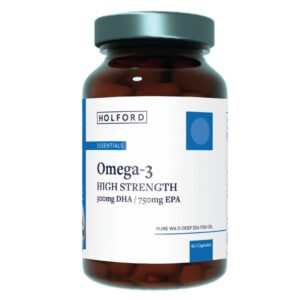
| HOLFORD Nutrition | Omega-3 High Strength | 500 | 750 | ND | 1,250 | 2 capsules | Yes (2 capsules) |
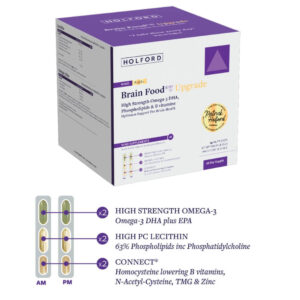
| HOLFORD Nutrition | Brain Food Upgrade Pack | 500 | 750 | ND | 1,250 | 2 omega-3 capsules | Yes (2 omega-3 capsules) |
| NutriLink | Nordic Naturals ProOmega | 450 | 650 | ND | 1,100 | 2 capsules | No at 2 capsules. 3 capsules calculated to qualify. |
| Nordic Naturals | Ultimate Omega D3 – Lemon x 120 Soft Gels | 450 | 650 | ND | 1,100 | 2 softgels | No at 2 softgels. 3 softgels calculated to qualify. |
| Cytoplan | Fish Oil Capsules High Potency | 440 | 660 | ND | 1,100 | 2 capsules | No at 2 capsules. 3 capsules calculated to qualify. |
| Cytoplan | Omega-3 Vegan | 334 | 166 | ND | 500 | 2 capsules | No at 2 capsules. 4 capsules calculated to qualify. |
| NutriGold | Marine Fish Oil x 60 Softgels | 288 | 432 | ND | 720 | 2 softgels | No at 2 softgels. 4 softgels calculated to qualify. |
Notes: DHA, EPA and EPA + DHA totals refer to the serving size shown. ND means not separately disclosed, not necessarily absent. EPA + DHA totals exclude DPA and other omega-3 fatty acids.
Food for the Brain criteria: The nutritional targets are at least 500 mg DHA and 750 mg combined EPA, DHA and DPA. Because DPA is not separately disclosed for the products shown, qualification is assessed using the available EPA and DHA values. A product marked “Yes” meets both thresholds without counting DPA. Where DHA is below 500 mg, the product does not meet the criteria at the listed serving.
Calculated quantities: Where additional capsules or softgels are indicated, these are mathematical calculations based on the supplied nutrient amounts. They are not dosage recommendations. Do not exceed the manufacturer’s recommended intake without appropriate professional advice. This is particularly important for products containing additional nutrients such as vitamin D3.
Verification: The EPA and DHA figures have been retained from the original comparison. Not all formulations have been independently verified against current manufacturer labels. Product formulations and serving instructions may change. Always check the manufacturer’s current label before purchasing or taking a supplement.
If you are considering an omega-3 supplement, look for a product that clearly states its EPA and DHA content, meets appropriate quality standards and suits your individual nutritional needs.
Some supplement providers also offer special discounts or support Food for the Brain’s charitable work through donations including:
Food for the Brain receives up to 10% commission on qualifying purchases made through participating affiliate links. This commission helps fund the charity’s research and educational activities.
Food for the Brain aims to provide independent, science-informed nutritional education. The inclusion of a product or supplier does not mean that it is suitable for everyone or that it has been shown to prevent dementia.
Discount arrangements and charitable donations are disclosed for transparency. When choosing a supplement, prioritise its EPA and DHA content, quality, safety and suitability for your individual needs.
One way to understand your omega-3 status is through a blood test. The Omega-3 Index measures the proportion of EPA and DHA in red blood cell membranes, expressed as a percentage of total red blood cell fatty acids.
Because red blood cell fatty acid composition changes over time, the test can provide an indication of longer-term omega-3 status rather than reflecting only your most recent meal.
People can have different omega-3 levels even when they report similar dietary habits. Factors such as food choices, supplement use, absorption and individual metabolism may influence blood levels.Measuring omega-3 status can help you understand your current levels and how they change following dietary adjustments.
Although omega-3 blood levels have been investigated in relation to cognitive health, there is not yet an established Omega-3 Index threshold proven to prevent dementia.
Food for the Brain offers an at-home Omega-3 Index blood test to help people understand their omega-3 status.
You can also find practical information about testing and results in our Omega-3 Index FAQs.
Omega-3 supplements are generally well tolerated when used appropriately, but they are not suitable for everyone.
Some people experience mild side effects, including:
Taking a supplement with food may help reduce some of these effects.
High-dose omega-3 supplementation has been associated with an increased risk of atrial fibrillation in some clinical trials, particularly in people with cardiovascular risk factors.
If you take anticoagulants, have a heart rhythm disorder, are preparing for surgery or are considering high-dose supplementation, seek advice from your healthcare professional.
People with fish or shellfish allergies should check product ingredients carefully.
During pregnancy and breastfeeding, it is particularly important to choose supplements formulated for those life stages and to avoid excessive vitamin A intake.
Brain health depends on several nutrients working together rather than on one nutrient in isolation. One area of particular interest is the relationship between omega-3 fatty acids, B vitamins and homocysteine. Homocysteine is an amino acid found in the blood. Elevated levels have been associated with poorer cognitive outcomes in some studies. Vitamins B6, B12 and folate are involved in homocysteine metabolism.
Research has investigated whether omega-3 status influences the effects of B-vitamin supplementation on brain atrophy and cognitive outcomes, particularly in older adults with mild cognitive impairment. Some findings suggest that omega-3 status may modify responses to B-vitamin treatment, but further research is needed to establish which individuals benefit and whether these effects translate into a lower risk of dementia.
This is one reason why Food for the Brain takes an interest in nutritional patterns and the interaction between nutrients, rather than focusing exclusively on individual supplements.
Both fatty acids play important roles. DHA is a major structural component of brain cells, while EPA contributes to several biological signalling pathways. Research does not establish one universally ideal EPA-to-DHA ratio for all aspects of brain health.
Many supplements are designed for daily use, but whether you need one depends on your dietary intake and individual circumstances. Follow the product instructions and seek professional advice if you are unsure.
Some studies have reported improvements in particular measures of cognition, while others have found little or no benefit. The evidence is mixed, and supplements should not be regarded as a proven treatment for memory problems.
There is currently insufficient clinical evidence to conclude that omega-3 supplementation prevents dementia. Observational studies reporting associations between higher omega-3 levels and lower dementia risk do not prove that taking supplements causes that reduction.
Algae-derived supplements can provide DHA and, in some formulations, EPA. Their suitability depends on the amount of these fatty acids provided and your nutritional needs.
Taking omega-3 supplements with a meal containing some fat may help absorption and improve tolerability.
You can assess your dietary intake and, if appropriate, measure changes in omega-3 blood levels. However, an increase in blood omega-3 does not automatically demonstrate improved memory or reduced dementia risk.
Looking after your brain is not about relying on one nutrient or supplement. It is about understanding how nutrition, physical activity, sleep, cardiovascular health and other lifestyle factors work together to support healthy ageing.
Omega-3 fatty acids are an important part of that picture.
If you regularly eat oily fish, you may already obtain useful amounts of EPA and DHA through your diet. If you rarely eat fish, a carefully chosen omega-3 supplement may provide an alternative. The most important steps are to understand what you are taking, choose a quality product and make decisions based on reliable scientific evidence.
At Food for the Brain, our mission is to help people understand the science of brain health and take practical, informed steps towards healthier ageing.
Want to learn more about your omega-3 status?