April 2025 - Food for the Brain

because prevention is better than cure.

because prevention is better than cure.

Mini Cart 0

Your cart is empty.

Mini Cart 0

Your cart is empty.

Unlock Your Child’s Brain Potential: Introducing the Smart Kids Cognitive Function Test
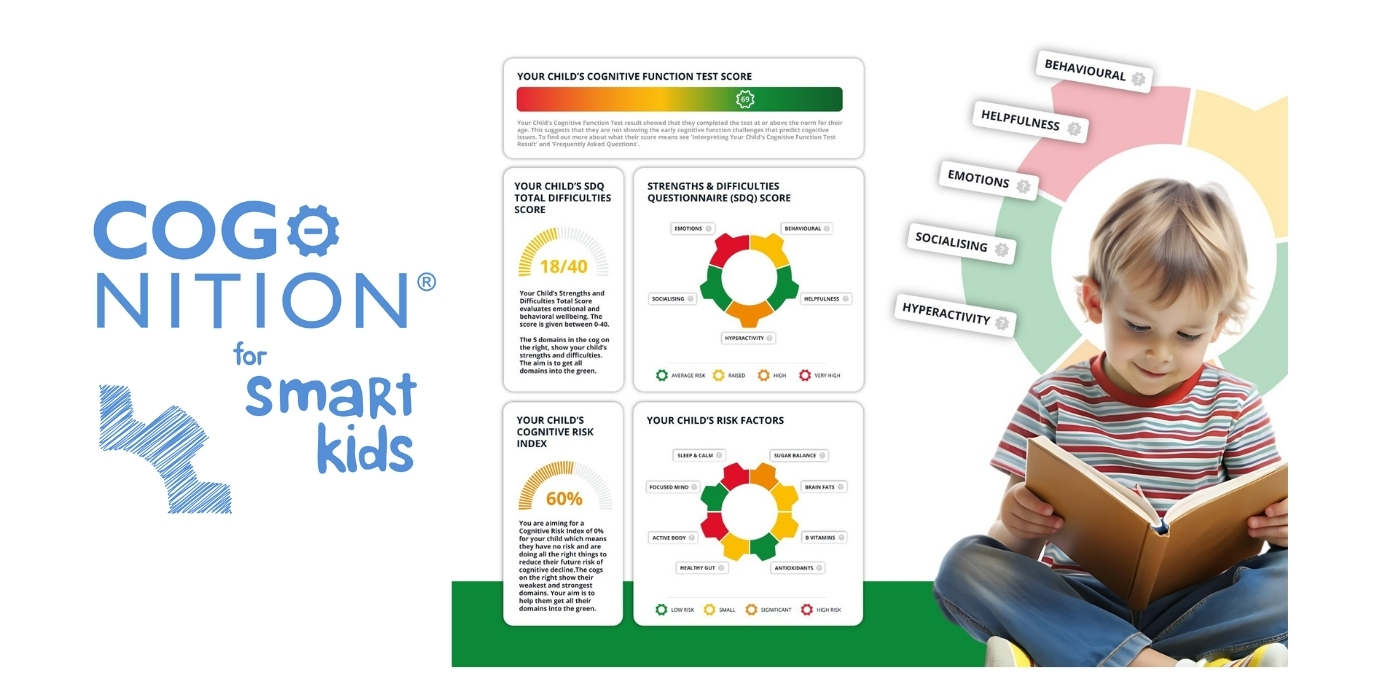
As parents or caregivers, nothing matters more than our children’s future. We want them to thrive – mentally, emotionally and physically – and to feel confident and capable in a complex, ever-changing world. Yet when it comes to their brain development, many of us are left wondering: are we doing enough? Are they getting what they need to build healthy, resilient minds?

This is why we’re proud to introduce our groundbreaking Smart Kids Cognitive Function Test. Developed by the team behind the widely respected Adult Cognitive Function Test, this tool is designed to empower parents with the knowledge, insight and practical strategies to support their child’s cognitive and emotional development, right from the start.

Why Early Brain Health Matters

From the moment they’re born, a child’s brain is growing at an extraordinary pace – forming up to a million new neural connections every second. These formative years are a critical window of opportunity, where the right nutrition, environment, and emotional support can set the foundation for a lifetime of strong cognitive function, balanced mood and behavioural wellbeing.

This test doesn’t just measure ‘smarts’ – it helps you understand how your child’s brain is functioning, what might be holding them back, and most importantly, what you can do about it.

What’s Involved?

Tailored for children aged 4 to 17, the test includes three essential elements:

  1. Cognitive Function Assessment. An engaging 15-minute digital test that challenges attention, memory and problem-solving in a fun, interactive way.
  2. Nutrition & Lifestyle Questionnaire. This helps highlight which of the eight key lifestyle areas may be influencing brain health, from sleep and gut health to sugar balance and essential fats.
  3. Strengths & Difficulties Questionnaire. A validated tool assessing emotional and behavioural wellbeing, giving you a fuller picture of how your child is feeling and functioning.

With this holistic insight, you’ll receive tailored guidance and practical steps to help your child move forward – cognitively, emotionally and behaviorally.

 What Parents Are Saying

“COGNITION helped me understand why my son was struggling with focus—and what I could do to help. The emails made it so easy to build new habits. We saw a real change.”
– Parent of a 9-year-old

“It was like someone had finally put the pieces together. We started with sugar balance and sleep—and within weeks, our daughter’s mood and energy improved.”
– Mum of a 13-year-old

A Mission for Change: Your Role as a Pioneer

By joining the first 1,000 families to complete the free Smart Kids Test, you’re helping us shape a healthier, smarter future for the next generation. Together, we can build a new model of prevention and wellbeing that begins not at midlife, but in childhood where it can make the biggest difference.

Have You Taken the Adult Test?

Many parents in our community have already taken the free Adult Cognitive Function Test – designed to help dementia-proof your diet and lifestyle. If you haven’t yet done so, we urge you to take this important step. Your brain matters too, and change is possible at any age.

Also, did you know that you can complete our at home pin prick DRIfT blood test on children over 2 years of age and they are available internationally. So that you can gather more data on what your child needs to thrive.

To Our Dementia Prevention Community

We know that many of you found us through our mission to prevent Alzheimer’s and cognitive decline. This children’s test is a natural extension of that work, because optimising brain health starts young. Helping your child now doesn’t just support their academic success, it lays the foundation for lifelong mental wellbeing.

Take the Smart Kids Cognitive Function Test today – and invest in your child’s brain, their wellbeing, and their future. 

Because every child deserves the chance to shine.
Actions:

Do the adult Cognitive Function Test here if you haven’t done so yet, so you can model what supporting your brain health looks like to your child and family.

Test Your Cognitive Function Now green banner.

Further info

Could ‘Statins Cut The Risk Of Dementia For All’?

By Patrick Holford

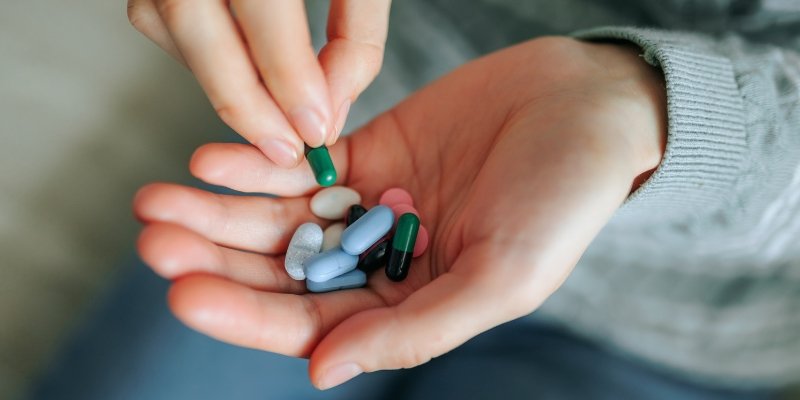
do statins increase the risk of dementia picture of tablets in hand

Recently, the Telegraph reported: “Statins can reduce the risk of dementia among those who already have low cholesterol.” The article claimed that those on statins were less likely to develop dementia – even Alzheimer’s – and that low LDL cholesterol was somehow protective.

Frankly, this is dangerous misinformation.

Why? Because it contradicts robust scientific evidence that low cholesterol – particularly below 4 mmol/l – increases the risk for dementia. That’s hardly surprising when you consider that 25% of the cholesterol in your body is in your brain. Cholesterol is a vital component of neuronal membranes – it’s not just blood fat, it’s brain fuel.

And as for statins? There’s no credible evidence that they prevent dementia. Quite the opposite: the evidence points to statins lowering brain-essential cholesterol and raising dementia risk. So I asked cholesterol expert Dr Malcolm Kendrick for his take on the study in question.

His response was blunt but justified: “This study is horseshit. Here’s why…

Dr Kendrick Key Critiques:

  1. LDL measurement was vague. It’s unclear if they even measured LDL directly- most studies use the Friedewald formula, known to be wildly inaccurate, especially with high triglycerides or low HDL.
  2. Only one measurement. LDL was recorded once at the study’s start – never again. That’s like measuring someone’s blood pressure once and claiming to predict their lifetime stroke risk.
  3. Bizarre cohort overlap. Somehow, 170,174 participants were in both high and low LDL groups? That’s statistically and biologically nonsensical.
  4. Alzheimer’s exclusion unexplained. Those with pre-existing Alzheimer’s were removed, but with no breakdown of their LDL levels – crucial missing data.
  5. Propensity score manipulation. This “retrospective matching” excluded over 350,000 people, distorting the natural associations. Diabetes and hyperlipidaemia were artificially balanced between groups, masking real-world relationships.
  6. Key confounder: statin timing. Participants were only included after being prescribed statins, meaning LDL levels were already artificially lowered. So “low LDL” here is post-drug, not natural. The entire premise collapses.

This study, like too many others published today, exemplifies what Drummond Rennie famously criticised:

There is no study too fragmented, no hypothesis too trivial, no design too warped, no analysis too self-serving for it to be published.

So what do we actually know? Here is an extract from Patrick’s new book – Alzheimers: Prevention is the Cure.

Cholesterol and the Brain – The Real Story

Your brain needs cholesterol. Low cholesterol (<4 mmol/l) is a clear risk factor for dementia. One biomarker study found that high homocysteine and low cholesterol were the best predictors of dementia risk【1】.

And what’s a common cause of low cholesterol in the elderly? Statins. These drugs have consistently failed to show benefits in preventing cognitive decline【2】.

This fits what we know genetically. The ApoE gene governs how cholesterol gets into neurons. Those with ApoE4 are less efficient at this – that’s why they’re more prone to cognitive decline.

It’s not high cholesterol itself that’s dangerous – it’s cholesterol mismanagement in the brain.

Yes, very high cholesterol (above 6.5 mmol/l) is statistically linked to increased dementia risk – but modest elevations, particularly with a healthy lifestyle, are not a problem【3】. And even that data is shaky. One meta-analysis of over a million people showed only a 14% increased dementia risk with “high” cholesterol. But the thresholds varied – some studies defined “high” as anything over 6.2 mmol/l【3】.

More importantly, people with higher cholesterol often eat more sugar, processed foods, and trans fats – all factors known to fuel inflammation and oxidative stress in the brain.

The Lancet Commission, which makes the anti-cholesterol case, even acknowledged this diet–dementia link: in a cohort of 94,184 Danes, poor diet predicted both high LDL and dementia risk【4】.

So maybe it’s not the cholesterol – it’s what comes with it.

Statins and the Hope for Vascular Dementia 

Originally, statins were hyped for vascular dementia – about 20% of all dementia cases – because of their supposed blood vessel–protective effects. But that theory has fallen flat. A Cochrane review found no benefit from statins for dementia prevention【6】.

And the best independent trial – not funded by drug companies – also found no cardiovascular benefit for statins in older adults【5】.

There’s no data supporting the notion that statins protect the brain. Yet the Lancet Commission listed “high cholesterol” as contributing 7% to dementia risk, which will no doubt spur even more statin prescriptions【4】.

The Optimum Nutrition Perspective

From an optimum nutrition standpoint, we view cholesterol differently.

If your total cholesterol is up to 6.5 mmol/l – but you have high HDL, low triglycerides, low homocysteine, and a healthy diet low in sugar and refined carbs – you’re not at risk. In fact, you’re likely protected.

One recent study showed that higher HDL in midlife predicted significantly lower future dementia risk【7】. Low HDL, not high total cholesterol, is a hallmark of metabolic syndrome – the precursor to diabetes, heart disease, and yes, dementia.

The evidence is clear: cholesterol is essential for brain health. Statins do not prevent dementia – and may contribute to cognitive decline by pushing cholesterol levels too low.

Instead of dumbing down the brain with unnecessary statins, we need to smarten up with nutrients that build brain health: omega-3 fats, phospholipids, B vitamins, and a low-sugar diet.

Doctors prescribing statins as dementia prevention are not only missing the mark – they may be making things worse.

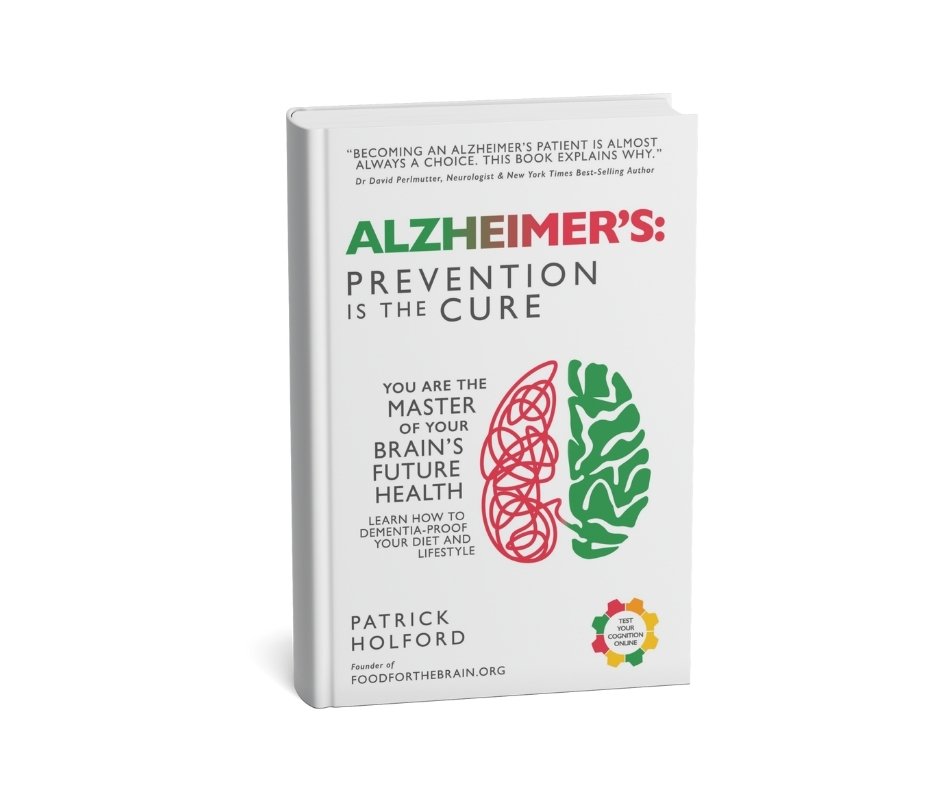
Let’s change the narrative. Let’s put nutrition – not cholesterol fear – at the top of the brain health agenda. Find out more in Patrick’s new book – Alzheimer’s: Prevention is the Cure.

Alzheimer's prevention is the cure book by Patrick Holford image
Test Your Cognitive Function Now green banner.

References

1  Gong, Q., Xie, L., Bi, M., & Yu, L. (2021). A probability formula derived from serum indicators, age, and comorbidities as an early predictor of dementia in elderly Chinese people. Brain and Behavior 11, e2236. https://doi.org/10.1002/brb3.2236

2 Peters, R, Breitner, J, James, S, et al. Dementia risk reduction, why haven’t the pharmacological risk reduction trials worked? An in-depth exploration of seven established risk factors. Alzheimer’s Dement. 2021; 7:e12202. https://doi.org/10.1002/trc2.12202 

3 Wee J, Sukudom S, Bhat S, Marklund M, Peiris NJ, Hoyos CM, Patel S, Naismith SL, Dwivedi G, Misra A. The relationship between midlife dyslipidemia and lifetime incidence of dementia: A systematic review and meta-analysis of cohort studies. Alzheimers Dement (Amst). 2023 Mar 8;15(1):e12395. doi: 10.1002/dad2.12395. PMID: 36911359; PMCID: PMC9993469.

4  Kjeldsen EW, Thomassen JQ, Rasmussen KL, Nordestgaard BG, Tybjærg-Hansen A, Frikke-Schmidt R. Adherence to dietary guidelines and risk of dementia: a prospective cohort study of 94 184 individuals. Epidemiol Psychiatr Sci 2022; 31: e71. 

5  Han BH, Sutin D, Williamson JD, Davis BR, Piller LB, Pervin H, Pressel SL, Blaum CS; ALLHAT Collaborative Research Group. Effect of Statin Treatment vs Usual Care on Primary Cardiovascular Prevention Among Older Adults: The ALLHAT-LLT Randomized Clinical Trial. JAMA Intern Med. 2017 Jul 1;177(7):955-965. doi: 10.1001/jamainternmed.2017.1442. PMID: 28531241; PMCID: PMC5543335.

6  McGuinness B, Craig D, Bullock R, Passmore P. Statins for the prevention of dementia. Cochrane Database Syst Rev 2016;1: CD003160. 

7 Zhang X, Tong T, Chang A, Ang TFA, Tao Q, Auerbach S, Devine S, Qiu WQ, Mez J, Massaro J, Lunetta KL, Au R, Farrer LA. Midlife lipid and glucose levels are associated with Alzheimer’s disease. Alzheimers Dement. 2023 Jan;19(1):181-193. doi: 10.1002/alz.12641. Epub 2022 Mar 23. PMID: 35319157; PMCID: PMC10078665.

Further info

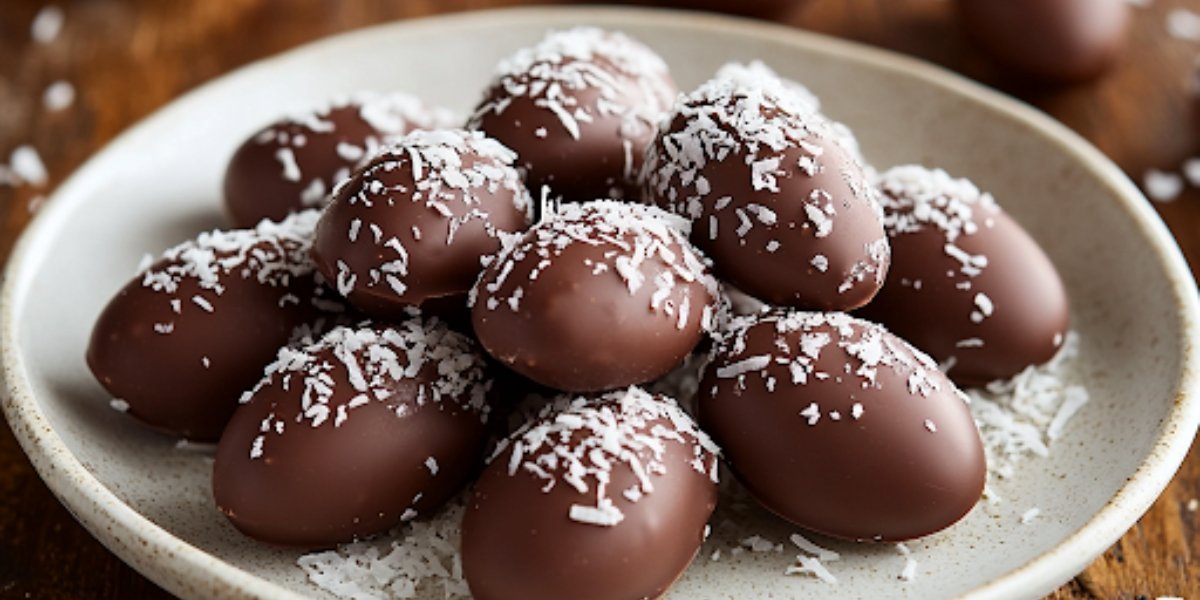
Brain Boosting Chocolate Mini  Eggs

With the arrival of spring come brighter days and flowers blooming all around. Sadly, it also marks what feels like yet another season full of sugar, with supermarket shelves overflowing with chocolate eggs, bunnies and other sugary temptations in every shape and size.

But knowing what we now do about how excess sugar impacts brain function (read more about how sugar impacts your brain here), whether you are 4 or 94 years old, the question is: what can you do instead?

We recommend heading into the kitchen to whip up some brain-friendly sweet treats – snacks that not only satisfy your sweet tooth, but also nourish your brain, support appetite control, and feed your gut microbiome.

With the launch of our Smart Kids Programme just weeks away, this recipe is perfect for creating fun and functional treats for the whole family – or even as a healthier option for your garden Easter egg hunt (just wrap them in foil if you’re hiding them for the kids!).

This recipe comes straight from the Upgrade Your Brain App, which includes over 100 delicious, brain-optimised recipes. If you haven’t already, subscribe today for just £30 for the whole year.

Brain-Boosting Highlights
Per mini egg (based on 14 per batch, without protein powder or coconut oil)
  • Low Glycemic Load (GL) & brain-friendly. Naturally sweetened with a little honey or maple syrup, these eggs contain just 2.5g of sugar each – helping to keep blood sugar levels balanced, which is key for maintaining stable mood, focus, and energy. (To reduce the GL you swap in chicory root syrup instead of honey or maple syrup. Use code FFB10 to get 10% off)
  • Supports the gut–brain axis. As we highlight in the COGNITION Programme and the upcoming Smart Kids initiative, a healthy gut = a healthier brain. Each mini egg delivers around 1.4g of fibre, thanks to oats, almonds, and cacao – feeding your good gut bacteria and reducing inflammation linked to cognitive decline.
  • Packed with healthy brain fats. With approximately 7g of fat per egg, these treats supply nourishing fats from almond butter (rich in vitamin E and monounsaturated fats) and dark chocolate (a source of flavonoids and magnesium) – both essential for supporting neurotransmitters and building stress resilience.
  • Optional protein boost. Even without added powder, each egg delivers around 2.5g of protein to help steady energy and mood throughout the day. Protein provides key amino acids – like tryptophan and tyrosine – that your brain uses to make serotonin and dopamine. For a little extra, simply add your favourite clean protein powder to increase the total to around 4g per egg. At any age, regular protein intake is vital for brain performance and emotional stability.
Recipe 

Ingredients (makes about 12-16 mini eggs)

  • 100g smooth almond butter (or peanut butter/cashew butter)
  • 2 tbsp honey or maple syrup (it is also worth buying some low GL chicory root syrup to further reduce sugar intake. Use code FFB10 to save 10% on your order)
  • 2 tbsp good quality cacao powder
  • 2 tbsp oat flour (or ground almonds)
  • Pinch of salt
  • Optional: 1 scoop vanilla or chocolate protein powder
  • Optional: 1 tbsp melted coconut oil (helps texture if mix is too thick)
  • 50g dark chocolate (70%+), melted, for coating
  • Optional: Crushed nuts, shredded coconut, or freeze-dried raspberries for decoration

Method

  1. In a bowl, mix almond butter, honey, cacao, oat flour, salt, and optional protein powder well until you get a thick but moldable dough.
  2. If it’s too dry, add a teaspoon of water or 1 tbsp melted coconut oil.
  3. Shape into small egg shapes using your hands (about 1 tablespoon – or slightly less per egg). try to work quickly so they don’t get too soft.
  4. Place on a lined tray and chill in the freezer for 15 minutes.
  5. Melt the dark chocolate gently in a bowl over hot water (or microwave in short bursts).
  6. Dip each mini egg in the melted chocolate to coat and place back on the tray.
  7. Optionally, sprinkle with nuts, coconut, or raspberry pieces before the chocolate sets.
  8. Chill until set (about 15 minutes in the fridge).
  9. Store in the fridge for up to a week.
Test Your Cognitive Function Now green banner.

Further info