Lifestyle Archives - Food for the Brain

because prevention is better than cure.

because prevention is better than cure.

Mini Cart 0

Your cart is empty.

Mini Cart 0

Your cart is empty.

Dry January for Your Brain: A Lighter, Clearer Start to the Year

Dry January for Your Brain: A Lighter, Clearer Start to the Year

Dry January

Dry January arrives with its usual mix of good intentions and side-eye, but beneath the trend is a surprising truth: your brain loves this month more than you think.

That’s because January quietly offers something modern brains rarely get the rest of the year: a drop in oxidative stress and a chance for your natural repair systems to catch up.  It’s a pause that lowers the background “noise” created by alcohol and allows your natural calming chemistry to rise back to the surface.

Many people start Dry January thinking about their liver or their waistline. But the strongest benefits often happen behind the scenes, in the place that governs mood, memory, sleep, and stress resilience.

That’s where the real benefits begin to show.

Dry January for Your Brain: Why the Benefits Show Up So Fast

Alcohol works on the same calming pathway your brain uses to wind down naturally. It boosts GABA, the neurotransmitter that quietens the nervous system. That lovely “first sip exhale” comes from this temporary GABA boost. You can learn more about GABA here

But your brain is clever. To compensate, it gradually nudges up adrenaline and turns the GABA dial down. This is why the glass that once relaxed you, can start to make you feel restless or wakeful later in the night.

And there’s more happening beneath the surface:

  • Alcohol increases oxidative stress inside neurons, largely because its metabolism produces acetaldehyde. This compound generates reactive oxygen species and increases neuronal damage (1).
  • It also places extra pressure on glutathione, the molecule the brain relies on for detoxification and repair. Chronic alcohol exposure is associated with reduced glutathione levels and impaired antioxidant capacity in the brain (2).
  • The hippocampus is particularly affected. This memory and mood hub is vulnerable to long term strain, and higher alcohol intake is linked to reduced hippocampal volume even at moderate levels (3).
  • Alcohol also disrupts sleep quality, especially REM cycles, which are crucial for cognitive repair. While alcohol initially sedates, it later fragments sleep architecture through a rebound in adrenaline and cortisol.

Read more about how alcohol impacts your brain here.

These are some of the core drivers of long term cognitive ageing. When they ease up, even for a short period, the brain begins to function more cleanly and calmly.

For this reason, so many people report that a couple of no or low alcohol weeks in January give them clearer thinking, steadier mood, and deeper sleep.

Two Brain Friendly Drinks for Your January Wind Down

With that in mind, here are two great recipe options to help you reduce your alcohol intake while still enjoying a wind down ritual. If you want more brain friendly recipes this year, make sure you subscribe to the Upgrade Your Brain Cook App.

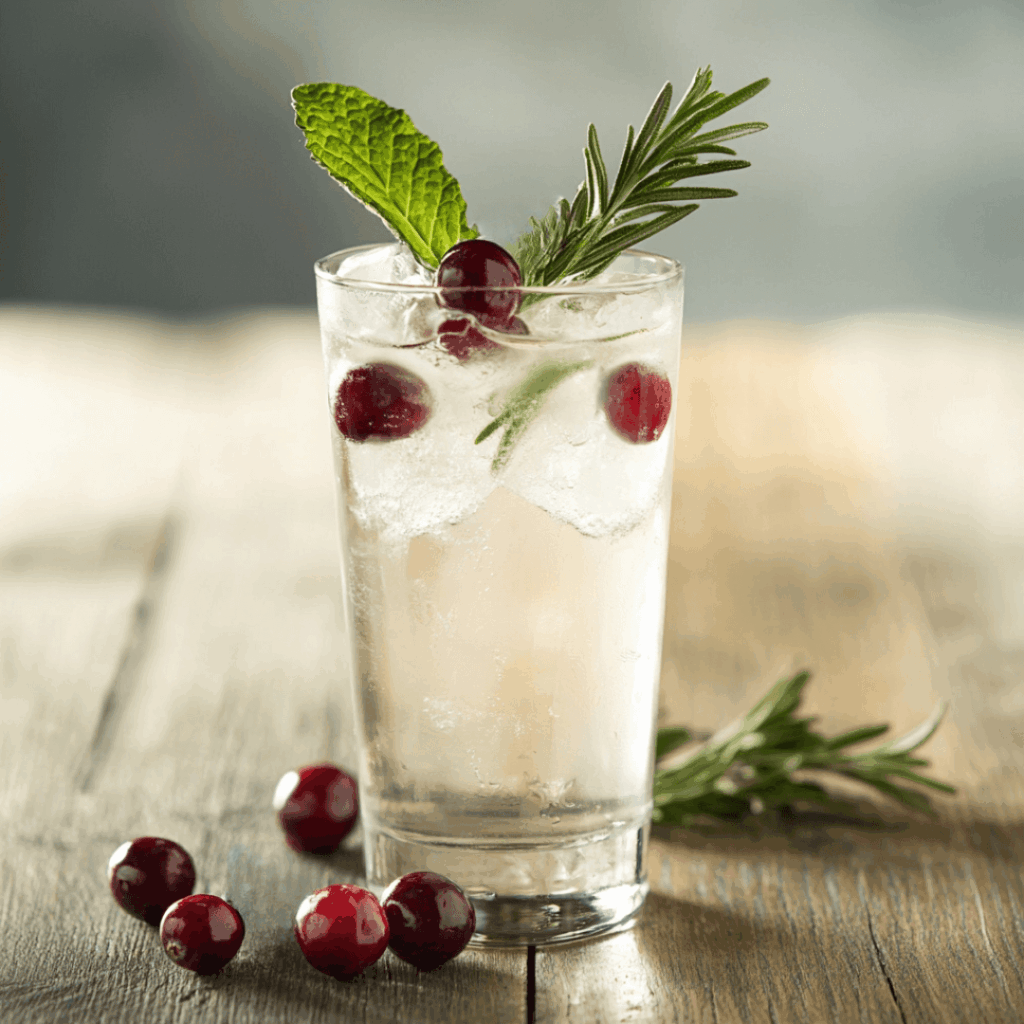
The Classic Gin Rickey

Zero alcohol, zero sugar, 100 percent January friendly

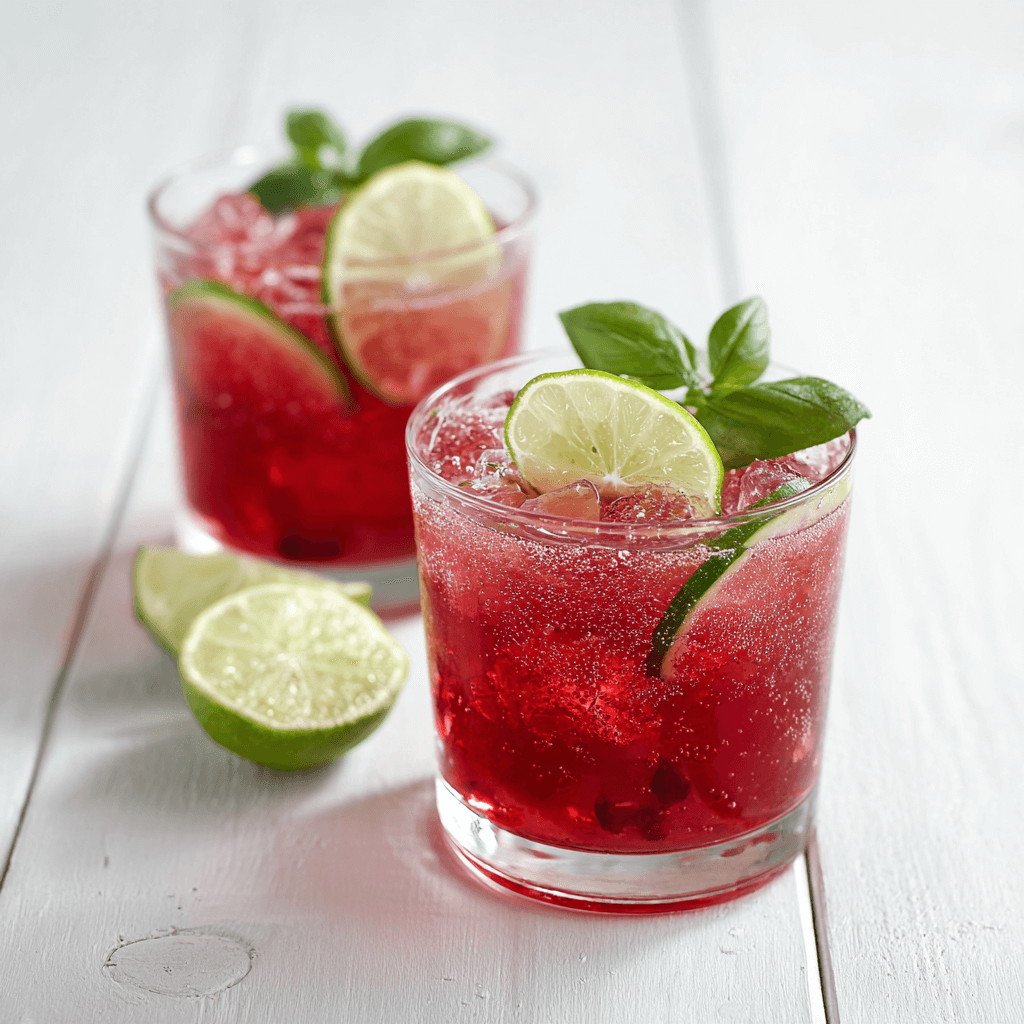
Pomegranate–Basil Spritz

Bright, Uplifting and Polyphenol-Rich

Serves: 1
Prep time: 2 minutes
GL per portion: 0 to 1 (negligible, no added sugar)

Ingredients
• 1 measure of alcohol free gin
• Soda water
• Ice
• 6 frozen cranberries
• Mint and or a sprig of rosemary
• Juice of half a lime, plus a slice for garnish
• Optional: a few drops of orange bitters

Instructions
1. Fill a tall glass with ice and scatter in the frozen cranberries.
2. Add the alcohol free gin.
3. Top with soda water.
4. Add the lime juice, a lime slice, and fresh herbs.
5. Swirl gently and enjoy.

It takes 60 seconds to make and tastes like a fresh start.

Serves: 2
Prep time: 5 minutes
GL per portion: 6

Ingredients
• 125 ml pomegranate juice (100 percent, unsweetened)
• 250 ml sparkling water
• Juice of half a lime
• 4 fresh basil leaves
• 2 cucumber ribbons
• Ice

Instructions
1. Add the basil and lime juice to a jug and gently muddle to release the oils.
2. Pour in the pomegranate juice and sparkling water.
3. Stir, add the cucumber ribbons, and serve over ice.

Nutritional highlights
• A natural source of vitamin C, polyphenols, and plant nitrates to support circulation.
• Offers a gentle lift through dopamine supporting compounds found in pomegranate and fresh herbs.

Cook’s notes
Diluting the juice keeps sugars moderate without losing impact. Mint works beautifully in place of basil if you prefer a cooler, sharper flavour.

Want to go deeper?

If you want deeper support for your brain this year, there are three simple steps you can take.

  • First, measure the things that matter. The DRIfT 5 in 1 at home blood test gives you a clear picture of the nutritional and metabolic factors that influence long term brain health. It is one of the most effective ways to understand your personal risk and what to do next.
  • Third, take the free Cognitive Function Test. It provides an objective snapshot of how your brain is performing right now and helps you track your progress over time.

References:

  1. Zakhari S. Overview: how is alcohol metabolized by the body? Alcohol Res Health. 2006;29(4):245-54. PMID: 17718403.
  2. Das SK, Vasudevan DM. Alcohol-induced oxidative stress. Life Sci. 2007;81(3):177-87. PMID: 17570440.
Further info

Why Sleep is Your Metabolic Superpower

Why Sleep is Your Metabolic Superpower

We tend to think of sleep as rest – the way we replenish energy.  In truth, your sleeping hours are a highly productive repair shift, especially for your metabolism

Each night, your body resets blood sugar, clears metabolic waste, restores energy and even rewires memory. Consistently missing out on quality or quantity of sleep means less of that vital repair work gets done.

Most people notice tiredness after a bad night, but few realise the impact it has on their blood sugar, metabolism and even body composition.

So in our last article we explored melatonin’s role in brain repair, in this part 2 we look at how poor sleep throws off your body’s entire metabolic rhythm – from blood sugar to fat storage.

(When we talk about poor sleep, we mean getting less than seven hours a night, sleeping at irregular times, or waking often through the night – all of which disturb the deep, restorative phases your brain depends on.)

Sleep and insulin: two sides of the same coin

Deep, unbroken sleep keeps your cells sensitive to insulin, the hormone that allows glucose into cells to make energy. Cut the night short and this system falters. Just one poor night can reduce insulin sensitivity by about 25 per cent (1).

That means glucose lingers in the bloodstream (creating inflammation over time) while your brain cells are left hungry for fuel.

The result? Brain fog, irritability, and a body craving quick fixes – sugar, caffeine and refined carbohydrates. You’ll have felt this yourself: after a poor night’s sleep, you wake up wanting pastries or toast, not eggs and greens.

The “tired brain” that acts diabetic

When the brain can’t get enough glucose, it flips into survival mode.

Stress hormones like cortisol and adrenaline surge to keep you going, but they also spike blood sugar and wreck the next night’s sleep (hello, 4 a.m. wake-ups).

Brain scans show that after even a single sleepless night, glucose metabolism in the prefrontal cortex, the region responsible for focus and decision-making, drops sharply (2).

It’s a vicious cycle: sleep loss drives insulin resistance, which drives stress and sugar intake, which drives more sleep loss.

Poor Sleep Changes Your Metabolism

It’s easy to see how poor sleep doesn’t just fog your mind – it rewires your metabolism. Short sleep duration is now recognised as one of the strongest lifestyle predictors of weight gain, insulin resistance and type-2 diabetes – even when calorie intake stays the same,

Even a few nights of shortened sleep raise ghrelin, the hunger hormone, and suppress leptin, which signals fullness (7). The result is stronger cravings for quick-release carbs and sugary snacks, precisely the foods that destabilise blood sugar and accelerate insulin resistance. At the same time, sleep loss changes how your body stores fat: studies show it increases visceral fat, the deep belly fat that drives inflammation (8).

Over time, this mix – more hunger, higher insulin, greater inflammation – pushes many people toward weight gain, pre-diabetes and, eventually, cognitive decline.

So if you’re trying to lose weight or steady your energy, don’t forget about sleep.

High blood sugar, low cognition

Poor sleep raises blood sugar, and when glucose stays high, the brain pays the price.

Overtime poor sleep raises blood sugar, and when glucose stays high, the brain eventually pays the price. Chronically elevated HbA1c, measured in our DRIfT test, predicts faster cognitive decline and higher dementia risk. The same metabolic stress that drives weight gain and diabetes also drives neurodegeneration. That’s why people with insomnia or sleep apnoea are far more likely to develop both type-2 diabetes and Alzheimer’s (3, 4).That is why we cover both sleep and insulin management as a key part of our COGNITION 6-month brain upgrade programme (available to all FRIEND’s of Food for the Brain) – because protecting your brain is possible when you know what to focus on.

The night-shift hormones that matter

  • Melatonin isn’t just for sleep – it fine-tunes your body’s glucose rhythm and acts as a powereful antioxidant. When evening light suppresses it, next-morning blood sugar shoots higher (5).
  • Cortisol should fall overnight so insulin can do its work; if stress, late eating or light keeps it high, blood sugar stays stuck.
  • Growth hormone, released in deep sleep, repairs tissue and builds lean muscle, your natural blood-sugar buffer.

Together these hormones keep the night restorative and the brain calm. Disrupt them and the same chemistry that fuels diabetes starts fuelling Alzheimer’s (6).

Simple Ways to Turn Sleep into a Metabolic Superpower

  1. Guard your 7–8 hours. Deep sleep is where metabolic reset happens.
  2. Skip caffeine or alcohol late. Both fragment sleep and blunt insulin response.
  3. Finish eating at least three hours before bed. Giving your body time to fast allows insulin to fall and encourages fat use for fuel overnight.
  4. Start your day with light, not sugar. Early daylight synchronises your circadian rhythm, boosting morning cortisol naturally so you rely less on coffee and quick carbs.
  5. Pair protein-rich, low-GL meals with consistent sleep. Balanced blood sugar by day supports stable melatonin and growth hormone at night, a feedback loop that keeps your metabolism working for you, not against you. Find 100+ delicious recipes here.https://foodforthebrain.org/uybcookapp/

Sleep as metabolic medicine

Sleep isn’t a luxury or a waste of time –  it’s your brain’s way of resetting and restoring the entire body. It shapes body composition, curbs cravings, steadies energy and supports the metabolism that powers your mind.

Takeaway: good sleep, like good nutrition, is prevention in action.
Want to dive deeper? Join us for the Sleep Solution Webinar with sleep scientist Greg Potter. Find out more here

Reference:

  1. Spiegel K et al. Impact of sleep debt on metabolic and endocrine function. Lancet. 1999;354(9188):1435–9.
  2. Benedict C et al. Acute sleep deprivation reduces energy expenditure and brain glucose metabolism. Sleep. 2012;35(7):981–8.
  3. Yaffe K et al. Sleep duration and risk of type 2 diabetes: a meta-analysis. Diabetes Care. 2015;38(9):1633–40.
  4. Sabia S et al. Association of sleep duration in middle and old age with dementia incidence. Nat Commun. 2021;12:2289.
  5. Gooley JJ et al. Exposure to room light before bedtime suppresses melatonin onset and shortens its duration. J Clin Endocrinol Metab. 2011;96(3):E463–72.
  6. Musiek ES, Holtzman DM. Mechanisms linking circadian clocks, sleep, and neurodegeneration. Science. 2016;354(6315):1004–8.
  7. Spiegel K et al. Brief sleep curtailment decreases leptin, increases ghrelin, and causes increased hunger and appetite. Ann Intern Med. 2004;141(11):846–50.
  8. Nedeltcheva AV et al. Insufficient sleep undermines dietary efforts to reduce adiposity. Ann Intern Med. 2010;153(7):435–41.
Further info

How To Break Free From Food Addiction

How To Break Free From Food Addiction

woman eating cake

Do you ever promise yourself you’ll stop eating sugar or junk food – only to find yourself back at the biscuit tin a few hours later? You’re not alone. Food addiction is real. In fact, it can be as powerful and pervasive as alcohol addiction.

The first step is awareness. According to clinical psychologist Dr Jen Unwin, there are six warning signs. If you recognise yourself in two or more, it may be time to take this seriously.

Read on to see if any apply to you.

Six Signs You May Be Addicted to Food

1. Certain foods feel impossible to resist

 “You’re craving a certain food so badly that you feel compelled to eat it, even when you know you shouldn’t,” Dr Unwin explains. At the height of her own addiction, she would secretly make a bowl of cake mixture – just butter, sugar and flour -and eat the entire thing raw. “It sounds ridiculous now, but I had such intense cravings for sweet, soft, sugary foods,” she explains.

2. You always need more

Like alcohol tolerance, food addiction builds over time. “One slice of cake may have been enough in the beginning, but soon you need two, three – or half the cake – to get the same dopamine hit,” says Dr Unwin. She recalls eating slice after slice at her daughter’s wedding, unable to stop until she felt sick.

3. Food takes priority over everything else

A common factor in addiction is that you begin to ignore what you once valued and prioritise food above socialising, hobbies, family time and even work. Often, Dr Unwin would leave the house and her family in secret to drive for 20 minutes to a cinema complex where she would order a large tub of Ben & Jerry’s Cookie Dough ice cream with chocolate sauce. She would then return to her car and eat the entire portion, feeling ashamed and elated at the same time, before returning home an hour later as if nothing had happened.

4. You lose control once you start

You might buy biscuits for your grandchildren, planning to have just one with your tea. Before you know it, the whole packet has disappeared.

5. Withdrawal symptoms kick in

If you try to cut down on sugary snacks and carbohydrates, do you experience withdrawal symptoms? “These include headaches, migraines, gastrointestinal symptoms, low mood, anxiety, fatigue and brain fog,” Dr Unwin says. “As people experience sugar withdrawal, they feel so bad that they just go back to eating it.” When Dr Unwin completely abstained from sugar, she experienced many of these symptoms for eight days. But after pushing through that difficult period, she began feeling better than ever.

6. You know it’s harming you – and carry on anyway

According to Dr Unwin, this is the defining sign: eating damaging foods despite knowing the consequences. She references a patient with Type 2 diabetes who kept bingeing on cake and sugar knowing how bad it is for their blood sugar. People in this situation often know the food is harmful, but they feel trapped in a cycle.

Why Processed Foods Hijack Your Brain

Breaking free from any addiction is not purely a matter of willpower. Addictive foods and drinks hijack your brain’s chemistry, making you crave them. This effect is purposely done so that you keep buying more.

Understanding how certain food ingredients and combinations work in the brain unlocks the secret to undoing food addiction. The most powerful trigger is the combination of fat and sugar – the two key components of most junk foods. Think cakes, biscuits, ice cream, chocolate bars and pastries. This pairing presses the brain’s dopamine “reward” switch, creating intense pleasure in the moment but diminishing feelings of satisfaction over time. Just like drugs, it fuels cravings and loss of control.
This hijacking of the dopamine-based reward system doesn’t just drive overeating – it also increases the risk of cognitive decline and brain shrinkage. Additionally, it disrupts glucose control and drives insulin resistance, a well-known promoter of cognitive decline.  (Read more –  ‘Is Sugar Killing Your Brain?)

Nutritional Tools That Reset Your Brain

In Patrick Holford’s book How to Quit without Feeling S**t  he recommends strategies that help restore balance to your brain chemistry:

  • Omega-3 fats – vital for healthy cell membranes and for receiving neurotransmitter messages.
  • B vitamins and methylationcheck homocysteine levels; if they are high, it may indicate poor methylation and raised risk of cognitive decline.
  • Tyrosine – dopamine is made from this amino acid. A supplement of 500mg twice daily can help support dopamine production.

Protein + slow carbs – pairing protein (such as nuts or Greek yogurt) with fruit like berries slows sugar release and provides fibre and nutrients.

If you feel like you are struggling to break free from food addiction, then join  Dr Jen Unwin’s live webinar on Wednesday, 24th September – find out more here.

 A clinical Psychologist’s Practical Tips on How to break free; 

  • Visualise how life will improve once you manage to quit your “drug foods”. These are typically ultra-processed and sugary foods with which you’re unlikely to have a healthy relationship.
  • Have an honest conversation with friends and family about the foods you struggle with, and ask for their support in resisting them..
  • Removing the “drug foods” from your home and diet is key. Replace them with natural, whole foods.
  • Give it time. Every day you resist, it gets easier. “Those foods are no longer in my thoughts at all,” says Dr Unwin.
  • If you take medication for diabetes or high blood pressure, consult your GPbefore reducing sugar and carbohydrates in your diet, as your dosage may need adjusting.
  • If you’re concerned about food addiction or would like to learn more, Dr Unwin recommends joining a Public Health Collaboration (PHC) support group in the UK, or Sweet Sobriety in the US. The PHC also runs a virtual lifestyle support group every Monday at 6pm, where you can learn more about overcoming food addiction and maintaining good metabolic health.

The Bigger Picture

Food addiction is more than a personal struggle and it impacts more people than you realise. It’s part of a wider public health crisis, fuelling obesity, diabetes and dementia – but no matter where you are at right now, change is possible!

Ways to get support:

Food or drink addiction? Discover how to beat cravings and food addiction in Dr Jen Unwin’s live webinar, 24 Sept.

Join the live webinar on food addiction with clinical psychologist Dr Jen Unwin on Wednesday, 24th September – find out more here.

International Food Addiction & Comorbidities Conference logo

ttend the International Food Addiction & Comorbidities Conference – IFACC 2025. Use discount code FFB to get 40% off:

  • Two-day in-person ticket: £150 (full price £250)
  • Two-day livestream ticket: £54 (full price £90)

Cognition Programme logo

Get ongoing support with the COGNITION™ programme. Receive monthly coaching when you become a. FRIEND of Food for the Brain.

Fork in a road logo

Read Dr Jen Unwin’s book, Fork in the Road a hopeful guide for identifying if you have a food addiction and learning what to do about it.

frontiers logo

Read this journal article in Frontiers in Psychiatry to support and join the movement to have food addiction classified as a real disease, thus enabling more research and support, and helping to make the dangers of ultra-processed foods more visible.

Further info

The Truth about Alcohol and Your Brain

Alcohol section in suppermarket with wine bottles

If coffee is the worker’s fuel for the fast and frenetic pace of modern life in the digital age, alcohol is the opiate of the masses. 

Most people use coffee or tea to wake up the brain and alcohol to switch off daily feelings of stress and anxiety. But what are these habits doing to brain health? How much is too much, or too little? Are there other ways to unwind after a hectic day that can benefit the brain?

Alcohol – The Friendly Neurotoxin?

Alcohol is a neurotoxin that impairs cognition. That is the simple fact we often forget. Once the liver’s capacity to detoxify is exceeded, it is precisely this neurotoxic effect that creates the ‘drunk’ feeling – starting with reduced inhibitions, the onset of memory loss, (which some may consider useful after a stressful day), and slurred speech. These effects are due to cognitive impairment, rather than relaxation – hence the warning: ‘not safe to drive’.

Stress Relief – at a Cost

The short-term upside of alcohol is its ability to suppress adrenal stress hormones – key accelerators of brain ageing, particularly when the stress switch is stuck in the ‘on’ position. That background hum of stress and anxiety, pending doom or checking for problems, is a hallmark of life in the 2020s, with hourly news cycles cranking up reasons for gloom and fear. In this context, a drink may feel like a welcome antidote, offering temporary relief by dampening stress.

Alcohol also boosts GABA, a calming neurotransmitter which temporarily switches off adrenaline. This is why one drink can feel like relief – but the effect fades quickly and excessive drinking leads to GABA receptor downregulation, increasing anxiety the next day and impairing sleep quality – especially during the deep and REM phases. These two phases are vital for full brain recovery. As a result, one wakes up less cognitively alert, less energised and more likely to feel anxious or to react stressfully.

Alcohol – like all toxic drugs – is what Oscar Ichazo called a ‘door of compensation:  temporary escape we reach for when psychic tension runs too high. While it offers short-term reprieve, it ultimately drains vital energy.
(Do you need more guidance and support to help you make healthier choices and habits? Then become a FRIEND of Food for the Brain today to get access to monthly group coaching and COGNITION ™ for 6 months. Find out more here)

More on GABA

GABA is made from two amino acids – taurine and glutamine – and is promoted by theanine. These three amino acids are often included in supplemental ‘chill’ formulas. There are also herbs, which in combination, help to promote GABA. This effect is harnessed in some non-alcoholic drinks like SENTIA drinks called ‘GABA spirits’. These are non-alcoholic yet potentially calming and de-stressing, offering a viable alternative to alcohol.  

However, alcohol is not just ‘alcohol’ and its appeal isn’t only due to GABA promotion. Red wine, for example, is rich in polyphenols, which have real benefits for the brain. However, unless it is organic, it often contains sulphites and other chemicals added. Additionally, some individuals – particularly those who drink often – can develop sensitivity to alcohol or to a component such as yeast, triggering further inflammation in both the gut and the brain.

How Much Alcohol is Too Much?

Alcohol is, of course, addictive –  and it can become so very quickly, even in small amounts. There are two ends to this spectrum. At the extreme, more than 10,000 people under the age of 35 die each year from alcohol poisoning – literally from a single binge. It can be compared to a heroin addict who quits and then relapses, taking the same dose they had previously built tolerance to. Tragically, this was the case for Amy Winehouse, who died after one evening of excess following a period of sobriety.

But what about the other end of the spectrum – modest drinking? And does the type of drink make a difference? Let’s look at the evidence. 

Since Alzheimer’s dementia, which accounts for two-thirds of dementia, is diagnosed through both brain shrinkage and cognitive decline, let’s look at the effects of alcohol at various doses on both brain shrinkage and cognitive decline, the most severe consequence being an increased risk of a dementia diagnosis later in life.

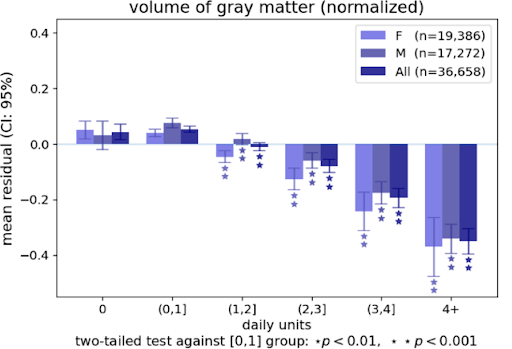
A study of 36,678 MRI scans from UK Biobank found that consuming more than one unit of alcohol per day is associated with steadily decreasing white and grey matter in the brain. (5)  A unit is a small glass of wine, half a pint of beer or a single shot of spirits. 


A comprehensive study in the British Medical Journal in 2018, which followed more than  9,000 people over 23 years, found that both abstinence and drinking more than 14 units of alcohol a week, which is equivalent to a medium glass of wine (2.3 units) every day,  increased risk by 40%. (6) This is illustrated in the graph below.

Volume of gray matter relation to alcohol consumption chart

You will notice that the brain shrinking effect is more pronounced in women than men, and those drinking 3 to 4 units, the equivalent of a large 250 ml of wine, show four times as much brain shrinkage as those drinking one small glass. Half a bottle a night, which is more than 4 units,  is associated with nearly eight times the loss of brain volume (7). That’s a high price to pay. 


Two other large studies last year showed something similar. A Chinese analysis of UK Biobank data involving 314,000 drinkers found that the more a person drank, the higher their risk. Once again, the effect was more pronounced in women than in men. or women, the lowest risk was observed  at around 8 units a week (roughly the equivalent of a bottle of wine), with risk actually lower than in those who drank less. Overall, the lowest risk was in those consuming 11.9 units a week, or about 1.7 units a day. (8)

Red Wine – Poison or Polyphenol Powerhouse?

On the positive side, research shows that a 125 ml glass of red wine a day may actually reduce dementia risk more than abstinence.. Another study reported that the lowest risk for dementia was among those consuming about 2 units a day – the equivalent of  a small to medium glass of wine. (9)

Red wine in particular may be beneficial because of its higher levels of polyphenols. Red wine, chocolate, and tea are all rich in a polyphenol called epicatechin. 

Jeremy Spencer, a scientific advisor to Food for the Brain and Professor of Nutritional Biochemistry and Medicine at the University of Reading, has shown that polyphenol-rich plants improve blood flow in specific regions of the brain that are associated with attention, decision-making, impulse control, and emotion, improving overall ‘executive’ function. (10) What’s more, the level of flavanols in your bloodstream predicts your memory performance. 

In the COSMOS study, the greatest benefit from increased flavanol intake was observed in those with the lowest dietary intake. Improvements were particularly noted in aspects of memory linked to the hippocampus – the brain’s central memory hub and the region most affected in Alzheimer’s disease (11). More recent research into cocoa, a rich natural source of flavanols – has also shown cognitive improvements, likely due to enhanced circulation (12). These findings were reinforced in a follow-up COSMOS trial involving more than 20,000 participants, who took a flavanol-rich cacao extract or placebo daily for five years (13).

Mitigating the Damage: Supplements for Protection

  • Quercetin (found in red onions), glutamine and vitamin C, support liver detoxification, helping to prevent hangover symptoms. (14)
  • Curcumin (especially water soluble Theracumin), reduces acetaldehyde by about a third, compared with drinking mineral water, thus easing hangover headaches.(15)  It has also recently been shown to protect the liver and reduce the risk of fatty liver disease.(16)
  • Glutathione – Alcohol-induced liver damage, fatty liver disease and reduced cognitive function are associated with a lower level of glutathione. A desirable level is above 800. Below 500 is an indicator that you need to increase your intake of antioxidants from food and/or supplements.

Not sure what your glutathione levels are? Test your antioxidant levels accurately from home with a single Glutathione test or as part of our DRIfT 5-in-1  blood test

The Final Pour…

Alcohol may quiet stress in the moment, but in the long term it dulls cognition, shrinks the brain, and disrupts sleep. 

The good news is that with the right habits and smarter choices, from regular exercise to alcohol-free days, you can unwind without trading clarity for comfort.

Our Advice: Smarter Drinking Hacks

  • Limit yourself to a maximum of one small glass of red wine daily (about 125 ml) – but ideally avoid drinking every day.
  • Stay under 14 units per week  to reduce cognitive risk.
  • Hydrate: drink one glass of water for every alcoholic beverage.
  • Exercise at the end of the day is a great way to de‑stress and promote sleep if you usually turn to alcohol for this purpose. 
  • Practise intermittent drinking: take longer alcohol-free breaks – weeks or months- to improve sleep, mood, and liver function
  • Avoid sugary drinks: they put extra strain on the liver. Choose dry wines, low-carb beers and skip sugary mixers like tonic and juice. Opt for ‘brut’ champagne. 
  • Eat polyphenols: pair wine with olives, blueberries, and dark chocolate for added brain protection..

 Want more insight into how healthy your brain is?

  1. Take the FREE Cognitive Function Test today to gain personal insights into into your brain health. 

Join our research and test your glutathione, homocysteine and other essential brain health biomarkers with our accurate at home test kits – find out more and order yours today

References:
1 The Stress Cure, Patrick Holford & Susannah Lawson, Piatkus 2014

2 Shell W, Bullias D, Charuvastra E, May LA, Silver DS. A randomized, placebo-controlled trial of an amino acid preparation on timing and quality of sleep. Am J Ther. 2010 Mar-Apr;17(2):133-9. doi: 10.1097/MJT.0b013e31819e9eab. PMID: 19417589.   https://pubmed.ncbi.nlm.nih.gov/19417589/

3 Dr Javier Sánchez-Betancourt et al., ‘Effect of 5-hydroxytryptophan and melatonin supplementation on mood, sleep and cognition in adult patients with depression’, Archivos Venezolanos de Farmacologia y Terapeutica, January 2022, DOI: https://doi.org/10.5281/zenodo.7512797

4 S. Saul, ‘Sleep drugs found only mildly effective but wildly popular’, New York Times, 23 October 2007

5 Daviet R, Aydogan G, Jagannathan K, Spilka N, Koellinger PD, Kranzler HR, Nave G, Wetherill RR. Associations between alcohol consumption and gray and white matter volumes in the UK Biobank. Nat Commun. 2022 Mar 4;13(1):1175. doi: 10.1038/s41467-022-28735-5. PMID: 35246521; PMCID: PMC8897479.

7 Nurk E, Refsum H, Drevon CA, Tell GS, Nygaard HA, Engedal K, Smith AD. Intake of flavonoid-rich wine, tea, and chocolate by elderly men and women is associated with better cognitive test performance. J Nutr. 2009 Jan;139(1):120-7. doi: 10.3945/jn.108.095182. Epub 2008 Dec 3. PMID: 19056649

8 Zheng L, Liao W, Luo S, Li B, Liu D, Yun Q, Zhao Z, Zhao J, Rong J, Gong Z, Sha F, Tang J. Association between alcohol consumption and incidence of dementia in current drinkers: linear and non-linear mendelian randomization analysis. EClinicalMedicine. 2024 Sep 5;76:102810. doi: 10.1016/j.eclinm.2024.102810. PMID: 39290634; PMCID: PMC11405827. https://pubmed.ncbi.nlm.nih.gov/39290634/

9 Zarezadeh M, Mahmoudinezhad M, Faghfouri AH, Mohammadzadeh Honarvar N, Regestein QR, Papatheodorou SI, Mekary RA, Willett WC. Alcohol consumption in relation to cognitive dysfunction and dementia: A systematic review and dose-response meta-analysis of comparative longitudinal studies. Ageing Res Rev. 2024 Sep;100:102419. doi: 10.1016/j.arr.2024.102419. Epub 2024 Jul 20. PMID: 39038743

10 Spencer JP. The impact of fruit flavonoids on memory and cognition. Br J Nutr. 2010 Oct;104 Suppl 3:S40-7. doi: 10.1017/S0007114510003934. PMID: 20955649. See also Professor Jeremy Spencer’s presentation at the Alzheimer’s is preventable masterclass (2022) – foodforthebrain.org/aipmasterclass;

11 Brickman AM, Yeung LK, Alschuler DM, Ottaviani JI, Kuhnle GGC, Sloan RP, Luttmann-Gibson H, Copeland T, Schroeter H, Sesso HD, Manson JE, Wall M, Small SA. Dietary flavanols restore hippocampal-dependent memory in older adults with lower diet quality and lower habitual flavanol consumption. Proc Natl Acad Sci U S A. 2023 Jun 6;120(23):e2216932120. doi: 10.1073/pnas.2216932120. Epub 2023 May 30. PMID: 37252983; PMCID: PMC10265949.

12127 Lamport DJ, Pal D, Moutsiana C, Field DT, Williams CM, Spencer JP, Butler LT. The effect of flavanol-rich cocoa on cerebral perfusion in healthy older adults during conscious resting state: a placebo controlled, crossover, acute trial. Psychopharmacology (Berl). 2015 Sep;232(17):3227-34. doi: 10.1007/s00213-015-3972-4. Epub 2015 Jun 7. PMID: 26047963; PMCID: PMC4534492.

13 Sesso HD, Manson JE, Aragaki AK, Rist PM, Johnson LG, Friedenberg G, Copeland T, Clar A, Mora S, Moorthy MV, Sarkissian A, Carrick WR, Anderson GL; COSMOS Research Group. Effect of cocoa flavanol supplementation for the prevention of cardiovascular disease events: the COcoa Supplement and Multivitamin Outcomes Study (COSMOS) randomized clinical trial. Am J Clin Nutr. 2022 Jun 7;115(6):1490-1500. doi: 10.1093/ajcn/nqac055. PMID: 35294962; PMCID: PMC9170467.

14 Markowska J, Kasprzak-Drozd K, Niziński P, Dragan M, Kondracka A, Gondek E, Oniszczuk T, Oniszczuk A. Quercetin: A Promising Candidate for the Management of Metabolic Dysfunction-Associated Steatotic Liver Disease (MASLD). Molecules. 2024 Nov 6;29(22):5245. doi: 10.3390/molecules29225245. PMID: 39598636; PMCID: PMC11596905.

15Sasaki H, Sunagawa Y, Takahashi K, Imaizumi A, Fukuda H, Hashimoto T, Wada H, Katanasaka Y, Kakeya H, Fujita M, Hasegawa K, Morimoto T. Innovative preparation of curcumin for improved oral bioavailability. Biol Pharm Bull. 2011;34(5):660-5. doi: 10.1248/bpb.34.660. PMID: 21532153.

16Panahi Y, Kianpour P, Mohtashami R, Jafari R, Simental-Mendía LE, Sahebkar A. Efficacy and Safety of Phytosomal Curcumin in Non-Alcoholic Fatty Liver Disease: A Randomized Controlled Trial. Drug Res (Stuttg). 2017 Apr;67(4):244-251. doi: 10.1055/s-0043-100019. Epub 2017 Feb 3. PMID: 28158893.

Further info