Raised Homocysteine and Disease Risk: More Than 100 Associated Conditions
Raised homocysteine has been associated with an increased risk of a remarkably wide range of diseases and adverse health outcomes. Research spanning cardiovascular disease, cognitive decline, dementia, pregnancy complications and other conditions has made homocysteine an important biomarker of nutritional and metabolic health [1].
Homocysteine is not itself a disease, and an association does not necessarily mean that elevated homocysteine directly causes every condition linked with it. However, an elevated level can provide useful information about B-vitamin status, homocysteine metabolism and wider health risk [1].
More than 100 diseases, syndromes and adverse health outcomes have been reported in association with raised total homocysteine [1]. These range from cardiovascular and cerebrovascular disease to cognitive decline, dementia, pregnancy complications and neurological disorders.
This article explores that evidence, what these associations actually mean and why homocysteine has attracted increasing attention as a potentially modifiable biomarker.
If you are new to the subject, start with our complete guide to homocysteine, which explains what homocysteine is, why levels can become elevated and why it matters.
What is homocysteine?
Homocysteine is an amino acid produced naturally when the body metabolises methionine, an amino acid obtained from dietary protein.
Normally, homocysteine is recycled or converted into other compounds through metabolic pathways that depend on nutrients including folate, vitamin B12 and vitamin B6. When these pathways do not work efficiently, homocysteine can accumulate in the blood [1].
Age, nutritional status, kidney function, genetics, certain medicines and lifestyle factors can all influence homocysteine levels [1,2,4].
What diseases are associated with high homocysteine?
More than 100 diseases, syndromes and adverse health outcomes have been reported in association with raised total homocysteine [1].
The most frequently reported associations involve cardiovascular and central nervous system conditions, although associations have also been reported across pregnancy and development, kidney disease, metabolic health, bone health and other areas [1].
Professors David Smith and Helga Refsum reviewed this extensive body of evidence in Homocysteine: from disease biomarker to disease prevention. Their review catalogued reports of associations between raised total homocysteine and more than 100 diseases, syndromes and adverse health outcomes [1].
The strength of evidence is not the same for every condition.
In some cases, raised homocysteine may be a marker of an underlying nutritional, metabolic or health problem. In others, it may contribute to biological processes involved in disease. An association therefore does not necessarily mean that homocysteine directly causes the condition [1].
For clarity, the reported associations are grouped below according to the main area of health affected.
Cardiovascular and circulatory conditions associated with raised homocysteine
Cardiovascular and cerebrovascular diseases are among the most extensively studied conditions associated with raised homocysteine. Smith and Refsum’s review identifies reported associations with myocardial infarction, coronary artery disease, hypertension, stroke, peripheral vascular disease, venous thrombosis and a wide range of other vascular outcomes [1].
Conditions and outcomes reported in association with raised total homocysteine include [1]:
| Cardiovascular and Circulatory Health |
Conditions Associated with Raised Homocysteine |
| Heart and coronary disease |
- Myocardial infarction
- Severity of coronary artery disease
- Hypertension
- Restenosis and adverse outcomes following angioplasty
- Atrial fibrillation
|
| Stroke and cerebrovascular disease |
- Stroke
- Stroke mortality
- Silent brain infarction
- Intracerebral arterial stenosis
- Cerebral small vessel disease
- Cerebral microbleeds
- Disruption of the blood-brain barrier
- Moyamoya disease
|
| Arterial and vascular disease |
- Carotid plaque, stenosis and increased intima-media thickness
- Peripheral vascular disease
- Arterial aneurysm
- Arterial stiffness
- Impaired endothelial-mediated dilation
- Vascular complications of diabetes
|
| Thrombotic and venous disease |
|
| Inflammatory and rare vascular disorders |
- Raynaud’s syndrome
- Takayasu arteritis
- Thromboangiitis obliterans (Buerger’s disease)
- Behçet disease
|
| Other vascular manifestations |
|
Researchers have investigated several mechanisms that could help explain these associations, including effects involving vascular endothelial function and thrombosis [1]. However, observational associations do not, on their own, establish that elevated homocysteine directly causes cardiovascular disease.
This distinction becomes particularly important when intervention studies are considered.
A meta-analysis of eight randomised trials involving 37,485 participants found that B-vitamin treatment lowered homocysteine by approximately 25%, but did not significantly reduce major vascular events, major coronary events or stroke during the treatment periods studied [14].
Later evidence suggests that stroke may warrant separate consideration. A Cochrane review of 15 randomised trials involving 71,422 participants found no significant reduction in myocardial infarction or all-cause mortality with homocysteine-lowering interventions, but reported a small reduction in stroke [15].
Taken together, the evidence supports an association between raised homocysteine and cardiovascular and cerebrovascular disease, but does not support assuming that lowering homocysteine will prevent cardiovascular disease generally. The effects of intervention may differ according to the outcome, population, nutritional status and treatment context [1,14,15].
Homocysteine, brain health and cognitive decline
The brain is another area in which homocysteine has been extensively studied.
Raised homocysteine has been associated with cognitive decline, brain atrophy, dementia and Alzheimer’s disease [1,11,12].
A meta-analysis of eight cohort studies involving 8,669 participants found an association between serum homocysteine and dementia [11].
A later dose-response meta-analysis incorporating 28 prospective cohort studies found that every 5 µmol/L increase in blood homocysteine was associated with a 15% higher relative risk of Alzheimer-type dementia. Associations with all-cause dementia, vascular dementia and cognitive impairment without dementia were less conclusive [12].
Other reported brain and cognitive associations include vascular dementia and vascular cognitive impairment, post-stroke cognitive impairment, age-related cognitive decline, conversion from cognitive impairment to dementia, grey- and white-matter atrophy, cerebral small vessel disease and white-matter damage [1].
Cerebral small vessel disease has also been investigated as a possible mediator of the association between homocysteine and cognitive function [9].
What happens when homocysteine is lowered?
The VITACOG randomised controlled trial investigated whether lowering homocysteine with B vitamins could affect brain atrophy in older people with mild cognitive impairment.
Participants received folic acid, vitamin B12 and vitamin B6 or placebo for two years. B-vitamin treatment lowered homocysteine and slowed the accelerated rate of brain atrophy [13].
However, intervention evidence is not uniform. A meta-analysis combining cognitive data from 11 trials involving approximately 22,000 participants found that B-vitamin treatment lowered homocysteine but did not demonstrate a significant overall effect on individual cognitive domains or global cognitive function [16].
The effects of B-vitamin intervention may therefore depend on factors including the population studied, baseline homocysteine and nutritional status, disease stage, treatment duration and the outcome being measured [1,13,16].
Mental health and neurological conditions
Raised homocysteine has also been studied in relation to a range of mental health and neurological conditions.
Smith and Refsum’s review identifies reported associations between raised total homocysteine and conditions including depression, bipolar disorder, schizophrenia, Parkinson’s disease, multiple sclerosis, amyotrophic lateral sclerosis or motor neurone disease, multiple system atrophy, migraine and autism spectrum disorder [1].
Parkinson’s disease has been examined more specifically in a systematic review and meta-analysis evaluating homocysteine alongside vitamin B12 and folate. The analysis found associations between these biomarkers and the risk and severity of Parkinson’s disease [10].
These findings do not mean that elevated homocysteine independently causes these conditions. Neurological and mental health disorders are complex and typically involve multiple genetic, biological, nutritional, environmental and lifestyle factors.
Homocysteine may therefore be a biomarker, a contributing factor or part of a wider metabolic picture, depending on the condition [1].
The evidence is strongest when interpreted condition by condition rather than treating all reported associations as equivalent.
Homocysteine and pregnancy
Homocysteine has also been studied in relation to pregnancy and fetal development.
Raised maternal homocysteine has been reported in association with pregnancy complications and outcomes including recurrent miscarriage, impaired fetal growth and small-for-gestational-age babies, neural tube defects, congenital heart defects and orofacial clefts [1,5,6].
A meta-analysis examining recurrent spontaneous abortion found higher homocysteine concentrations among women experiencing recurrent pregnancy loss, supporting an association between elevated homocysteine and recurrent spontaneous abortion [5].
A broader review of homocysteine and pregnancy complications also describes associations across a range of adverse pregnancy outcomes [6].
These findings need careful interpretation. Homocysteine metabolism is closely connected with folate, vitamin B12 and other nutritional factors, while pregnancy outcomes are influenced by many additional maternal, fetal, genetic and environmental factors [1].
An association with elevated homocysteine therefore does not establish that homocysteine directly caused a particular pregnancy outcome.
Anyone who is pregnant, planning a pregnancy or concerned about folate, vitamin B12 or homocysteine status should discuss appropriate testing and supplementation with a qualified healthcare professional.
Other conditions associated with raised homocysteine
The reported associations extend considerably further.
| Health Area |
Other Reported Associations with Raised Homocysteine [1] |
| Ageing and general health |
- All-cause mortality
- Frailty
- Telomere shortening
|
| Metabolic and endocrine health |
- Metabolic syndrome
- Obesity
- Non-alcoholic fatty liver disease
- Hypothyroidism
- Gout
|
| Kidney and respiratory health |
- Renal insufficiency and chronic kidney disease
- Chronic obstructive pulmonary disease
- Obstructive sleep apnoea
|
| Bone and musculoskeletal health |
- Osteoporosis and bone disease
|
| Inflammatory and autoimmune conditions |
- Inflammatory bowel disease and Crohn’s disease
- Systemic lupus erythematosus
- Dermatomyositis
- Inflammatory responses
|
| Skin and oral health |
- Psoriasis
- Vitiligo
- Burning mouth syndrome
- Atrophic glossitis
- Periodontal disease
|
| Blood and systemic conditions |
- Cancer
- Sickle-cell disease
|
| Lifestyle and environmental factors |
- Alcohol abuse
- Blood lead concentration
|
| Sensory health |
|
Higher homocysteine has also been associated with all-cause mortality. A dose-response meta-analysis of prospective studies reported an association between homocysteine concentrations and all-cause mortality [7].
Research has additionally examined relationships between homocysteine, inflammation, telomere shortening and mortality [8].
The breadth of these associations is striking, but it should not be interpreted as evidence that homocysteine directly causes every condition listed.
A biomarker can be associated with many diseases without being their single underlying cause. Kidney function, nutritional deficiencies, ageing, lifestyle and existing health conditions can themselves influence homocysteine concentrations [1].
A raised result therefore needs to be interpreted in the context of the individual rather than viewed as a diagnosis in itself.
Why can homocysteine be associated with so many conditions?
One reason homocysteine appears across such a broad range of research is its relationship with fundamental metabolic processes.
Homocysteine sits within pathways involving folate, vitamin B12, vitamin B6, methionine and methylation [1]. Researchers have also investigated potential effects of elevated homocysteine on vascular and neurological processes [1].
However, there is an important distinction between homocysteine being:
- a marker of another underlying problem
- a contributor to disease processes
- a causal factor whose reduction directly changes disease risk.
These roles should not be assumed to be identical across every disease [1].
This is why the more useful question is not simply whether homocysteine is “good” or “bad”. It is why a person’s homocysteine is elevated and what that result may reveal about their nutritional, metabolic and wider health.
How do you know if your homocysteine is high?
Homocysteine is measured with a blood test and is generally reported in micromoles per litre (µmol/L).
A result needs to be interpreted in context because homocysteine can vary according to factors including age, sex and nutritional status [2,4].
Know Your Homocysteine Level
The only way to know your homocysteine level is to measure it.
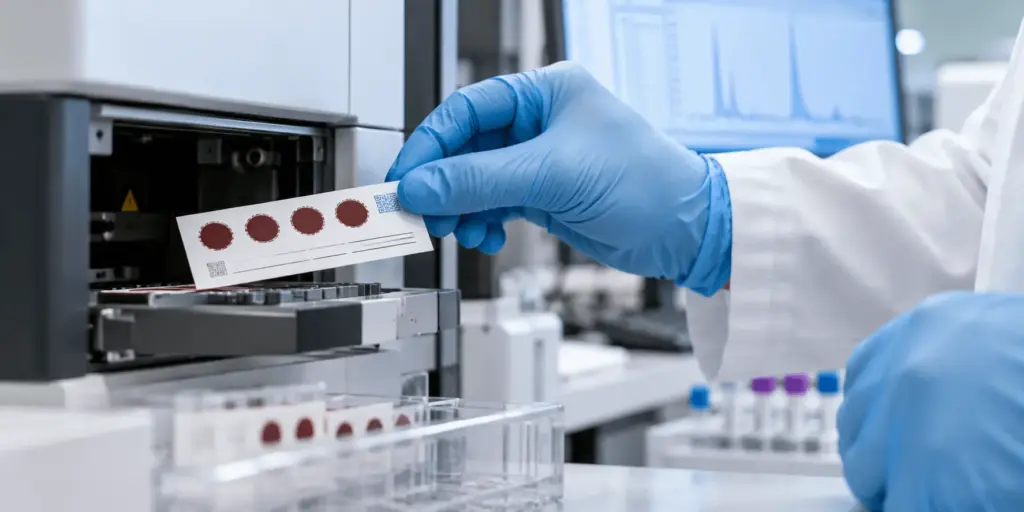
The Food for the Brain Homocysteine Test is an at-home blood spot test that measures your homocysteine level from a fasted finger-prick sample.
By taking part, you also support Food for the Brain Foundation’s charitable research and work to help reduce the risk of cognitive decline through nutrition and lifestyle.
What should you do if your homocysteine is high?
A raised homocysteine result is a reason to consider why the level is elevated rather than treating the number in isolation.
Factors associated with elevated homocysteine include folate and vitamin B12 status, age, kidney function and other nutritional, genetic, medical and lifestyle influences [1,2,4].
The appropriate response therefore depends on the underlying cause.
For a detailed look at nutritional, lifestyle and other factors involved, read our guide to lowering homocysteine.
Can lowering homocysteine reduce disease risk?
B vitamins can lower homocysteine, but demonstrating that an intervention lowers a biomarker is not the same as demonstrating that it prevents every disease associated with that biomarker [1,14-16].
The cardiovascular evidence illustrates this distinction clearly. Large randomised-trial analyses have not demonstrated a general reduction in major cardiovascular events despite substantial reductions in homocysteine [14], although a later Cochrane review found evidence of a small reduction in stroke [15].
A similar complexity exists in cognitive health. The VITACOG trial demonstrated slower brain atrophy in people with mild cognitive impairment receiving B vitamins [13], while a much larger meta-analysis of cognitive trial data did not find a significant overall benefit on cognitive performance [16].
Clinical effects may depend on the outcome being studied, baseline homocysteine and nutritional status, age, treatment context and other factors [1,13-16].
The evidence should therefore be considered outcome by outcome rather than assuming that lowering homocysteine automatically produces the same reduction in risk across all conditions associated with elevated levels.
At Food for the Brain, we are particularly interested in potentially modifiable nutritional and lifestyle factors associated with homocysteine and their relationship with long-term brain health.
Frequently asked questions
What diseases are associated with high homocysteine? Raised homocysteine has been reported in association with more than 100 diseases, syndromes and adverse health outcomes. These include cardiovascular disease, stroke, cognitive decline, dementia, neurological and mental health conditions, pregnancy complications and a range of metabolic and inflammatory conditions [1].
The strength and nature of the evidence vary considerably between conditions.
Does high homocysteine cause disease? Not necessarily.
An association between high homocysteine and a disease does not automatically mean that homocysteine caused the disease. Depending on the condition, homocysteine may act as a biomarker, contribute to disease processes or form part of a more complex causal pathway [1].
Is high homocysteine associated with dementia? Yes. Elevated homocysteine has been associated with cognitive decline, brain atrophy and dementia risk [1,11,12].
However, dementia has many contributing factors, and association alone does not establish that homocysteine is the sole or direct cause.
For more detail, read Homocysteine and Dementia.
Is high homocysteine associated with heart disease and stroke? Raised homocysteine has been associated with cardiovascular disease and stroke [1].
However, intervention evidence is more complex. Large trials have not demonstrated a general reduction in major cardiovascular events from homocysteine lowering [14], while a Cochrane review found evidence of a small reduction in stroke [15].
The bigger picture
The association between raised homocysteine and such a broad range of diseases is one reason this biomarker continues to attract scientific interest.
An accurate conclusion is that raised homocysteine has been associated with a remarkably broad range of diseases and adverse health outcomes, with particularly substantial research around vascular and cognitive health [1,11,12].
Whether lowering homocysteine changes clinical outcomes depends on the condition, population and intervention being considered [13-16].
Homocysteine sits at the intersection of several important nutritional and metabolic processes, and an elevated level may therefore provide useful information about what is happening within the body.
Understanding your homocysteine level can be one piece of a much larger picture involving nutrition, lifestyle, cardiovascular
Written by Patrick Holford
Last reviewed: 15/09/2026
The table lists diseases and syndromes for which there are reports of association with raised total homocysteine. Reproduced with the permission of the authors Professors David Smith and Helga Refsum from the paper Smith AD, Refsum H. Homocysteine – from disease biomarker to disease prevention. J Intern Med. 2021 Oct;290(4):826-854. doi: 10.1111/joim.13279. Epub 2021 Apr 6. PMID: 33660358. © 2021 The Association for the Publication of the Journal of Internal Medicine 3 Journal of Internal Medicine
Further info