Keeping our brain’s structure and neural network healthy may seem like a mystery at times, but often the best advice is simple: ‘use it or lose it!’
The exercise and stimulation your brain gets from an active physical, social and intellectual lifestyle is vital to keeping it healthy. Just like our bodies need movement and exercise to function well, our brains need their own workout to thrive, too.
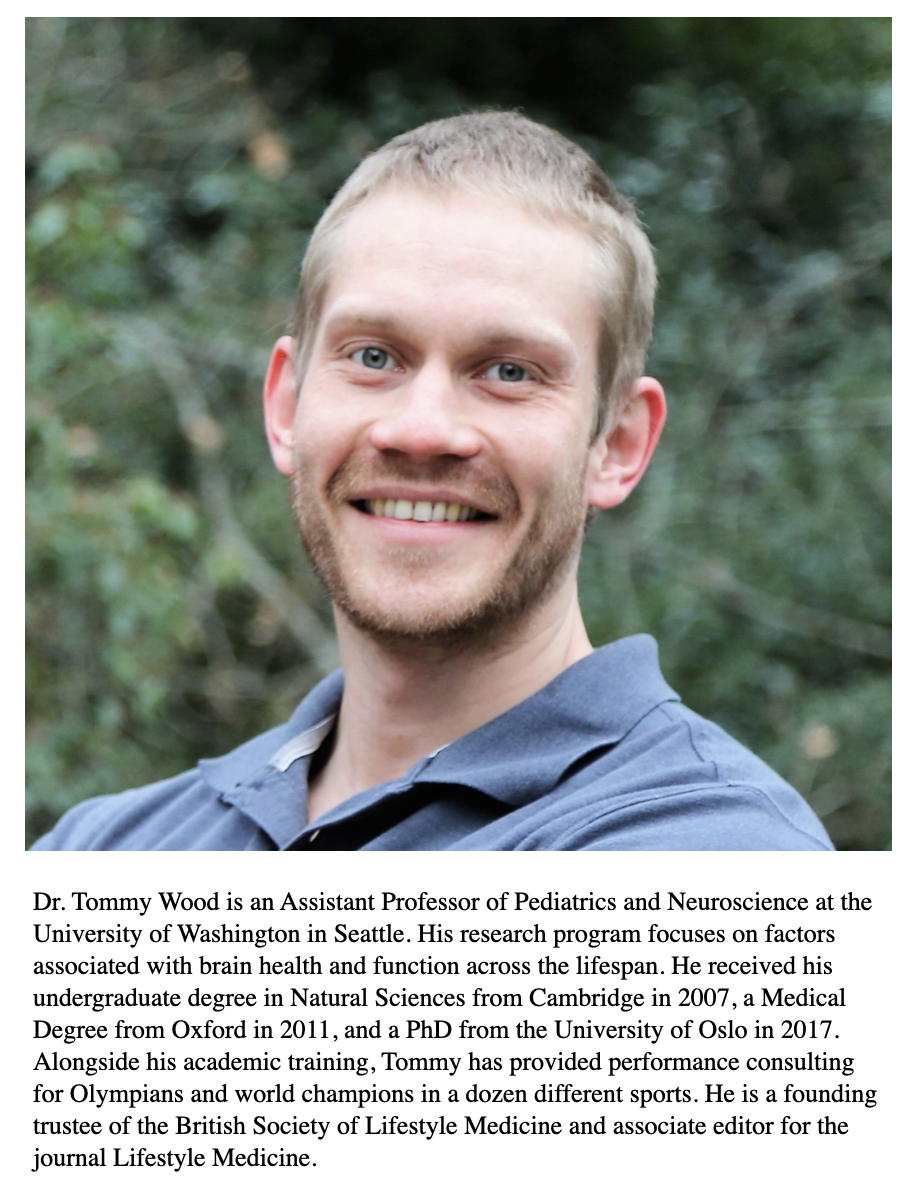
Lifestyle expert at Food for the Brain, Assistant Professor Tommy Wood, from the University of Washington has advised people at the top of their game, from Formula 1 drivers and Olympians to world champions, on how to maximise their performance, both mentally and physically. His top tip for keeping our brains sharp?
“In short, use it or lose it. The brain is an amazing organ, and it’s more resilient and adaptable than we’ve been led to believe. I’m sure you’ve heard that adults have a fixed amount of brain cells. Then, as we get older (or every time we take a sip of wine) we “lose” some of those brain cells as part of an unstoppable decline towards dementia or Alzheimer’s disease.”
“That’s not necessarily true” says Professor Wood. “I like to think about the brain like I think about muscles. In order to grow our muscles, we need to provide a stimulus – like lifting weights in the gym – followed by a period of rest. The opposite also happens – if we stop going to the gym or if we stop using a limb after breaking a bone – our muscles get smaller. Most have experienced this personally, and there’s every indication that your cognitive “muscle” behaves in the same way.”
A classic example of this is a study of London taxi drivers in training who have to learn ‘The Knowledge’. Many spend three years driving the 25,000 streets of London, logging up tens of thousands of miles, on foot or on a scooter. Not all pass the first time. Katherine Woollett at University College London decided to find out if acquiring the knowledge actually changed a person’s brain by measuring the density of grey matter as an indicator of brain volume. About half of her group of training taxi drivers passed first time and the other half failed. She also had a control group of people of the same age, most in their late 30’s with similar other demographics such as IQ. Sure enough, those who passed had increased their brain density of grey matter, and specifically in the central hippocampus area most associated with cognitive resilience. (1)
Keep Cognitively Active
There’s a pattern in our society – we are meant to learn every day as we go through school in childhood and teenage years, then we get a job, which, past a training phase, may not require much more learning, then around 65 we are meant to retire, with no more ‘need’ to work or learn.
Every indicator that you can think of – leaving school early, having a lower educational standard (2), or retiring early (3), has been associated with an increasing risk of cognitive decline.
When Professor May Beydoun, at the US National Institutes of Health (NIH) did a comprehensive study of the biggest risk factors for developing Alzheimer’s, she attributed 24% of risk to educational status and 32% of risk to physical activity(4). So, using our brains, reflected in educational and physical activity, is a huge part of keeping your brain healthy. (It’s worth remembering that omega-3/seafood and homocysteine-lowering B vitamins account for 22% each while smoking racks up 31% in the risk stakes).
Think about how you use your mind. How much time do you spend stimulated, learning something? How much time do you spend engaged in relatively mindless mental activities?
Television can be stimulating, or mind-numbing – engaging your attention but not really making you think. Social media activity, like scrolling through TikTok or Instagram, could be mind-numbing, while digital engagement with others could be stimulating. A simple yardstick is to ask ‘am I learning anything? Am I using my mind?’
While these activities are keeping your brain busy, what our brains really needs is to be engaged in learning or working something out, ideally without too much stress. Many films are designed to engage you by stimulating a stress response, keeping you on the edge of our seat. On the other hand, doing Wordle or a crossword, or playing a game of backgammon or chess involves concentration and thinking without cranking up your stress response.
Two high-rating apps designed to engage our minds Brain HQ and Lumosity. Brain HQ (www.brainhq.com) adapts according to your needs – do you want better memory, better attention or faster processing? Three 20-minute sessions weekly are recommended. Lumosity (www.lumosity.com) is also adaptive and achieves much the same improvement in cognition. In just the same way you become physically fitter by increasing the duration or intensity of an exercise, it seems the same is true with your mind.
Reading books, or listening to podcasts can also be a great way to stimulate the old grey matter, mind but it does depend on what you are reading or listening to. The golden question is ‘am I learning anything from this?’. Even better – join a bookclub for the social stimulation, sharing views, hearing others, and working out where you stand.
Learn by failing
Land on any social media platform and we are bombarded with stories of people succeeding, urging us to try the latest self-help, diet or exercise programme, meditation or music app (who didn’t try and learn the guitar in lockdown!) but failure, according to Professor Tommy Wood, is when the magic really happens for our brains:
“Failure constitutes protective cognitive demand. The cocktail of hormones released as we try, fail, repeat, and learn, provides the ideal environment for the brain to grow and adapt. This is a real sticking point for improving brain health – as adults we hate the feeling of being bad at something.”
Professor Wood recommends picking an activity that’s truly challenging. “Cognitive demand requires failure, so pick something you’ll be bad at initially. What’s cognitively challenging is personal, but learning a new language is better than sudoku, picking up a guitar is better than listening to music, building model airplanes is probably better than reading the news, and playing chess is definitely better than scrolling through Instagram. As you get better, add challenges to keep stimulating your brain.”
“A fascinating study looked at the brains of musicians. While both professional and amateur musicians’ brains looked younger compared to non-musicians of the same age, the benefit was greatest in amateur musicians (5) – it’s harder, so they got more benefit. The cocktail of hormones released as we try, fail, repeat, and learn, provides the ideal environment for the brain to grow and adapt.”
In fact, learning an instrument, or a language, are considered heavy lifters when it comes to brain stimulation – it’s challenging and can take a long time to become completely proficient. But every step along the way, even just a few minutes a day, learning new words, processing the grammar, learning chords and finger positions, is a significant mental challenge. And there are so many language learning apps, like DuoLingo now, playing on the ‘reward’ and game theory to keep us cognitively engaged and coming back for more.
Speaking two languages is not only associated with less risk of cognitive decline but, according to one study, ‘the neuroprotective effects of lifelong bilingualism act both against neurodegenerative processes and through the modulation of brain networks connectivity.’ (6) Your brain ends up more connected – literally hardwired for brain health.
Keep physically active
The brain also benefits from physical exercise, especially if it involves complex movements and learning – think dance, yoga or t’ai chi or trail running or walking on uneven surfaces. The brain is processing a lot of information, triggering patterns of muscle movement, keeping you in balance. You want a bit of both – movement and balance. Just working out on a fixed machine or walking on a flat, straight, tarmacked path, is not nearly as challenging as hill walking up an uneven path, cycling, surfing, skateboarding or anything where your body is micro-adjusting to keep you in balance.
One study of retired people assigned to walk briskly for 40 minutes three times a week showed increased hippocampal brain volume (7). Another study showed benefits from doing one or two sessions of resistance or strength training twice a week (8).
Of all the measures relating to how fit or fat we are, muscle mass best predicts brain volume and risk of cognitive decline in later years.
One big study from the UK Biobank data found that those with a lower fat-to-muscle ratio) in their legs had around 40% less risk for dementia later in life (9). Muscle uses energy and ‘soaks up’ glucose. This helps keep your blood sugar stable and prevent insulin resistance. Often, as we age, it can seem like an uphill battle to keep our weight down, even if we are not eating any more than we used to. This is often simply because we’ve lost muscle mass with age. So hitting those weights can be extra beneficial in later years and many gyms offer classes especially for older clients. Even body weight exercise can build resistance, though, and there are plenty of free videos on the internet – just check with your GP first.
Step it up
A good general guideline is to aim for 30 minutes of brisk walking every day. Some days you may do none and others twice this, so this is a good weekly average to shoot for. Over time you can step it up by walking faster, jogging or including some hills in your circuit.
A good way to monitor and up our exercise level is to count steps. Smart phones and watches have apps that do this for you. Shoot for increasing daily steps between 10% and 20% a week. If you start at 2,000 and add 200 steps per day each week, that’s a great start. If you’re at 4,000 steps already then getting up to 4,400 daily in this week is also going to stimulate our muscles and brains. While 8,000 steps a day is considered optimal, what’s much more important is to make sustainable improvements as you ‘activate’ your lifestyle.
But, we don’t need to limit ourselves to ‘exercise’. Gardening, mowing the lawn, playing a sport, vigorous cleaning, or clearing out a yard – anything that gives us a faster heart rate, a bit of sweat and engages different sets of muscles, thus including ‘resistance’(10), counts as well, especially if we can do them faster or more energetically.
Aerobic plus resistance exercise anti-ages your brain
As previously mentioned, of all the measures relating to how fit or fat we are, muscle mass best predicts brain volume and risk of cognitive decline in later years.
Including exercise that helps build and maintain muscle tone correlates most strongly with brain health. A good weekly guideline is to include two resistance training sessions a week. Perhaps you are a member of a gym, go to a pilates or yoga class or have some equipment at home for your own workout.
If you’re not sure where to start, “Burn Fat Fast” (Piatkus, 2013), written by Patrick Holford and exercise guru and former Gladiator (Zodiac) Kate Staples, is a great resource. Staples devised a series of strength building exercises that anyone can do at home in eight minutes, three times a week, including beginner version, and intermediate and advanced versions (light to medium weight dumbbells (2kg – 6kg) are needed for these).
The exercises are all explained in the book and Kate Staples demonstrates each one HERE so you can follow along until you feel comfortable. A five minute warm-up (marching on the spot is great, or stepping side to side) will get your heart rate up and help avoid injury.
The beginner sequence includes wall sits and reverse lunges, while the advance sequence progresses to jumping squats and mountain climbers. It’s important to build up gradually, keep hydrated, and learn to do the moves safely, so watching the videos is a great way to get started.
The secret is to find an activity that engages both mind and body, builds muscle, and is not too repetitive. As an example, our very own Patrick Holford says “I’ve taken up paragliding, and qualified at the age of 65. I had to pass an exam on meteorology, aerodynamics and air law, and failed the first time, but now I have to think about these things before and during flight. Then there’s the exercise of carrying an 11 kg pack up a mountain, and the balance and strength and adjustments my brain is having to make to keep the canopy stable even before take off.” This may not be your thing but it shows how one activity can tick so many brain boxes. It is good to learn new sports for this very reason.
Be Social
A lack of meaningful social interaction, and loneliness, is also a major driver of both low mood and cognitive decline later in life (11).
How often do you go to social gatherings, meet new people and have engaging conversations? This could be meeting friends, going to the movies, a museum, a gallery, a show, church or temple, or a restaurant?
There are times in your lives where you might find yourself more isolated. For example, when relationships break up and you lose connection with ‘their’ friends, or if a partner dies and most of your social interaction was with them. These are extremely challenging times, but facing our fears and getting out there to meet friends can help us on the road to recovery.
Unset your mind
It’s all too easy to get locked into routines that remove any form of challenging social interaction yet this is not only how we learn, it also nourishes the social aspect of who we are. A good strategy is to make sure you have a significant social event or interaction every week, starting with this week.
As we age, and friends move away, or pass on, it’s important to find ways to expose ourselves to new ideas and new ways of thinking and feeling differently and swapping ideas. Travelling and exploring other cultures can be an incredibly enriching way to broaden our mindset and there are lots of companies that cater for the solo traveller these days.
But there’s no need to go far from home to get the benefits of brain gain. There are many opportunities to ‘use it or lose it’, for example, volunteering at a local garden or school or supporting the local arts club. The brain boost from being out of your comfort zone will reap dividends, whether it’s joining a group of new people, engaging in a new activity you’ve never tried, like drawing, writing or yoga – or even just catching up with old friends you haven’t seen for ages, or striking up a conversation with someone you meet on the daily dog walk.
Local bookshops, art centres, churches or schools can be great sources of information, so check them out.
Be inquisitive
As Tommy Wood says “The key is to push right at the boundaries of what you’re capable of – with occasional failure showing that you’re at the right level of difficulty. Keep at it, and you’ll be more likely to be healthy and sharp for decades to come.”
And if you want more personalised information on how you can improve and support your brain through nutrition and lifestyle changes then make sure you complete our Cognitive Function Test. A FREE, online and validated test to assess your current cognitive function and dementia risk and then get a clear plan of action on how you can improve your brain health and score over the next 6 months.
Thank you for reading!
Food for the Brain is a non-for-profit educational and research charity that offers a free Cognitive Function Test and assesses your Dementia Risk Index to be able to advise you on how to dementia-proof your diet and lifestyle.
By completing the Cognitive Function Test you are joining our grassroots research initiative to find out what really works for preventing cognitive decline. We share our ongoing research results with you to help you make brain-friendly choices.
References:
1 Woollett K, Maguire EA. Acquiring “the Knowledge” of London’s layout drives structural brain changes. Current biology: CB. 2011;21(24):2109-14. Epub 2011/12/08. doi: 0.1016/j.cub.2011.11.018. PubMed PMID: 22169537.
2 Yu JT, Xu W, Tan CC, Andrieu S, Suckling J, Evangelou E, Pan A, Zhang C, Jia J, Feng L, Kua EH, Wang YJ, Wang HF, Tan MS, Li JQ, Hou XH, Wan Y, Tan L, Mok V, Tan L, Dong Q, Touchon J, Gauthier S, Aisen PS, Vellas B. Evidence-based prevention of Alzheimer’s disease: systematic review and meta-analysis of 243 observational prospective studies and 153 randomised controlled trials. J Neurol Neurosurg Psychiatry. 2020;91(11):1201-9. Epub 2020/07/22. doi: 10.1136/jnnp-2019-321913. PubMed PMID: 32690803; PMCID: PMC7569385.
3 Hale JM, Bijlsma MJ, Lorenti A. Does postponing retirement affect cognitive function? A counterfactual experiment to disentangle life course risk factors. SSM – Population Health. 2021;15:100855. doi: https://doi.org/10.1016/j.ssmph.2021.100855; see also Dufouil C, Pereira E, Chêne G, Glymour MM, Alpérovitch A, Saubusse E, Risse- Fleury M, Heuls B, Salord JC, Brieu MA, Forette F. Older age at retirement is associated with decreased risk of dementia. Eur J Epidemiol. 2014;29(5):353-61. Epub 2014/05/06. doi: 10.1007/s10654-014-9906-3. PubMed PMID: 24791704.
4 Beydoun MA, Beydoun HA, Gamaldo AA, Teel A, Zonderman AB, Wang Y. Epidemiologic studies of modifiable factors associated with cognition and dementia: systematic review and meta-analysis. BMC Public Health. 2014 Jun 24;14:643. doi: 10.1186/1471-2458-14-643. PMID: 24962204; PMCID: PMC4099157.
5 Erickson KI, Voss MW, Prakash RS, Basak C, Szabo A, Chaddock L, Kim JS, Heo S, Alves H, White SM, Wojcicki TR, Mailey E, Vieira VJ, Martin SA, Pence BD, Woods JA, McAuley E, Kramer AF. Exercise training increases size of hippocampus and improves memory. Proceedings of the National Academy of Sciences. 2011;108(7):3017. doi: 10.1073/pnas.1015950108.
6 Sala A, Malpetti M, Farsad M, Lubian F, Magnani G, Frasca Polara G, Epiney JB, Abutalebi J, Assal F, Garibotto V, Perani D. Lifelong bilingualism and mechanisms of neuroprotection in Alzheimer dementia. Hum Brain Mapp. 2022;43(2):581-92. Epub 2021/11/04. doi: 10.1002/hbm.25605. PubMed PMID: 34729858; PMCID: PMC8720191.
7 Ludyga S, Gerber M, Pühse U, Looser VN, Kamijo K. Systematic review and meta- analysis investigating moderators of long-term effects of exercise on cognition in healthy individuals. Nature Human Behaviour. 2020;4(6):603-12. doi: 10.1038/s41562-020-0851-8.
8 Herold F, Törpel A, Schega L, Müller NG. Functional and/or structural brain changes in response to resistance exercises and resistance training lead to cognitive improvements – a systematic review. Eur Rev Aging Phys Act. 2019;16:10. Epub 2019/07/25. doi: 10.1186/s11556-019-0217-2. PubMed PMID: 31333805; PMCID: PMC6617693.
9 Wang W, Luo Y, Zhuang Z, Song Z, Huang N, Li Y, Dong X, Xiao W, Zhao Y, Huang T. Total and regional fat-to-muscle mass ratio and risks of incident all-cause dementia, Alzheimer’s disease, and vascular dementia. J Cachexia Sarcopenia Muscle. 2022 Oct;13(5):2447-2455. doi: 10.1002/jcsm.13054. Epub 2022 Jul 20. PMID: 35856185; PMCID: PMC9530585.
100 Gallardo-Gómez D, Del Pozo-Cruz J, Noetel M, Álvarez-Barbosa F, Alfonso-Rosa RM, Del Pozo Cruz B. Optimal dose and type of exercise to improve cognitive function in older adults: A systematic review and bayesian model-based network meta-analysis of RCTs. Ageing Res Rev. 2022 Apr;76:101591. doi: 10.1016/j.arr.2022.101591. Epub 2022 Feb 17. PMID: 35182742.
111 Penninkilampi R, Casey AN, Singh MF, Brodaty H. The Association between Social Engagement, Loneliness, and Risk of Dementia: A Systematic Review and Meta-Analysis. J Alzheimers Dis. 2018;66(4):1619-33. Epub 2018/11/20. doi: 10.3233/jad- PubMed PMID: 30452410.
Further info