because prevention is better than cure.

because prevention is better than cure.

Mini Cart 0

Your cart is empty.

Mini Cart 0

Your cart is empty.

Use it or Lose it. Why an active lifestyle is a brain essential.

Keeping our brain’s structure and neural network healthy may seem like a mystery at times, but often the best advice is simple: ‘use it or lose it!’

The exercise and stimulation your brain gets from an active physical, social and intellectual lifestyle is vital to keeping it healthy. Just like our bodies need movement and exercise to function well, our brains need their own workout to thrive, too.

Lifestyle expert at Food for the Brain, Assistant Professor Tommy Wood, from the University of Washington has advised people at the top of their game, from Formula 1 drivers and Olympians to world champions, on how to maximise their performance, both mentally and physically.  His top tip for keeping our brains sharp?  

“In short, use it or lose it. The brain is an amazing organ, and it’s more resilient and adaptable than we’ve been led to believe. I’m sure you’ve heard that adults have a fixed amount of brain cells. Then, as we get older (or every time we take a sip of wine) we “lose” some of those brain cells as part of an unstoppable decline towards dementia or Alzheimer’s disease.”

“That’s not necessarily true” says Professor Wood. “I like to think about the brain like I think about muscles. In order to grow our muscles, we need to provide a stimulus – like lifting weights in the gym – followed by a period of rest. The opposite also happens – if we stop going to the gym or if we stop using a limb after breaking a bone – our muscles get smaller. Most have experienced this personally, and there’s every indication that your cognitive “muscle” behaves in the same way.”

A classic example of this is a study of London taxi drivers in training who have to learn ‘The Knowledge’. Many spend three years driving the 25,000 streets of London, logging up tens of thousands of miles, on foot or on a scooter. Not all pass the first time. Katherine Woollett at University College London decided to find out if acquiring the knowledge actually changed a person’s brain by measuring the density of grey matter as an indicator of brain volume. About half of her group of training taxi drivers passed first time and the other half failed. She also had a control group of people of the same age, most in their late 30’s with similar other demographics such as IQ. Sure enough, those who passed had increased their brain density of grey matter, and specifically in the central hippocampus area most associated with cognitive resilience. (1)

Keep Cognitively Active

There’s a pattern in our society – we are meant to learn every day as we go through school in childhood and teenage years, then we get a job, which, past a training phase, may not require much more learning, then around 65 we are meant to retire, with no more ‘need’ to work or learn.

Every indicator that you can think of – leaving school early, having a lower educational standard (2), or retiring early (3), has been associated with an increasing risk of cognitive decline.

When Professor May Beydoun, at the US National Institutes of Health (NIH) did a comprehensive study of the biggest risk factors for developing Alzheimer’s, she attributed 24% of risk to educational status and 32% of risk to physical activity(4). So, using our brains, reflected in educational and physical activity, is a huge part of keeping your brain healthy. (It’s worth remembering that  omega-3/seafood and homocysteine-lowering B vitamins account for 22% each while smoking racks up 31% in the risk stakes).

Think about how you use your mind. How much time do you spend stimulated, learning something? How much time do you spend engaged in relatively mindless mental activities? 

Television can be stimulating, or mind-numbing – engaging your attention but not really making you think. Social media activity, like scrolling through TikTok or Instagram, could be mind-numbing, while digital engagement with others could be stimulating. A simple yardstick is to ask ‘am I learning anything? Am I using my mind?’ 

While these activities are keeping your brain busy, what our brains really needs is to be engaged in learning or working something out, ideally without too much stress. Many films are designed to engage you by stimulating a stress response, keeping you on the edge of our seat. On the other hand, doing Wordle or a crossword, or playing a game of backgammon or chess involves concentration and thinking without cranking up your stress response. 

Two high-rating apps designed to engage our minds Brain HQ and Lumosity. Brain HQ (www.brainhq.com) adapts according to your needs – do you want better memory, better attention or faster processing? Three 20-minute sessions weekly are recommended. Lumosity (www.lumosity.com) is also adaptive and achieves much the same improvement in cognition. In just the same way you become physically fitter by increasing the duration or intensity of an exercise, it seems the same is true with your mind.

Reading books, or listening to podcasts can also be a great way to stimulate the old grey matter, mind but it does depend on what you are reading or listening to. The golden question is  ‘am I learning anything from this?’. Even better – join a bookclub for the social stimulation, sharing views, hearing others, and working out where you stand. 

Learn by failing

Land on any social media platform and we are bombarded with stories of people succeeding, urging us to try the latest self-help, diet or exercise programme, meditation or music app (who didn’t try and learn the guitar in lockdown!) but failure, according to Professor Tommy Wood, is when the magic really happens for our brains:

“Failure constitutes protective cognitive demand. The cocktail of hormones released as we try, fail, repeat, and learn, provides the ideal environment for the brain to grow and adapt. This is a real sticking point for improving brain health – as adults we hate the feeling of being bad at something.”

Professor Wood recommends picking an activity that’s truly challenging. “Cognitive demand requires failure, so pick something you’ll be bad at initially. What’s cognitively challenging is personal, but learning a new language is better than sudoku, picking up a guitar is better than listening to music, building model airplanes is probably better than reading the news, and playing chess is definitely better than scrolling through Instagram. As you get better, add challenges to keep stimulating your brain.”

“A fascinating study looked at the brains of musicians.  While both professional and amateur musicians’ brains looked younger compared to non-musicians of the same age, the benefit was greatest in amateur musicians (5) – it’s harder, so they got more benefit. The cocktail of hormones released as we try, fail, repeat, and learn, provides the ideal environment for the brain to grow and adapt.”

In fact, learning an instrument, or a language, are considered heavy lifters when it comes to brain stimulation – it’s challenging and can take a long time to become completely proficient. But every step along the way, even just a few minutes a day, learning new words, processing the grammar, learning chords and finger positions, is a significant mental challenge.  And there are so many language learning apps, like DuoLingo now, playing on the ‘reward’ and game theory to keep us cognitively engaged and coming back for more. 

Speaking two languages is not only associated with less risk of cognitive decline but, according to one study, ‘the neuroprotective effects of lifelong bilingualism act both against neurodegenerative processes and through the modulation of brain networks connectivity.’ (6) Your brain ends up more connected – literally hardwired for brain health.

Keep physically active

The brain also benefits from physical exercise, especially if it involves complex movements and learning – think dance, yoga or t’ai chi or trail running or walking on uneven surfaces. The brain is processing a lot of information, triggering patterns of muscle movement, keeping you in balance. You want a bit of both – movement and balance. Just working out on a fixed machine or walking on a flat, straight, tarmacked path, is not nearly as challenging as hill walking up an uneven path, cycling, surfing, skateboarding or anything where your body is micro-adjusting to keep you in balance.

One study of retired people assigned to walk briskly for 40 minutes three times a week showed increased hippocampal brain volume (7).  Another study showed benefits from doing one or two sessions of resistance or strength training twice a week (8).

Of all the measures relating to how fit or fat we are, muscle mass best predicts brain volume and risk of cognitive decline in later years. 

One big study from the UK Biobank data found that those with a lower fat-to-muscle ratio) in their legs had around 40% less risk for dementia later in life (9). Muscle uses energy and ‘soaks up’ glucose. This helps keep your blood sugar stable and prevent insulin resistance. Often, as we age, it can seem like an uphill battle to keep our weight down, even if we are not eating any more than we used to. This is often simply because we’ve lost muscle mass with age. So hitting those weights can be extra beneficial in later years and many gyms offer classes especially for older clients. Even body weight exercise can build resistance, though, and there are plenty of free videos on the internet – just check with your GP first.

Step it up

A good general guideline is to aim for 30 minutes of brisk walking every day. Some days you may do none and others twice this, so this is a good weekly average to shoot for. Over time you can step it up by walking faster, jogging or including some hills in your circuit. 

A good way to monitor and up our exercise level is to count steps. Smart phones and watches have apps that do this for you. Shoot for increasing daily steps between 10% and 20% a week. If you start at 2,000 and add 200 steps per day each week, that’s a great start. If you’re at 4,000 steps already then getting up to 4,400 daily in this week is also going to stimulate our muscles and brains. While 8,000 steps a day is considered optimal, what’s much more important is to make sustainable improvements as you ‘activate’ your lifestyle.

But, we don’t need to limit ourselves to ‘exercise’. Gardening, mowing the lawn, playing a sport, vigorous cleaning, or clearing out a yard – anything that gives us a faster heart rate, a bit of sweat and engages different sets of muscles, thus including ‘resistance’(10), counts as well, especially if we can do them faster or more energetically.

Aerobic plus resistance exercise anti-ages your brain

As previously mentioned, of all the measures relating to how fit or fat we are, muscle mass best predicts brain volume and risk of cognitive decline in later years. 

Including exercise that helps build and maintain muscle tone correlates most strongly with brain health. A good weekly guideline is to include two resistance training sessions a week. Perhaps you are a member of a gym, go to a pilates or yoga class or have some equipment at home for your own workout.

If you’re not sure where to start, “Burn Fat Fast” (Piatkus, 2013), written by Patrick Holford and exercise guru and former Gladiator (Zodiac) Kate Staples, is a great resource.  Staples devised a series of strength building exercises that anyone can do at home in eight minutes, three times a week, including  beginner version, and intermediate and advanced versions (light to medium weight dumbbells (2kg – 6kg) are needed for these).

The exercises are all explained in the book and  Kate Staples demonstrates each one HERE so you can follow along until you feel comfortable. A five minute warm-up (marching on the spot is great, or stepping side to side) will get your heart rate up and help avoid injury. 

The beginner sequence includes wall sits and reverse lunges, while the advance sequence progresses to jumping squats and mountain climbers. It’s important to build up gradually, keep hydrated, and learn to do the moves safely, so watching the videos is a great way to get started. 

The secret is to find an activity that engages both mind and body, builds muscle, and is not too repetitive. As an example, our very own Patrick Holford says “I’ve taken up paragliding, and qualified at the age of 65. I had to pass an exam on meteorology, aerodynamics and air law, and failed the first time, but now I have to think about these things before and during flight. Then there’s the exercise of carrying an 11 kg pack up a mountain, and the balance and strength and adjustments my brain is having to make to keep the canopy stable even before take off.” This may not be your thing but it shows how one activity can tick so many brain boxes. It is good to learn new sports for this very reason.

Be Social

A lack of meaningful social interaction, and loneliness, is also a major driver of both low mood and cognitive decline later in life (11). 

How often do you go to social gatherings, meet new people and have engaging conversations? This could be meeting friends, going to the movies, a museum, a gallery, a show, church or temple, or a restaurant?

There are times in your lives where you might find yourself more isolated. For example, when relationships break up and you lose connection with ‘their’ friends, or if a partner dies and most of your social interaction was with them. These are extremely challenging times, but facing our fears and getting out there to meet friends can help us on the road to recovery. 

Unset your mind

It’s all too easy to get locked into routines that remove any form of challenging social interaction yet this is not only how we learn, it also nourishes the social aspect of who we are. A good strategy is to make sure you have a significant social event or interaction every week, starting with this week.

As we age, and friends move away, or pass on, it’s important to find ways to expose ourselves to new ideas and new ways of thinking and feeling differently and swapping ideas. Travelling and exploring other cultures can be an incredibly enriching way to broaden our mindset and there are lots of companies that cater for the solo traveller these days.

But there’s no need to go far from home to get the benefits of brain gain. There are many opportunities to ‘use it or lose it’, for example, volunteering at a local garden or school or supporting the local arts club. The brain boost from being out of your comfort zone will reap dividends, whether it’s joining a group of new people, engaging in a new activity you’ve never tried, like drawing, writing or yoga – or even just catching up with old friends you haven’t seen for ages, or striking up a conversation with someone you meet on the daily dog walk.

Local bookshops, art centres, churches or schools can be great sources of information, so check them out. 

Be inquisitive

As Tommy Wood says “The key is to push right at the boundaries of what you’re capable of – with occasional failure showing that you’re at the right level of difficulty. Keep at it, and you’ll be more likely to be healthy and sharp for decades to come.”

And if you want more personalised information on how you can improve and support your brain through nutrition and lifestyle changes then make sure you complete our Cognitive Function Test. A FREE, online and validated test to assess your current cognitive function and dementia risk and then get a clear plan of action on how you can improve your brain health and score over the next 6 months.

—-

Thank you for reading!
Food for the Brain is a non-for-profit educational and research charity that offers a free Cognitive Function Test and assesses your Dementia Risk Index to be able to advise you on how to dementia-proof your diet and lifestyle.

By completing the Cognitive Function Test you are joining our grassroots research initiative to find out what really works for preventing cognitive decline. We share our ongoing research results with you to help you make brain-friendly choices.

Please support our research by becoming a Friend of Food for the Brain.

Test Your Cognitive Function Now green banner.

References:

1 Woollett K, Maguire EA. Acquiring “the Knowledge” of London’s layout drives structural brain changes. Current biology: CB. 2011;21(24):2109-14. Epub 2011/12/08. doi: 0.1016/j.cub.2011.11.018. PubMed PMID: 22169537.

2 Yu JT, Xu W, Tan CC, Andrieu S, Suckling J, Evangelou E, Pan A, Zhang C, Jia J, Feng L, Kua EH, Wang YJ, Wang HF, Tan MS, Li JQ, Hou XH, Wan Y, Tan L, Mok V, Tan L, Dong Q, Touchon J, Gauthier S, Aisen PS, Vellas B. Evidence-based prevention of Alzheimer’s disease: systematic review and meta-analysis of 243 observational prospective studies and 153 randomised controlled trials. J Neurol Neurosurg Psychiatry. 2020;91(11):1201-9. Epub 2020/07/22. doi: 10.1136/jnnp-2019-321913. PubMed PMID: 32690803; PMCID: PMC7569385.

3 Hale JM, Bijlsma MJ, Lorenti A. Does postponing retirement affect cognitive function? A counterfactual experiment to disentangle life course risk factors. SSM – Population Health. 2021;15:100855. doi: https://doi.org/10.1016/j.ssmph.2021.100855; see also Dufouil C, Pereira E, ChĂȘne G, Glymour MM, AlpĂ©rovitch A, Saubusse E, Risse- Fleury M, Heuls B, Salord JC, Brieu MA, Forette F. Older age at retirement is associated with decreased risk of dementia. Eur J Epidemiol. 2014;29(5):353-61. Epub 2014/05/06. doi: 10.1007/s10654-014-9906-3. PubMed PMID: 24791704.

4 Beydoun MA, Beydoun HA, Gamaldo AA, Teel A, Zonderman AB, Wang Y. Epidemiologic studies of modifiable factors associated with cognition and dementia: systematic review and meta-analysis. BMC Public Health. 2014 Jun 24;14:643. doi: 10.1186/1471-2458-14-643. PMID: 24962204; PMCID: PMC4099157.

5 Erickson KI, Voss MW, Prakash RS, Basak C, Szabo A, Chaddock L, Kim JS, Heo S, Alves H, White SM, Wojcicki TR, Mailey E, Vieira VJ, Martin SA, Pence BD, Woods JA, McAuley E, Kramer AF. Exercise training increases size of hippocampus and improves memory. Proceedings of the National Academy of Sciences. 2011;108(7):3017. doi: 10.1073/pnas.1015950108.

6 Sala A, Malpetti M, Farsad M, Lubian F, Magnani G, Frasca Polara G, Epiney JB, Abutalebi J, Assal F, Garibotto V, Perani D. Lifelong bilingualism and mechanisms of neuroprotection in Alzheimer dementia. Hum Brain Mapp. 2022;43(2):581-92. Epub 2021/11/04. doi: 10.1002/hbm.25605. PubMed PMID: 34729858; PMCID: PMC8720191.

7 Ludyga S, Gerber M, PĂŒhse U, Looser VN, Kamijo K. Systematic review and meta- analysis investigating moderators of long-term effects of exercise on cognition in healthy individuals. Nature Human Behaviour. 2020;4(6):603-12. doi: 10.1038/s41562-020-0851-8.

8 Herold F, Törpel A, Schega L, MĂŒller NG. Functional and/or structural brain changes in response to resistance exercises and resistance training lead to cognitive improvements – a systematic review. Eur Rev Aging Phys Act. 2019;16:10. Epub 2019/07/25. doi: 10.1186/s11556-019-0217-2. PubMed PMID: 31333805; PMCID: PMC6617693.

9 Wang W, Luo Y, Zhuang Z, Song Z, Huang N, Li Y, Dong X, Xiao W, Zhao Y, Huang T. Total and regional fat-to-muscle mass ratio and risks of incident all-cause dementia, Alzheimer’s disease, and vascular dementia. J Cachexia Sarcopenia Muscle. 2022 Oct;13(5):2447-2455. doi: 10.1002/jcsm.13054. Epub 2022 Jul 20. PMID: 35856185; PMCID: PMC9530585.

100 Gallardo-Gómez D, Del Pozo-Cruz J, Noetel M, Álvarez-Barbosa F, Alfonso-Rosa RM, Del Pozo Cruz B. Optimal dose and type of exercise to improve cognitive function in older adults: A systematic review and bayesian model-based network meta-analysis of RCTs. Ageing Res Rev. 2022 Apr;76:101591. doi: 10.1016/j.arr.2022.101591. Epub 2022 Feb 17. PMID: 35182742.

111 Penninkilampi R, Casey AN, Singh MF, Brodaty H. The Association between Social Engagement, Loneliness, and Risk of Dementia: A Systematic Review and Meta-Analysis. J Alzheimers Dis. 2018;66(4):1619-33. Epub 2018/11/20. doi: 10.3233/jad- PubMed PMID: 30452410.
Further info

How to stop your brain cells dying

—-

Last week a discovery, published in the journal Science, showed that a high level of an abnormal ‘phosphorylated-tau’ protein triggers brain cells to self-destruct. It also gives a vital clue as to how to stop your brain cells dying with specific vitamins.

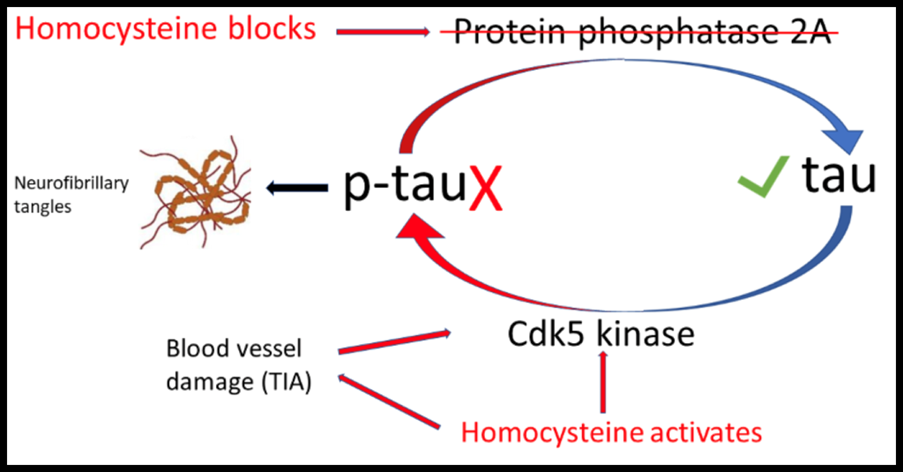
When cells become largely dysfunctional, they self-destruct. This process in neurons (brain cells) is called ‘necroptosis’. The recent discovery, made by researchers at the UK’s Dementia Research Institute at University College London (1), showed that an abnormal accumulation of a protein called tau that then becomes phosphorylated, making it tangled and dysfunctional, triggers a specific molecule called MEG3 that triggers brain cell death.

“For the first time we get a clue to how and why neurons die in Alzheimer’s disease. There’s been a lot of speculation for 30-40 years, but nobody has been able to pinpoint the mechanisms. It really provides strong evidence it’s this specific suicide pathway.” researcher Prof Bart De Strooper, from the UK’s Dementia Research Institute. told the BBC.

Even before this, too much phosphorylated-tau (abbreviated to p-tau) interferes with the cell’s energy factories (called mitochondria), potentially leading to brain fatigue. The more p-tau accumulates, the greater a person’s risk for cognitive problems and Alzheimer’s dementia. Also, those with memory decline have been shown to have relatively more p-tau to tau protein.

The critical prevention question is, then, what stops too much of the tau protein from turning into the potentially harmful p-tau and what helps restore p-tau to normal tau protein. 

—-

—-

The answer is remarkably simple – a lack of B vitamins and raised blood levels of homocysteine which is an established risk factor for memory decline, measurable in the blood. When levels of B vitamins (B6, B12 and folate) are low, blood levels of homocysteine go up. This activates one enzyme (Cdk5 kinase) that adds the bad ‘p’ to tau and blocks another enzyme (protein phosphatase A2) which removes the dangerous ‘p’ restoring normal tau protein (2)(3).  High homocysteine also damages the tiny blood vessels in the brain, leading to ‘mini strokes’ or transient ischemic attacks (TIAs), which further raise levels of p-tau (4). Homocysteine both raises levels of the dangerous p-tau and can also bind to tau (5), further generating the neurofibrillary tangles that then trigger brain cell death.

So, the simplest way to stop the formation of p-tau, and neurofibrillary tangles, and keep your brain healthy, is to keep your plasma homocysteine level below 10 mcmol/L. Half of those above 65 have a level of homocysteine higher than this. The easiest way to lower your homocysteine below 10 mcmol/L is to supplement B6, B12 and folate. 

But it’s also good to eat greens and beans that are high in folate. While B12 is only in animal foods – meat, seafood, eggs and milk. While an optimal supplemental intake for a middle-aged person might be 20mg of B6, 10 mcg of B12, and 400 mcg of folate, many older people start to dramatically lose their ability to absorb B12, the absorption of which requires stomach secretions. Antacid ‘PPI’ medication such as omeprazole accelerates this decline, promoting B12 deficiency. And, over four years of use, increases dementia risk by a third (6). Then, as studies show, you might need a lot more B12, such as 500 mcg, to get a little more into your bloodstream, and possibly more supplemental folate, in the region of 500 to 800 mcg.

This is the cheapest, safest and most logical solution to lower p-tau and prevent brain cells from committing suicide. The problem is that these nutrients, invented by nature, cannot be patented. Therefore it is not in the interest of the pharmaceutical industry to research them.

Consequently, drugs are being developed and tested that block the kinase enzyme and activate the phosphatase enzyme (7), which is exactly what the homocysteine-lowering B vitamins do. But, so far, there are no human clinical trials reporting significant benefit. 

On the other hand, trials giving these kinds of doses of B6, B12 and folic acid have shown up to a two-thirds slower rate of brain shrinkage (8) and virtually no further memory loss in those with pre-dementia (9).

—-

Thank you for reading!
Food for the Brain is a non-for-profit educational and research charity that offers a free Cognitive Function Test and assesses your Dementia Risk Index to be able to advise you on how to dementia-proof your diet and lifestyle.

By completing the Cognitive Function Test you are joining our grassroots research initiative to find out what really works for preventing cognitive decline. We share our ongoing research results with you to help you make brain-friendly choices.

Please support our research by becoming a Friend of Food for the Brain.

———

Test Your Cognitive Function Now green banner.

References

1 https://www.science.org/doi/10.1126/science.abp9556 Balasu S et al. Science
14 Sep 2023 Vol 381, Issue 6663 pp. 1176-1182 DOI: 10.1126/science.abp9556

2 Smith AD, Refsum H. Homocysteine, B Vitamins, and Cognitive Impairment. Annu Rev Nutr. 2016 Jul 17;36:211-39. doi: 10.1146/annurev-nutr-071715-050947. PMID: 27431367.

3 LiJ-G,ChuJ,BarreroC,MeraliS,Pratico`D.2014.Homocysteine exacerbatesÎČ-amyloid, tau pathology, and cognitive deficit in a mouse model of Alzheimer’s disease with plaques and tangles. Ann. Neurol. 75:851–63 

4 Shirafuji N et al Homocysteine Increases Tau Phosphorylation, Truncation and Oligomerization. Int J Mol Sci. 2018 Mar 17;19(3):891. doi: 10.3390/ijms19030891. PMID: 29562600; PMCID: PMC5877752.

5 Bossenmeyer-PouriĂ© C et al. N-homocysteinylation of tau and MAP1 is increased in autopsy specimens of Alzheimer’s disease and vascular dementia. J Pathol. 2019 Jul;248(3):291-303. doi: 10.1002/path.5254. Epub 2019 Mar 19. PMID: 307349

6 Northuis C, Bell E, Lutsey P, George KM, Gottesman RF, Mosley TH, Whitsel EA, Lakshminarayan K. Cumulative Use of Proton Pump Inhibitors and Risk of Dementia: The Atherosclerosis Risk in Communities Study. Neurology. 2023 Aug 9:10.1212/WNL.0000000000207747. doi: 10.1212/WNL.0000000000207747. Epub ahead of print. PMID: 37558503.

7 Xia, Y., Prokop, S. & Giasson, B.I. “Don’t Phos Over Tau”: recent developments in clinical biomarkers and therapies targeting tau phosphorylation in Alzheimer’s disease and other tauopathies. Mol Neurodegeneration 16, 37 (2021). https://doi.org/10.1186/s13024-021-00460-5

8 Smith AD, Refsum H. Homocysteine, B Vitamins, and Cognitive Impairment. Annu Rev Nutr. 2016 Jul 17;36:211-39. doi: 10.1146/annurev-nutr-071715-050947. PMID: 27431367; see also Jernerén F., et al. Am J Clin Nutr. 2015 Jul;102(1):215-21.

Further info

Dopamine and the Brain: Is Modern Life Hijacking Your Reward System?

Dopamine and the Brain: Is Modern Life Hijacking Your Reward System?

Hands holding a head-shaped cutout with a smiling face icon, symbolizing dopamine and its positive effects on the brain and mood.

By Patrick Holford. In this article, we explore the important relationship between dopamine and the brain.

We already know that today’s diet is low in brain-friendly fats and nutrients and high in sugar and ultra-processed food. It’s likely shrinking our brains, dumbing us down, and driving the rise in mental health problems. But diet isn’t the only thing engineering our mental decline. Tech, sugar, caffeine and alcohol are all pulling the same lever in your brain: dopamine.

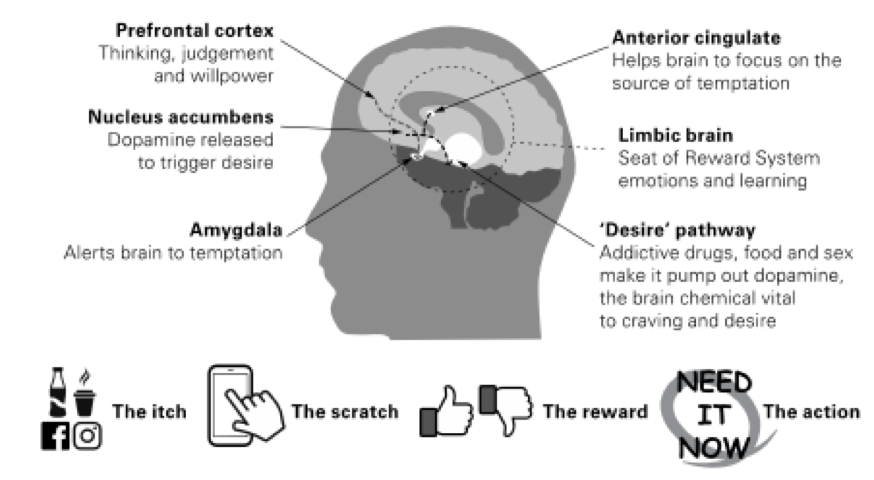
Dopamine makes us want the reward. It isn’t what makes us enjoy it. It drives the urge to check, eat, drink or scroll again. That distinction matters, because marketers behind our food, phones and drinks have got very good at triggering the itch without ever satisfying it. That’s why you can eat a whole packet of biscuits, or scroll for an hour, and still feel restless afterwards.

This was first identified in the 1930s by psychologist B.F. Skinner. He found that mice responded most frequently to a reward-associated lever when rewards arrived unpredictably. The mouse never knew which press would pay off. We’re wired the same way: if a reward feels random, and checking for it costs us nothing, we end up checking compulsively. It’s the exact mechanism behind a fruit machine, and it’s the exact mechanism behind your phone’s notification badge.

This manipulation of the brain’s stress-and-reward response is one of its oldest systems: essential for survival, but also what makes us impulsive, manipulable, and, frankly, easier to sell to. Multinational companies have learned to get us neurochemically hooked on their products. They use the language of happiness to sell us pleasure: the happy hour, the happy meal, happiness in a can. But joy and contentment are governed by serotonin, not sugar or a special offer, and chasing dopamine too hard actively undermines it. This relationship between dopamine and the brain helps explain why repeated rewards can become so difficult to resist.

The more pleasure you seek, the more unhappy you get,” says Professor Robert Lustig, author of The Hacking of the American Mind. Too much dopamine suppresses serotonin, leaving you feeling flat, restless or low once the initial hit fades. He describes this constant cycle of stimulation and reward-seeking as a kind of “brain hijack”, and one possible piece of a much bigger mental health picture. And that picture is concerning: in England, 92.6 million antidepressant items were dispensed in 2024/25 alone, up almost 4% on the year before,[1] while in the US, 19.3% of adults reported taking prescription medication for their mental health in 2024.[2]

We are the most in debt, the most obese, the most medicated and the most drugged-up adult population in human history,” Lustig argues. We’ve learned to fool our own brains. In doing so, we’ve fooled ourselves by engineering addictive foods and behaviours around us.

Sugar stimulates dopamine and endorphins in much the same way as cocaine and heroin. It triggers the reward system and, with overuse, can lead to reward deficiency, where you need more to feel the same lift.[3] Dr Candace Pert, the neuroscientist who discovered the opiate receptor, was among the first to say this outright: “I consider sugar to be a drug, a highly purified plant product that can become addictive. Relying on an artificial form of glucose, sugar, to give us a quick pick-me-up is analogous to, if not as dangerous as, shooting heroin.”[4] That was heresy when she said it. It’s now closer to conventional wisdom, but it’s still not sugar acting alone.

Neuropharmacologist Professor Paul Kenny discovered the real driver almost by accident, feeding rats different diets in his Mount Sinai lab. Rats fed only sugary food, or only fatty food, barely gained weight: they self-regulated. But rats fed a 50/50 combination of sugar and fat, the cheesecake diet, “dive head first into a slice and gorge so vigorously that it covered its fur in blobs.” They kept eating as if the “I’m full” switch had stopped working, stopped exercising, and gained significant weight within a week.[5] When Kenny then offered them an electric shock as a warning before the food arrived, rats on a normal diet fled. The cheesecake rats ignored the shock and kept eating anyway; their reward-seeking had overridden their own self-preservation.

This is the pattern behind food addiction more broadly. In some people, the reward system becomes so overstimulated that it overpowers the normal “stop eating” signal. As with alcohol and drugs, the more you have, the more you need, and dopamine receptors gradually shut down in response, a cycle researchers call dopamine resistance. People with fewer dopamine D2 receptors are, in fact, at greater genetic risk of both obesity and addiction. So if this feels like an uphill battle for you specifically, that’s not just willpower.[6,7] Counter-intuitively, some studies suggest people people with a higher weight respond less strongly to food reward, not more. This means they may need to eat more just to feel the same lift a leaner person gets from less.

No single ingredient drives this as reliably as the fat-and-sugar combination together, at high calorie density.[8,9] Think biscuits, doughnuts, chocolate, ice cream, cakes and many fast ultra processed foods. Nature simply doesn’t produce foods like this; only manufacturing does.

Sugary drinks exploit the reward system in a slightly different way. The same logic explains a can of cola. Caffeine, sugar and salt combined to make you drink more, with fructose (rather than glucose) doing extra work, because your body is slower to register “enough” from fructose, so you keep consuming past the point you’d normally stop. That’s also why fructose, often as high-fructose corn syrup, has quietly become the default sweetener in ultra-processed food.


Of everything that’s changed this century, the digital revolution has reshaped daily life most completely. It has changed not just what we do, but the sheer pace we live at. People everywhere are sleeping less, resting less, and burning out faster, and it shows up in rising work absence, anxiety and depression, especially in cities.

Phone-checking estimates vary enormously depending on who’s asking and how. A 2026 US survey put the average at 186 checks a day, down from 205 the year before, roughly once every five minutes of waking time.[10] A separate, larger commercial survey in 2022 put the figure far higher, at 352 checks a day, up from just 96 in the same survey’s 2019 run.[11] The truth is that “checks per day” is measured differently by almost everyone who studies it, so treat any single number as an illustration of scale rather than a precise fact; the honest takeaway is that the frequency has clearly risen, by a lot, in a few years.

Whatever the exact count, the direction is the same. Our phones have become almost constant companions, including at moments we’d probably rather they weren’t. A 2026 study published in JAMA Pediatrics found that over 70% of parents and nearly 70% of children used a phone or other digital device during their family’s most recent meal together.[12] What’s better established: separate UK research from January 2025 found 81% of Britons reach for their phone as one of the first things they do after waking,[13] and a May 2025 US survey found 43% of adults use their phone within ten minutes of trying to fall asleep, and 44% within ten minutes of waking, rising to around 60% among under-30s.[14]

Why does it work so well? To sell things. “I feel tremendous guilt,” Chamath Palihapitiya, Facebook’s former Vice President of User Growth, told an audience of Stanford students. “The short-term, dopamine-driven feedback loops that we have created are destroying how society works.” Every major platform is built the same way. It captures your attention, then serves ads tailored to what it has learned about you. A red notification badge, a “like” or an unexplained ping can provide a small hit of validation. Facebook has even been documented timing notifications for when a user is likely to be feeling insecure or bored, when that validation may land hardest.


There’s a genuinely useful finding buried in the research here. A study of 143 University of Pennsylvania undergraduates found that limiting social media use to 30 minutes a day significantly reduced loneliness and depression.[15] The researchers’ own conclusion was blunt: “limiting social media use to approximately 30 minutes per day may lead to significant improvement in well-being.” That’s not a difficult habit to test on yourself for two weeks.

Whether it’s a text, a “like” or a notification, the mechanism is identical to sugar: a dopamine hit, scheduled by an algorithm built to know exactly when a variable reward will keep you coming back. This constant cycle of dopamine and reward can train the brain to seek stimulation more frequently, making it harder to switch off.

All of this (sugar, phones, gambling, gaming, alcohol) routes through the same small structure: the nucleus accumbens, the brain’s dopamine-based reward hub. The more dopamine you release chasing something, the more your receptors down-regulate in response, so you need progressively more stimulation to feel the same lift. That’s the hijack. It’s not a character flaw; it’s the same ancient survival circuit being pulled by people who’ve studied exactly how to pull it. Understanding dopamine and the brain helps explain why these everyday rewards can become so compelling.

Alcohol might seem different from sugar, ultra-processed food or social media, but it taps into the same reward circuitry. The difference is that while we often reach for sugar, caffeine or our phones for stimulation, alcohol is frequently used for the opposite reason: to switch off, unwind or take the edge off stress. Yet it still acts on the brain’s reward system, which is part of what can make that evening drink so easy to repeat. Over time, tolerance can creep up: a glass a night becomes two, then half a bottle, then more.

Alcohol is a well-established neurotoxin,[16] and perhaps the most normalised drug of the lot. Smoking has become socially unacceptable in a single generation; drinking, outside of visibly heavy use, largely hasn’t. Yet alcohol remains a major cause of premature death and disability. The World Health Organization estimates that it was responsible for 2.6 million deaths worldwide in 2019, with 13% of deaths among 20 to 39-year-olds attributable to alcohol.[17] In the UK, 9,809 alcohol-specific deaths were registered in 2024, still substantially above pre-pandemic levels.[18] Despite this scale of harm, alcohol remains deeply embedded in how we socialise, celebrate and switch off. It is another example of how dopamine and the brain can shape repeated reward-seeking behaviour.

What’s less well known is that the health risk from alcohol isn’t confined to heavy drinkers. It rises with the amount consumed, even at moderate levels. The encouraging flip side is that reducing consumption reduces risk. To make that concrete, a 12.5%-ABV bottle of wine contains about 75g of alcohol. Two large glasses, roughly two-thirds of a bottle, contain about 50g, while one medium 175ml glass contains about 17.5g.

More recent research adds to the case for keeping alcohol intake low. A 2022 study of 36,678 UK Biobank participants found that consuming more than one unit of alcohol per day was associated with progressively lower grey and white matter volume in the brain.[25] Neuropsychopharmacologist Professor David Nutt has advocated lower-risk daily alcohol limits. He recommends around 15g for women and 20g for men, with alcohol-free days each week. The current UK Chief Medical Officers’ guideline remains no more than 14 units a week for both men and women. That’s about 112g of pure alcohol, spread over three or more days rather than concentrated into one or two sessions.[19] Nutt was dismissed as chair of the government’s Advisory Council on the Misuse of Drugs in 2009. He had repeatedly challenged drug harm classifications, arguing that alcohol and tobacco were more harmful than several illegal drugs, including ecstasy.[20]

The other major, socially glorified drug is caffeine, mostly as coffee, though strong tea carries a similar caffeine load to a regular cup of coffee. Like sugar, alcohol and your phone, it stimulates dopamine release and a genuine hit of reward. This connection between dopamine and the brain is part of what makes caffeine so effective at reinforcing the habit of reaching for another cup. Picture a day with no coffee, tea, chocolate or that end-of-day drink. If your instinctive reaction is “absolutely not,” there’s a real chance you have some level of dependence, anywhere from mild and manageable to something quietly running your day.

Whatever the level, the net effect of stimulant dependence is always less energy, not more. One of my clients, Bobbie, is a good example. She already ate well and took a sensible, targeted supplement programme. Her only real complaints were low morning energy and occasional headaches, and her only vice was three cups of coffee a day. She agreed, reluctantly, to drop the coffee for a month. Her energy came back, and the headaches stopped.

Stimulant Inventory | Food for the Brain

Stimulant Inventory

A simple 3‑day self-audit of caffeine, sugar, alcohol and nicotine

It’s worth auditing your own stimulant intake occasionally, honestly, not the version you’d tell your doctor. Use the table below to tick off each item as you have it, for three ordinary days. You’re not aiming for a perfect score; you’re just collecting honest, useful data on what you’re actually reaching for, and how often.

Print it and keep it by the kettle, or fill it in on screen as you go.

Item A unit equals

This tracker is for personal reflection only. It isn’t a diagnostic tool, and it doesn’t replace advice from your GP or a qualified practitioner. If you’re concerned about your drinking, smoking, or caffeine or sugar intake, please speak to one.

Like Bobbie, it’s worth auditing your own stimulant intake occasionally, honestly, not the version you’d tell your doctor. Try asking yourself:

  • Do you ever buy sweets and hide the wrappers so no one else knows you’ve eaten them?
  • Do you swoon at the dessert menu before you’ve even ordered a main course?
  • How much do you think about, or look forward to, your morning coffee, or the second cup?
  • How important is the after-work drink, really?
  • Does everyone around you actually know how much you smoke?
  • Has your “normal” coffee crept up to a double-espresso equivalent, more coffee at home than you used to make?
  • Do you still get a noticeable “kick” from caffeine, or does it now just relieve the fuzzy tiredness of not having had it yet?


None of these are shameful on their own; they’re just useful, honest data. What they point to, taken together, is a chemical dependency that quietly drains your energy and mood, and at its more extreme end, feeds into genuine mental health problems.


If you wake up feeling fine and function well without coffee, that’s a good sign. If you also sleep normally, one daily coffee isn’t necessarily a problem worth solving. The real test of your relationship with caffeine is what happens when you stop. No effect suggests little or no physical dependence, while headaches, fatigue and irritability are well-established signs of caffeine withdrawal.[21] Withdrawal can begin within 12 to 24 hours and typically peaks within one to two days. It usually resolves within several days. For some people, just 100mg of caffeine a day, roughly one cup of coffee, can cause withdrawal symptoms when stopped abruptly.[22]

It’s also worth knowing that caffeine can interfere with sleep even when consumed several hours before bed. One controlled study found that a 400mg dose taken six hours before bedtime significantly reduced sleep. The effect of a normal-strength cup of coffee is likely to be smaller.[23] If sleep is already a struggle, a simple experiment is to set a caffeine cut-off around noon and see whether sleep improves.

Both raise adrenaline, cortisol and dopamine while blocking adenosine, the brain’s natural calming chemical. That adrenaline spike gives you a lift now, but often leaves you flatter and more fatigued later, and if you respond by having more caffeine, you end up agitated by day and wired-but-tired by night. It’s another important connection between dopamine and the brain when looking at everyday stimulant use.

Tea contains caffeine, but also theanine, a calming amino acid. Theanine has been shown to support cognitive performance [24] and protect GABA receptors, effectively the brain’s adrenaline off-switch. On balance, tea comes out ahead of coffee. Green tea edges out black tea because it retains more antioxidants and polyphenols.

There’s no shortage of research on the upsides of tea, coffee and even moderate alcohol, from resveratrol in red wine to polyphenols in coffee and cacao and antioxidants in tea.

But almost any dependency generates its own psychological alibi: “it’s just a nice sauce” (sugar), “a little of what you fancy never hurt anyone,” “I’m too stressed not to have a drink,” “I need a coffee to focus.” These substances work. That’s precisely why we reach for them. Used with real intention, in the right moment, that’s not automatically a problem. A sugary drink after a genuine shock, or caffeine to get through a late deadline, are reasonable uses of a tool.

The problem comes when these habits start to stack up. Sugar, caffeine, alcohol, tech and social media can combine into a system that leaves you more tired, anxious and low than if you’d never reached for any of them.

The good news is that this is genuinely reversible. It doesn’t require an overhaul, just a few deliberate changes to how you use each of these levers.

  • Cap social media at 30 minutes a day. Build down to it if you need to. Put your phone on airplane mode at least an hour before bed and for the first hour after waking. If it has to be on, hold off on social apps for the first couple of hours of the day.

  • Limit caffeine to roughly 100mg a day. That’s about one strong coffee or two weaker cups of tea. For a second cup, reuse the same tea bag or pull a weaker filter coffee. Cut off all caffeine after noon.

  • Avoid foods with added sugar. Check labels, since it’s often hiding as high-fructose corn syrup, dates or raisins. As a rule of thumb, 5g per 100g is roughly a teaspoon-equivalent; anything above 22.5g per 100g counts as high-sugar, and 5g or below as low-sugar. Get your sugar from whole fruit where possible, and treat fruit juice as a sugar drink, not a health drink.

  • Cap alcohol at 20g a day. That’s a maximum of around two small (125ml) glasses of wine, with at least two alcohol-free days a week.

Want to understand whether food or drink has hijacked your own reward system, and what you can do about it? Watch our webinar with psychologist Dr Jen Unwin to discover how to recognise and break the cycle of food and drink addiction. You can also become a FRIEND and get support to build healthier habits that help protect your brain for the long term.

None of this replaces individual medical advice. If drinking, medication, sleep or your mood feel genuinely out of your control, talk to your GP or a qualified practitioner alongside making these changes.

References
  1. NHS Business Services Authority, Medicines Used in Mental Health, England, 2015/16 to 2024/25 (92.6 million antidepressant items dispensed in 2024/25, a 3.94% increase on 2023/24).
  2. CDC/NCHS data reported via OPEN MINDS, “19.3% of U.S. Adults Used Prescription Mental Health Medication in 2024.”
  3. P. Holford, How to Quit Without Feeling S**t, Piatkus, 2008.
  4. P. Holford, How to Quit Without Feeling S**t, Piatkus, 2008.
  5. Johnson, P.M. & Kenny, P.J., “Dopamine D2 receptors in addiction-like reward dysfunction and compulsive eating in obese rats,” Nature Neuroscience (2010), 13(5), 635-641.
  6. Kenny, P.J., “Reward Mechanisms in Obesity: New Insights and Future Directions,” Neuron, 24 Feb 2011, 69(4), 664-679.
  7. See reference 6.
  8. Avena, N.M. & Gold, M.S., “Food Addiction, Sugars, Fats and Hedonic Eating,” Addiction (2011), 106(7), 1214-1215.
  9. Lennerz, B. et al., “Effects of dietary glycemic index on brain regions related to reward and craving in men,” American Journal of Clinical Nutrition, 98(3), 641-647, Sept 2013.
  10. Reviews.org, Cell Phone Usage Stats 2026, based on a Q4 2025 survey of US adults (186 checks/day, down from 205 the prior year).
  11. Asurion, 2022 consumer research (nearly 2,000 US adults), reported via TechSpot, “Adults in the U.S. check their phones 352 times a day on average, 4x more often than in 2019.” (commercial survey research, not peer-reviewed; included to show the range of published estimates)
  12. Study reported in JAMA Pediatrics (2026), covered via news report: over 70% of parents and nearly 70% of children used a phone/digital device during their family’s last meal together. [VERIFY/UPDATE: this is a secondary news report of the JAMA Pediatrics study; locate and cite the original journal article directly before publishing.]
  13. Research reported by Advanced Television, “Research: 81% Brits reach for phone after waking,” 9 January 2025. [VERIFY/UPDATE: confirm the original research body/survey behind this news report before publishing.]
  14. YouGov, phone use survey, 23-25 May 2025 (n=1,129 US adults): 43% use their phone within 10 minutes of falling asleep; 44% within 10 minutes of waking; both figures around 60% among under-30s.
  15. University of Pennsylvania study, Journal of Social and Clinical Psychology (2018), 37(10), 751.
  16. Nutt, D. et al., “Alcohol and the Brain,” Nutrients (2021), 13, 3938.
  17. Office for National Statistics, Alcohol-specific deaths in the UK (latest edition).
  18. UK Government, Clinical guidelines for alcohol treatment (Chief Medical Officers’ low-risk drinking guideline).
  19. Juliano, L.M. & Griffiths, R.R., “A critical review of caffeine withdrawal,” Psychopharmacology (2004), 176(1), 1-29.
  20. Drake, C. et al., “Caffeine effects on sleep taken 0, 3, or 6 hours before going to bed,” Journal of Clinical Sleep Medicine (2013), 9(11), 1195-1200.
  21. Anas Sohail, A. et al., “The Cognitive-Enhancing Outcomes of Caffeine and L-theanine: A Systematic Review,” Cureus (2021), 13(12), e20828.
  22. Daviet R, Aydogan G, Jagannathan K, Spilka N, Koellinger PD, Kranzler HR, et al. Associations between alcohol consumption and gray and white matter volumes in the UK Biobank. Nat Commun. 2022;13(1):1175. doi:10.1038/s41467-022-28735-5.

——–

Food for the Brain is a non-for-profit educational and research charity that offers a free Cognitive Function Test and assesses your Dementia Risk Index to be able to advise you on how to dementia-proof your diet and lifestyle.

By completing the Cognitive Function Test you are joining our grassroots research initiative to find out what really works for preventing cognitive decline. We share our ongoing research results with you to help you make brain-friendly choices.

Please support our research by becoming a FRIEND of Food for the Brain.


Further info

Alzheimer’s drugs – like statins for your brain?

Last month’s newspaper headlines pitched the new anti-amyloid Alzheimer’s drug as a ‘turning point’. The pitch has a lot in common with the statin story.

Last month’s newspaper headlines pitched the new anti-amyloid Alzheimer’s drug as a ‘turning point’. (Read our response here) The pitch has a lot in common with the statin story.

Is high cholesterol the cause of heart disease? No. 

Do statins lower it? Yes.

Are amyloid deposits the cause of cognitive decline? No. 

Do anti-amyloid drugs lower it? Yes.

No doubt there will be a blood test soon for amyloid, just like a blood test for cholesterol, the effect of which pushed millions into taking statins.

Both statins, given to people with very high cholesterol, and anti-amyloid drugs, given to people with very high amyloid levels, do have marginal benefit but not enough to establish causation. In the case of the new Alzheimer’s drug, the benefit is considerably less than half that shown by the combination of B vitamins and omega-3. 

But, even more than statins, they come with a high risk of quite serious adverse effects – over a third in the recent trial got brain bleeding or swelling and three died. Also, the whole brain shrinkage accelerated by twenty percent compared to placebo, a fact not reported in any newspaper. Any vitamin showing such adverse effects would be immediately banned.

But the important question is: what’s causing these diseases, be it cognitive decline or heart disease? To the extent that cholesterol or amyloid is relevant, what makes them go up? Cholesterol gets damaged by sugar and oxidants and is protected by antioxidants such as vitamin C and a low-carb diet. Brain cells get damaged by homocysteine and are protected by B vitamins and omega-3.

Mind the gap 

Also, in those with cognitive decline, there’s an energy deficit in brain cells. Ironically, they can’t get the glucose they need due to ‘insulin resistance’ which is driven by eating too much sugar and ultra-processed carbs. So, the effect of too much sugar is to starve the brain of fuel which then leads to mental tiredness and cognitive decline. 

There is a way around this – and that is to give the brain an alternative fuel – ketones. 

Ketones can either be supplied as ketone salts or esters, both of which taste disgusting or made from a type of fat – principally C8 oil, which is a medium-chain triglyceride. About 7 percent of coconut oil is C8. Studies giving people with cognitive decline a C8-rich MCT oil have shown clear improvements in cognition by increasing the brain’s energy supply and production. Ripping out amyloid deposits isn’t going to fill this energy gap. Eating less carbs, reversing diabetes, which is a big risk factor for dementia, and having C8 oil will. Our podcast with Professor Stephen Cunnane, who heads the Brain Research Team at Sherbrooke University in Sherbrooke, Quebec, Canada and holds the clinical research chair in ketotherapeutics and on the Food for the Brain Scientific Advisory Board, discusses this area with Patrick Holford – listen to the podcast here.

Also, in those with cognitive decline, there’s an energy deficit in brain cells. Ironically, they can’t get the glucose they need due to ‘insulin resistance’ which is driven by eating too much sugar and ultra-processed carbs. So, the effect of too much sugar is to starve the brain of fuel which then leads to mental tiredness and cognitive decline. 

An increase in amyloid in the brain is really a consequence of the disease, not the cause. It’s part of an inflammatory reaction, much like the nodules in joints that occur from inflammation resulting in arthritis. Should you cut out the nodules or reduce inflammation? Do you eliminate the root cause or target the consequences? Inflammation is both a function of a bad diet high in ultra-processed and fried food, smoking, lack of antioxidants, omega-3 fats and vitamin C to name a few key nutrients. Having an active lifestyle is also important.

The same story exists with all major diseases. Cancer cells thrive on sugar. Do you starve them and in the process protect healthy cells, or cut or drug them out?

The big difference in approach – treat the cause or the consequences – is money.  You can’t patent nutrients, but you can patent drugs that stop you from making cholesterol or amyloid. More than $1 billion has been spent on the anti-amyloid approach and the push isn’t going to stop. Pharma needs a return on their investment. This latest drug treatment, according to the Financial Times, will be sold for $26,000 a year. Taking B vitamins, eating fish and/or supplementing omega-3, which has shown more clinical benefit and reduced the rate of brain shrinkage by over 70% with no side-effects – actually side-benefits – might cost ÂŁ100 a year. Which would you choose?

Food for the Brain is a non-for-profit educational and research charity that offers a free Cognitive Function Test and assesses your Dementia Risk Index to be able to advise you on how to dementia-proof your diet and lifestyle.

By completing the Cognitive Function Test you are joining our grassroots research initiative to find out what really works for preventing cognitive decline. We share our ongoing research results with you to help you make brain-friendly choices.

Please support our research by becoming a Friend of Food for the Brain.


Test Your Cognitive Function Now green banner.
Further info

Polyphenol Power. Keep your Brain Young with Antioxidants.

—–

By Patrick Holford

Life is a balancing act between making energy by combusting glucose or ketones with oxygen, which generates ‘oxidant’ exhaust fumes and dealing with these ‘oxidant fumes’ which harm the body.

Skin goes crinkly, age spots develop all due to oxidation. That’s what makes apples go brown, leaves change colour and iron rust. In the end, we lose, which is why all oxygen-based life forms have a finite life – and why your brain and body do inevitably age.

However, you can not only add years to your life, but also life to your years by improving your intake of antioxidants and polyphenols found in whole foods, fruits, vegetables and herbs and spices. A study in Finland and Sweden compared those with a ‘healthy’ versus ‘unhealthy’ diet in mid-life for future risk of developing Alzheimer’s disease and dementia 14 years later (1). Those who ate the healthiest diet had an 86-90% decreased risk of developing dementia and a 90-92% decreased risk of developing Alzheimer’s disease. Some of the benefit comes from low sugar diets, high in omega-3 and B vitamins and some from foods high in antioxidants and polyphenols which we will focus on here.

Your intake of these versus your intake and generation of oxidants, for example from smoking and pollution, is a major determinant of brain health. An illustration of this is the fact that both smoking and pollution exposure increase risk of cognitive decline and dementia, while vitamin C, which is the antioxidant par excellence, reduces risk.

(This is why we have developed our brand new Glutathione at home blood test – the first of its kind where you can accurately test your antioxidant status from home and support our further research into this important area. You can find out more and pre order the test here )

Oxidants vs antioxidants – moving the balance in your favour

Smoking increases risk of Alzheimer’s just as much as having low B vitamin or omega-3 status, according to the US National Institute of health’s analysis (2). Smoking is something a person can easily change. Air pollution, for many, is not. It is measured in the amount of particulate matter (PMs) and people living in polluted cities are exposed to more. A study of women living in cities in the US found that those exceeding the ‘safe’ levels (greater than 12 ÎŒg/m3) had ‘increased the risks for global cognitive decline and all-cause dementia respectively by 81% and 92%’. (3)

While you may not be able to change where you live, can you mitigate the effects of pollution? The answer is yes – in two ways. Firstly, by increasing your intake of antioxidants and also by improving your B vitamin status since the body detoxifies many toxins, including toxic metals from lead to mercury, by methylation. A similar study to the one above found that residing in locations with PM exposure above the safe level was associated with a higher risk of dementia but only among people with lower intakes of the homocysteine lowering B vitamins (B6, folate, b12) (4). ‘Vitamin C in the diet or taken as supplements might help’ concludes another.(5)

Smokers need at least twice as much vitamin C as non-smokers just to have basic vitamin C levels in their blood (serum). Men do worse than women. Even with an intake of 200mg a day they do not achieve this basic blood level, which is already two to three times the recommended dietary intake and what you’d get in four oranges (6). It is certainly wise for any smoker to supplement vitamin C, perhaps adding 50mg per cigarette – 500mg if you smoke 10 a day, although there is a good case for everyone to supplement 1,000mg a day, or 2,000mg a day if over 50.

Nature always provides a solution to help us with our evolution. It seems obvious to me we need vitamin C to combat excessive pollution.

Vitamin C is a keystone nutrient as far as swinging the antioxidant equation in your favour. It’s made in all living things, from animals to plants, including yeasts and funghi. It’s probably been the essential ‘exhaust recycler’ of all oxygen-based lifeforms. Production is even activated when oxidants are sensed. Animals also make more when stressed or exposed to viruses. Us humans, and all other primates, are one of very few species who can’t make it. The first non-vitamin C making animal to be discovered was the guinea pig. That’s how it became the ‘guinea pig’ for research since, like us, it’s dependent every second of every day on vitamin C from diet. Bats, a few birds and the teleost family of fish have also lost the ability to make vitamin C. 

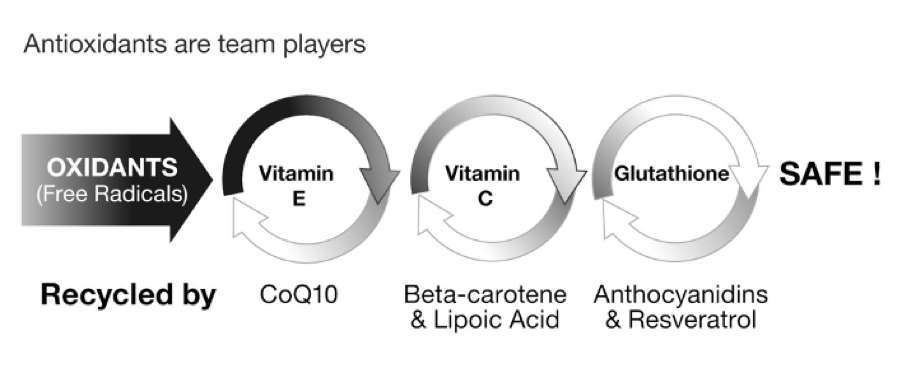
You’ll see in this figure below and from watching the film above, that vitamin C disarms water-based oxidants, such as smoke, and vitamin E disarms fat-based oxidants such as burnt fat. Then, there are other key antioxidant team players that help to neutralise the reactive oxidants that damage our brain and body.

Your best bet is probably to both eat a diet with a broad spectrum of antioxidants and also supplement them. The older you are the more you are likely to need. Key antioxidants are:

  • Vitamin A, C and E – associated with reducing Alzheimer’s risk
  • Lipoic acid (7) – protects the memory-friendly neurotransmitter acetylcholine and dampens down brain oxidation and inflammation)
  • Glutathione (8) or N-acetyl Cysteine (NAC)(9) – protects the brain and improves methylation thus having potential in dementia prevention.
  • Co-enzyme Q10 – protects the mitochondria in the brain from oxidative stress (10)
  • Resveratrol – resveratrol has antioxidant, anti-inflammatory and neuroprotective properties and prevents hippocampal brain damage. (11)

It doesn’t really make a lot of sense to supplement one without the others.

Individually, their impact on your brain health may be less than when combined. A study of 4,740 Cache County Utah elderly residents found that those supplementing both vitamin E and C cut their risk of developing Alzheimer’s by two thirds. Taking either cut risk by a quarter (12). A recent meta-analysis of all studies on factors that could prevent Alzheimer’s by one of our Scientific Advisory Board members – Professor Jin Tai Yu of Fudan University in Shanghai, China – shows that ‘either a high vitamin E or C intake showed a trend of attenuating risk by about 26%’ making these nutrients ‘grade 1’ top level prevention risk factors (13).

All those listed above – vitamin C, E, glutathione and N-acetyl cysteine, Coenzyme Q10 and resveratrol – work together and are often found in combined antioxidant supplement formulas. There are many other team player ‘cousins’ from B vitamins to minerals such as magnesium, selenium and zinc found respectively in greens, seafood, nuts and seeds.

There are two ways to increase your intake – through food and from supplements. Foods can be measured for their ‘Total Antioxidant Capacity’ or TAC for short. It’s worked out from an equation involving eight key antioxidants from vitamin A, carotenes (think carrots), lycopenes (rich in tomatoes), lutein and zeaxanthine (rich in green vegetables), vitamin E (is nuts and seeds), but most of all vitamin C (rich in berries, broccoli, peppers and other vegetables).

The higher the TAC score of your diet the lower is your risk of cognitive and memory decline. This was the finding of a recent study of 2,716 people over age 60. The researchers measured the TAC score from their diet, splitting them into the highest to lowest quarter of TAC score, and compared this to a number of memory tests. Those in the highest quarter, eating the most antioxidant-rich foods had half the risk of decreasing memory. The higher the TAC score the better their memory function was. (14)

Go Rainbow, ‘Mediterranean’ and eat five or more servings of fruit and vegetables a day

So, what do you need to eat and drink to preserve your memory and protect your brain?

Basically, eat a Mediterranean style ‘rainbow coloured’ diet. A Mediterranean diet has more fish, less meat and dairy, more olive oil, fruit and vegetables including tomatoes, legumes (beans and lentils) and whole grain cereals than a standard Western diet. It also includes small quantities of red wine. There are variations of this kind of diet, called the MIND diet and the DASH diet, but the core components are the same and as researchers drill down, we are learning what to eat and drink to keep your mind sharp and brain young, and how much.

The trick is to really start thinking of the colours you’re eating and gravitate for the strong colours.

Mustard and turmeric, for example, are strong yellows. Dijon mustard is great – no sugar. But if you like good old-fashioned English mustard go for it. Have a teaspoon every other day.

Add turmeric to almost any steam-fry, curry or soup. 

Bright oranges include butternut squash, sweet potato, carrots – but do buy organic. Translucent mass produced carrots are tasteless and have a higher water content, ie less actual carrot. 

Tomatoes are particularly good for you. Buy seeded, not seedless watermelons. Blend the flesh in a blender, perhaps with some ice. The black husk of the seeds drops to the bottom. The flesh of the seeds, full of essential nutrients, becomes part of this mouth-wateringly refreshing drink. Great for detox. Strawberries are a low GL fruit. Red, yellow, green and orange peppers are all rich in vitamin C.

Anything purple, magenta or blue is brilliant for you. From beetroots (eat them raw, grated into salads) to blueberries, blackberries and raspberries. Strawberries are particularly good. According to a study, part of the Rush Memory and Aging Project at Rush University, Chicago, having a higher intake cut Alzheimer’s risk by a quarter. They are high in both vitamin C and flavanoids, a high level of which were also confirmed to cut risk by a third. (15)

Strong greens are always beneficial – from spinach, kale, Brussels sprouts, broccoli, tender stem, watercress, rocket, asparagus, artichoke, green beans, peas, kohlrabi, and cauliflower (although not green).

Polyphenol power

Some of these foods are particularly rich in ‘polyphenols’ a group of health promoting molecules which also includes flavonoids, sometimes called flavanols.  Blue foods such as blueberries contain another polyphenol called anthocyanins. Tea, the cacao in chocolate, red wine, red onions, olives and all the blueish berries are rich sources of polyphenols. Many of these polyphenol rich foods act as antioxidants but they do much more than this. They improve circulation in the brain, lower blood pressure and dampen down inflammation which lies behind many conditions from depression to dementia. Once again, the principle of what’s good for the heart is good for the brain.

One of the first important studies was carried out in Norway more than a decade ago by Eha Nurk and Helga Refsum and colleagues in Norway. (16)(17) They found that:

Tea – the more you drink the better. The tea benefit has been confirmed more recently in a study in Singapore, with green tea being marginally better than black tea.(18) However, this benefit was not found in a UK Biobank study, which reported tea and coffee drinking to be associated with worsening cognition compared to abstainers. (19)

Chocolate – peaks at 10g, or about 3 pieces – and let’s say dark, 70 or more percent, thus with less sugar, is likely to be better, as sugar is a strong indicator of cognitive decline. If a chocolate is 80% cacao that means almost 20% will be sugar. More recent studies giving cocoa, a rich source of flavanols, have shown improved cognition, possibly by improving circulation.(20) This has been confirmed in a big COSMOS trial involving over 20,000 people given a cacao extract supplement rich in flavanols versus a placebo for five years. (21) The reduction in cardiovascular risk was even greater than that of a Mediterranean diet.

Wine – consumption reduces risk of cognitive decline up to an intake of 125ml a day, which is a small glass. A thorough study in the British Medical Journal in 2018, which had followed over 9,000 people over 23 years, showed that both abstinence and drinking more than 14 units of alcohol a week, which is equivalent to a medium glass of wine (2.3 units) every day, also increases risk (22). This is consistent with studies showing that a small glass of wine a day decreases risk of cardiovascular disease. Red wine, high in resveratrol is likely to be most beneficial.

All the above are rich in a polyphenol called epicatechin. Jeremy Spencer, an advisor to Food for the Brain, who is Professor of Nutritional Biochemistry and Medicine at the University of Reading, where he specialises in studying the health benefits of polyphenols and other compounds in plants, has shown that these polyphenol rich plants improve blood brain flow in specific regions of the brain that improve attention, decision-making, impulse control and emotion, thus improving overall ‘executive’ function (23). What’s more, the level of flavanols you have in your bloodstream predicts your memory. The biggest impact of increasing flavanols, was seen in the COSMOS study, in those in the lowest third for dietary intake specifically seeing improvement in aspects of memory that link to the hippocampus, that central area of the brain that degenerates in Alzheimer’s (24).

The Best Fruit and Veg to Eat for Your Brain

Which vegetables pack the biggest punch as far as polyphenols and antioxidants are concerned and are also lower in sugar or low GL?

Taking all these factors into account – the GL, antioxidants and polyphenols these are the dozen best rated fruit and veg. But do not think of this list as finite as more and more research reveals the amazing healing power of nature’s fruits and vegetables.

 Lowest GLAntioxidantPolyphenol
Cacao*********
Olives*********
Blueberries*********
Kale********
Blackcurrants*******
Strawberries********
Broccoli********
Artichokes********
Cabbage (red)********
Asparagus*******
Onions (red)******
Avocado*******
Apples******
Beetroot*****
Cherries******
The optimal intake for brain protection is 5 to 6 servings of fruit and veg a day

Half a plate of a main meal counts as two. A handful of berries would count as one. So, if half your plate for two main meals is vegetables, and you had some berries with your breakfast and another piece of fresh fruit or perhaps some broccoli heads or tenderstem or carrots dipped in hummus as a snack, or half an avocado with some high polyphenol olive oil, you’ve achieved six servings.

The first step is to eat ‘whole’ foods, and especially fresh plant foods with an emphasis on those listed above that are more likely to be high in antioxidants and polyphenols. (Also see the Alzheimers Prevention Diet.) There are some nutrients such as vitamin C for which just eating whole foods doesn’t guarantee you are achieving an optimal intake and are well worth supplementing.

My advice is to supplement 500mg to 1,000mg of vitamin C twice a day and also take an antioxidant formula or antioxidant rich multivitamin containing vitamins A, C, E, lipoic acid, glutathione or NAC, resveratrol and CoQ10.

Summary
  • Support our research and be one of the first to test your antioxidant status with the Glutathione Index test. Pre order here
  • Take the FREE Cognitive Function Test here.
  • Want to get recipes to help you increase your antioxidant intake? Pre order the Upgrade Your Brain Cook App here

Food for the Brain is a non-for-profit educational and research charity that offers a free Cognitive Function Test and assesses your Dementia Risk Index to be able to advise you on how to dementia-proof your diet and lifestyle.

By completing the Cognitive Function Test you are joining our grassroots research initiative to find out what really works for preventing cognitive decline. We share our ongoing research results with you to help you make brain-friendly choices.

Please support our research by becoming a Friend of Food for the Brain.


Test Your Cognitive Function Now green banner.

References

  1. Eskelinen MH, Ngandu T, Tuomilehto J, Soininen H, Kivipelto M. Midlife healthy-diet index and late-life dementia and Alzheimer’s disease. Dement Geriatr Cogn Dis Extra. 2011 Jan;1(1):103-12. doi: 10.1159/000327518. Epub 2011 Apr 27. PMID: 22163237; PMCID: PMC3199886.
  2. Beydoun MA, Beydoun HA, Gamaldo AA, Teel A, Zonderman AB, Wang Y. Epidemiologic studies of modifiable factors associated with cognition and dementia: systematic review and meta-analysis. BMC Public Health. 2014 Jun 24;14:643. doi: 10.1186/1471-2458-14-643. PMID: 24962204; PMCID: PMC4099157.
  3. Cacciottolo M, Wang X, Driscoll I, Woodward N, Saffari A, Reyes J, Serre ML, Vizuete W, Sioutas C, Morgan TE, Gatz M, Chui HC, Shumaker SA, Resnick SM, Espeland MA, Finch CE, Chen JC. Particulate air pollutants, APOE alleles and their contributions to cognitive impairment in older women and to amyloidogenesis in experimental models. Transl Psychiatry. 2017 Jan 31;7(1):e1022. doi: 10.1038/tp.2016.280. PMID: 28140404; PMCID: PMC5299391.
  4.  Chen C, Whitsel EA, Espeland MA, Snetselaar L, Hayden KM, Lamichhane AP, Serre ML, Vizuete W, Kaufman JD, Wang X, Chui HC, D’Alton ME, Chen JC, Kahe K. B vitamin intakes modify the association between particulate air pollutants and incidence of all-cause dementia: Findings from the Women’s Health Initiative Memory Study. Alzheimers Dement. 2022 Nov;18(11):2188-2198. doi: 10.1002/alz.12515. Epub 2022 Feb 1. PMID: 35103387; PMCID: PMC9339592.
  5.  Yu JT, Xu W, Tan CC, Andrieu S, Suckling J, Evangelou E, Pan A, Zhang C, Jia J, Feng L, Kua EH, Wang YJ, Wang HF, Tan MS, Li JQ, Hou XH, Wan Y, Tan L, Mok V, Tan L, Dong Q, Touchon J, Gauthier S, Aisen PS, Vellas B. Evidence-based prevention of Alzheimer’s disease: systematic review and meta-analysis of 243 observational prospective studies and 153 randomised controlled trials. J Neurol Neurosurg Psychiatry. 2020 Nov;91(11):1201-1209. doi: 10.1136/jnnp-2019-321913. Epub 2020 Jul 20. PMID: 32690803; PMCID: PMC7569385.
  6.  Carr AC, Lykkesfeldt J. Factors Affecting the Vitamin C Dose-Concentration Relationship: Implications for Global Vitamin C Dietary Recommendations. Nutrients. 2023 Mar 29;15(7):1657. doi: 10.3390/nu15071657. PMID: 37049497; PMCID: PMC10096887.
  7.  A. Maczurek, et al., ‘Lipoic acid as an anti-inflammatory and neuroprotective treatment for Alzheimer’s disease’, Advance Drug Delivery Review, 2008;60(13-14):1463-70 
  8.  Pocernich CB, Butterfield DA. Elevation of glutathione as a therapeutic strategy in Alzheimer disease. Biochim Biophys Acta. 2012 May;1822(5):625-30. doi: 10.1016/j.bbadis.2011.10.003. Epub 2011 Oct 12. PMID: 22015471; PMCID: PMC3277671.
  9.  Hara Y, McKeehan N, Dacks PA, Fillit HM. Evaluation of the Neuroprotective Potential of N-Acetylcysteine for Prevention and Treatment of Cognitive Aging and Dementia. J Prev Alzheimers Dis. 2017;4(3):201-206. doi: 10.14283/jpad.2017.22. PMID: 29182711.
  10.  Yang X, Zhang Y, Xu H, Luo X, Yu J, Liu J, Chang RC. Neuroprotection of Coenzyme Q10 in Neurodegenerative Diseases. Curr Top Med Chem. 2016;16(8):858-66. doi: 10.2174/1568026615666150827095252. PMID: 26311425.
  11.  Gomes BAQ, Silva JPB, Romeiro CFR, Dos Santos SM, Rodrigues CA, Gonçalves PR, Sakai JT, Mendes PFS, Varela ELP, Monteiro MC. Neuroprotective Mechanisms of Resveratrol in Alzheimer’s Disease: Role of SIRT1. Oxid Med Cell Longev. 2018 Oct 30;2018:8152373. doi: 10.1155/2018/8152373. PMID: 30510627; PMCID: PMC6232815.
  12.  Basambombo LL, Carmichael PH, CĂŽtĂ© S, Laurin D. Use of Vitamin E and C Supplements for the Prevention of Cognitive Decline. Ann Pharmacother. 2017 Feb;51(2):118-124. doi: 10.1177/1060028016673072. Epub 2016 Oct 5. PMID: 27708183.
  13.  See reference 5.
  14.  Peng, M., Liu, Y., Jia, X. et al. Dietary Total Antioxidant Capacity and Cognitive Function in Older Adults in the United States: The NHANES 2011–2014. J Nutr Health Aging 27, 479–486 (2023). https://doi.org/10.1007/s12603-023-1934-9
  15.  Agarwal P, Holland TM, Wang Y, Bennett DA, Morris MC. Association of Strawberries and Anthocyanidin Intake with Alzheimer’s Dementia Risk. Nutrients. 2019 Dec 14;11(12):3060. doi: 10.3390/nu11123060. PMID: 31847371; PMCID: PMC6950087.
  16.  Nurk E, Refsum H, Drevon CA, Tell GS, Nygaard HA, Engedal K, Smith AD. Intake of flavonoid-rich wine, tea, and chocolate by elderly men and women is associated with better cognitive test performance. J Nutr. 2009 Jan;139(1):120-7. doi: 10.3945/jn.108.095182. Epub 2008 Dec 3. PMID: 19056649.
  17.  Nurk E, Refsum H, Drevon CA, Tell GS, Nygaard HA, Engedal K, Smith AD. Cognitive performance among the elderly in relation to the intake of plant foods. The Hordaland Health Study. Br J Nutr. 2010 Oct;104(8):1190-201. doi: 10.1017/S0007114510001807. Epub 2010 Jun 16. PMID: 20550741.
  18.  Feng L, Chong MS, Lim WS, Lee TS, Kua EH, Ng TP. Tea for Alzheimer Prevention. J Prev Alzheimers Dis. 2015;2(2):136-141. doi: 10.14283/jpad.2015.57. PMID: 29231231.
  19.  Cornelis MC, Weintraub S, Morris MC. Caffeinated Coffee and Tea Consumption, Genetic Variation and Cognitive Function in the UK Biobank. J Nutr. 2020 Aug 1;150(8):2164-2174. doi: 10.1093/jn/nxaa147. PMID: 32495843; PMCID: PMC7398783.
  20.  Lamport DJ, Pal D, Moutsiana C, Field DT, Williams CM, Spencer JP, Butler LT. The effect of flavanol-rich cocoa on cerebral perfusion in healthy older adults during conscious resting state: a placebo controlled, crossover, acute trial. Psychopharmacology (Berl). 2015 Sep;232(17):3227-34. doi: 10.1007/s00213-015-3972-4. Epub 2015 Jun 7. PMID: 26047963; PMCID: PMC4534492.
  21.  Sesso HD, Manson JE, Aragaki AK, Rist PM, Johnson LG, Friedenberg G, Copeland T, Clar A, Mora S, Moorthy MV, Sarkissian A, Carrick WR, Anderson GL; COSMOS Research Group. Effect of cocoa flavanol supplementation for the prevention of cardiovascular disease events: the COcoa Supplement and Multivitamin Outcomes Study (COSMOS) randomized clinical trial. Am J Clin Nutr. 2022 Jun 7;115(6):1490-1500. doi: 10.1093/ajcn/nqac055. PMID: 35294962; PMCID: PMC9170467.
  22.  Sabia S, Fayosse A, Dumurgier J, Dugravot A, Akbaraly T, Britton A, KivimĂ€ki M, Singh-Manoux A. Alcohol consumption and risk of dementia: 23 year follow-up of Whitehall II cohort study. BMJ. 2018 Aug 1;362:k2927. doi: 10.1136/bmj.k2927. PMID: 30068508; PMCID: PMC6066998.
  23.  See Professor Peremy Spencer’s presentation at the Alzheimer’s is preventable masterclass (2022); also see Spencer JP. The impact of fruit flavonoids on memory and cognition. Br J Nutr. 2010 Oct;104 Suppl 3:S40-7. doi: 10.1017/S0007114510003934. PMID: 20955649.
  24.  Brickman AM, Yeung LK, Alschuler DM, Ottaviani JI, Kuhnle GGC, Sloan RP, Luttmann-Gibson H, Copeland T, Schroeter H, Sesso HD, Manson JE, Wall M, Small SA. Dietary flavanols restore hippocampal-dependent memory in older adults with lower diet quality and lower habitual flavanol consumption. Proc Natl Acad Sci U S A. 2023 Jun 6;120(23):e2216932120. doi: 10.1073/pnas.2216932120. Epub 2023 May 30. PMID: 37252983; PMCID: PMC10265949.
Further info

How the Guardian halves impact of prevention – and what steps make the biggest difference.

Friday’s Guardian article on ‘I refuse to get old’ about how readers strive to keep dementia at bay, on the face of it, seems like a good message. Most cases given focussing on people increasing physical and mental activity, as an active lifestyle is certainly a positive step towards prevention. But these two prevention steps reduce risk by less than B vitamins, omega-3 and reducing sugar and carbs.

The first error is the extent to which dementia can be prevented. The article says by 40%, which is based on the inaccurate Lancet Commission’s Livingston report which, despite being sent all the evidence, doesn’t even mention B vitamins and homocysteine, which is the single most important prevention step. There’s also only one mention of omega-3 from a redundant study so this risk factor is also ignored to arrive at the ‘40% preventable’ figure.

80% of dementia cases could be prevented, not 40%

The latest assessment of how much can be prevented, based on UK Biobank data is “47%–73% of dementia cases could be prevented.” This was published last week in Nature and even this is an underestimate because, while including B vitamins, it excludes the impact of omega-3 and seafood. If that modifiable risk factor were included it is likely that around 80% of dementia cases could be prevented. This would mean that the Guardian is halving the impact of prevention.

The next error is no-one quoted in the article mentions diet, let alone B vitamins or omega-3, except for Professor David Smith. He rightly says: ‘The large leap forward in what we know about preventability has informed his own retirement lifestyle: he walks for half an hour a day, spends at least 15 minutes on an exercise bike, drinks alcohol sparingly, and follows a Mediterranean diet.

Having led a clinical trial into the benefits of B vitamins in people with mild cognitive impairment – a memory-loss condition that increases the chance of those who have it developing dementia – Smith takes 500mcg of vitamin B12 daily and fish oil with Omega 3. Nutrition, he believes, is not given enough prominence when we talk about prevention.’

When we calculated the attributable risk for each risk factor for our online Dementia Risk Index questionnaire each domain scores as follows, adding up to 100%:

B Vitamins           18%

Brain Fats             17%

Glycemic Load     15%

Active Body          15%

Active Mind          10% 

Sleep & Calm       10%

Antioxidants         10%

Gut  Health          5%

So, the biggest impact you can have on your risk is to supplement B vitamins, especially B12, and omega-3 fish oils, as David Smith does. But the Guardian article then downplays the role of supplements with this statement ‘Alzheimer’s Research UK does not recommend any supplements in particular, but says “there is no harm in people taking a supplement to reduce the risk of deficiency”.

B12 Reference Ranges are wrong

This is not only wrong because brain shrinkage occurs well within the ‘normal’ range of either B12 dietary intake or blood tests, but also ARUK, who largely promotes drug-based solutions, happened to know what they are saying is wrong because they funded, back in 2010, a top level, randomised placebo controlled trial on B vitamins that, virtually stopped cognitive decline and reduced brain shrinkage by 52% – in the group with higher omega 3 , by 73% – that is the most effective disease modifying treatment to date! In fact, David Smith and I have written to ARUK to stop making this inaccurate statement. Here’s why it’s wrong:

The reason so many people are low in B12 is less to do with dietary intake and more due to malabsorption which often becomes worse with age, due to lack of stomach acid secretions which are needed to absorb B12. So relying only of analysing what someone eats (meat, fish, eggs, dairy being the only sources of B12) doesn’t prove sufficiency. Note that David Smith says he supplements 500mcg of B12 daily, while the basic ‘Nutrient Reference Value’ (NRV) that you’ll see on the back of a vitamin supplement is 2.5mcg. So, why does he take two hundred times this amount? Because you cannot rely on your dietary intake to confirm sufficiency. Also, there is growing body of evidence from well designed studies showing that supplements giving nutrients at levels beyond the basic ‘recommended intakes’ delay, eliminate or ameliorate symptoms of dementia.

So, what about blood tests? One UK study reports that 2 in five people over 61 have insufficient levels of B12 to prevent accelerated brain shrinkage. Serum B12 is the ‘standard’ test used by doctors. The UK reference range of above 180pg/ml being sufficient (and the US lower level of 200pg/ml) is out of date and in need of revision. In Europe and Japan anything below 500pg/ml is considered deficient. Accelerated brain shrinkage due to a lack of B12 does happen with B12 levels below 500pg/ml.

In conclusion, while it is good to recommend a physically and intellectually lifestyle, ignoring the need to supplement B vitamins, especially B12, eat fish and supplement omega-3, and cut your intake of carbs and sugar, is not doing anyone any favours.


Food for the Brain is a non-for-profit educational and research charity that offers a free Cognitive Function Test and assesses your Dementia Risk Index to be able to advise you on how to dementia-proof your diet and lifestyle.

By completing the Cognitive Function Test you are joining our grassroots research initiative to find out what really works for preventing cognitive decline. We share our ongoing research results with you to help you make brain-friendly choices.

Please support our research by becoming a Friend of Food for the Brain.


Test Your Cognitive Function Now green banner.
Further info

Coffee – is it good for your brain?

Is coffee good or bad for you?

On the one hand is contains polyphenols that act like antioxidants, but on the other hand even two coffees a day raises markers of inflammation, including homocysteine which is an established indicator of dementia risk.

A major study involving almost 400,000 people in the UK’S Biobank shows that those having 6+ coffees a day, or three double expressos, have more than double the risk of dementia compared to 1 to 2 coffees a day. They also had increased brain shrinkage in the hippocampal region associated with Alzheimer’s. Why? Two studies in the Netherlands found that two coffees a day raise homocysteine, a toxic amino acid, by about 10%, while caffeine tablets without coffee increased it by 5%. It appears that it is mainly the caffeine content that is increasing risk. However, those having none, or only decaf, had very slightly higher, but not significant risk compared to those having 1 or 2 coffees.  Much like alcohol especially red wine, a little may offer protection, a lot of increases risk.

Another study, again using UK Bio Bank data, found significant dose-dependent association beyond three cups/d coffee with dementia risk if those with degenerative nervous system disorders not related to dementia were removed from the analysis, while moderate-to-high tea intake was negatively associated with incident dementia therefore reducing risk.

Coffee does, however, have some plus sides. Four meta-analyses examining liver cancer, report a risk reduction of 38% in those who drank 2-3 cups of coffee per day and 41% in those who drank more than 4 cups.  Drinking six cups of coffee a day, while bad for the brain, was shown to halve the risk of fatal prostate cancer, according to a study published in the Journal of the National Cancer Institute with each cup of coffee reducing overall prostate cancer risk by about 5%.

What’s the protective factor in coffee?

Exactly why coffee has these protective effects is a subject of much debate. While there is evidence that caffeine itself has benefits tea,  which also contain caffeine, doesn’t show the same protective benefit for cancer. Paraxanthine, the main primary metabolite of caffeine, has been shown to slow down pre-cancerous liver cell growth, and in turn the progression of liver fibrosis, alcoholic cirrhosis and liver cancer. Chlorogenic acid, may reduce oxidative stress in the liver, in turn reducing the risk of fibrosis and development of cancers. There are about 1,000 different compounds in coffee.

Both caffeine and chlorogenic acid, however, raise homocysteine, which is a concern especially regarding Alzheimer’s risk.

Coffee may help protect against diabetes and weight gain. 

Two studies have shown that coffee doesn’t cause the release of insulin, and may even reduce insulin resistance. Interestingly, this effect is true for both coffee and decaf coffee, suggesting that it is isn’t the caffeine that reduces insulin resistance. In fact, decaf may even help keep insulin producing cells healthy. 

Before you hit the coffee, there’s something you need to know. Rather than reducing insulin resistance, if you combine coffee with a carb snack such as a croissant or a muffin, it has the opposite effect. To explore the consequence of this much loved combination researchers at Canada’s University of Guelph gave volunteers a carbohydrate snack, such as a croissant, muffin or toast, together with either a decaf or coffee. Those having the coffee/carb combo had triple the increase in blood sugar levels and insulin sensitivity, the hormone that controls blood sugar levels, was almost halved.

Caffeine, hence coffee, is an addictive stimulant. If, for example, you can’t wake up without it, then you have a level of dependence probably due to ‘down-regulation’ of adrenalin receptors. In other words you’ve become adrenalin resistant in much the same way that we can become insulin resistant. Coffee can, in this sense, be an energy depleter, although the immediate effect is energy increase. I liken this to a wave hitting the shore. The latent energy we have is in the wave. As it crashes into the shore there’s an energy surge or release occurs, as it also does with caffeine, but the after-effect is energy depletion.

How coffee is decaffeinated makes a difference to both the taste and what’s left behind. Almost all decaf uses a chemical solvent. The exception are those that use the “swiss water” process which is used almost exclusively used for decaffeination of organic coffee. This is probably the best to choose if you like the taste of coffee but not the buzz. 

If you want to know more about how you can support your brain, make sure you complete our free Cognitive Function Test here to give you your plan of action on how you can upgrade your own brain in the next 6 months.

Help support Food for the Brain

Food for the Brain is a non-for-profit educational and research charity that offers a free Cognitive Function Test and assesses your Dementia Risk Index to be able to advise you on how to dementia-proof your diet and lifestyle.

By completing the Cognitive Function Test you are joining our grassroots research initiative to find out what really works for preventing cognitive decline. We share our ongoing research results with you to help you make brain-friendly choices.

Please support our research by becoming a Friend of Food for the Brain.

Food for the Brain is a non-for-profit educational and research charity that offers a free Cognitive Function Test and assesses your Dementia Risk Index to be able to advise you on how to dementia-proof your diet and lifestyle.

By completing the Cognitive Function Test you are joining our grassroots research initiative to find out what really works for preventing cognitive decline. We share our ongoing research results with you to help you make brain-friendly choices.

Please support our research by becoming a Friend of Food for the Brain.

References

 1 Zhang Y, Yang H, Li S, Li WD, Wang Y. Consumption of coffee and tea and risk of developing stroke, dementia, and poststroke dementia: A cohort study in the UK Biobank. PLoS Med. 2021 Nov 16;18(11):e1003830. doi: 10.1371/journal.pmed.1003830. PMID: 34784347; PMCID: PMC8594796.

2 Schaefer SM, Kaiser A, Behrendt I, Eichner G, Fasshauer M. Association of Alcohol Types, Coffee, and Tea Intake with Risk of Dementia: Prospective Cohort Study of UK Biobank Participants. Brain Sciences. 2022; 12(3):360. https://doi.org/10.3390/brainsci12030360

3  Grubben MJ, Boers GH, Blom HJ, Broekhuizen R, de Jong R, van Rijt L, de Ruijter E, Swinkels DW, Nagengast FM, Katan MB. Unfiltered coffee increases plasma homocysteine concentrations in healthy volunteers: a randomized trial. Am J Clin Nutr. 2000 Feb;71(2):480-4. doi: 10.1093/ajcn/71.2.480. PMID: 10648261; P. Verhoef et al., ‘Contribution of caffeine to the homocysteine-raising effect of coffee: a randomized controlled trial in humans’, American Journal of Clinical Nutrition, 2002 Dec; 76(6): 1244-1248; J. Geleijnse, ‘Habitual coffee consumption and blood pressure: An epidemiological perspective’, Vascular Health Risk Management, 2008 Oct; 4(5): 963–970; 

4 Wilson KM et al., ‘Coffee consumption and prostate cancer risk and progression in the Health Professionals Follow-up Study.’J Natl Cancer Inst. 2011 Jun 8;103(11):876-84.

 5 T. Wu et al., ‘Caffeinated coffee, decaffeinated coffee, and caffeine in relation to plasma C-peptide levels, a marker of insulin secretion, in U.S. women’, Diabetes Care, 2005 Jun; 28(6):1390-6; see also R. C. Loopstra-Masters et al., ‘Associations between the intake of caffeinated and decaffeinated coffee and measures of insulin sensitivity and beta cell function’, Diabetologia, 2010 Nov, [Epub ahead of print]
University of Guelph

6 Moisey LL, Kacker S, Bickerton AC, Robinson LE, Graham TE. Caffeinated coffee consumption impairs blood glucose homeostasis in response to high and low glycemic index meals in healthy men. Am J Clin Nutr. 2008 May;87(5):1254-61. doi: 10.1093/ajcn/87.5.1254. PMID: 18469247.

Test Your Cognitive Function Now green banner.

Further info

New Alzheimer’s Drug Accelerates Rate of Brain Shrinkage by 20%

Don’t be fooled by the rhetoric promoting the new Alzheimer’s anti-amyloid drug. The results – increased brain shrinkage, a third getting brain bleeding or swelling and questionable clinically meaningful benefit – are not good.

However, reading this week’s headlines claiming a ‘turning point’ in the fight against Alzheimer’s you’d be mistaken in thinking something new has occurred since Eli Lilly’s press release regarding their new drug, donanemab, a month ago. What stimulated this week’s front pages was publication of the actual study in the Journal of the American Medical Association [1] giving more details of the results. This was reported positively in every major newspaper. Yet not one reported the fact that the drug treatment accelerated the rate of brain shrinkage by over 20% compared to placebo. This is clearly stated in the paper as “At 76 weeks, MRI [scans] showed a greater decrease in whole brain volume”.

This is consistent with a meta-analysis of all anti-amyloid treatments including donanemab, in the journal Neurology [2] earlier this year, which concluded that “Mild cognitively impaired participants treated with anti-amyloid drugs were projected to have a material regression toward brain volumes typical of Alzheimer dementia approximately 8 months earlier than if they were untreated.”

In stark contrast, treatment with homocysteine-lowering B vitamins, given to those with sufficient omega-3, ‘the rate of atrophy was significantly slowed by circa 70%’.[3] B vitamins and omega-3 are but two out of eight established prevention steps you can take yourself.

Alzheimer’s is characterised by brain shrinkage, and particularly in the central ‘hippocampus’ area of the brain. The new drug treatment was not associated with shrinkage of the hippocampus, just the whole brain. In fact, there was a very small reduction of about one per cent in shrinkage in this area of the brain compared to the placebo. In the B vitamin study there was an 80% reduction in shrinkage in the medial temporal lobe. While it is theoretically possible that, having selected people with lots of plaques, then targeting them with an aggressive drug, the brain may have shrunk as part of the process of amyloid destruction, this is not yet known and therefore this increased brain shrinkage is worrying

The other main measure of Alzheimer’s and dementia, made by a health professional, include interviewing the patient’s carer or partner – thus potentially subject to ‘hopeful’ bias – is the Clinical Dementia Rating (CDR).

The new drug treatment results do show a statistically significant improvement, showing just over half a point  (0.67) less worsening, compared to placebo, on the 18 point CDR scale. But is this small change meaningful? A study in the Lancet suggests that minimum changes of 0.98 in mild cognitive impairment and 1.63 in mild Alzheimer’s disease are meaningful. [4] This study was on those with early Alzheimer’s.

In contrast, a trial giving omega-3 fish oils to those with adequate B vitamin status, showed three times this beneficial clinical effect [5]. In another, giving homocysteine lowering B vitamins to those with adequate omega-3, almost two thirds of the trial participants ended the trial with an overall Clinical Dementia Rating of zero [6]. This means they were no longer diagnostically labelled as having cognitive impairment. In other words, not less worse, but actually better. 

Serious adverse effects including deaths

More details in the recent donanemab paper were given on the adverse effects and trial deaths. ‘Treatment-emergent adverse events’ were reported by 759 of 853 participants (89%) receiving donanemab’ and ‘Either amyloid-related imaging abnormalities of edema/effusion [swelling] or microhaemorrhages [bleeding] occurred in 314 participants (37%) receiving donanemab’. Also, in the donanemab group, ‘3 participants with serious amyloid-related imaging abnormalities subsequently died.’ This means that more than a third had brain bleeding or swelling and 1 in 287 died. This compares to no adverse events in the B vitamin and omega-3 trials, or other prevention approaches. If any nutritional supplement had anything like these adverse effects it would be banned, not licenced.

According to the Financial Times, this new treatment will cost $26,000 a year (in addition to medical costs including numerous scans). In the UK this would be paid by the taxpayer. In contrast, taking homocysteine-lowering B vitamins, eating fish and/or having fish oil supplements would cost perhaps 20p or cents a day.

So, the question is would you rather take a treatment that markedly slows both whole brain and medial temporal lobe shrinkage than a treatment that is associated with a greater loss of brain volume, a high risk of adverse effects and costs.

The big push is now on to get approval of the UK’s NICE  (National Institute for Health & Care Excellence) and the drug licensed in Europe. NICE have previously refused to consider the evidence for homocysteine-lowering B vitamins and omega-3, which is now overwhelmingly positive, when both these nutrients are combined.

That is why we, at Food for the Brain, aim to make sure as many people as possible know that the real ‘turning point’ for Alzheimer’s is prevention through diet, nutrition and lifestyle improvements, not expensive drugs with dangerous side-effects.

Please take the Cognitive Function Test yourself at foodforthebrain.org, and encourage all you know to do the same. We appreciate your support by becoming a Friend at foodforthebrain.org/friend. 

Test Your Cognitive Function Now green banner.

REFERENCES
Further info

VIDEO: What’s Driving Alzheimer’s with Patrick Holford

Is there a better way to do healthcare?

That was the focus of a conference of the World Council for Health and, given 10 minutes, our founder Patrick Holford, focussed on getting across why Alzheimer’s is a preventable disease. With eight core drivers, and homed in on two – B vitamins and omega-3 – and why one can’t work without the other, to show that we already know how to prevent age-related cognitive decline far better, and safer, than any drug treatment on offer.

This 10 minutes video is well worth a watch and will inspire you that there is so much you can do to upgrade your brain and prevent Alzheimer’s.

——-

——-

Have you taken the Cognitive Function Test yet? Click the link below to do it today.
Test Your Cognitive Function Now green banner.

Further info

Choline crisis in the UK?

This was the title of a report in the British Medical Journal (1), pointing out that choline is an essential nutrient, much like omega-3 fats, that is vital for health and especially the brain, but not sufficiently supplied in many people’s diets, and especially those who are largely vegan.

While the body can make a little, it does not make enough and thus choline is being reclassified as an essential nutrient with an adequate intake defined as between 400mg and 520mg a day, the latter for pregnant and breast-feeding women. But these levels don’t relate to brain function. They relate to the EFSA allowed claims of “choline is needed for lipids metabolism”, “maintaining healthy liver functioning” and “reduction in homocysteine levels”. You need choline to do the right thing with cholesterol in the liver. 

But even more important is choline’s role in building and maintaining a healthy brain. A pregnant woman’s intake defines the cognitive abilities of their child. Twenty years ago we knew that pregnant rats fed choline half way through their pregnancy have more connections between brain cells, plus improved learning ability and better memory recall. Now we know it’s true for babies. In fact, a lack of choline can lead to a shrinking of a woman’s brain as the foetus robs their brain to build its own – a case of ‘Mummy I shrank your brain’. Babies are born with blood choline levels three times higher than their mother, illustrating how vital this nutrient is for building neuronal connections, which newborn babies do at a rate of up to a million new connections a second! An optimal intake for brain function is likely to be a lot higher than the 400mg recommended for adults.

Brain cells are made of a membrane containing choline (and other phospholipids) attached to the omega-3 fat DHA. Without choline the omega-3 doesn’t work. The attaching of the two depends on methylation, a process that is dependent on B vitamins, especially B12, folate and B6. Choline helps methylation and healthy methylation, indicated by low homocysteine, helps synthesize choline.

The reason the BMJ says ‘crisis’ is that more people are eating a plant-based diet and shunning eggs, fish and meat, which are the best sources of, not only choline, but also B12. There’s a tiny bit of choline in broccoli and in nuts, but not enough. An egg provides around 120mg, a 50g beef or salmon steak around 50mg. The same amount of almonds or broccoli is about 25mg. Cow’s milk has a little, but a fraction of that found in human milk. Beef liver is the richest source.

Twenty years ago I found the evidence sufficiently compelling to recommend eating an egg a day, three servings of fish and one of meat (or another portion of fish) a week, a handful of nuts, plus daily supplementation of circa 100mg, which is what I do in my ‘brain food’ formula. If you also ate a serving of broccoli a day, you’d be achieving something like 2,100mg a week, or 300mg a day – still short of daily requirements.

If you don’t eat eggs, fish or meat and don’t supplement there’s no way of getting even close. That’s why it’s time to add choline, along with omega-3 DHA and B12, to the list of nutrients that must be supplemented by those eating a vegan diet. Lecithin granules and capsules are the richest vegan source of choline, derived from soya. It will not work in building the brain, without a source of DHA which can be derived, in supplements, from algae or seaweed. 

If you want more strategies on what to eat and do to support ad upgrade your brain make sure you complete the Cognitive Function Test below to get your plan of action for improving your brain over the next 6 months.
Test Your Cognitive Function Now green banner.

Reference:

Further info