Evidence & Risk Archives - Food for the Brain

because prevention is better than cure.

because prevention is better than cure.

Mini Cart 0

Your cart is empty.

Mini Cart 0

Your cart is empty.

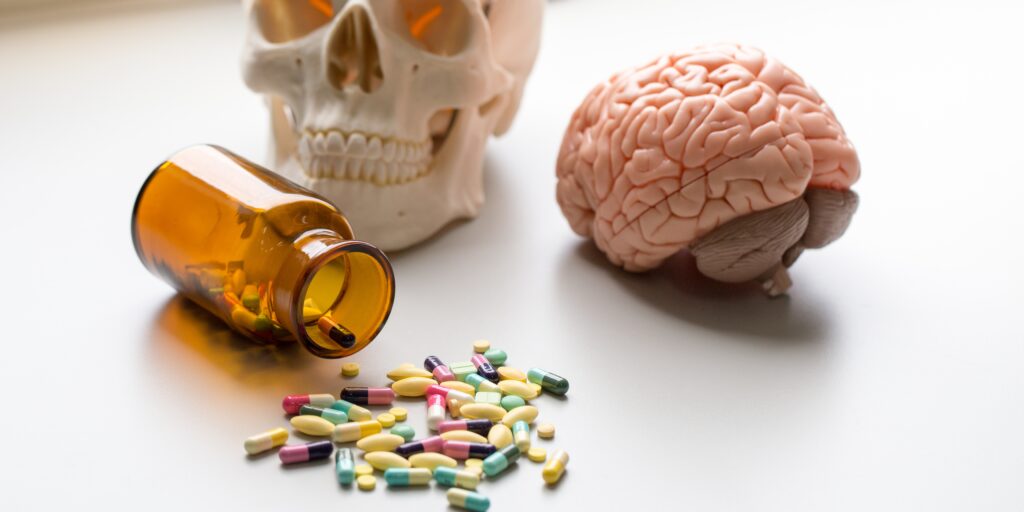
Psychiatric Drugs Are The Third Leading Cause Of Death

By Patrick Holford
The reason we advocate natural, nutritional, and lifestyle-based approaches to mental health is simple – because they work, and they’re safe.

Unspoken Risks of Psychiatric & Dementia Drugs

The next big challenge is to discover which combination of changes has the most impact. This is what our research is focused on.

From depression to dementia, the typical approach is still, all too often, medication While it’s valid to compare a nutrient or diet to a pharmaceutical – take omega-3s, for example, which have been shown to be as effective as antidepressants – the real concern is how rarely we hear about the risks of psychiatric drugs. For many, by the time those dangers become clear, it’s already too late.

A classic example of this is the well-known increased risk of suicide particularly in young people prescribed antidepressants. Not only did this take more than ten years to ‘come out’, even now, despite on-the-box warnings, many remain unaware of this well-established risk.

A similar situation is emerging with the new anti-amyloid antibody treatments being proposed for dementia sufferers. Reported deaths are often downplayed or not fully disclosed.. In trials of the two drugs Lecanemab and Donanemab, eight deaths were reported. Eight deaths were reported during the trials, which involved 1,785 participants – a rate of one in every 219 – though not all were officially attributed to the drug. That’s quite a risk. But it is also the nature of these deaths, caused by brain bleeding and swelling, that is even more concerning. 

Investigative journalist Charles Piller, in his book ‘Doctored’, interviewed the pathologist for the first Lecanemab death who said it was like “her brain exploded”. Another Lecanemab associated death was a 65 year-old woman, who had a blood clot induced stroke and was given a common, often lifesaving intervention (tPA) which went badly wrong. “As soon as they put it in her, it was like her body was on fire,” the woman’s husband told me, he said. “She was screaming, and it took, like, eight people to hold her down. It was horrific. Everybody’s running in and (asking) ‘What the hell is going on?’” His wife was sedated and recovered to intensive care, he said. Soon the woman suffered seizures and was placed on a ventilator. After a few days the family approved disconnecting the device and she died. In his book Piller also reports another case in which a participant ‘died after hideous brain swelling and bleeding, and violent seizures.’

The UK has licensed the use of Lecanemab. The EU has not. The UK has licensed Donanemab, but NICE hasn’t approved it for NHS use.

Safer, Evidence-Based Alternatives

Despite more effective and safer alternatives being available, Alzheimer’s charities continue to advocate for NHS access to these drugs. This raises an important question: why? The combination of homocysteine-lowering B vitamins and omega-3 already has stronger evidence of efficacy – with no adverse effects – and certainly no risk of death (Read Alzheimer’s: Prevention is the Cure for the evidence and the comparison).

We invited Dr Peter Gøtzsche – co-founder of the Cochrane Collaboration, originally established to evaluate health treatments without bias – to speak about the risks of psychiatric drugs and their link to mortality. When the Cochrane Collaboration became corrupted, which he later criticised for being influenced by commercial interests, he founded the Institute for Scientific Freedom.

 “Overtreatment with drugs kills many people, and the death rate is increasing. It is therefore strange that we have allowed this long-lasting drug pandemic to continue, and even more so because most of the drug deaths are easily preventable.” he says.

In 2013, I estimated that our prescription drugs are the third leading cause of death after heart disease and cancer,(1) and in 2015, that psychiatric drugs alone are also the third leading cause of death”.(2)

Read on to understand how he arrived at the conclusion that psychiatric drugs may be the third leading cause of death.

How many people are killed by psychiatric drugs?

If we want to estimate the death toll of psychiatric drugs, the most reliable source of data comes from placebo-controlled randomised trials. However, we need to consider their limitations.

First, these trials typically last just a few weeks, despite the fact that most patients take psychiatric medications for many years.(3, 4) 

Second, polypharmacy – the use of multiple medications –  is common in psychiatry, and this significantly increases the risk of mortality.. As an example, the Danish Health Authority has warned that adding a benzodiazepine to a neuroleptic increases mortality by 50-65% (5).

Third, up to half of all deaths go unreported in published clinical trial data.(6)  For dementia, published data shows that for every 100 people treated with a newer neuroleptic for ten weeks, one patient dies as a result. (7) This represents a high mortality rate for a pharmaceutical intervention, but FDA data on the same trials show it is double this number, equivalent to two deaths per 100 people over ten weeks. (8) And if we extend the observation period, the death toll becomes even higher.  A Finnish study of 70,718 community-dwellers newly diagnosed with Alzheimer’s disease reported that neuroleptics kill 4-5 people per 100 annually, compared to patients who were not treated.(9)

Fourth, the design of psychiatric drug trials is biased. In almost all cases, patients were already in treatment with psychiatric medication before they entered the trial, (1, 2), and some of those randomised to placebo will therefore experience withdrawal effects that will increase their risk of dying, due to withdrawal symptoms such as akathisia. Placebo-controlled trials in schizophrenia cannot be reliably used to assess the effect of neuroleptics on mortality because of the drug withdrawal design. The suicide rate in these unethical trials was 2-5 times higher than the norm. (10,11) Among those enrolled in trials of risperidone, olanzapine, quetiapine, and sertindole, one in every 145 patients died. However, none of these deaths were mentioned in the published scientific literature, and the FDA did not require their inclusion in trial reporting.

Fifth, events occurring after the trial period are often ignored. In Pfizer’s trials of sertraline in adults, the risk ratio for suicides and suicide attempts was 0.52 when follow-up lasted only 24 hours, but increased to 1.47 when follow-up was extended to 30 days — indicating a rise in suicidal events. (12) Furthermore, when researchers reanalysed the FDA trial data on depression drugs and included harms occurring during follow-up, they found that antidepressants were associated with twice the number of suicides in adults compared to placebo (13, 14)

Estimating the True Death Toll of Mental-Health Medications

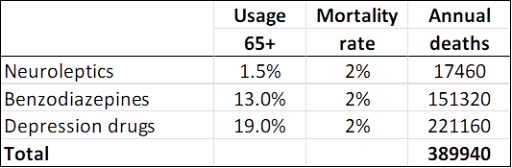
In 2013, I estimated that, in people aged 65 and above, neuroleptics, benzodiazepines or similar, and antidepressants kill 209,000 people annually in the United States.(2) I used relatively conservative estimates, however, and usage data from Denmark, which is far lower than those in USA. I have therefore updated the analysis based on US usage data, again focusing on older age groups.

For neuroleptics, I used the estimate of 2% mortality from the FDA data.(8)

For benzodiazepines and similar drugs, a matched cohort study showed that the drugs doubled the death rate, although the average age of the patients was only 55.(15)  The excess death rate was about 1% per year. In another large, matched cohort study, the appendix to the study report shows that hypnotics quadrupled the death rate (hazard ratio 4.5). The study authors estimated that sleeping pills kill between 320,000 and 507,000 Americans every year. (16)  A reasonable estimate of the annual death rate would therefore be 2%.

For SSRIs, a UK cohort study of 60,746 depressed patients older than 65 showed that they led to falls and a 3.6% annual mortality rate among those treated.(17) The study was well-designed, in that the patients were their own control in one of the analyses, which helps control for confounding variables. Nonetheless, the reported death rate is notably high.

Another cohort study, of 136,293 American postmenopausal women (age 50-79) participating in the Women’s Health Initiative study, found that depression drugs were associated with a 32% increase in all-cause mortality after adjustment for confounding factors, which corresponding to an estimated 0.5% annual mortality rate among women treated with SSRIs.(18). The authors noted that the mortality rate was likely underestimated. The authors warned that their results should be interpreted with great caution due to a high risk of exposure misclassification, which would make it more difficult to find an increase in mortality. Further, the patients were much younger than in the UK study, and the death rate increased markedly with age and was 1.4% for those aged 70-79. Finally, the exposed and unexposed women were different for many important risk factors for early death, whereas the people in the UK cohort were their own control.

For these reasons, I decided to use the average of the two estimates, a 2% annual death rate.

These are my results for USA for these three drug groups for people at least 65 years of age (58.2 million; usage is in outpatients only): (19, 20, 21, 22)
A limitation in these estimates is that you can only die once, and many people receive polypharmacy. It is not clear how we should adjust for this. In the UK cohort study of depressed patients, 9% also took neuroleptics, and 24% took hypnotics/anxiolytics. (17)

On the other hand, the data on death rates come from studies where many patients were also on several psychiatric drugs in the comparison group, so this is not likely to be a major limitation considering also that polypharmacy increases mortality beyond what the individual drugs cause.

Statistics from the Centers for Disease Control and Prevention list these four top causes of death: (23) 

Heart disease: 695,547
Cancer: 605,213
COVID-19: 416,893
Accidents: 224,935

COVID-19 deaths are rapidly declining, and many of such deaths are not caused by the virus but merely occurred in people who tested positive for it because the WHO advised that all deaths in people who tested positive should be called COVID deaths.

Young people have a much smaller death risk than the elderly, as they rarely fall and break their hip, which is why I have focused on the elderly. I have tried to be conservative. My estimate misses many drug deaths in those younger than 65 years; it only included three classes of psychiatric drugs; and it did not include hospital deaths.

I therefore do not doubt that psychiatric drugs are the third leading cause of death after heart disease and cancer.

Learn more and begin your brain upgrade journey today:

  • Complete the free online brain assessment – the Cognitive Function Test – to get personalised feedback on your brain health
  • Order the Upgrade Your Brain book here
  • Order Alzheimer’s: Prevention is the Cure book here
  • Contribute to our research and order your accurate, at home, blood tests here.
  • If you are looking for personalised one to one support, visit the Brain Bio Centre here.

References:
1 Gøtzsche PC. Deadly medicines and organised crime: How big pharma has corrupted health care. London: Radcliffe Publishing; 2013.

2 Gøtzsche PC. Deadly psychiatry and organised denial. Copenhagen: People’s Press; 2015.. US News 2016; Sept 27. 

2. Gøtzsche PC. Mental health survival kit and withdrawal from psychiatric drugs. Ann Arbor: L H Press; 2022.

 3 Gøtzsche PC. Long-term use of antipsychotics and antidepressants is not evidence-based. Int J Risk Saf Med 2020;31:37-42. 

4 Gøtzsche PC. Long-term use of benzodiazepines, stimulants and lithium is not evidence-based. Clin Neuropsychiatry 2020;17:281-3.

5 Forbruget af antipsykotika blandt 18-64 årige patienter, med skizofreni, mani eller bipolar affektiv sindslidelse. København: Sundhedsstyrelsen; 2006.

6 Hughes S, Cohen D, Jaggi R. Differences in reporting serious adverse events in industry sponsored clinical trial registries and journal articles on antidepressant and antipsychotic drugs: a cross-sectional study. BMJ Open 2014;4:e005535. 

7 Schneider LS, Dagerman KS, Insel P. Risk of death with atypical antipsychotic drug treatment for dementia: meta-analysis of randomized placebo-controlled trials. JAMA 2005;294:1934–43.

8 FDA package insert for Risperdal (risperidone). Accessed 30 May 2022. 

9 Koponen M, Taipale H, Lavikainen P, et al. Risk of mortality associated with antipsychotic monotherapy and polypharmacy among community-dwelling persons with Alzheimer’s disease. J Alzheimers Dis 2017;56:107-18.

10 Whitaker R. Lure of riches fuels testing. Boston Globe 1998;Nov 17.

11 Whitaker R. Mad in America: bad science, bad medicine, and the enduring mistreatment of the mentally ill. Cambridge: Perseus Books Group; 2002:page 269.

12 Vanderburg DG, Batzar E, Fogel I, et al. A pooled analysis of suicidality in double-blind, placebo-controlled studies of sertraline in adults. J Clin Psychiatry 2009;70:674-83.

13 Hengartner MP, Plöderl M. Newer-generation antidepressants and suicide risk in randomized controlled trials: a re-analysis of the FDA database. Psychother Psychosom 2019;88:247-8.

14 Hengartner MP, Plöderl M. Reply to the Letter to the Editor: “Newer-Generation Antidepressants and Suicide Risk: Thoughts on Hengartner and Plöderl’s ReAnalysis.” Psychother Psychosom 2019;88:373-4.

15 Weich S, Pearce HL, Croft P, et al. Effect of anxiolytic and hypnotic drug prescriptions on mortality hazards: retrospective cohort study. BMJ 2014;348:g1996.

16 Kripke DF, Langer RD, Kline LE. Hypnotics’ association with mortality or cancer: a matched cohort study. BMJ Open 2012;2:e000850.

17 Coupland C, Dhiman P, Morriss R, et al. Antidepressant use and risk of adverse outcomes in older people: population based cohort study. BMJ 2011;343:d4551.

18 Smoller JW, Allison M, Cochrane BB, et al. Antidepressant use and risk of incident cardiovascular morbidity and mortality among postmenopausal women in the Women’s Health Initiative study. Arch Intern Med 2009;169:2128-39.

19 O’Neill A. Age distribution in the United States from 2012 to 2022. Statista 2024;Jan 25.

20 Olfson M, King M, Schoenbaum M. Antipsychotic treatment of adults in the United States. Psychiatrist.com 2015;Oct 21.

21 Maust DT, Lin LA, Blow FC. Benzodiazepine use and misuse among adults in the United States. Psychiatr Serv 2019;70:97-106.

23 Centers for Disease Control and Prevention. Leading Causes of Death. 2024;Jan 17.

Further info

Autistic Children are Three and a Half Times More Likely to Have High Homocysteine

by Patrick Holford

What has homocysteine got to do with autism?

Homocysteine, a toxic amino acid commonly associated with disorders of the brain and circulation, is an indicator of a lack of B vitamins resulting in faulty methylation, a process critical for brain function.

So are there links between autism and homocysteine and could this help us to optimise neurodivergence in our children?

(At Food for the Brain we are on a mission to help upgrade and support ALL brains. That is why we are creating the Smart Kids & Teens COGNITION programme. Click here to find out more.)
Homocysteine Levels in Autistic Children: A Significant Risk Factor

Recent studies have drawn attention to the elevated presence of homocysteine in autistic children. In a well-controlled study involving 119 autistic children compared to age and sex-matched neurotypical children, 13.4% of the autistic group exhibited homocysteine levels above 15 mcmol/L. This contrasts sharply with only 3.4% of typically developing children who showed such elevations (1).  This means that an autistic child is three and a half times more likely to have raised homocysteine. These findings also suggest that approximately one in six autistic children have a significant methylation problem, a process critical to DNA repair and neurotransmitter production.

Previous studies have reported similar findings. A study in 2022 (2) reported that ‘Overall, an increased homocysteine level was associated with autistic spectrum disorder (ASD) in a linear manner and is thus a novel diagnostic biomarker for ASD. Decreased concentrations of folate and vitamin B12 were associated with poor clinical profiles of children with ASD. These findings suggest that homocysteine-lowering interventions or folate and vitamin B12 supplementation might be a viable treatment strategy for ASD.’

The Role of B Vitamins in mother & child

Homocysteine-lowering interventions, particularly through the supplementation of the most important B vitamins –  B12, B6, and methylfolate, that are required for healthy methylation – have demonstrated effectiveness in clinical settings (3). These vitamins play a vital role in the metabolism of homocysteine, converting it back into methionine, thereby reducing its toxic buildup in the bloodstream.

Research also indicates that maternal homocysteine levels during pregnancy can influence child development. A study found that women with homocysteine levels above 9 mcmol/L during pregnancy were more likely to have children exhibiting behavioural problems by age 6, including withdrawal, anxiety, depression and social or aggressive behaviours (4).

This suggests that early intervention targeting homocysteine levels in expectant mothers or women planning a pregnancy may have long-term benefits for child development.

Autistic children often experience a range of developmental delays and behavioural symptoms, many of which have been linked to elevated homocysteine. These include delayed language and movement skills, cognitive challenges, and abnormal emotional responses. Given the substantial overlap between symptoms of ASD and the effects of high homocysteine, it is logical to explore and implement further research into this biomarker as a target for therapeutic intervention. (As we plan to do in our Smart Kids & Teens COGNITION Programme.)

The Case for Homocysteine Testing in Autistic Children

Given the evidence linking elevated homocysteine with autism, it makes sense to test homocysteine in all children classified as ASD. A subset will likely have raised homocysteine and benefit from B vitamin supplementation. 

We offer at home testing of homocysteine which can be done from age 2+  and is available globally here.

Actions
  • Further reading –  ‘Is Autism Genetic?‘ – read here
  • Further reading – ‘Autism Reversed: A case study‘ – read here
  • Order your homocysteine test here
  • Find out more about our Smart Kids & Teens COGNITION Program here

References

​​1 Gulati S, Narayan CL, Mahesan A, Kamila G, Kapoor S, Chaturvedi PK, Scaria V, Velpandian, T, Jauhari P, Chakrabarty B, Datta SKR, Pandey RM. Transmethylation and Oxidative Biomarkers in Children with Autism Spectrum Disorder: A Cross Sectional Study. J Autism Dev Disord. 2024 Sep 4. doi: 10.1007/s10803-024-06542-9. Epub ahead of print. PMID: 39230783.

2 Li B, Xu Y, Pang D, Zhao Q, Zhang L, Li M, Li W, Duan G and Zhu C (2022) Interrelation between homocysteine metabolism and the development of autism spectrum disorder in children. Front. Mol. Neurosci. 15:947513. doi: 10.3389/fnmol.2022.947513

3 Adams JB, Audhya T, Geis E, Gehn E, Fimbres V, Pollard EL, Mitchell J, Ingram J, Hellmers R, Laake D, Matthews JS, Li K, Naviaux JC, Naviaux RK, Adams RL, Coleman DM, Quig DW. Comprehensive Nutritional and Dietary Intervention for Autism Spectrum Disorder-A Randomized, Controlled 12-Month Trial. Nutrients. 2018 Mar 17;10(3):369. doi: 10.3390/nu10030369. PMID: 29562612; PMCID: PMC5872787.

4 Roigé-Castellví J, Murphy M, Fernández-Ballart J, Canals J. Moderately elevated preconception fasting plasma total homocysteine is a risk factor for psychological problems in childhood. Public Health Nutr. 2019 Jun;22(9):1615-1623. doi: 10.1017/S1368980018003610. Epub 2019 Jan 14. PMID: 30636652; PMCID: PMC10261079.

Further info

Good Omega-3, Homocysteine & Vitamin D Status Cuts the Risk of Dementia to a Quarter.

by Patrick Holford

There is a reason why we don’t just talk about the benefits of omega-3, or encourage people to only focus on vitamin D – many of these nutrients work synergistically and are all needed to work together to maximise the reduction in dementia risk.

A few months ago, a study looked at three blood tests – homocysteine, vitamin D and omega-3 index and assigned a score of 1 = bad or 0 = good to each result. A person scoring 3 (three ‘bad’ results) had 4.6 times the risk of having dementia compared to a score of 0 (three ‘good’ results). This confirms the synergistic effect of two of our four ‘biological horsemen of the mental health apocalypse’ – brain fats (omega-3 and vitamin D) together with homocysteine-lowering B vitamins. 

The researchers, led by Dr Annike van Soest in Holland say: 

“The effect size we observed was substantial; a four-fold increased risk of developing dementia in individuals with combined suboptimal status of omega-3, vitamin D, and homocysteine (three ‘bad’ results). This effect size is large in comparison with other risk factors of dementia. In our sample, being a current smoker or having diabetes doubled the risk, and being a carrier of at least one APOE ε4 allele (gene variant) tripled the risk of dementia (1).”

In this study, which is the third of its kind, if homocysteine was above 8mcmol/l, that was ‘high risk’ (scoring 1) and if below this, ‘low risk’ (scoring 0). Similarly, if vitamin D was below 15 ng/ml (37.5 nmol/l) that was classified as high risk and if the omega-3 index was below 5%, then that was classified as high risk. 

Interestingly, this was based on the research of risk according to blood levels. So, while it is already known that if homocysteine is above 11mcmol/l the brain is shrinking at an accelerated rate, in this study, even levels above 8 are associated with increased risk of dementia! 

At Food for the Brain, we set the optimal level for homocysteine at 7 or less.

Buy Blood test here button.

According to Professor David Smith from Oxford University whose group carried out the original study of this kind, homocysteine-lowering B vitamins slowed the rate of brain shrinkage by 73%. They also slowed the rate of cognitive decline, arresting it in a third of trial participants.  

He stated: 

“For too long nutrition has been relatively discounted as a factor in the causation of dementia. This study corrects that misconception and lays the foundation for prevention based upon multiple nutrients.”

A study in France (2), which didn’t include homocysteine but did include a measure of carotenoids as an indicator of ‘oxidation’ reported a fourfold increased risk if all blood tests were in the ‘high-risk’ category.

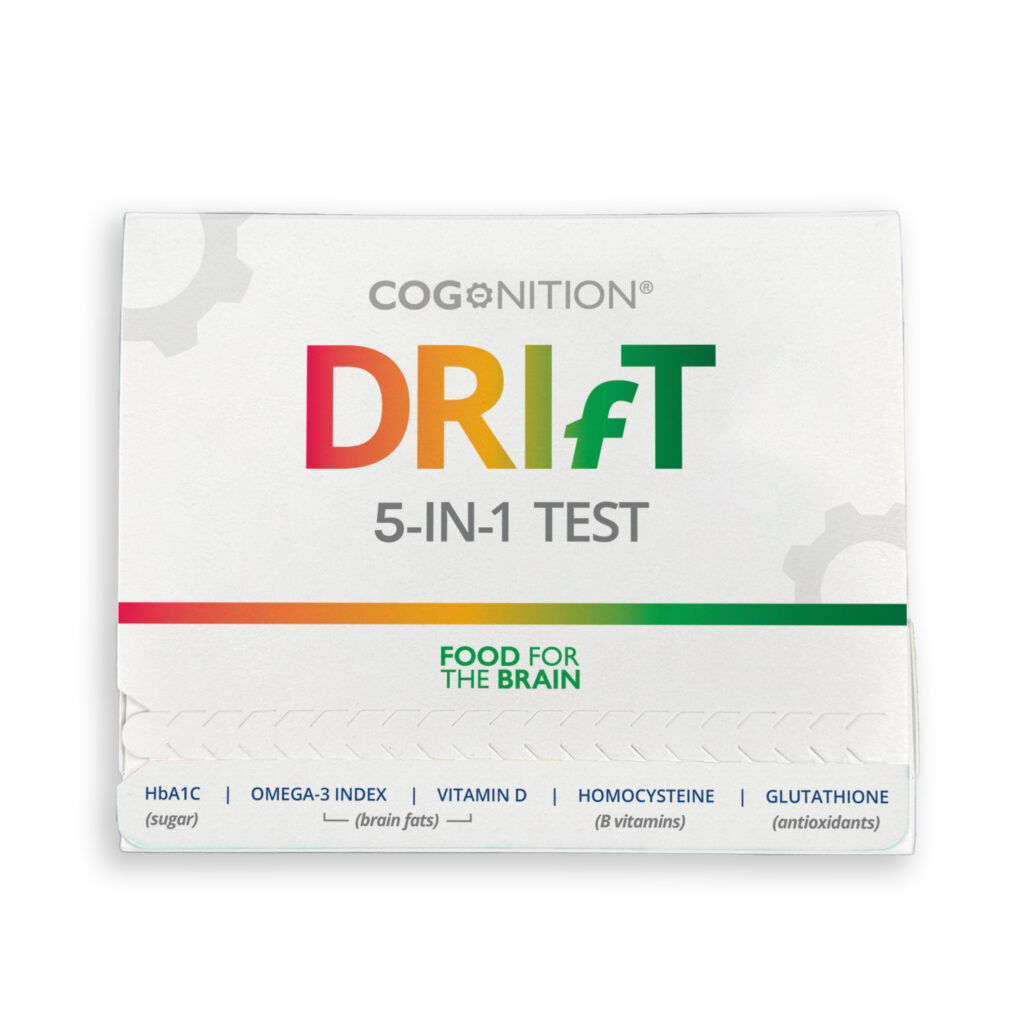
We offer a similar range of tests in our Dementia Risk Index functional Test (DRIfT) but with more sensitivity, plus adding in HbA1c as a measure of blood sugar resilience. We have also recently added a Glutathione Index test as a measure of antioxidant status. 

In other words, we are looking at ‘four horsemen of the mental health apocalypse’, not just two. Additionally, instead of only having a good/bad, 0/1 scale we have a four-point scale, from 0 to 3 for each test. So, our 4 in 1 test can score within a range of 0 to 12.

On a practical level, your goal is to have all blood test levels in ‘the green’ zone, which we have set as:

– homocysteine below 7
– omega-3 index above 8%
– vitamin D above 40 ng/ml or 100 nmol/l
– HBA1c below 5.5%;
– Glutathione Index above 800.

Tracking changes in these markers against changes in cognitive function would provide further evidence for a systems-based approach to preventing age-related cognitive decline. Whilst it might sound technical, when you test with us (and support our charity and research in the process), we help by making it clear and easy to understand.

We hope to have substantial test results soon, and to plug into NHS patient data to import more test results for vitamin D and HbA1c, along with future dementia diagnoses. This will help further develop and research the perfect DRIfT score and enhance our guidance for your future protection against cognitive decline.

Exciting, isn’t it?

What can you do?

  • Online test. Find out more about your own brain health and unique risk factors by completing the FREE Cognitive Function Test here
  • Blood Tests. Order one of your at-home pin-prick blood tests here.
    You can find out your homocysteine, vitamin D, HbA1c, Omega-3 and Glutathione index results from your own home worldwide and also contribute to our Citizen Science Research
  • Become a FRIEND and support our charity and get access to COGNITION – your personalised online program to help you reclaim your brain. Become a FRIEND here
  • Get the book! Order the latest Upgrade Your Brain book here if you are in the UK 

References

1.  van Soest APM, de Groot LCPGM, Witkamp RF, van Lent DM, Seshadri S, van de Rest O. Concurrent nutrient deficiencies are associated with dementia incidence. Alzheimers Dement. 2024 Jun 12. doi: 10.1002/alz.13884. Epub ahead of print. PMID: 38865433.

2.  Neuffer J, Gourru M, Thomas A, Lefèvre-Arbogast S, Foubert-Samier A, Helmer C, Delcourt C, Féart C, Samieri C. A Biological Index to Screen Multi-Micronutrient Deficiencies Associated with the Risk to Develop Dementia in Older Persons from the Community. J Alzheimers Dis. 2022;85(1):331-342. doi: 10.3233/JAD-215011. PMID: 34806604.

Further info

Autism Reversed – A Case Study

By Simon Martin – this article was originally shared by IHCAN – shared and edited with permission. 

As we start to develop our Smart Kids & Teens COGNITION Programme this story is worth sharing as it highlights the importance of environmental and nutritional factors on our children’s brain optimisation and in helping them reach their full potential. 

Autism: “reversed” in twins with personalised nutrition, supplements and therapeutic approaches

It’s “kind of a miracle”, says one of the paediatricians consulted in a newly-published case study, as twin girls recover – one, so completely it’s as if she never had autism. 

Research charity Documenting Hope, has published a case study detailing the reversal of severe Autism Spectrum Disorder symptoms in fraternal female twin toddlers.

Diagnosed at 20 months with severe (Level 3) ASD and requiring substantial support, the twins exhibited limited communication, repetitive behaviours, and significant gastrointestinal issues. Realising that conventional approaches were unlikely to help, the parents assembled an intervention focusing on environmental and lifestyle factors. 

In a paper published in the journal Personalised Medicine by a multi-disciplinary team, Dr Chris D’Adamo PhD, (who will be speaking at our Smart Kids & Teens Event in 2025) the charity’s Scientific Director and Principal Investigator and Director of the Centre for Integrative Medicine at the University of Maryland School of Medicine, and his colleagues reported the following stunning results: 

“Both twins showed dramatic improvements on the Autism Treatment Evaluation Checklist (ATEC) . The ATEC measures the effectiveness of autism treatment by assessing  communication, social skills, sensory awareness and more. Autism Treatment Evaluation Checklist (ATEC) scores dropped from 76 to 32 and 43 to 4 (scores below 43 indicate neurotypical), respectively, with stability over six months. The progress of Twin P, whose score dropped to 4 from March 2022 to October 2023, was described as “a kind of miracle” by one of the paediatricians. Dr D’Adamo told the Telegraph, “This twin’s functions are comparable to those who have never had an autism diagnosis”.  

Twin L, who had more severe autism at 20 months, scoring 76 initially, reduced this to 32 a year and a half later. D’Adamo said she “improved dramatically, but not quite as much”.

They also highlighted “the clear environmental and lifestyle influences on ASD that these findings help establish, building upon previous studies revealing the comparatively greater impact of these types of factors than genetics”.

D’Adamo and colleagues do not use the word “cure” in their report, but say the symptoms are unlikely to come back; “Because autism is a developmental condition, one can safely say that once they have overcome the developmental aspects of autism and returned to a typical developmental trajectory, they are very unlikely to exhibit the common symptoms of autism again. Symptoms that could return might be more along the lines of things like anxiety, gastrointestinal issues and sensory issues, but not necessarily the behavioural aspects of autism”.

The team from the University of Maryland and Hope concluded: 

“This case revealed a reversal of the Level 3 Autism Spectrum Disorder diagnoses among toddler twin girls that was achieved primarily through environmental and lifestyle modifications over a two-year period. The twins’ dramatic improvements and diagnosis reversal have persisted for over six months with no signs of regression”.

“What’s more”, says Documenting Hope, “we have learned from the parents that the twins’ ATEC scores have continued to drop below those that were originally published in this paper. This is very exciting news for this family and for the promise of symptom reversal in autism as a viable clinical outcome”.

This is not the first report of a reversal/cure of autism, but certainly the first case where researchers have documented treatment initiated and led by parents. The published paper includes a review of the literature, in which D’Adamo and colleagues detail the many “alternative” approaches that have succeeded, but have been ignored by orthodox medicine, even when published, possibly due to lack of blinding, which is challenging for such interventions. Additionally, they say, a degree of expectation bias is possible and more studies are needed for conclusive results regarding any such interventions, particularly in light of both the diversity of possible causes of ASD and the presentation of symptoms.

The nutritional, supplements & therapeutic approaches

Citing almost 50 previous studies, the Hope team write: “There are limited FDA-approved pharmacological options at present to treat ASD. Accordingly, there have been a number of non-pharmacological interventions tailored to address the underlying environmental and lifestyle risk factors that have demonstrated promising, though not conclusive, improvements in ASD symptoms. 

These include: 

  • Dietary interventions such as gluten and casein-free, GAPS (Gut & Psychology / Physiology Syndrome), a specific carbohydrate diet, low glutamate and ketogenic.
  • Targeted or personalised dietary supplements such as vitamin D, methylfolate, carnitine, vitamin B12 and other micronutrient supplementation, mitochondrial support, or supplements thought to be relevant to a child’s functional genomic situation. 
  • Addressing other modifiable lifestyle factors and environmental interventions, such as more time in nature, a reduction in exposure to artificial light, and improving indoor air quality, have demonstrated promise.
  • Therapeutic interventions addressing a child’s physical structure and function, such as cranial osteopathy, retained reflex integration, physical therapy, and occupational therapy, have also been associated with improved outcomes among ASD patients.

“While reversal of ASD diagnosis is relatively rare, there have been documented cases in the literature of complete recovery with a multi-modal intervention. One such case achieved reversal of ASD diagnosis through a combination of dietary modifications, probiotics and micronutrient supplementation, and antimicrobials that were personalised to the child’s risk factors, clinical presentation and a variety of laboratory tests”.

The approaches taken for this intervention

The parents gathered support and resources from many places.  They worked with an autism parenting coach, utilising the Child Health Inventory for Resilience and Prevention (CHIRP) survey of the Documenting Hope Project, in addition to resources at Epidemic Answers. They also used Applied Behaviour Analysis (ABA, which is typically recommended for new ASD diagnoses –  find out more here) and speech therapy with the twins.  Additionally, the twins’ parents implemented a rigorous diet and nutrition intervention around the time of diagnosis.

First to go was glutamate – aka MSG – following the principles of the Reduced Excitatory Inflammatory Diet (REID – references can be found here ) developed by PhD biochemist Dr Katherine Reid. Dr Reid is a mother of a daughter “no longer considered on the autism spectrum, which is managed 100% through diet”.

Dr Reid is also the author of Fat, Stressed, and Sick: MSG, Processed Food, and America’s Health. She says: “The Reduced Excitatory Inflammatory Diet (REID) is a food lifestyle focused on reducing excitatory and inhibitory signalling imbalances (ie improving neurotransmitter balance) and reducing inflammation through a balanced whole food approach. Some of the most prevalent excitatory and inflammatory foods are gluten, casein (a class of proteins found in dairy), soy, corn (to a lesser extent) and ready-to-eat or commercially processed foods with various food additives, particularly those containing free glutamate and aspartate. These foods can be problematic because of their high concentration of unbound/free glutamate (glutamic acid). Unbound or free glutamate (aka MSG) is most commonly found in processed foods as a food additive or created as a by-product of commercial food manufacturing processes”. The book is available in our Food for the Brain bookstore: here.

The parents put the girls on a strictly gluten-free, casein-free diet that was low in sugar and had no exposure to artificial colours, dyes, or ultra-processed foods. They emphasised organic, unprocessed, freshly prepared, and home-cooked food from local sources when possible.

The twins took a number of dietary supplements, including omega-3 fatty acids, a multivitamin, vitamin D, carnitine and 5-methyltetrahydrofolate, plus individualised homoeopathic remedies. They also used lab tests and genomic information to select nutritional supplements based on the twins’ DNA.

There were some common findings, such as impaired serotonin metabolism and a recommendation that the girls be fed a diet rich in tryptophan to upregulate serotonin production, as well as consume foods rich in vitamins B12, B6 and folate. Both twins had several genetic variants associated with a higher risk of systemic inflammation.

The mother was advised to feed the children foods that are high in betaine and choline, as well as to supplement with Lion’s mane and resolvins (found in fatty fish). However, each girl also had unique needs. P had variants that suggested an increased need for vitamin D. L had several variants associated with neuroinflammation, oxidative stress and compromised detoxification. Advice was provided to support glutathione production.

Both girls had the most sessions of any intervention with an occupational therapist who focused on the specialised technique of neuro-sensory motor reflex integration developed by Dr Svetlana Masgutova, PhD.

Eventually the parents’ research led them to check their home for air quality, mould and moisture. 

In October of 2022, they brought in a Building Biology Environmental Consultant. The consultant tested the home’s indoor air quality, evaluated possible signs of moisture intrusion, and identified other potential sources of toxicants. Air tests for mould were reported to be “very clean”. However, thermal imaging and moisture metre readings suggested the family was encouraged to further evaluate several areas of the home, which suggested water damage. A window in the twins’ bedroom was one area needing more evaluation.

Both girls were seen by a cranial osteopath. The family decided to pursue osteopathic care for L and not for P. L visited an osteopath at regular intervals in 2023 and saw notable benefits.

Outcomes

Twin L’s ATEC (Autism Treatment Evaluation Checklist) scores improved dramatically, from 76 in March 2022 to 32 in October 2023, and then remained relatively stable at 34 in March 2024. Twin P’s ATEC scores also improved dramatically, from 43 in March 2022 to 4 in October 2023, remaining stable at 4 in March 2024.

“In addition to the twins’ improved ATEC scores, numerous other behavioural and social improvements were noted after the implementation of the interventions”, the paper reports. Both L and P’s eye contact, language, and attention had all improved noticeably by autumn 2022. “This was accompanied by participation in a toddler play group three days per week and ultimately attending pre-school three days per week in Fall 2023. 

Conclusions & future progress

The University of Maryland team give full credit to the parents’ commitment and drive in achieving these results for their twins. They also acknowledge that this level of complex and sustained treatment may be impossible for many families to take on.

“For instance, the cost of the healthy lifestyle modifications and out-of-pocket costs of care of the numerous practitioners and laboratory assessments in this case would be financially prohibitive to many families. Access to healthy foods and the types of practitioners contributing to this therapeutic approach may also be limited for many families”.

However, they conclude: “It has become increasingly clear that ASD treatment is not one-size-fits-all, and that personalised, multi-modality treatment approaches to help address the total load of stressors are likely required to achieve optimal outcomes”.

This is why we are developing our Smart Kids & Teens Programme.

Every child deserves to reach their own full potential, without environmental or nutritional factors holding them back.

We need funding to make this happen. This case study and article highlights the expense that the twin’s parents went to, in order to ensure their children were able to reach their healthiest, optimal potential. We aim to create something to help parents that is a fraction of the cost.

The children are our future and we want to optimise their brains and ensure they live healthy happy lives – will you donate and help us?

Other resources:
  • Save 25% off ICHAN magazine if you head here
  • Want to read more about Autism? Read our ‘Is Autism Genetic?’ article here

Further info