Homocysteine may not be a household word, but at Food for the Brain, we want it to become one!
It is arguably one of the most important blood biomarkers for your brain and overall health, predicting the risk of over 100 diseases, from cardiovascular issues to cognitive decline, depression, and developmental disorders in children (1,2,3). For many years it was difficult to obtain accurate testing privately or at home – which is why we developed a new, accurate at-home pin-prick test that is one of our most popular options.
The reason we think this is such a good biomarker to track and research is that whilst high homocysteine is linked to increased risk of over 100 diseases – it can be quick and easy to lower!
Learn more about homocysteine and why it matters in the video below:
What level should you be aiming for?
Based on Patrick Holford’s research in his book Upgrade Your Brain, the recommended homocysteine levels are:
Ideal/Optimal Level: Below 7.5 µmol/L – This is especially important for women preparing for pregnancy, as higher levels are linked to increased risk of chromosomal damage and developmental problems in children.
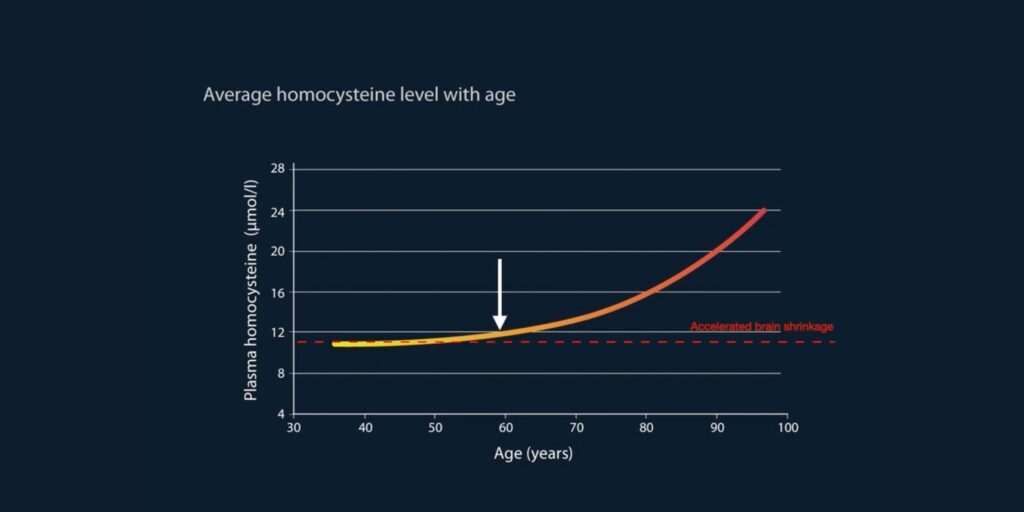
Treatment Threshold: Above 10 µmol/L – Anyone with a homocysteine level above this should be treated with B vitamins to reduce brain shrinkage and risk of dementia.
Warning Level: Above 11 µmol/L – Associated with increased brain shrinkage and elevated risk for Alzheimer’s and cardiovascular disease.
Ideally, with regular testing, you should maintain homocysteine levels well below 10 µmol/L to support optimal brain health and reduce the risk of neurodegenerative conditions.
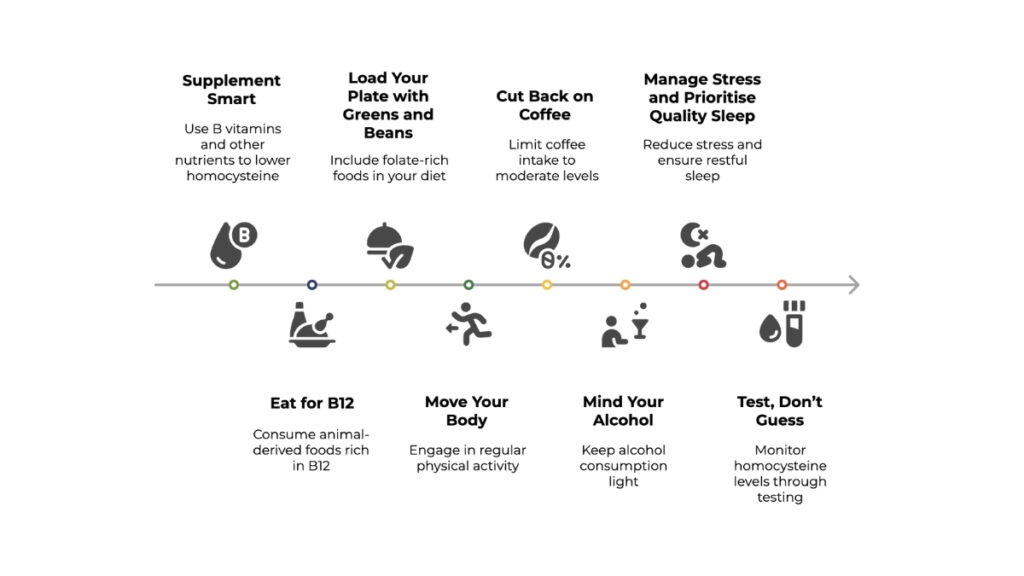
Here are eight proven ways to bring your homocysteine levels into the optimal range and keep your brain firing on all cylinders:
1.Supplement Smart: The B Vitamin Trio (and Friends)
The fastest way to reduce homocysteine is through targeted supplementation. The ‘magic trio’ is vitamin B6 (20mg), B12 (500µg as methylcobalamin), and methylfolate (400µg). A major paper has shown that supplementing these B vitamins not only lowers homocysteine, but also slows brain shrinkage and cognitive decline in people with mild cognitive impairment. Add trimethylglycine (TMG), zinc, and N-acetyl cysteine (NAC) for additional support, particularly in older adults with memory concerns. These nutrients work synergistically to support methylation and brain function. (1) Get our supplement guidelines here.
2. Eat for B12: Fish, Eggs, Dairy and Meat
Vitamin B12 is primarily found in animal-derived foods. Aim to eat oily fish three times a week, eggs most days, and small amounts of organic meat or dairy (if tolerated). Pescatarians thrive here. For vegans, the focus should be on fortified foods and sources such as shiitake mushrooms. However, supplementation and regular testing are strongly recommended to ensure optimal levels. Poor B12 absorption – particularly in older adults or those taking proton pump inhibitors – is a common risk factor for elevated homocysteine and brain shrinkage (1,2).
3. Load Your Plate with Greens and Beans
Folate is critical for methylation. Aim for seven servings of fruit and vegetables a day. Prioritise leafy greens, broccoli, lentils, chickpeas, and asparagus. These naturally support homocysteine metabolism and keep your methylation processes running smoothly (1).
4. Move Your Body
Regular physical activity helps lower homocysteine. Studies show that consistent aerobic or resistance exercise can reduce levels, improve circulation, and support metabolic health. Aim for at least 30 minutes of brisk walking, cycling, or swimming five times a week to complement your nutritional strategy (3).
5. Cut Back on Coffee – Especially Excessive Intake
Drinking more than two cups of coffee a day can raise homocysteine levels. While low to moderate coffee intake may offer some antioxidant benefits, high intake (six or more cups a day) has been linked to elevated homocysteine levels and an increased risk of dementia (4).
6. Mind Your Alcohol
Keep it light. Up to seven small glasses (125ml) of red wine or two pints of beer per week is the maximum. Excess alcohol increases homocysteine levels and impairs nutrient absorption – particularly of B vitamins (1).
7. Manage Stress and Prioritise Quality Sleep
Chronic stress may indirectly raise homocysteine by increasing inflammation and depleting vitamin B6 – both linked to higher mortality and accelerated cellular ageing (5).Make stress reduction a priority. Meditation, yoga, deep breathing, regular exercise, and talking therapies are all effective. Equally important is prioritising restorative sleep. The brain clears toxins and resets during deep sleep – both are vital for healthy methylation. Learn more about sleep and your brain here.
8. Test, Don’t Guess – Know Your Level
You can’t manage what you don’t measure. Have your homocysteine levels tested.. We now offer at-home pinprick tests, which also contribute to our ongoing research. Don’t be surprised if your levels are higher than expected. Forty per cent of people over 60 have homocysteine levels above 11 µmol/L. As we age, our ability to absorb vitamin B12 declines (3).
Homocysteine is a key indicator for cognitive and overall health. As we can see, with a few dietary tweaks, lifestyle upgrades, and targeted nutrients, you can lower your homocysteine, support methylation, and quite literally upgrade your brain!
Start today:
Join our research and test your homocysteine level today. Purchase a single homocysteine test hereor get it as part of the DRIfT 5 in 1 test, which also measures your antioxidant status (another world first in accurate home testing), omega-3, vitamin D and HbA1c.
Read more in the Upgrade Your Brain book – This fully referenced guide offers practical strategies to improve your brain health – including how to lower homocysteine through diet, lifestyle, and supplementation.
Support our charitable work by becoming a FRIEND. From just £5 a month, you can help fund vital research and public education. Become a FRIEND today
Food for the Brain is a not-for-profit educational and research charity that offers a free Cognitive Function Test and assesses your Dementia Risk Index to be able to advise you on how to dementia-proof your diet and lifestyle.
By completing the Cognitive Function Test you are joining our grassroots research initiative to find out what really works for preventing cognitive decline. We share our ongoing research results with you to help you make brain-friendly choices. Please support our research by becoming a Friend of Food for the Brain.
References: 1 Smith AD, Refsum H. Homocysteine – from disease biomarker to disease prevention. J Intern Med. 2021 Oct;290(4):826-854.
2 Vogiatzoglou A, Refsum H, Johnston C, et al. Vitamin B12 status and rate of brain volume loss. Neurology. 2008 Sep 9;71(11):826-32.
3 Vincze G, et al. Physical activity and plasma homocysteine in the elderly: the Rotterdam Study. Am J Clin Nutr. 2011;93(5):1025–31.
4 Grubben MJAL, et al. Unfiltered coffee increases plasma homocysteine concentrations in healthy volunteers: a randomized trial. Am J Clin Nutr. 2000;71(2):480–4.
5 Pusceddu I, et al. Subclinical inflammation, telomere shortening, homocysteine, vitamin B6, and mortality: the Ludwigshafen Risk and Cardiovascular Health Study. Eur J Nutr. 2020;59:1399–411.
What can you do, practically and quickly, to reduce your risk of developing Alzheimer’s?
The International Alzheimer’s Prevention Expert Group, including our founder Patrick Holford, has identified four key areas that could cut your future risk by over 80% – down to less than a quarter – if addressed early.
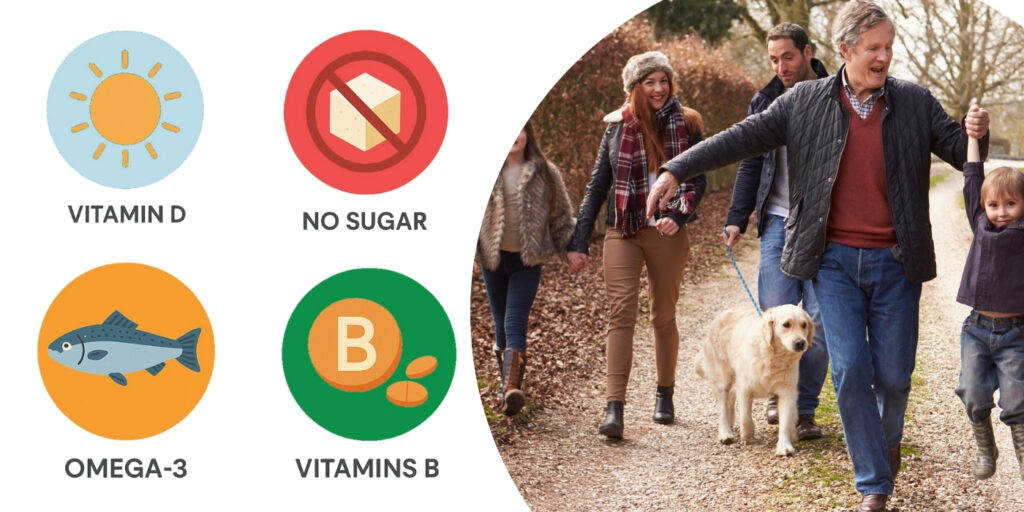
The four “quick wins”? Increase your vitamin D, omega-3, and B vitamins, and reduce your intake of sugar and refined carbs.
1. Vitamin D: The Sunshine Factor
Vitamin D is primarily made in your skin through sun exposure, particularly at midday in the summer. However, in the winter – especially in the UK and other northern countries – you cannot make enough, so supplementation is essential. A Dutch study found that people with low levels of vitamin D, omega-3s, and B vitamins were over four times more likely to develop dementia¹. Those who supplement with vitamin D have around a third less risk².
Even levels below 62.5 nmol/L (25 ng/mL) increase risk. A French study found that low vitamin D levels tripled Alzheimer’s risk³. The darker your skin, the more sun exposure you need – which makes supplementation all the more vital for many.
2. Omega-3: Feed Your Brain with Fish
Fish is a true brain food – rich in omega-3s, vitamin D, and B12. Eating fish at least once a week reduces Alzheimer’s risk by a third⁴. A recent review confirmed that a daily serving cuts the risk of cognitive decline by 30%⁵.
Omega-3 fats (especially DHA) quite literally build brain cells. The UK Biobank study of over 250,000 people found that those with higher omega-3 levels had a 20% lower risk of dementia⁶. A US study also found that a higher omega-3 index correlated with more white matter in the brain and better cognitive function⁷.
Professor William Harris of the Fatty Acid Research Institute calls it “a safe, simple, cheap and effective tool to forestall Alzheimer’s.”
3. B Vitamins: The Brain Fixers
B6, B12, and folate don’t just support brain function – they’re essential for fixing omega-3s into your brain’s cell membranes. Without them, homocysteine – a toxic amino acid – builds up in your blood. High levels (above 11 μmol/L) are strongly linked to brain shrinkage and Alzheimer’s.
Half of people over 60 in the US have homocysteine levels above 11. The Dutch study found that risk rises even above 8 – a level many people exceed.
As Professor Joshua Miller from Rutgers University says, raised homocysteine is an early warning sign: “a canary in the coal mine.” The good news? It’s easily lowered with a B vitamin supplement – ideally one containing 500 mcg of B12, methylfolate, and B6.
More greens, beans, nuts, and lentils also help. A recent study showed that replacing just one serving of processed meat with nuts or beans (rich in folate) cut dementia risk by 19%⁸.
4. Sugar and Refined Carbs: Silent Brain Saboteurs
The more sugar a person eats – including refined white carbohydrate foods such as bread, pastries, pasta, and rice – the higher their risk of both diabetes and dementia. Fizzy drinks and ultra-processed foods, sweetened with high-fructose corn syrup, are particularly bad for the brain. “The brain needs the most energy of any organ, so it has the most mitochondria to make it. Sugar damages mitochondria,” says Dr Robert Lustig from the University of California, San Francisco.
A study just published this month in Neurology involving 2 million people shows that those with sugar problems (metabolic syndrome) are 24% more likely to develop dementia early¹⁰. Keeping blood glucose levels in the low–normal range is reflected by a low glycosylated haemoglobin (HbA1c), which is the blood test doctors use to diagnose diabetes. Having a lower HbA1c is associated with reduced risk for dementia in several studies⁹. A recent study of 374,021 older men with diabetes found that keeping HbA1c stable over three years cut the risk of dementia by a third¹¹.
Want to know what’s driving your brain risk?
Take our free 3-minute Alzheimer’s Prevention Check atalzheimersprevention.info– or, for the full picture, order the four-in-one home blood test to measure your omega-3 index, vitamin D, homocysteine and HbA1c:foodforthebrain.org/tests
Food for the Brain is a not-for-profit educational and research charity that offers a free Cognitive Function Test and assesses your Dementia Risk Index to be able to advise you on how to dementia-proof your diet and lifestyle.
By completing the Cognitive Function Test you are joining our grassroots research initiative to find out what really works for preventing cognitive decline. We share our ongoing research results with you to help you make brain-friendly choices. Please support our research by becoming a Friend of Food for the Brain.
2 Ghahremani M, et al. Vitamin D supplementation and incident dementia: Effects of sex, APOE, and baseline cognitive status. Alzheimers Dement (Amst). 2023 Mar;15(1):e12404. doi: https://doi.org/10.1002/dad2.12404
3 Feart C, et al. Associations of lower vitamin D concentrations with cognitive decline and long-term risk of dementia and Alzheimer’s disease in older adults. Alzheimers Dement. 2017 Nov;13(11):1207-1216. doi: https://doi.org/10.1016/j.jalz.2017.03.003
4 Beydoun MA, et al. Epidemiologic studies of modifiable factors associated with cognition and dementia: systematic review and meta-analysis. BMC Public Health. 2014;14:643. doi: https://doi.org/10.1186/1471-2458-14-643
5 Godos J, et al. Fish consumption, cognitive impairment and dementia: an updated dose-response meta-analysis of observational studies. Aging Clin Exp Res. 2024;61:3731–3739. doi: https://doi.org/10.1007/s40520-024-02823-6
6 Sala-Vila A, et al. Plasma Omega-3 Fatty Acids and Risk for Incident Dementia in the UK Biobank Study: A Closer Look. Nutrients. 2023 Nov;15(23):4896.
8 Li Y, et al. Long-term intake of red meat in relation to dementia risk and cognitive function in US adults. Neurology.2025;104(3):e210286. doi: https://doi.org/10.1212/WNL.0000000000210286
9 Luchsinger JA, et al. Hyperinsulinemia and risk of Alzheimer disease. Neurology. 2004;63(7):1187–92. doi:https://doi.org/10.1212/01.WNL.0000140292.04932.04932.87; see also Abbatecola AM, et al. Insulin resistance and executive dysfunction in older persons. J Am Geriatr Soc.2004;52(10):1713–
8. https://doi.org/10.1111/j.1532-5415.2004.52466.x ;see also Xu WL, et al. Uncontrolled diabetes increases the risk of Alzheimer’s disease: a population-based cohort study. Diabetologia. 2009;52(6):1031–
9. doi: 10.1007/s00125-009-1323-x ;see also Hassing LB, et al. Type 2 diabetes mellitus contributes to cognitive decline in old age: a longitudinal population-based study. J Int Neuropsychol Soc. 2004;10(4):599–607. https://doi.org/10.1017/S1355617704104165 ; see also Yaffe K, et al. Glycosylated hemoglobin level and development of mild cognitive impairment or dementia in older women. J Nutr Health Aging. 2006;10(4):293–5. https://pubmed.ncbi.nlm.nih.gov/16886099/ ; see also Roberts RO, et al. Diabetes and elevated hemoglobin A1c levels are associated with brain hypometabolism but not amyloid accumulation. J Nucl Med. 2014;55(5):759–64. https://jnm.snmjournals.org/content/55/5/759
10 Lee JY, Han K, Kim J, Lim JS, Cheon DY, Lee M. Association Between Metabolic Syndrome and Young-Onset Dementia: A Nationwide Population-Based Study. Neurology. 2025 May 27;104(10):e213599. doi: 10.1212/WNL.0000000000213599. Epub 2025 Apr 23. PMID: 40267374.11 Underwood PC, et al. HbA1c time in range and dementia. JAMA Netw Open. 2024;7(8):e2425354. doi: https://doi.org/10.1001/jamanetworkopen.2024.25354
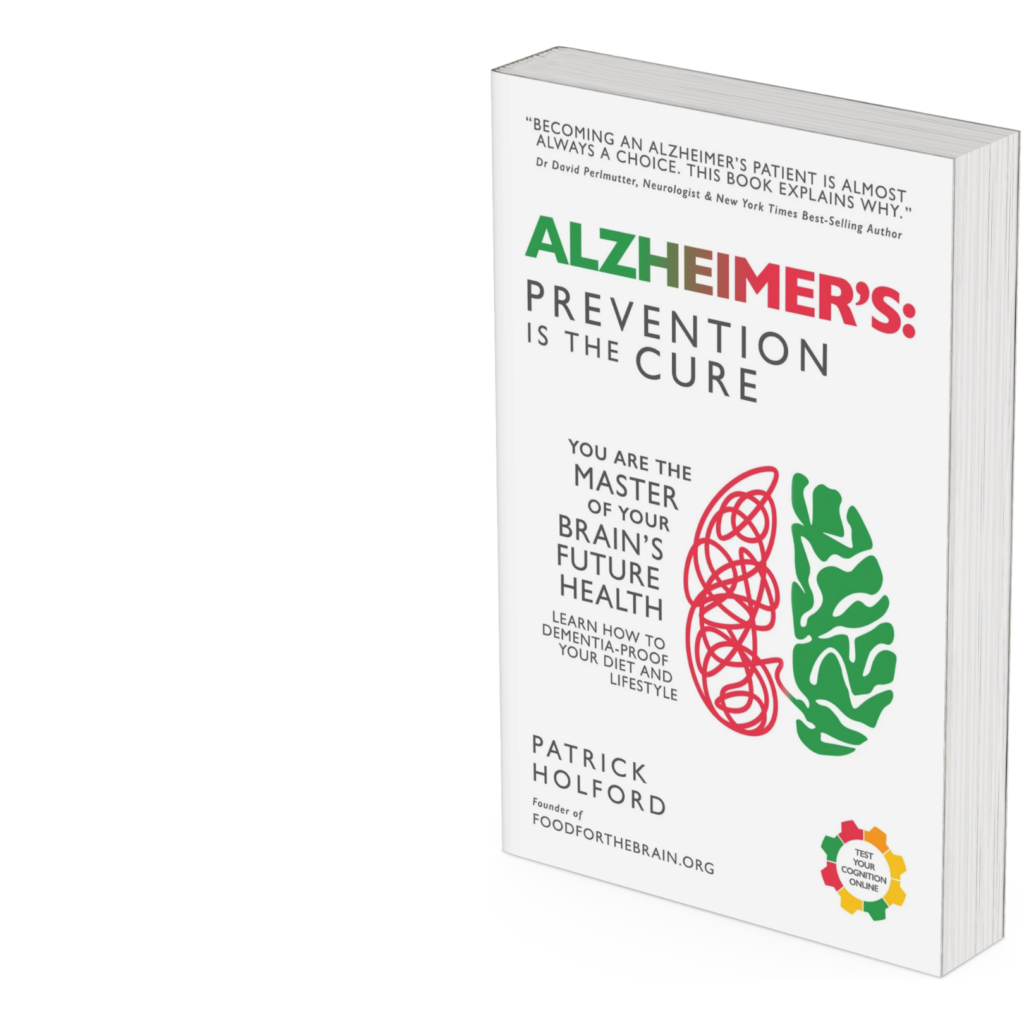
Patrick Holford’s new book claims that almost no one needs to develop Alzheimer’s.
Fewer than 1% of Alzheimer’s cases are genetic, and amyloid deposits – long targeted by new drugs – are neither the cause of the disease nor its cure.
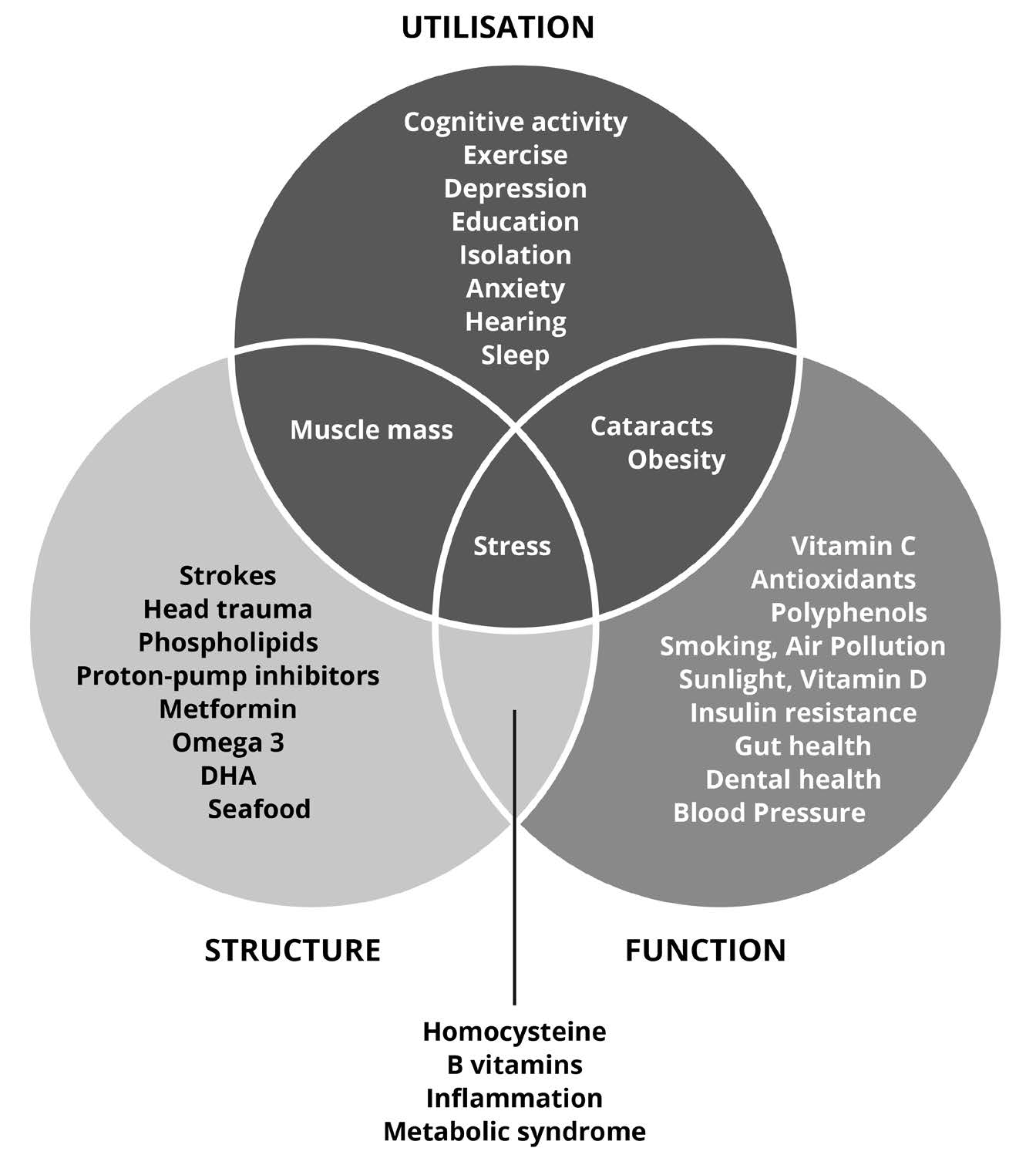
Alzheimer’s is the consequence of a ‘perfect storm’ – a combination of poor diet, unhealthy lifestyle and harmful environmental factors that affect the structure, function or utilisation of the brain, says Patrick Holford, our founder and author of Alzheimer’s: Prevention is the Cure. He says: “Every single known risk factor affects one of these, and it is combinations of these risk factors – which are under our control – that lead to cognitive decline, first experienced as brain fog and forgetfulness”.
—
Figure 1 – Structure, Function and Utilisation model of risk factors forcognitive decline
—
The book stems from a major global Alzheimer’s prevention project by the charity Food for the Brain, which has assessed the cognitive function of hundreds of thousands of people through a free test, followed by a comprehensive diet and lifestyle questionnaire that calculates their future risk – and shows how to lower it.
“We can detect declining cognitive function from as young as 18. The youngest non-genetic Alzheimer’s diagnosis is just 19,” says Holford, who founded the charity to help prevent Alzheimer’s. “We see a steady decline in cognitive function from the early twenties, with most people starting to show significant cognitive impairment in their seventies and eighties. But this decline cannot only be arrested – it can be reversed with the right diet, supplements and lifestyle choices.”
“Becoming an Alzheimer’s patient is almost always a choice,” says neurologist Dr David Perlmutter, a member of the charity’s Alzheimer’s Prevention Expert Group who also believes that diet and lifestyle, much more than genes, are driving the increase in Alzheimer’s.
“Becoming an Alzheimer’s patient is almost always a choice“
neurologist Dr David Perlmutter
—
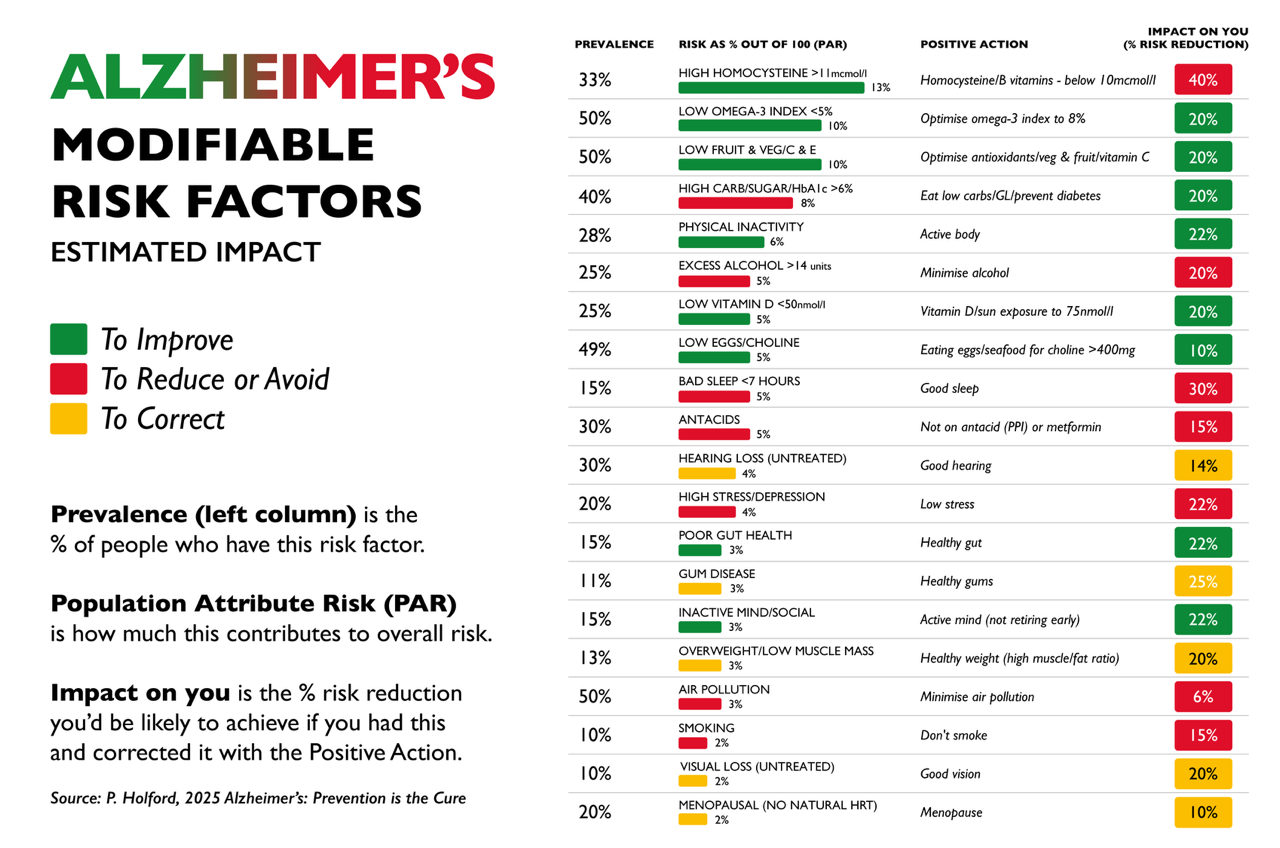
The book (out today!) explains all the known risk factors we can change – and the extent to which doing so reduces future risk. Particularly important are what Holford calls ‘the four horsemen of the brain health apocalypse’: lack of brain fats, lack of B vitamins, lack of antioxidants, and too much sugar and refined foods. Increasing omega-3 intake from oily fish and supplements cuts risk by about 20%, as does optimising vitamin D levels. Vitamin D is produced in the skin when exposed to sunlight, with some also obtained from oily fish, but supplementation is needed during the winter months. Those who supplement with vitamin D have about one third less risk of developing dementia.
The single biggest–and most easily eliminated–risk factor, is lack of B vitamins, leading to high levels of the toxic amino acid homocysteine. “Homocysteine, if raised above 11 µmol/L, causes brain shrinkage and cognitive decline. If lowered with B vitamins, both shrinkage and decline are arrested. It is the only risk factor for which the evidence is strong enough to say it is causal.” says Holford. “Mine is 7 µmol/L but my wife’s, despite eating the same food, was 15µmol/L – right in the brain-shrinking zone. She now supplements high-dose B12, B6 and folate and her level has dropped to the same as mine. You would never know without testing. We are both in our sixties.” He estimates that half of those over-60 have a homocysteine level above 11, increasing their risk by about one-third.
—
Figure 2 – Possible Population Attributable Dementia Risk Reductions (estimates)
The test kit also measures HbA1c, which GPs use to diagnose diabetes. However, the optimal level for Alzheimer’s prevention is lower than the threshold used to diagnose diabetes. Eating less sugar, fewer refined and ultra-processed foods, and reducing total carbohydrate intake also cuts dementia risk by about 20%.
Another big risk reducer is increasing intake of fruits and vegetables rich in antioxidants, and supplementing with vitamin C. Those in the top third of antioxidant intake have half the risk of cognitive decline, according to a study of 2,716 people over age 60 (1). The home-test kit also measures antioxidant status, specifically glutathione levels. Greens and beans are rich sources of the B vitamin folate. A recent study found that swapping one serving of processed meat for a serving of nuts or beans – foods high in folate – was associated with a 19% lower risk of dementia (2).
Getting your diet right is only half the story, says Holford. “Minimising alcohol, not smoking, staying physically active, and having a socially and intellectually stimulating lifestyle are all vital parts of dementia-proofing. So too are getting enough sleep, managing stress, and ensuring good hearing and vision. Cataracts, for example, increase risk, but having cataract surgery significantly lowers it. Women also need to support hormonal health after menopause. Often using ‘natural’ HRT makes a big difference.”
The book is out in the UK, EU today and you can pre-order for USA & Australia too (they will be shipped ot you in 3-5 weeks) .
When you buy a book from us, you’re not just gaining valuable knowledge – you’re supporting a cause. Every penny from your purchase goes directly back into Food for the Brain, helping us advance research and develop life-changing tools to support cognitive health.
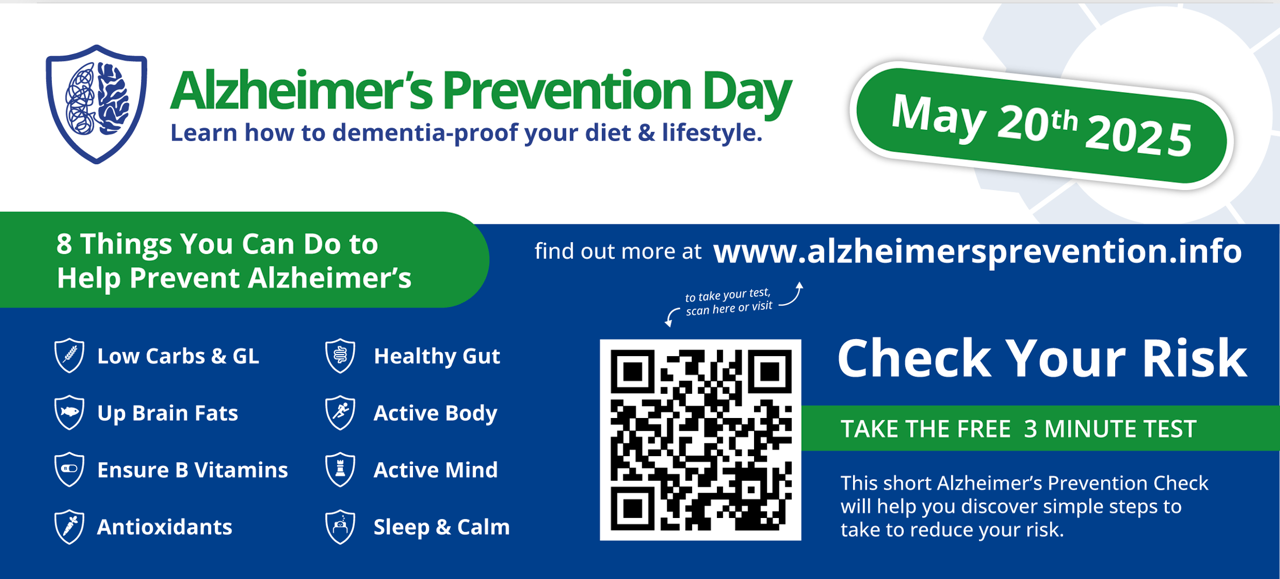
Also join us in May for the Alzheimer’s Prevention Day
Food for the Brain is a not-for-profit educational and research charity that offers a free Cognitive Function Test and assesses your Dementia Risk Index to be able to advise you on how to dementia-proof your diet and lifestyle.
By completing the Cognitive Function Test you are joining our grassroots research initiative to find out what really works for preventing cognitive decline. We share our ongoing research results with you to help you make brain-friendly choices. Please support our research by becoming a Friend of Food for the Brain.
Lowering Homocysteine: Why It Matters and How to Do It
Lowering homocysteine: Why It Matters and How to Do It
Homocysteine is a natural amino acid produced during a vital process in the body called methylation. It is fast becoming one of the most important biomarkers of long term health, and understanding lowering homocysteine is becoming equally important.
Methylation is a fundamental biochemical process happening in every cell, every second. It helps switch genes on and off, build and regulate neurotransmitters, repair DNA, support detoxification, and maintain healthy blood vessels. For methylation to run smoothly, the body depends on key nutrients, particularly B vitamins.
Homocysteine sits at the centre of this process. When methylation is working well, homocysteine is efficiently recycled and kept within a healthy range. When it rises, it reflects strain within the methylation cycle.
This matters because disrupted methylation affects brain chemistry, vascular integrity, and cellular repair. It is a systems issue, not a single pathway problem.
Despite this, homocysteine is rarely discussed in routine healthcare, and access to accurate, affordable testing has historically been limited. Yet the research is extensive. Elevated homocysteine has been linked to more than 100 health conditions, including cardiovascular disease, depression, and neurodevelopmental delays in children (1, 2, 3).
Levels above approximately 10 to 11 µmol/L are considered a red flag. This is not uncommon. Studies in the United States suggest that around 40% of adults over 60 have levels above 11 µmol/L (4). In the UK, nearly 40% of older adults are thought to have low vitamin B12 status, which is associated with accelerated brain shrinkage (5).
Lowering homocysteine through understanding Methylation and B Vitamins
Homocysteine is recycled through the methylation cycle.
The body uses this process to activate nutrients and manage many chemical reactions every day.
For example, folate (and folic acid, its synthetic form) needs to change into its active form, methylfolate. This change helps support cellular functions. Key enzymes that aid in methylation depend on vitamins B6, B12, and folate. They also need cofactors like zinc, riboflavin (B2), niacin (B3), and trimethylglycine (TMG).
When this system is under-resourced or less efficient, homocysteine levels go up. This can happen with age or certain diets like veganism (3). Homocysteine can act as a “functional” marker of methylation efficiency, a bit like HbA1c reflects longer-term blood glucose control.
Why lowering homocysteine matters for health?
So how much does this biomarker matter really? Here at Food for the Brain, we let the science lead – here are some of the ways it can impact your health:
Cardiovascular Disease and Stroke
Elevated homocysteine is associated with damage to the inner lining of blood vessels, promoting atherosclerosis. One study found that people with levels over 20 µmol/L have almost five times the risk of death. For every 5 µmol/L increase, the risk rises by about one-third (6).
. Another study, involving nearly three thousand cardiovascular patients, found that those in the highest homocysteine quartile had a threefold higher risk of death compared to those in the lowest quartile (7). Furthermore, other research shows that two-thirds of heart attacks and strokes in older adults could be predicted by homocysteine levels rather than by cholesterol (2).
Brain Shrinkage and Cognitive Decline
High homocysteine levels are linked to faster brain shrinkage and p-tau buildup. P-tau is a protein involved in Alzheimer’s disease (8). Studies show that taking B vitamins to lower homocysteine can slow brain atrophy and reduce cognitive decline (1).
Pregnancy and Child Development
Even small increases (above 9 µmol/L) in pregnant women are associated with increased risk of miscarriage and other issues. They may also affect child development. This can lead to issues like withdrawn behaviour, anxiety, and social difficulties later on (9, 10, 11).
Mental Health Disorders
High homocysteine levels have been associated with a wide range of neurological and psychiatric conditions, including autism, anxiety, and bipolar disorder. They also relate to children’s behavioural issues and cognitive decline in both kids and adults. Additionally, elevated homocysteine is tied to dementia, depression, and hearing loss. Other associations include migraines, multiple sclerosis, motor neuron disease, and neural tube defects. It also connects to obsessive-compulsive disorder, post-traumatic stress disorder, and schizophrenia (1).
This breadth of association reflects how central methylation is to brain chemistry and neurological stability.
Lowering Homocysteine
The encouraging news is that there is a lot you can do to lower homocysteine levels!
Most critical is the amount of vitamin B12 they provide.
The basic Dietary Reference Value that you see on supplements is 2.5mcg. Few provide more than 10mcg, which is sufficient if you don’t have raised Hcy. Standard low-dose supplements are unlikely to significantly reduce an elevated homocysteine level. Professors Smith and Refsum recommend 500mcg a day – substantially higher than standard reference intakes. This is both safe and effective especially if taken alongside B6 (20mg) and methylfolate (400mcg). Also, it doesn’t take long to bring your level down.
In addition to these core nutrients, extra support from zinc, TMG (trimethylglycine), and N-acetyl cysteine (NAC) may be beneficial. NAC, for instance, may help channel homocysteine toward SAMe production by boosting the body’s antioxidant defences and glutathione production (1).
Lifestyle choices that support lowering homocysteine
Eat greens, beans, nuts and seeds which are high in folate
Include seafood and eggs, high in B12 and phospholipids as well as omega-3, which methylation helps bind together to make healthy cell membranes
Avoid smoking and excess alcohol (one 125ml glass of red wine does not appear to raise homocysteine levels)
Limit coffee to one cup a day
Reduce chronic stress
Prioritise quality sleep
Stay physically active and keep fit
Want to learn more about homocysteine? There are few more things you can do:
1. Join us for the B Vitamin Blueprint Webinar with Patrick Holford, where he’ll break down this key health marker and its impact on you.
2. Join our research and order your homocysteine test to understand your body and take action toward lowering homocysteine effectively. Prevention is power and you can start today.
Food for the Brain is a not-for-profit educational and research charity that offers a free Cognitive Function Test and assesses your Dementia Risk Index to be able to advise you on how to dementia-proof your diet and lifestyle.
By completing the Cognitive Function Test you are joining our grassroots research initiative to find out what really works for preventing cognitive decline. We share our ongoing research results with you to help you make brain-friendly choices. Please support our research by becoming a Friend of Food for the Brain.
Xia Y, Prokop S, Giasson BI. “Don’t Phos Over Tau”: recent developments in clinical biomarkers and therapies targeting tau phosphorylation in Alzheimer’s disease and other tauopathies. Mol Neurodegener. 2021;16(1):37. doi: 10.1186/s13024-021-00460-5. PMID: 34016169; PMCID: PMC8122932.
.
Li JG, Chu J, Barrero C, Merali S, Praticò D. Homocysteine exacerbates β-amyloid, tau pathology, and cognitive deficit in a mouse model of Alzheimer’s disease with plaques and tangles. Ann Neurol. 2014;75(6):851-63. doi: 10.1002/ana.24156. PMID: 24771537.
Shirafuji N, Hamano T, Yen SH, Kanaan NM, Hayashi K, Hashimoto T. Homocysteine increases tau phosphorylation, truncation and oligomerization. Int J Mol Sci. 2018 Mar 17;19(3):891. doi: 10.3390/ijms19030891. PMID: 29562600; PMCID: PMC5877752.
Bossenmeyer-Pourié C, Kerek R, Martin N, Koziel V, Lidzborski E, Sargueil F, et al. N-homocysteinylation of tau and MAP1 is increased in autopsy specimens of Alzheimer’s disease and vascular dementia. J Pathol. 2019 Jul;248(3):291-303. doi: 10.1002/path.5254. Epub 2019 Mar 19. PMID: 30734989.
Dementia, including Alzheimer’s is not only the greatest cause of death entailing huge healthcare costs, it is the major fear for many about aging. The great news is that dementia and Alzheimer’s are preventable. Less than 1% of Alzheimer’s is caused by genes so for most of us, the risk for dementia and age-related cognitive decline relates to things we can easily change.
At foodforthebrain.org we have tested (for free) almost half a million people with a validated Cognitive Function Test, followed by a questionnaire which calculates your future Dementia Risk Index and crucially, advises what to do about it.
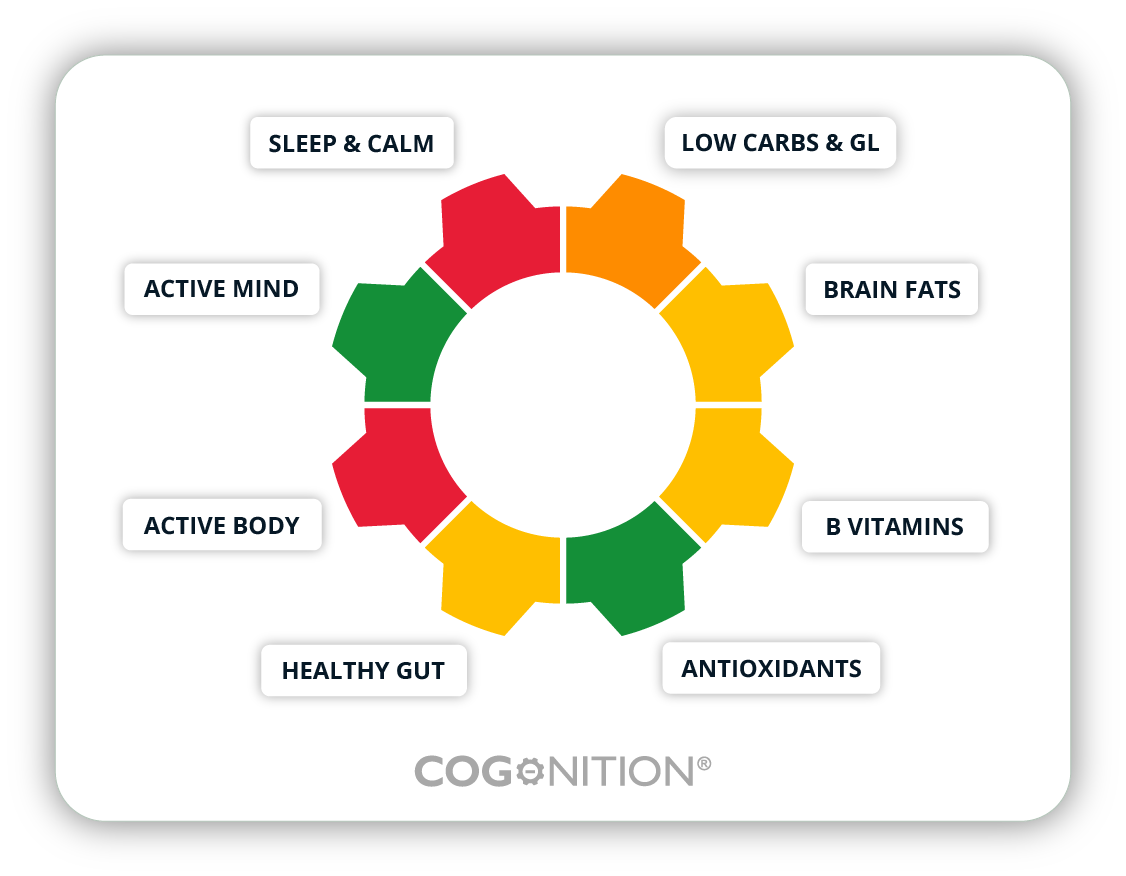
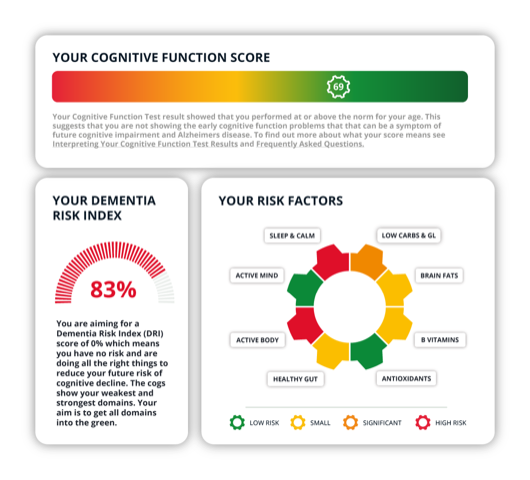
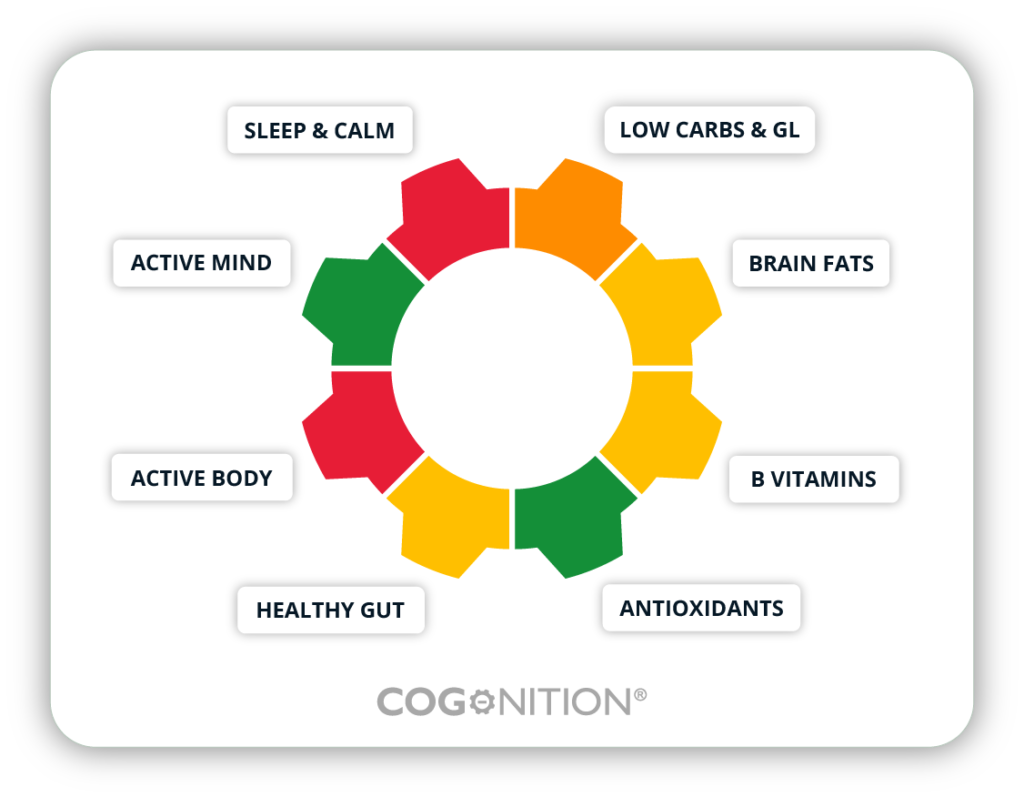
Your risk is divided into eight domains (see image), highlighting areas to focus on to enable brain and cognitive powers to stay intact.
Here are 25 simple steps you can take to dementia-proof your diet and lifestyle taken from our advice and my recent book, Upgrade Your Brain, which gives more detail for those who want to dig deeper.
Brain Fats – Up your brain fats – omega-3, phospholipids and vitamin D
—
Get your omega-3 index above 8%
You can measure your omega-3 index with a home test kit. Psychologists at the Linda Loma University in California did this for a group of older people, publishing their results in the journal Brain Sciences (1). They found that the higher a person’s omega-3 index was, the more white matter there was in their brain and the better they performed in cognitive tests. Omega-3 index is part of the DRIfT home test kit from foodforthebrain.org/tests
__
Eat oily fish three times a week or SMASH it
S for salmon, M for mackerel, A for anchovies, S for sardines, and H for herrings or kippers. Caviar has the highest known levels of omega-3 DHA, which builds your brain. Even having one serving a week almost halves the risk of Alzheimer’s. (2, 3)(not sure what to actually eat? Subscribe to our Upgrade Your Brain Cook App. Get access to over 100 recipes, including many that are high in omega-3 options!
—
Supplement omega-3 fish oils
Aim for any supplement that provides 500mg of omega-3 DHA. This may mean two capsules a day. See this recent study in the American Journal of Clinical Nutrition of over 100,000 people (4). If you’re vegan, supplement with algal omega-3 DHA. Read more about omega-3 supplementation here.
__
Eat an egg and/or nuts and seeds every day
Organic and free range are the preferred options.
Eating two eggs a week halves future risk of Alzheimer’s (5). The best seeds are chia, flax, hemp and pumpkin. The best nuts are walnuts, pecans, and macadamia, but all nuts are a good source of protein and minerals.
__
Exercise outdoors and supplement vitamin D
Low blood levels of vitamin D make cognitive decline 19 times more likely. If your vitamin D level is high, Alzheimer’s disease is 4 times less likely. People who take vitamin D, which is especially important in winter, have a one-third lower risk. A vitamin D test is part of the DRIfT test at foodforthebrain.org/tests
—
Low Carb and GL –Eat a low-carb, low sugar, low GL diet
—
Avoid sugar and don’t eat junk food
Avoid the white stuff – flour, sugar, rice and especially ultra-processed foods. Fructose and high fructose corn syrup are common sweeteners. They are especially harmful to the brain.
__
Eat your fruit, don’t drink it
Stay away from fruit juices as they contain no fibre but lots of sugar. A glass of orange juice is worth three oranges’ worth of juice, but no fibre. Fibre fills you up.
—
Limit your intake of bread, pasta, and potatoes
If you eat more than 100 to 150 g a day of grains or potatoes, which is one or two servings max, your risk of dementia goes up .
__
Limit alcohol to a glass of wine a day or equivalent
Drinking alcohol, particularly red wine, can lower risk if done in moderation. However, the benefits are limited. . Abstinence increases risk, as does having more than 14 units of alcohol a week, according to a study in the British Medical Journal (6).
Add C8 oil to your coffee
The brain can run on either glucose or ketones, made in the liver from a ‘medium chain triglyceride’ called C8 oil. Two tablespoons of a C8-rich oil improve cognitive abilities and help provide the brain with energy (7). Read more about MCT oil here.
—
B vitamins – Keep your homocysteine low with B vitamins
—
Test your blood homocysteine level with a home test kit and supplement B vitamins if needed
A level above 10 mmol/l, which is extremely common in people over 60, is strongly associated with accelerated brain shrinkage and increases risk of Alzheimer’s ten-fold. Homocysteine is easily lowered by supplementing vitamin B6, B12 and folate but the amounts needed are much higher if your homocysteine level is high. We recommend everyone to supplement 10 mcg of B12, which is what you’ll find in a good multivitamin but if your homocysteine is raised, you’ll need 500 mcg a day to lower it. It’s completely safe so there’s no harm in taking this much. It’s in the pin prick DRIfT test from foodforthebrain.org/tests
__
Eat a serving a day of both greens and either beans, lentils, nuts or seeds
These are all high in the B vitamin folate as well as vitamin B6. A study in Holland gave 818 people aged 50 to 70 a folic acid supplement of 800mcg for three years, versus a placebo. At the end of the study, compared to those taking the placebo, those taking folic acid were functioning at the equivalent of being 5.5 years younger (8).
__
Antioxidants – Eat and drink anti-ageing antioxidants and polyphenols [4]
—
Eat lots of fresh fruit and veg
The more you eat, the better, though the benefits start to plateau at 500g a day, which is about five to six servings. People who ate the most greens had much less Alzheimer’s-related issues than those who ate the least.(9). Berriesare particularly protective, especially blueberries and strawberries.
Drink Tea
The more you drink, the better as confirmed by a recent study from Singapore (8). However, other studies are conflicting (9). My view is to drink tea, green over black, in preference to coffee, and limit your intake to one or two cups a day.
Eat dark (70%+) chocolate
The benefit peaks at10g, or about 3 pieces. More recent studies on cocoa, a rich source of flavanols, have shown improved cognition, possibly by improving circulation (11).
Supplement vitamins C and E – and don’t smoke!
A study of 4,740 elderly people in Utah found that those taking both vitamin E and C reduced their risk of developing Alzheimer’s by 23%.
Taking either cut risk by a quarter (12). Overall, a meta-analysis of vitamin C studies concludes thta supplementation lowers risk by about 26% (12). Smokers need at least twice as much vitamin C as non-smokers, just to have basic vitamin C levels in their blood. Smoking also raises homocysteine levels, another risk factor.
—
Healthy Gut – A healthy gut is a healthy brain [5]
—
Eat plenty of soluble fibre and prebiotic foods
Fibre from foods like oats, chia, and flax seeds benefits our gut microbiome. Prebiotic foods like garlic, artichoke, leeks, and onions nourish and support healthy gut bacteria.
When you eat potatoes or rice, cook them ahead of time. Then, store them in the fridge. Reheating food increases the amount of prebiotics, also known as resistant starch.
Supplementing vitamin C helps promote lactobacillus and bifidobacteria.
—
Active Body – Exercise and keep physically active [6]
—
Get active for 20 minutes … and build and maintain muscle
Spend at least 20 minutes doing activities such as walking, gardening, housework or repairing things – anything that gets you moving. Don’t limit yourself to ‘exercise’– anything that gives you a faster heart rate and engages different sets of musclesis good. Muscle massbest predicts both your brain volume and risk of cognitive decline in later years (13).
Get balancing!
The brain works hard in exercise, especially if it involves complex movements and learning, such as learning to dance, or doing different movements in a yoga or t’ai chi class or running or walking on uneven surfaces. The brain is processing a lot of information, triggering patterns of muscle movement and keeping you in balance.
—
Active Mind – Keep yourself socially and intellectually active [7]
—
Read, watch, or listen to stimulating content
A simple yardstick is to ask, ‘Am I learning anything? Am I using my mind?’ Reading books or listening to podcasts can be great ways to stimulate your mind, depending entirely on what you engage with.
Be social
Aim to spend at least two hours a week with other people in a social (not work) setting – groups, friends, family, etc.
Test your brain in the morning
Do Sudoku, the crossword or Wordle – check out this link. You may prefer an app; two that have high ratings are Brain HQ and Lumosity.
Learn something new and challenging
Learning a new language, sport or musical instrument are all good – anything that you keep practising. This fascinating study looked at the brains of musicians and showed that amateur musicians benefited most (14).
—
Sleep and Calm – Sleep well, stay calm and live purposefully
—
Avoid alcohol before bed and limit any caffeine intake after midday
Caffeine suppresses melatonin, which helps you sleep, for up to 10 hours.
Aim to follow a soothing bedtime routine
Ensure your bedroom is quiet and dark and you are comfortable. Turn off mobile phones and Wi-Fi connections at night. Prioritise relaxing activities in the few hours before you go to bed.
—
So, while you do not need to implement all 25 things this week, think about what 2-3 things you could focus on this month.
For further support, monthly coaching and detailed personalised email guidance make sure you join us as a FRIEND so you get access to COGNITION – your 6 month programme to help you upgrade your brain and improve your cognitive function. All for just £5 a month or £50 a year!
Also, to accompany your 6-month programme we highly recommend completing the DRIfT at home blood test.
Not only will you be contributing to our research you will also get additional data so you know exactly what to do and what to supplement.
Everyone is different but these tests help you know exactly what YOU need and are available worldwide, are done in the comfort of your own home and are suitable from age 2+!
Most of all – remember that Alzheimer’s and dementia is preventable and the best time to start is TODAY.
Food for the Brain is a not-for-profit educational and research charity that offers a free Cognitive Function Test and assesses your Dementia Risk Index to be able to advise you on how to dementia-proof your diet and lifestyle.
By completing the Cognitive Function Test you are joining our grassroots research initiative to find out what really works for preventing cognitive decline. We share our ongoing research results with you to help you make brain-friendly choices. Please support our research by becoming a Friend of Food for the Brain.
2 Morris MC, Evans DA, Bienias JL, Tangney CC, Bennett DA, Wilson RS, Aggarwal N, Schneider J. Consumption of fish and n-3 fatty acids and risk of incident Alzheimer disease. Arch Neurol. 2003 Jul;60(7):940-6. doi: 10.1001/archneur.60.7.940. PMID: 12873849.
3 Beydoun MA, Beydoun HA, Gamaldo AA, Teel A, Zonderman AB, Wang Y. Epidemiologic studies of modifiable factors associated with cognition and dementia: systematic review and meta-analysis. BMC Public Health. 2014 Jun 24;14:643. doi: 10.1186/1471-2458-14-643. PMID: 24962204; PMCID: PMC4099157.
4 Gong, Q., Xie, L., Bi, M., & Yu, L. (2021). A probability formula derived from serum indicators, age, and comorbidities as an early predictor of dementia in elderly Chinese people. Brain and Behavior 11, e2236. https://doi.org/10.1002/brb3.2236
5 Pan Y, Wallace TC, Karosas T, Bennett DA, Agarwal P, Chung M. Association of Egg Intake With Alzheimer’s Dementia Risk in Older Adults: The Rush Memory and Aging Project. J Nutr. 2024 Jul;154(7):2236-2243. doi: 10.1016/j.tjnut.2024.05.012. Epub 2024 May 22. PMID: 38782209; PMCID: PMC11347793.
6 Sabia S, Fayosse A, Dumurgier J, Dugravot A, Akbaraly T, Britton A, Kivimäki M, Singh-Manoux A. Alcohol consumption and risk of dementia: 23 year follow-up of Whitehall II cohort study. BMJ. 2018 Aug 1;362:k2927. doi: 10.1136/bmj.k2927. PMID: 30068508; PMCID: PMC6066998.
7 Croteau E, Castellano CA, Richard MA, Fortier M, Nugent S, Lepage M, Duchesne S, Whittingstall K, Turcotte ÉE, Bocti C, Fülöp T, Cunnane SC. Ketogenic Medium Chain Triglycerides Increase Brain Energy Metabolism in Alzheimer’s Disease. J Alzheimers Dis. 2018;64(2):551-561. doi: 10.3233/JAD-180202. PMID: 29914035.
8 Durga J, van Boxtel MP, Schouten EG, Kok FJ, Jolles J, Katan MB, Verhoef P. Effect of 3-year folic acid supplementation on cognitive function in older adults in the FACIT trial: a randomised, double blind, controlled trial. Lancet. 2007 Jan 20;369(9557):208-16. doi: 10.1016/S0140-6736(07)60109-3. PMID: 17240287.
9 Devore E et al, ‘Dietary intakes of berries and flavonoids in relation to cognitive decline’, Annals of neurology 2012; 72: 135-43; see also Agarwal P, Holland TM, Wang Y, Bennett DA, Morris MC. Association of Strawberries and Anthocyanidin Intake with Alzheimer’s Dementia Risk. Nutrients. 2019 Dec 14;11(12):3060. doi: 10.3390/nu11123060. PMID: 31847371; PMCID: PMC6950087.
11 Lamport DJ, Pal D, Moutsiana C, Field DT, Williams CM, Spencer JP, Butler LT. The effect of flavanol-rich cocoa on cerebral perfusion in healthy older adults during conscious resting state: a placebo controlled, crossover, acute trial. Psychopharmacology (Berl). 2015 Sep;232(17):3227-34. doi: 10.1007/s00213-015-3972-4. Epub 2015 Jun 7. PMID: 26047963; PMCID: PMC4534492.
12 Basambombo LL, Carmichael PH, Côté S, Laurin D. Use of Vitamin E and C Supplements for the Prevention of Cognitive Decline. Ann Pharmacother. 2017 Feb;51(2):118-124. doi: 10.1177/1060028016673072. Epub 2016 Oct 5. PMID: 2770818; see also Yu JT, Xu W, Tan CC, Andrieu S, Suckling J, Evangelou E, Pan A, Zhang C, Jia J, Feng L, Kua EH, Wang YJ, Wang HF, Tan MS, Li JQ, Hou XH, Wan Y, Tan L, Mok V, Tan L, Dong Q, Touchon J, Gauthier S, Aisen PS, Vellas B. Evidence-based prevention of Alzheimer’s disease: systematic review and meta-analysis of 243 observational prospective studies and 153 randomised controlled trials. J Neurol Neurosurg Psychiatry. 2020;91(11):1201-9. Epub 2020/07/22. doi: 10.1136/jnnp-
13 Wang W, Luo Y, Zhuang Z, Song Z, Huang N, Li Y, Dong X, Xiao W, Zhao Y, Huang T. Total and regional fat-to-muscle mass ratio and risks of incident all-cause dementia, Alzheimer’s disease, and vascular dementia. J Cachexia Sarcopenia Muscle. 2022 Oct;13(5):2447-2455. doi: 10.1002/jcsm.13054. Epub 2022 Jul 20. PMID: 35856185; PMCID: PMC9530585.
14 Beydoun MA, Beydoun HA, Gamaldo AA, Teel A, Zonderman AB, Wang Y. Epidemiologic studies of modifiable factors associated with cognition and dementia: systematic review and meta-analysis. BMC Public Health. 2014 Jun 24;14:643. doi: 10.1186/1471-2458-14-643. PMID: 24962204; PMCID: PMC4099157.
This is the question we get asked all the time from our community.
Normally if they go to the doctor they may get referred to a memory clinic for a Cognitive Function Test. Some get invited to take part in drug trials and there are basically two kinds of drugs under investigation – anti-amyloid and anti-p-tau. If you’re tempted to participate in any test, we would suggest finding out which type is being tested. So far the anti-amyloid treatments have not delivered any significant clinical benefit and lots of adverse effects including deaths. Anti p-tau drugs have not yet been proven to work. However, p-tau accumulation, making neurofibrillary tangles, is a function of high homocysteine which is lowered with B vitamins (see below). We know this already. So why not test and lower homocysteine with B vitamins?
Some people get prescribed cholinesterase inhibitor drugs, designed to stop the breakdown of acetylcholine. These include rivastigmine, donepezil (Aricept) and galantamine. They are marginally effective, but the effect runs out after 2 years (see why below and other approaches).
—
The first steps:
The first step, with help, is to do the Cognitive Function Test here (which they may struggle with), followed by a questionnaire.
Even if they can’t complete the Cognitive Function Test, do encourage them to continue and complete the questionnaire because this will show where the weak areas that need attention are. An example test result is below.
Ideally, they should then sign up as a FRIEND to get access to COGNITION and a focused brain upgrade but if they are too far progressed to receive and respond to emails, then here are some quick wins.
—
At home tests to run & what to do with the results
First, have them do the DRIfT home test to measure HBA1c, homocysteine, omega-3 index and vitamin D. If you know their HbA1c and vitamin D already then you can test these individually (see all test options here).
From a raised HbA1c we’d know if sugar balance is a problem, in which case 2 tablespoons (60g) of C8 oil is likely to help, as well as eating low carbs and avoiding sugar as much as possible (and limit alcohol). The C8 oil helps the brain make ketones which is an alternative fuel source for brain cells and fills the ‘energy gap’ created by poor glucose delivery, a function of insulin resistance.
If Homocysteine is above 10mcmol/l. we’d know they need homocysteine lowering B vitamins (including supplementing vitamin B12 500mcg – see here)
If Vitamin D is below 75nmol/l they need to supplement – probably 1,000 to 3,000ius a day or 10,000-20,000ius a week. Click here to read more about what’s needed depending on their level.
—
How to support neuronal membranes
Neuronal membranes, which is what breaks down in dementia, are made from phospholipids binding to omega-3, which require B vitamins to drive a process called methylation.
If this process is not working efficiently, homocysteine goes up.
A critical phospholipid is Phosphatidyl Choline (PC), bound to omega-3 DHA (known as PC-DHA, which predicts dementia if low). The cholinesterase inhibitor drugs try to protect this but why not supplement phosphatidyl choline, which is very rich in lecithin capsules or granules? Two high PC lecithin capsules, plus at least 500 mg of omega-3 DHA, plus homocysteine-lowering B vitamin complexes cover all bases. See here for more information on supplements.
A diet low in sugar and carbs, with lots of oily fish, regular exercise and as much social and intellectual stimulation as possible along with good sleep, all make a big difference and we guide you through that in COGNITION for £5 a month or £50 a year. Access COGNITION by joining as a FRIEND here.
Once the Cognitive Function Test is complete, you will get a personalised result showing the areas that are ‘in the green’ and the areas you need to focus on (bear in mind that if dementia is already diagnosed, there will probably be a lot of red and amber colours).
All tests ordered and completed contribute to our charitable work and independent research and are a part of our Citizen Science mission!
—
Thank you for reading!
Food for the Brain is a non-for-profit educational and research charity that offers a free Cognitive Function Test and assesses your Dementia Risk Index to be able to advise you on how to dementia-proof your diet and lifestyle.
By completing the Cognitive Function Test you are joining our grassroots research initiative to find out what really works for preventing cognitive decline. We share our ongoing research results with you to help you make brain-friendly choices. Please support our research by becoming a Friend of Food for the Brain.
Attention-Deficit Hyperactivity Disorder (ADHD) is not just an issue to address with our children. Many adults are finding themselves diagnosed with this brain disorder and conventional medicinal support is limited.
Why are we struggling to focus and concentrate OR focus on one specific task at a cost to our health, relationships and other essential life activities (known as hyperfocus)?
We can see how this, if not managed, can be problematic for children and the impact it can have on their learning and confidence but what if you are an adult who has recently realised that your brain works and struggles differently to those around you? (If you are interested in supporting your child’s brain then join our Smart Kids & Teens programme here.)
The incidence of neurodevelopmental disorders like Attention-Deficit Hyperactivity Disorder (ADHD) and Autism Spectrum Disorder (ASD) has surged in recent years and both are classified as neurodivergent conditions (along with other conditions like learning disabilities, attention-deficit and anxiety disorders, obsessive-compulsive disorder and Tourette’s syndrome).
In the UK and the USA, the rise in diagnoses has been significant, prompting questions about underlying causes and potential solutions. While there may be a familial aspect, we know ‘it is not in the genes’. So, why are we facing this attention deficit disaster?
—
The Attention Deficit Disaster in Adults
ADHD is not confined to childhood; many adults continue to experience its symptoms, which can significantly impact their personal and professional lives. Also, many parents discover this about themselves as they go through the process of getting their child diagnosed.
Common symptoms of adult ADHD include:
Inattention: difficulty sustaining attention during tasks, making careless mistakes, not listening when spoken to directly, and being easily distracted (1,2).
Hyperfocus: paradoxically, some adults with ADHD can become intensely focused on tasks they find stimulating or rewarding, often to the exclusion of other activities (3).
Disorganisation: chronic issues with organising tasks and activities, often leading to missed deadlines and forgotten appointments (4).
Time Management Problems: struggling to manage time effectively, leading to procrastination and difficulty completing tasks (5).
Impulsivity: making hasty decisions without considering the long-term consequences, interrupting others, and difficulty waiting for their turn (6).
Emotional Dysregulation: experiencing intense emotions, such as frustration or anger, and difficulty managing stress (7,8).
—
It looks different for men and women…
ADHD can present differently in men and women, which often leads to underdiagnosis or misdiagnosis in women. Here are some key differences:
Inattention vs. Hyperactivity: women are more likely to exhibit inattentive symptoms, such as disorganisation, forgetfulness, and difficulty focusing. In contrast, men often display more hyperactive and impulsive behaviours, like restlessness and acting without thinking (9,10).
Emotional Symptoms: women with ADHD may experience higher levels of emotional dysregulation, including mood swings, anxiety, and depression. Men are more likely to exhibit externalising behaviours, such as aggression and conduct problems (11,12).
Coping Mechanisms: women tend to develop coping strategies that mask their symptoms, such as becoming perfectionists or overworking to compensate for their inattentiveness. This can delay diagnosis and treatment (13).
Social Consequences: women with ADHD often face significant social consequences, including challenges in maintaining relationships and social isolation. Men, however, may struggle more with academic and behavioural issues in school settings (14,15).
—
Start at the very beginning of brain development…
The adult brain begins at conception, making maternal nutrition crucial.
As well as avoiding alcohol and smoking during pregnancy we know from a study of 11,875 pregnant women there is a clear relationship between the amount of seafood consumed by a pregnant woman and their child’s development. The less seafood consumed, the worse the child’s social behaviour, fine motor skills, communication and social development, and verbal IQ. (16)
In addition, a lack of vitamin A during pregnancy, another nutrient rich in seafood, can affect brain development and lead to long-term or even permanent impairment in the learning process, memory formation, and cognitive function. (17)
Plus, there is folic acid. A mother’s folate intake predicts the child’s performance in cognitive tests at the age of nine to ten (18) and the higher a baby’s B-vitamin status, the higher their cognitive function at the age of 25. (19) Supplementing mothers-to-be with folic acid (400mcg/day) during the second and third trimesters of pregnancy is associated with better cognition in their children at the age of three and better word reasoning and IQ (verbal and performance) at seven.(20)
Nothing can be built properly in the brain without healthy methylation and methylation requires folate (which is reflected by a low homocysteine level). Raised homocysteine is a well-known predictor of miscarriage and pregnancy problems, which is why we recommend that no woman attempts pregnancy until her homocysteine level is below 7 mcmol/l.
While we have learned that a homocysteine level above 11 means increased brain shrinkage, even a homocysteine level of above 9 during pregnancy predicts more problems, specifically withdrawn behaviour, anxiety, depression, social problems and aggressive behaviour in the child at the age of six. (21)
So looking back at your childhood development might help you to understand your adult brain. How well nourished was it? Did you get adequate folate, vitamin A and consume seafoods as a child?
Our hope is some of the deficit in brain function can be recovered by providing all brain-dependent nutrients at an optimal level and see what happens.
What would happen if you started to eat more fish and seafood? Here is some of the science:
Lower DHA concentrations are associated with poorer reading ability, poorer memory, oppositional behaviour and emotional instability. (22)
Several studies have shown increased aggression in those with low omega-3 DHA and EPA, and giving more omega-3 reduces aggression.(23)
Improved IQ and sleep quality: a study of 541 Chinese schoolchildren found that fish consumption predicted sleep quality and that those who ate the most fish had the highest IQ – 4.8 points higher than those who ate none. Improved sleep quality, linked to fish intake, was correlated with IQ. (24)
—
Other Essential Nutrients for Brain Health
The brain needs nourishing, especially in childhood as it is growing and developing rapidly, but also as adults.
Here are some of the essential nutrients you may want to focus on to optimise your brain:
Vitamin A: can affect brain development and lead to long-term or even permanent impairment in the learning process, memory formation, and cognitive function. (17)
Vitamin D: low vitamin D levels in childhood are related to behaviour problems in adolescence (25) and are significantly linked to a higher risk of dementia and cognitive decline. (26, 27, 28)
Chromium, copper, zinc, and magnesium: children with ADHD tend to have lower levels of zinc, chromium, and magnesium, with some having low levels of copper (29). One study found a higher copper to zinc ratio in neurodivergent children compared to neurotypical children, predicting the degree of ADHD (30). Zinc supplementation has been shown to improve memory and attention spans in ADHD (31). Additionally, magnesium deficiency is common in ADHD, and supplementation has been linked to reduced hyperactivity (32). Deficiencies in these minerals can contribute to symptoms of ADHD and other neurodevelopmental disorders.
So are we Neurodivergent or Neurodeficient?
In the chart below are the most common characteristics in those with autistic spectrum disorder by the US Center for Disease Control and Prevention
I’ve added a column for the nutrients, when deficient, that have been shown to induce these symptoms.
Omega-3 DHA, Hcy/B vitamins, dysglycemia (sugar), vitamin C
Lack of fear or more fear than expected
Omega-3 DHA, Hcy/B vitamins, dysglycemia (sugar), vitamin C
Hcy stands for homocysteine which is the best indicator of lack of methylating B vitamins
—
—
Ending your sweet tooth…
It’s not just about specific nutrients, the amount of sugar you consume has a big impact on your brain health.
Too many carbs and ultra-processed foods are bad for anyone at any age, as is too much sugar. They are linked to children’s mental health issues relating to symptoms of ADHD (33) and autism and adult anxiety and depression, (34) and strongly linked to increased risk of age-related cognitive decline, dementia and Alzheimer’s.
Going back to childhood, even the glycemic load of a mother’s diet predicts a massive four-fold risk of anxiety in toddlers, with five times more impulsivity in boys, and four times as many sleeping problems, while girls have 15 times the likelihood of anxiety in those in the top third for glycemic load. (35)
So while you probably already know it, reducing sugar is imperative to your brain health.
—
Gut health & food intolerances
Dr Alessio Fasano, who is both Professor of Paediatrics at Harvard Medical School and Professor of Nutrition at Harvard’s Chan School of Public Health, thinks something is going wrong in the gut, with many ASD children reporting gut problems, including diarrhoea, constipation, belching and excessive flatulence and dysbiosis indicated by an abnormal pattern of gut bacteria. (36)
Professor Fasano’s research finds that neurodivergent guts show high levels of zonulin, which can lead to leaky gut. (37) The gluten in wheat makes the zonulin levels go up.
Opioid-like wheat and milk proteins have been found in the urine samples of those with ASD, making these foods especially ‘addictive’. This was the discovery of researchers at the Autism Research Unit at the University of Sunderland, headed by Paul Shattock, now known as ESPA Research. They developed successful strategies for helping children with autism known as the Sunderland Protocol. (38)
—
The four drivers of ADHD
Optimum nutrition has a big role to play in helping ameliorate negative symptoms of neurodivergence.
Multi-nutrient trials have shown improvements in irritability, hyperactivity and self-harm in children with ADHD.(39) Raised homocysteine and low B12 or folate are associated with greater risk of developing ASD and worse symptoms, (40) creating methylation abnormalities that could explain many of the symptoms. (41) Supplementing homocysteine-lowering B vitamins makes symptoms better. (42)
So to summarise conditions like ADHD may be made worse or contributed to by:
A high-GL diet, with too much sugar
A lack of essential omega-3 fats
A lack of critical nutrients such as B vitamins, zinc and magnesium
Unidentified food intolerances (read more about how food intolerance can impact the brain here)
—
What you can do
For adults managing ADHD, a holistic approach that incorporates dietary changes and supplementation can be highly effective. Here are some strategies:
Feed your brain! The food you eat provides the ‘raw material’ for your brain and body. Focus on a diet rich in whole foods, including 3-5 portions of oily fish a week, nuts, seeds, leafy greens, and vegetables, to ensure adequate intake of essential nutrients.
Add in key nutrients. Consider supplementing with B-vitamins, zinc, magnesium, copper, chromium, and other essential nutrients to address deficiencies and support optimal brain function. Find out more about recommended supplements and dose requirements here
Test don’t guess. Test your vitamin D, omega-3, and sugar levels, along with your homocysteine, to get accurate data on what you need to focus on or supplement with.Find out more about the accurate, at-home tests here
Mindful Eating. Pay attention to food intolerances and adopt a low-glycemic load (low sugar) diet to stabilise blood sugar levels and improve cognitive function.
Complete the Cognitive Function test below to get personalised information on your area of risk and what you can do to mitigate them and upgrade your brain over the next 6 months..
Reclaim your brain so that your neurodivergence can serve and support you, and no longer create additional struggle in your life.
Thank you for reading!
Food for the Brain is a non-for-profit educational and research charity that offers a free Cognitive Function Test and assesses your Dementia Risk Index to be able to advise you on how to dementia-proof your diet and lifestyle.
By completing the Cognitive Function Test you are joining our grassroots research initiative to find out what really works for preventing cognitive decline. We share our ongoing research results with you to help you make brain-friendly choices. Please support our research by becoming a Friend of Food for the Brain.
References
1 Barkley RA. Attention-Deficit Hyperactivity Disorder: A Handbook for Diagnosis and Treatment. New York: Guilford Press; 2010.
2 Kooij JJS, Bejerot S, Blackwell A, et al. European consensus statement on diagnosis and treatment of adult ADHD: The European Network Adult ADHD. BMC Psychiatry. 2010;10(1):67.
3 Asherson P, et al. Attention deficit hyperactivity disorder in adults: A review of the literature. Nat Rev Neurol. 2012;8(2):93-104.
4 Brown TE. Attention Deficit Disorder: The Unfocused Mind in Children and Adults. New Haven: Yale University Press; 2005.
5 Faraone SV, Biederman J, Mick E. The age-dependent decline of ADHD: A meta-analysis of follow-up studies. Psychol Med. 2006;36(2):159-165.
6 Willcutt EG, et al. Validity of DSM-IV attention deficit/hyperactivity disorder symptom dimensions and subtypes. J Abnorm Psychol. 2012;121(4):991.
7 Shaw P, et al. Emotion dysregulation in attention deficit hyperactivity disorder. Am J Psychiatry. 2014;171(3):276-293.
8 Surman CB, et al. Emotional dysregulation in adult ADHD and response to atomoxetine. J Atten Disord. 2011;15(5):354-368.
9 Quinn PO, Madhoo M. A review of attention-deficit/hyperactivity disorder in women and girls: Uncovering this hidden diagnosis. Prim Care Companion CNS Disord. 2014;16(3):PCC.13r01596.
10. Williamson D, Johnston C. Gender differences in adults with attention-deficit/hyperactivity disorder: A narrative review. Clin Psychol Rev. 2015;40:15-27.
11.Loo SK, et al. Cognition in girls with attention-deficit/hyperactivity disorder: Executive functions, emotion regulation, and comorbidity. J Am Acad Child Adolesc Psychiatry. 2008;47(3):262-274.
12 Babinski DE, et al. A meta-analysis of neuropsychological functioning in posttraumatic stress disorder. Arch Clin Neuropsychol. 2015;30(8):724-743.
13 Skogli EW, et al. Emotional lability in children and adolescents with attention deficit/hyperactivity disorder (ADHD): Clinical correlates and familial prevalence. J Affect Disord. 2013;145(2):241-249.
14 Grevet EH, et al. Gender differences in prevalence of symptoms of attention deficit and hyperactivity disorder in adults. Rev Bras Psiquiatr. 2005;27(1):21-24.
15 Solanto MV, et al. The prevalence of sluggish cognitive tempo in psychiatric outpatients with ADHD, anxiety, and mood disorders. J Atten Disord. 2017;21(8):666-674.
16 Hibbeln JR, Davis JM,] Steer C, Emmett P, Rogers I, Williams C, Golding J. Maternal seafood consumption in pregnancy and neurodevelopmental outcomes in childhood (ALSPAC study): an observational cohort study. Lancet. 2007 Feb 17;369(9561):578-85. doi: 10.1016/S0140-6736(07)60277-3. PMID: 17307104.
17 Z.Liu Behav Neurol. 2021 Dec 7;2021:5417497
18 Veena SR, Krishnaveni GV, Srinivasan K, Wills AK, Muthayya S, Kurpad AV, Yajnik CS, Fall CH. Higher maternal plasma folate but not vitamin B-12 concentrations during pregnancy are associated with better cognitive function scores in 9- to 10- year-old children in South India. J Nutr. 2010 May;140(5):1014-22. doi: 10.3945/jn.109.118075. Epub 2010 Mar 24. PMID: 20335637; PMCID: PMC3672847.
19. Qin B, Xun P, Jacobs DR Jr, Zhu N, Daviglus ML, Reis JP, Steffen LM, Van Horn L, Sidney S, He K. Intake of niacin, folate, vitamin B-6, and vitamin B-12 through young adulthood and cognitive function in midlife: the Coronary Artery Risk Development in Young Adults (CARDIA) study. Am J Clin Nutr. 2017 Oct;106(4):1032-1040. doi: 10.3945/ajcn.117.157834. Epub 2017 Aug 2. PMID: 28768650; PMCID: PMC5611785.
20 McNulty H, Rollins M, Cassidy T, Caffrey A, Marshall B, Dornan J, McLaughlin M, McNulty BA, Ward M, Strain JJ, Molloy AM, Lees-Murdock DJ, Walsh CP, Pentieva K. Effect of continued folic acid supplementation beyond the first trimester of pregnancy on cognitive performance in the child: a follow-up study from a randomized controlled trial (FASSTT Offspring Trial). BMC Med. 2019 Oct 31;17(1):196. doi: 10.1186/s12916-019-1432-4. PMID: 31672132; PMCID: PMC6823954.
21 Roigé-Castellví J, Murphy M, Fernández-Ballart J, Canals J. Moderately elevated preconception fasting plasma total homocysteine is a risk factor for psychological problems in childhood. Public Health Nutr. 2019 Jun;22(9):1615-1623. doi: 10.1017/S1368980018003610. Epub 2019 Jan 14. PMID: 30636652; PMCID: PMC10261079.
22 Montgomery P, Burton JR, Sewell RP, Spreckelsen TF, Richardson AJ. Low blood long chain omega-3 fatty acids in UK children are associated with poor cognitive performance and behavior: a cross-sectional analysis from the DOLAB study. PLoS One. 2013 Jun 24;8(6):e66697. doi: 10.1371/journal.pone.0066697. Erratum in: PLoS One. 2013;8(9). doi:10.1371/annotation/26c6b13f-b83a-4a3f-978a-c09d8ccf1ae2. PMID: 23826114; PMCID: PMC3691187.
23 Raine A, Ang RP, Choy O, Hibbeln JR, Ho RM, Lim CG, Lim-Ashworth NSJ, Ling S, Liu JCJ, Ooi YP, Tan YR, Fung DSS. Omega-3 (ω-3) and social skills interventions for reactive aggression and childhood externalizing behavior problems: a randomized, stratified, double-blind, placebo-controlled, factorial trial. Psychol Med. 2019 Jan;49(2):335-344. doi: 10.1017/S0033291718000983. Epub 2018 May 10. PMID: 29743128; see also Choy O, Raine A. Omega-3 Supplementation as a Dietary Intervention to Reduce Aggressive and Antisocial Behavior. Curr Psychiatry Rep. 2018 Apr 5;20(5):32. doi: 10.1007/s11920-018-0894-y. PMID: 29623453; see also Gow RV, Hibbeln JR. Omega-3 fatty acid and nutrient deficits in adverse neurodevelopment and childhood behaviors. Child Adolesc Psychiatr Clin N Am. 2014 Jul;23(3):555-90. doi: 10.1016/j.chc.2014.02.002. Epub 2014 May 27. PMID: 24975625; PMCID: PMC4175558.
24 Liu, J., Cui, Y., Li, L. et al. The mediating role of sleep in the fish consumption – cognitive functioning relationship: a cohort study. Sci Rep7, 17961 (2017). https://doi.org/10.1038/s41598-017-17520-w
25 Sonia L Robinson, Constanza Marín, Henry Oliveros, Mercedes Mora-Plazas, Betsy Lozoff, Eduardo Villamor, Vitamin D Deficiency in Middle Childhood Is Related to Behavior Problems in Adolescence, The Journal of Nutrition, Volume 150, Issue 1, 2020, pp.140–148, ISSN 0022-3166, https://doi.org/10.1093/jn/nxz185.
26 Jayedi A, Rashidy-Pour A, Shab-Bidar S. Vitamin D status and risk of dementia and Alzheimer’s disease: A dose-response meta-analysis. Nutr Neurosci. 2019 Nov;22(11):750-9. doi: 10.1080/1028415X.2018.1436639.
27 Chai B, Gao F, Wu R, Dong T, Gu C, Lin Q, et al. Vitamin D deficiency as a risk factor for dementia and Alzheimer’s disease: an updated meta-analysis. BMC Neurol. 2019 Nov 13;19(1):284. doi: 10.1186/s12883-019-1500-6.
28 Melo van Lent D, Egert S, Wolfsgruber S, Kleineidam L, Weinhold L, Wagner-Thelen H, et al. Low Serum Vitamin D Status Is Associated with Incident Alzheimer’s Dementia in the Oldest Old. Nutrients. 2023;15(1):61. https://doi.org/10.3390/nu15010061
29 Skalny AV, Mazaletskaya AL, Ajsuvakova OP, Bjørklund G, Skalnaya MG, Chao JC, Chernova LN, Shakieva RA, Kopylov PY, Skalny AA, Tinkov AA. Serum zinc, copper, zinc-to-copper ratio, and other essential elements and minerals in children with attention deficit/hyperactivity disorder (ADHD). J Trace Elem Med Biol. 2020 Mar;58:126445. doi: 10.1016/j.jtemb.2019.126445. PMID: 31869738.
31 Hemamy M, Pahlavani N, Amanollahi A, Islam SMS, McVicar J, Askari G, Malekahmadi M. The effect of vitamin D and magnesium supplementation on the mental health status of attention-deficit hyperactive children: a randomized controlled trial. BMC Pediatr. 2021 Apr 17;21(1):178. doi: 10.1186/s12887-021-02631-1. Erratum in: BMC Pediatr. 2021 May 12;21(1):230. PMID: 33865361; PMCID: PMC8052751.
32 B. Starobrat-Hermelin and T. Kozielec, ‘The effects of magnesium physiological supplementation on hyperactivity in children with attention deficit hyperactivity disorder (ADHD): Positive response to magnesium oral loading test’, Magnes Res, Vol 10(2), 1997, pp. 149-56
33 Farsad-Naeimi A, Asjodi F, Omidian M, Askari M, Nouri M, Pizarro AB, Daneshzad E. Sugar consumption, sugar sweetened beverages and Attention Deficit Hyperactivity Disorder: A systematic review and meta-analysis. Complement Ther Med. 2020 Sep;53:102512. doi: 10.1016/j.ctim.2020.102512. Epub 2020 Aug 16. PMID: 33066852.
34 Haghighatdoost F, Azadbakht L, Keshteli AH, Feinle-Bisset C, Daghaghzadeh H, Afshar H, Feizi A, Esmaillzadeh A, Adibi P. Glycemic index, glycemic load, and common psychological disorders. Am J Clin Nutr. 2016 Jan;103(1):201-9. doi: 10.3945/ajcn.114.105445. Epub 2015 Nov 25. PMID: 26607943.
35 Alick CL, Maguire RL, Murphy SK, Fuemmeler BF, Hoyo C, House JS. Periconceptional Maternal Diet Characterized by High Glycemic Loading Is Associated with Offspring Behavior in NEST. Nutrients. 2021 Sep 13;13(9):3180. doi: 10.3390/nu13093180. PMID: 34579057; PMCID: PMC8469715.
36 Needham BD, Adame MD, Serena G, Rose DR, Preston GM, Conrad MC, Campbell AS, Donabedian DH, Fasano A, Ashwood P, Mazmanian SK. Plasma and Fecal Metabolite Profiles in Autism Spectrum Disorder. Biol Psychiatry. 2021 Mar 1;89(5):451-462. doi: 10.1016/j.biopsych.2020.09.025. Epub 2020 Oct 10. PMID: 33342544; PMCID: PMC7867605.
37 Asbjornsdottir, Birna, et al. “Zonulin-dependent intestinal permeability in children diagnosed with mental disorders: a systematic review and meta-analysis.” Nutrients 12.7 (2020): 1982.
39 Mehl-Madrona L. Journal of Alternative and Complementary Medicine 2017 , 23(7), 526–533.
40 Li B, Xu Y, Pang D, Zhao Q, Zhang L, Li M, Li W, Duan G, Zhu C. Interrelation between homocysteine metabolism and the development of autism spectrum disorder in children. Front Mol Neurosci. 2022 Aug 15;15:947513. doi: 10.3389/fnmol.2022.947513. PMID: 36046711; PMCID: PMC9421079.
41 Antonio Belardo, Federica Gevi, Lello Zolla, The concomitant lower concentrations of vitamins B6, B9 and B12 may cause methylation deficiency in autistic children, The Journal of Nutritional Biochemistry, Volume 70, 2019, Pages 38-46, ISSN 0955-2863, https://doi.org/10.1016/j.jnutbio.2019.04.004; see also James SJ, Melnyk S, Fuchs G, Reid T, Jernigan S, Pavliv O, Hubanks A, Gaylor DW. Efficacy of methylcobalamin and folinic acid treatment on glutathione redox status in children with autism. Am J Clin Nutr. 2009 Jan;89(1):425-30. doi: 10.3945/ajcn.2008.26615. Epub 2008 Dec 3. PMID: 19056591; PMCID: PMC2647708.
42 Rossignol DA, Frye RE. The Effectiveness of Cobalamin (B12) Treatment for Autism Spectrum Disorder: A Systematic Review and Meta-Analysis. J Pers Med. 2021 Aug 11;11(8):784. doi: 10.3390/jpm11080784. PMID: 34442428; PMCID: PMC8400809; see also ref xx below; Adams JB, Audhya T, Geis E, Gehn E, Fimbres V, Pollard EL, Mitchell J, Ingram J, Hellmers R, Laake D, Matthews JS, Li K, Naviaux JC, Naviaux RK, Adams RL, Coleman DM, Quig DW. Comprehensive Nutritional and Dietary Intervention for Autism Spectrum Disorder-A Randomized, Controlled 12-Month Trial. Nutrients. 2018 Mar 17;10(3):369. doi: 10.3390/nu10030369. PMID: 29562612; PMCID: PMC5872787; see also James SJ, Melnyk S, Fuchs G, Reid T, Jernigan S, Pavliv O, Hubanks A, Gaylor DW. Efficacy of methylcobalamin and folinic acid treatment on glutathione redox status in children with autism. Am J Clin Nutr. 2009 Jan;89(1):425-30. doi: 10.3945/ajcn.2008.26615. Epub 2008 Dec 3. PMID: 19056591; PMCID: PMC2647708.
Written by Jerome Burne, see the original article at the Daily Mail here. Find out about Jerome here.
It is over 20 years since I discovered in my fifties that I have a copy of the gene, ApoE4, that’s been linked to a raised risk of Alzheimer’s.
—
It is over 20 years since I discovered in my fifties that I have a copy of the gene, ApoE4,that’s been linked to a raised risk of Alzheimer’s.
It’s the same gene that the actor Chris Hemsworth carries, although he has two copies, one from each of his parents – he learned this in 2022 after having tests for a documentary series he was making about longevity.
Now comes news of a major study that’s found that almost everyone who has two copies of this gene goes on to develop early signs of Alzheimer’s – researchers at the Sant Pau Research Institute in Barcelona looked at data from 10,000 people and 3,000 brain donors and found that the majority of those with two copies showed signs of Alzheimer’s by the time they reached the age of 55. The researchers estimate that around 2 percent of people have this gene profile.
My ApoE4 gene was identified when I was writing about the gene tests then just becoming publicly available, and as a health journalist I took one. It was an alarming discovery, since not only do I have no family history of Alzheimer’s, but back then there was nothing to be done about it, and for a while, common moments such as forgetting why I was peering into the fridge or a cupboard felt like a sinister warning.
But I quickly persuaded myself that any brain malfunction wouldn’t begin for years.
Anyway, a cure might come along any time and as a health journalist I could keep up with the latest research.
Yet for years there was little to be hopeful about – the few drugs that were available didn’t make a difference to the disease progression.
Small bits of cutting-edge research I came across here and there convinced me to try various lifestyle approaches (more on the specifics later), but the expectation has long been that once you’re heading into the medical territory that is Alzheimer’s, you need heavyweight pharmaceuticals.
But the cheering, and very surprising news, is that nutritional and lifestyle advice, with some additions and tweaks, is the very latest thing in Alzheimer’s prevention, with several UK charities and academic centres – including Imperial College, London, Exeter University, and Alzheimer’s Research UK – now actively investigating lifestyle.
What’s driving this dramatic U-turn is the failure of the drug industry to come up with effective and safe products. Even the newer ‘wonder’ drugs such as donanemab and lecanemab, which can delay the worsening of the disease by around a third in patients, can have serious side-effects – around a quarter of those who take them suffer bleeding or swelling in the brain, and some patients have experienced brain shrinkage.
These drugs work by clearing the brain of amyloid plaques – the sticky protein deposits thought to cause symptoms by disrupting communication between brain cells.
The problems with the latest drugs are detailed in a new book by leading neurologist Professor Karl Herrup, of Philadelphia University. In ‘How not to study a disease: The story of Alzheimer’s’ he writes: ‘In our rush to find a cure we have gone down a blind alley. For decades we have focused more on salesmanship than scholarship. The amyloid cascade hypothesis has become a steamroller, intent on crushing any alternative models.’
One problem is that having the plaque doesn’t necessarily mean you will have Alzheimer’s and not having it doesn’t mean you won’t.
As Professor Herrup points out, ‘we need to rebalance this amyloid hypothesis about the cause of Alzheimer’s to include other worthy ideas about its nature, such as those indicated by the links with diabetes and blood vessel damage and the insights gained from approaches involving diet, nutrition, and lifestyle’.
What’s so radical about the nutritional and lifestyle approach is that it doesn’t target a single cause but aims to improve the health of many of the body’s systems – such as metabolism (how energy is used), the immune system and the vast colony of bacteria and other microbes (the microbiome) in your guts, that have a two-way connection with the brain. Keeping them all healthy can do the same for the brain.
And it means we can all take steps to protect themselves, which is what I’ve tried to do.
I spoke to Tommy Woods, an Assistant Professor of neuroscience and paediatrics at the University of Washington, who is a principal investigator for the research charity, the Food for the Brain Foundation, which is looking at dementia amongst other brain disorders. The charity offers a free online test to both measure your cognitive function but also a questionnaire that works out your dementia risk. I did the test and it showed me exactly what, in my diet and lifestyle, was driving my risk.
He told me: ‘I first came across the idea of multiple approaches to health and fitness when I worked with athletes as a performance consultant. Many of the systems that affected their cognitive and physical abilities were the same as the ones we concentrate on at the charity with much older people.’
Robert Lustig, who is professor emeritus and an international expert on metabolism, based at the University of California San Francisco, explains why both blood sugar levels and insulin need to be kept at a low level to protect the brain.
Insulin’s job is to help the body use blood sugar (glucose) as fuel to clear it away into storage as fat. Professor Lustig, who is also advising the Food for Brain Foundation, says high levels of glucose – from a high carb diet – lead to higher levels of insulin. ‘Fairly soon, however, your system stops responding to insulin – known as insulin resistance – which is bad news because insulin delivers the glucose needed for energy in the brain and muscles.’
This is the kind of information that convinced me over the years to make changes to my diet.
The standard advice to have plenty of carbs and pick the low-fat option was reversed, and I started following a ketogenic diet that involves eating much more fat, mostly saturated and is very low in carbs.
The fat gets turned into small packets of energy, known as ketones, that can power brain cells.
I also started stepping up gym visits from a couple of times a week, to three or four. Exercise improves blood circulation which is needed to clear waste products from the brain.
I started paying attention to my microbiome – the colony of microbes that lives in the gut. This involved eating more fibrous vegetables, as well as making and drinking kefir – a fermented drink that delivers probiotics to the guts, every day.
And I started taking B vitamins.
A decade after my gene was spotted, a randomised trial at Oxford University, run by Professor Emeritus David Smith, showed that B vitamins were essential for clearing a toxic compound called homocysteine from blood.
Homocysteine comes from the breakdown of proteins, and can damage cells. High levels often found in the brains of Alzheimer’s patients.
In the Oxford study, which involved over 200 people with mild cognitive impairment (MCI) – where memory and clear thinking are impaired – half were given a daily high dose of a B vitamin, the rest a placebo. A proportion of each group had a brain scan at the beginning end of the two-year trial.
The results, published in the journal PLOS One in September 2010, were impressive: those in the vitamin group not only had reduced homocysteine levels but brain shrinkage – the sign brain cell death – was half that of those in the placebo group.
Rather than being welcomed, however, the trial set off a long running academic battle. Alzheimer’s charities, including one that contributed funding, ignored it.
Another study which found no benefit from B vitamins was published four years later, but it didn’t convince me. While the participants in the Oxford trial had mild cognitive impairment, those in the later trials did not. So I kept taking the tablets.
One senior academic who has picked up on this research is Professor Peter Garrard, a specialist in neurodegenerative diseases such as Alzheimer’s, at St George’s Hospital in London.
When his mother Sheila started losing words and describing things in roundabout ways at the age of 78, he put her on a daily dose of high strength B vitamins.
‘It was very encouraging that despite having had a brain scan that showed significant cell damage, she didn’t get any worse and then gradually started doing a lot better,’ says Professor Garrard. Sheila died at the age of 89. ‘We’ll never know how long she would have lived without the vitamins, but it must have made a difference that she stayed very fit and active.’
Professor Garrard told me that he’d been impressed by the B vitamin research done at Oxford and regarded claims that the vitamins had no benefit inaccurate. ‘I check all my patient’s homocysteine levels and give them B vitamins if they are over the healthy level,’ he says.
Evidence for the benefit of B vitamins continued to mount, including in 2020, a review published by Professor Jin-Tai Yu from Fudan University in Shanghai, China’s leading Alzheimer’s prevention expert. Published in Journal of Neurology, Neurosurgery and Psychiatry, this analysed the results of 153 randomised trials and concluded that: ‘Homocysteine-lowering treatment seems the most promising intervention for Alzheimer’s disease prevention. ’ (The homocysteine-lowering treatment reviewed involved using folic acid (B9), vitamin B12 and vitamin B6).
As for me, I’m sanguine about the latest research about the ApoE4 gene: I’m currently feeling fit and well, thanks to a programme that seems a sensible way to stave off physical decline in general, and neurological decline in particular.
For more information and to reduce your risk you can:
Food for the Brain is a non-for-profit educational and research charity that offers a free Cognitive Function Test and assesses your Dementia Risk Index to be able to advise you on how to dementia-proof your diet and lifestyle.
By completing the Cognitive Function Test you are joining our grassroots research initiative to find out what really works for preventing cognitive decline. We share our ongoing research results with you to help you make brain-friendly choices. Please support our research by becoming a Friend of Food for the Brain.
Boosting GABA: Natural Support for Anxiety and Low Mood This Winter
By Patrick Holford
Boost gaba naturally this winter. For many people, the darker months are when anxiety creeps up and mood dips. Shorter days, colder weather and more indoor time often leave the nervous system running on empty. Yet winter does not have to feel this way. Once you understand what is happening in your brain, you can support it with simple, effective tools that help you stay calm, steady and more resilient.
Why alcohol and cannabis feel calming: the GABA effect
How these substances create short term calm
When anxiety builds, many people instinctively reach for something to take the edge off. In one ordinary week in the UK, around 10 million tranquilliser pills are taken, 10 million cannabis joints are smoked and 120 million alcoholic drinks are consumed.
These substances all act on the same calming messenger in the brain: GABA, short for gamma aminobutyric acid. GABA is your neurological dimmer switch. It helps turn down adrenaline, settles the nervous system and makes you feel relaxed and more sociable. A drink or a joint can temporarily boost GABA and give you that familiar sense of relief.
Why the calming effect backfires
The problem comes shortly afterwards. GABA rises, then dips. Once levels fall, irritability, low mood and cravings follow, pushing people towards another drink or smoke. Alcohol also disrupts dreaming sleep which is essential for mental rejuvenation. The result is that you wake tired, flat and anxious with GABA still suppressed and the body working hard to detoxify last night’s alcohol.
Over time, alcohol raises anxiety rather than reducing it. Cannabis, used habitually, tends to lower drive and motivation while offering the same short-lived GABA response.
The good news is that you can support your GABA system in ways that build resilience rather than deplete it.
Natural ways to boost GABA and restore calm
GABA and taurine supplements
GABA is both a neurotransmitter and an amino acid. Supplementing it can help support healthy GABA activity in the brain, offering a gentle, natural way to unwind. In the UK it is regulated as a medicine so you cannot purchase it, though it remains easily available online in other countries. Several natural calming formulas include taurine and glutamine which help the body boost GABA production.
If using GABA directly, most people benefit from 250 to 500 mg once or twice a day. It is not addictive. Higher doses can cause nausea, vomiting or a rise in blood pressure, especially above 3 g a day. Taken in the evening it can also support sleep.
Taurine is structurally and functionally similar to GABA and helps settle the stress response. Despite its inclusion in energy drinks, taurine is not a stimulant. Research shows taurine supplementation slows key markers of ageing (2). It is richest in animal foods, so vegetarians may be more prone to low levels. A typical supportive dose is 500 to 1,000 mg twice daily.
B vitamins and vitamin C for steadier mood
Several B vitamins, especially vitamin B6, are tightly linked to how efficiently your body produces GABA. A recent trial found that 100 mg of B6 reduced self-reported anxiety (3). A large-scale study found women with higher vitamin B6 intake had lower depression and anxiety risk (4). Combined B vitamins also correlate with lower levels of both stress and mood disorders (5).
B6 is part of the same biochemical pathway that keeps homocysteine in check. When homocysteine rises, methylation slows and the brain becomes more vulnerable to low mood and anxiety. Keeping this pathway supported can make a meaningful difference. If you are curious about your levels, homocysteine is included in the DRIfT test.
Another review concluded that B6, magnesium and essential fatty acids can reduce anxiety and blood pressure responses to stress, particularly in women (6).
Vitamin C also plays an important role in stress resilience. It sits alongside cortisol in the adrenal cortex and rises in the bloodstream during stress. Since humans, unlike most animals, do not produce vitamin C internally, low intake can heighten vulnerability to stress. Several trials show vitamin C supplementation reduces anxiety and boosts mental vitality (7, 8). Earlier work from the 1970s showed that intakes above 400 mg reduced fatigue (9).
Calming herbs: valerian, hops and passionflower
Valerian (Valeriana officinalis) is a well-established natural relaxant used for restlessness, nervousness and insomnia. It enhances GABA receptor activity and can help boost GABA in a gentle way that supports deeper relaxation. Typical amounts are 50 to 100 mg twice daily, with double that amount before bed if sleeplessness is an issue. Valerian should not be combined with sedative medication or alcohol and not taken without medical guidance.
Hops (Humulus lupulus) has been used historically for sleep and nervous tension. It acts directly on the central nervous system and is most effective when combined with valerian or passionflower.
Passionflower (Passiflora incarnata) offers gentle calming support, promotes sleep and has no known side effects at normal doses. Around 100 to 200 mg a day is typical. It is also thought to be useful for children who struggle to settle. For those who want to avoid excessive drowsiness, hops and passionflower used without valerian may be preferable.
Magnesium to relax body and mind and to help boost GABA pathways
Magnesium supports muscle relaxation, nerve function and mood. Diets high in sugar, refined foods, calcium rich dairy, caffeine and alcohol may lead to depleted magnesium status. Too much calcium relative to magnesium can contribute to muscle tension, nervousness, insomnia and irregular heartbeat.
Magnesium also helps stabilise blood sugar and works alongside B6 and zinc in stress regulation. Several trials show that magnesium, especially combined with B6, reduces anxiety and depression within weeks (10, 11).
Most people would benefit from around 300 mg from supplements, alongside a diet rich in vegetables, nuts, seeds and whole foods. Seeds, nuts, beans and leafy greens provide very good levels.
Theanine: why tea feels calming
Tea delivers caffeine but never feels as jittery as coffee. That is because tea naturally contains L-theanine, an amino acid that increases alpha wave activity associated with relaxed alertness (13). Around 50 mg can noticeably shift the nervous system into a calmer state. Supplements that combine theanine with GABA can can boost gaba effects even further (14).
Balance blood sugar to reduce anxiety physiology
Alongside supporting neurotransmitters like GABA, keeping blood sugar steady is one of the simplest ways to reduce anxiety. When glucose drops, the body releases adrenaline and cortisol to raise it again, which can create sudden waves of anxiety, shakiness and irritability. Research shows that unstable glucose control increases stress reactivity and mood volatility, while balanced meals with protein, fibre and lower GL carbohydrates help stabilise both blood sugar and mood (15). This is particularly relevant in winter, when comfort eating, irregular routines and higher sugar intake are more common.
Support omega 3 levels for calmer mood and boost GABA function
Another key factor underpinning calmness is omega-3 status. EPA and DHA play an essential role in how flexible and responsive brain cell membranes are, which directly affects how well GABA and serotonin receptors function. Keeping omega three levels optimal helps the brain boost GABA signalling more effectively.
Several clinical studies show omega-3 supplementation can lower symptoms of anxiety and improve overall mood stability, especially in those with low baseline levels (16). Since omega-3 cannot be produced in meaningful amounts by the body, keeping levels optimal makes a measurable difference to stress resilience.
Winter is also the time when vitamin D levels typically fall, and low vitamin D has repeatedly been linked with lower mood, poorer stress tolerance and greater anxiety. A large meta analysis found that adults with low vitamin D were significantly more likely to experience depression, and supplementation helped improve mood in those who were deficient (17). Vitamin D also influences serotonin production and inflammation, two pathways that strongly affect how the brain responds to stress. Checking levels during winter and supplementing if needed is a simple step with meaningful impact.
A notes on panic attacks, lactic acid and the breath
Panic attacks can be terrifying, with palpitations, rapid breathing and a sense of impending doom. While psychological factors play a role, there can be a biochemical layer too. High levels of lactic acid can drive symptoms. When breathing becomes fast and shallow, carbon dioxide drops and lactic acid rises, which can quickly trigger an anxiety surge.
Breathing slowly into a paper bag or through cupped hands can help restore balance by raising carbon dioxide and reducing lactic acid. Keeping blood sugar stable by eating regularly also helps prevent abrupt dips that can trigger hyperventilation.
A systems based approach to boost GABA and reduce anxiety
Anxiety rarely comes from one place. Biology, psychology, sleep, nutrients, hormones, blood sugar and daily habits all interact, which is why a systems based approach often works best. Supporting several of these pathways at once helps the nervous system become steadier and more resilient, especially in winter when stress loads tend to rise. When you strengthen blood sugar balance, reduce stimulants, restore nutrient status, improve sleep and use targeted herbs, you naturally boost GABA and shift the whole stress response.
Explore the DRIfT test to join our research and check key nutritional and metabolic markers linked to mood and cognitive health.
Food for the Brain is a non-for-profit educational and research charity that offers a freeCognitive Function Testand assesses your Dementia Risk Index to be able to advise you on how to dementia-proof your diet and lifestyle.
By completing theCognitive Function Testyou are joining our grassroots research initiative to find out what really works for preventing cognitive decline. We share our ongoing research results with you to help you make brain-friendly choices.
3 Field DT, Cracknell RO, Eastwood JR, Scarfe P, Williams CM, Zheng Y, Tavassoli T. High-dose Vitamin B6 supplementation reduces anxiety and strengthens visual surround suppression. Hum Psychopharmacol. 2022 Nov;37(6):e2852. doi: 10.1002/hup.2852. Epub 2022 Jul 19. PMID: 35851507; PMCID: PMC9787829.
4 Kafeshani M, Feizi A, Esmaillzadeh A, Keshteli AH, Afshar H, Roohafza H, Adibi P. Higher vitamin B6 intake is associated with lower depression and anxiety risk in women but not in men: A large cross-sectional study. Int J Vitam Nutr Res. 2020 Oct;90(5-6):484-492. doi: 10.1024/0300-9831/a000589. Epub 2019 Jun 11. PMID: 31188081.
5 Mahdavifar B, Hosseinzadeh M, Salehi-Abargouei A, Mirzaei M, Vafa M. Dietary intake of B vitamins and their association with depression, anxiety, and stress symptoms: A cross-sectional, population-based survey. J Affect Disord. 2021 Jun 1;288:92-98. doi: 10.1016/j.jad.2021.03.055. Epub 2021 Mar 26. PMID: 33848753.
6 McCabe D, Lisy K, Lockwood C, Colbeck M. The impact of essential fatty acid, B vitamins, vitamin C, magnesium and zinc supplementation on stress levels in women: a systematic review. JBI Database System Rev Implement Rep. 2017 Feb;15(2):402-453. doi: 10.11124/JBISRIR-2016-002965. PMID: 28178022.
7 de Oliveira IJ, de Souza VV, Motta V, Da-Silva SL. Effects of Oral Vitamin C Supplementation on Anxiety in Students: A Double-Blind, Randomized, Placebo-Controlled Trial. Pak J Biol Sci. 2015 Jan;18(1):11-8. doi: 10.3923/pjbs.2015.11.18. PMID: 26353411.
8 Sim M, Hong S, Jung S, Kim JS, Goo YT, Chun WY, Shin DM. Vitamin C supplementation promotes mental vitality in healthy young adults: results from a cross-sectional analysis and a randomized, double-blind, placebo-controlled trial. Eur J Nutr. 2022 Feb;61(1):447-459. doi: 10.1007/s00394-021-02656-3. Epub 2021 Sep 2. PMID: 34476568; PMCID: PMC8783887.
9 E. Cheraskin et al., ‘Daily vitamin consumption and fatigability’, Journal of the American Geriatrics Society (1976), vol 24(3), pp. 136–137.
10 Noah L, Dye L, Bois De Fer B, Mazur A, Pickering G, Pouteau E. Effect of magnesium and vitamin B6 supplementation on mental health and quality of life in stressed healthy adults: Post-hoc analysis of a randomised controlled trial. Stress Health. 2021 Dec;37(5):1000-1009. doi: 10.1002/smi.3051. Epub 2021 May 6. PMID: 33864354; PMCID: PMC9292249.
11 Tarleton EK, Littenberg B, MacLean CD, Kennedy AG, Daley C. Role of magnesium supplementation in the treatment of depression: A randomized clinical trial. PLoS One. 2017 Jun 27;12(6):e0180067. doi: 10.1371/journal.pone.0180067. PMID: 28654669; PMCID: PMC5487054.
12 Hindmarch I et al, Psychopharmacology, 1998; see also Hindmarch I et al, Psychopharmacology, 2000
13 Nobre AC et al., a report to Unilever by the Department of Experimental Psychology, University of Oxford, 2003; see also Unno K et al, Pharmacol Biochem Behav, 2013
14 Lyon et al, Altern Med Rev, 2011
15 Benton D, Donohoe RT. The effects of nutrients on mood. Public Health Nutr. 1999 Dec;2(3A):403–9.
16 Su KP, Matsuoka Y, Pae CU. Omega 3 fatty acids in mood disorders. J Clin Psychiatry. 2003;64 Suppl 2:32–7.
17 Anglin RE, Samaan Z, Walter SD, McDonald SD. Vitamin D deficiency and depression in adults: systematic review and meta analysis. Br J Psychiatry. 2013 Feb;202:100–7.
Whether your goal is to protect your memory from getting worse, or enhance and optimise your mental acuity, you need three things.
The first is having the best ‘structure’ – that is building brain cells and their connections; then it’s about the best ‘function’ as in fuel supply; and ‘utilisation’ and the importance of having an active physical, social and intellectual lifestyle.
The thing about memory is that it is very subjective.
One person’s perception of how good their memory is will be very different from someone else. Many people, later in life, think their memory is getting worse, while for others, they choose the path of denial that anything is wrong, even when it’s becoming obvious to those around them. Yet the specific aspects of cognition that decline on the road to dementia can, in fact, be objectively mapped and measured decades before any diagnosis might occur and, most importantly, can enable us to ‘course correct’ if we are ready to take the right actions soon enough.
Many people who worry their memory is worse find that they score well into the healthy green zone. Only by having enough people of different ages completing the Cognitive Function Test, can we explore what is optimum and possible, to further improve, and what people with higher scores are doing differently to those with lower scores to stay in the green zone.
For example, if a person is aged 50 to 70, a score of 54 is the average expected score and we expect most respondents to score between 43 and 65. Scores below 43 and above 38 we classify as ‘amber’ or ‘at risk’ – that is not ideal. Below 38 is in the red zone and is consistent with mild cognitive impairment (MCI) sometimes called pre-dementia.
So, the first step to improving your memory is to take the Cognitive Function Test, and complete the questionnaire that follows, to find out which bits of your brain could benefit from an MOT and some proverbial ‘bodywork’. It will give you the very best road map to improve those areas that are not serving you well, while keeping up the bits that do work. This is what the COGNITION programme is all about.
We spend time and care looking after our cars – why not our minds and brains too?
The good news is, that there are some great shortcuts to improving your memory that you can start taking now.
—
Diana first took the Cognitive Function Test when she was 60.
“I‘ve been doing the Cognitive Function Test for about 10 years. I’m no longer worried that I’m losing my mental abilities.” Now, age 70, her cognitive function has improved. “In fact, my memory is better, my vocabulary has improved and I’m no longer searching for that “right” word – it’s springing to mind much more readily. People are even complimenting me on my great memory whereas in the past, I used to joke that I had the memory retention of a goldfish. Doing the test annually has given me confidence that ageing and Alzheimer’s are not to be feared and has played a significant role in reinforcing the lifestyle changes I’ve made.”
The B vitamin – Omega-3 Dynamic Duo
The first, relating to how we build neurons and their connections, is the dynamic duo of homocysteine-lowering B vitamins and omega-3 fats, especially DHA.
—
—
Homocysteine is an amino acid and B vitamins play a crucial role in breaking down homocysteine into other chemicals your body needs.
In trials, participants with memory problems were given homocysteine-lowering B vitamins and had a massive 73% reduction in the annual rate of brain shrinkage compared to those on a dummy placebo pill. Another trial, giving just 2.3 grams of omega-3 fish oils to participants (who already had adequate B vitamin status) produced a halving of the participant’s clinical dementia rating (CDRsob), and an improvement in their memory on the mini-mental state exam (MMSE). Omega 3 is vital to keep our brain membranes fluid and supports the action of neurotransmitters (our brain’s chemical couriers) so the combination is a clear freeway to better brain health.
So what levels are optimal? Getting your omega-3 index above 8%, whether by eating fish or supplementing with capsules, is a good starting point. Psychiatrist Joe Hibbeln gives 4 grams a day – that’s four large fish oil capsules. Also, higher homocysteine levels (above 7 to 7%) indicate that your body needs more B vitamins to break down the amino acids. A broad spectrum supplement that includes B12, folate, B6, TMG, zinc and NAC is a great option.
The next stop on the brain upgrade road trip is to fill up on those antioxidants. Two of the key antioxidants in your body are glutathione and melatonin. They help detox the brain and play an important role in protecting the brain from ‘free radicals’, a byproduct of energy production. Think of antioxidants as the ‘fuel filter’ for your brain.
Glutathione is made from NAC (N-acetylcysteine), an amino acid that should be included in your homocysteine-lowering formula. It is also ‘recycled’ by anthocyanins – that’s all those blue/red foods, such as blueberries, green leafy vegetables like spinach, and dark chocolate, while onions, asparagus and eggs are rich in glutathione. You could aim to have a serving of berries every day, but also supplement glutathione or NAC.
Having sufficient melatonin is a product of both your serotonin status, made from tryptophan or 5-HTP, and getting good quality sleep. If you have a neurodegenerative disease, cognitive impairment, high stress or poor sleep, and especially if you have more than one of these, supplementing 1 to 5mg of melatonin every night, the higher level being for those with sleeping problems, may have anti-ageing benefits for the brain (1).
—
Don’t Forget Niacin
One B vitamin that has a benefit for your memory is Vitamin B3, in the form of niacin. In animal studies, the combination of melatonin and NMN (nicotinamide mononucleotide, also in the family of vitamin B3) has been shown to protect the central hippocampus area of the brain, slowing down ageing, improving mitochondrial energy production and cognition (2). They are the hot new nutrients in brain research, with the potential to protect against amyloid and p-tau formation, two key markers of brain degeneration.
In a long-term study looking at nutrient levels in people aged 18 to 30, then measuring their memory 25 years later, niacin intake most predicted better memory, followed by folate, B6 and B12 (3). Another study found niacin intake protects against Alzheimer’s. Those with higher niacin intakes had a third of the risk (4) than those with lower intakes.
A small study giving supplements of niacin at a dose of 141 mg (which is almost ten times the basic ‘nutrient reference value’ of 16mg), produced measurable improvement in memory in eight weeks in healthy people without cognitive decline (5).
I hedge my bets and supplement 50mg daily in my multivitamin.
—
Fill the Energy Gap with C8 oil
In previous articles, we have explained how the brain loves ketones as fuel, primarily derived from a specific type of medium-chain triglyceride (MCT) called C8 oil. The main sources of C8 oil are coconut, palm oil, butter and milk, though coconut is the most common, containing about 7% C8 oil.
People with blood sugar problems such as diabetes, as well as many older people, become less able to get sufficient glucose (the other critical brain fuel), into the brain’s mitochondrial energy factories within neurons and end up with a brain energy deficit. Filling this energy gap with one or two tablespoons (15-30 g) of C8 oil is a quick win for increased brain energy.
This has proven to work in those with cognitive decline, thanks to the excellent research of Professor Stephen Cunnane. Four out of six studies have shown improvements in memory from MCT oil supplementation in those without dementia (6). And the benefits are there if you’re younger and healthier too. One study at Liverpool Hope University giving healthy young adults between 12-18 g of C8/C10 in combination found cognitive improvements in just three weeks.
To support memory, start with a tablespoon of C8 oil a day for younger, healthier people, or twice this if you’re older, are already experiencing some cognitive decline, or have blood sugar problems, such as a raised HBA1c level above 6% or 53 nmol/mol.
The other way to boost your brain with ketones is to eat a low-carb high-fat diet or do intermittent fasting. I recommend two or three days a week doing ‘18:6’ (18 hours fasting, six hours eating). After your last evening meal, fast until lunch the next day, but start your day with a Hybrid Latté containing a tablespoon of C8 oil. Your brain is more likely to convert the C8 to ketones if you are ‘starved’ of carbohydrates in this way.
—
—
Vitamin D protects your brain and memory
Vitamin D is considered a true all rounder as far as your brain and mental health is concerned and it’s worth ensuring your level is optimal for both brain and body. It helps neurotransmission and exerts anti-inflammatory and neuroprotective activities within the brain by reducing inflammation and oxidative stress (8), both of which are drivers of cognitive decline.
Vitamin D deficiency increases the risk of Alzheimer’s (9). In a study in France involving 912 elderly patients followed for twelve years, a total of 177 dementia cases occurred. Those with low vitamin D levels had a nearly three-fold increased risk of Alzheimer’s (10).
Supplements may also help ward off dementia, according to a recent, large-scale study involving over twelve thousand dementia-free 70+ year olds in the US (12). More than a third (37%) took supplements of vitamin D. Those who did had a 40% lower incidence of dementia. Professor Zahinoor Ismail, of the University of Calgary and University of Exeter, who led the research, said: “We know that vitamin D has some effects in the brain that could have implications for reducing dementia, however so far, research has yielded conflicting results. Overall, we found evidence to suggest that earlier supplementation might be particularly beneficial, before the onset of cognitive decline.”
So what is considered a ‘good’ level? Ideally, a blood level above 75 nmol/l (30 ng/ml) is recommended, which usually means supplementing 3,000 iu during the winter months (October to March for those in the Northern hemisphere) and up to 1,000iu in the summer months depending on your sun exposure. But even supplementing just 800 iu (20 mcg) a day for 12 months has been shown to improve cognitive function (11). And we also have an at-home Vitamin D research project you can join here by simply testing your vitamin D with us.
—
Mushrooms and Your Mind
Various plants and fungi have positive effects on memory that are worth knowing about.
Those that stand out are the oldest living tree Ginkgo biloba and the fungus Lion’s Mane. A trial in healthy adults given Gingko for 30 days showed memory improvements. Ginkgo is a potent antioxidant, anti-inflammatory and neuroprotective compound (13). The usual doses given are 120–300 mg of standardized Ginkgo biloba. It slightly thins the blood so should be used with caution for those on blood thinners. It’s an optional extra.
Lion’s Mane has been shown to improve aspects of memory and cognitive function in three trials, on healthy volunteers (14), those with mild cognitive impairment (15) and dementia (16).
The best-researched mushroom, used for thousands of years in Japan as an anti-ageing compound, is Reishi. It is a potent antioxidant, thus protecting the brain from damage (17). Many people in Japan take it on a daily basis.
There are other brain-friendly plant remedies that fall more into the ‘stimulant’ category.
Maca root from Peru (18), Ginseng, Siberian Ginseng (Eleutherococcus)and Rhodiola are other potentially brain-friendly plants, perhaps best used by those with low brain energy, mental fatigue or high stress as they have effects on stress hormones and may support stress resilience. Some stimulating supplements (see Resources) use combinations of these.
There are others, such as guarana, whose main active ingredient is caffeine. I’m not so keen on these as caffeine ultimately causes downregulation, making you less responsive to your own adrenal hormones. In this way, the more you have the more you need.
Keeping our brains healthy is a lifelong journey that changes with the different stages of life. And just like a road trip, we can sometimes get lost. The good news is, we can get back on track. Knowing where we are is key, and Food for the Brain is there to support you on your way. Here are some simple things you can do today to begin to rebuild your brain and protect your precious memories along the ride.
Step 3 – Implement 1-2 pieces of the advice above within the next 7 days.
Thank you for reading!
Food for the Brain is a non-for-profit educational and research charity that offers a freeCognitive Function Testand assesses your Dementia Risk Index to be able to advise you on how to dementia-proof your diet and lifestyle.
By completing theCognitive Function Testyou are joining our grassroots research initiative to find out what really works for preventing cognitive decline. We share our ongoing research results with you to help you make brain-friendly choices.
1 Martín Giménez VM, de Las Heras N, Lahera V, Tresguerres JAF, Reiter RJ, Manucha W. Melatonin as an Anti-Aging Therapy for Age-Related Cardiovascular and Neurodegenerative Diseases. Front Aging Neurosci. 2022 Jun 3;14:888292. doi: 10.3389/fnagi.2022.888292. PMID: 35721030; PMCID: PMC9204094.
2 Read https://www.lifespan.io/topic/melatonin-benefits-side-effects/; also seeHosseini L, Farokhi-Sisakht F, Badalzadeh R, Khabbaz A, Mahmoudi J, Sadigh-Eteghad S. Nicotinamide Mononucleotide and Melatonin Alleviate Aging-induced Cognitive Impairment via Modulation of Mitochondrial Function and Apoptosis in the Prefrontal Cortex and Hippocampus. Neuroscience. 2019 Dec 15;423:29-37. Doi: 10.1016/j.neuroscience.2019.09.037. Epub 2019 Oct 31. PMID: 31678348.
3 Qin B, Xun P, Jacobs DR Jr, Zhu N, Daviglus ML, Reis JP, Steffen LM, Van Horn L, Sidney S, He K. Intake of niacin, folate, vitamin B-6, and vitamin B-12 through young adulthood and cognitive function in midlife: the Coronary Artery Risk Development in Young Adults (CARDIA) study. Am J Clin Nutr. 2017 Oct;106(4):1032-1040. doi: 10.3945/ajcn.117.157834. Epub 2017 Aug 2. PMID: 28768650; PMCID: PMC5611785.
4 Morris MC, Evans DA, Bienias JL, Scherr PA, Tangney CC, Hebert LE, Bennett DA, Wilson RS, Aggarwal N. Dietary niacin and the risk of incident Alzheimer’s disease and of cognitive decline. J Neurol Neurosurg Psychiatry. 2004 Aug;75(8):1093-9. doi: 10.1136/jnnp.2003.025858. PMID: 15258207; PMCID: PMC1739176.
5 Loriaux SM, Deijen JB, Orlebeke JF, De Swart JH. The effects of nicotinic acid and xanthinol nicotinate on human memory in different categories of age. A double blind study. Psychopharmacology (Berl). 1985;87(4):390-5. doi: 10.1007/BF00432500. PMID: 3936095.
6 Giannos, P., Prokopidis, K., Lidoriki, I. et al. Medium-chain triglycerides may improve memory in non-demented older adults: a systematic review of randomized controlled trials. BMC Geriatr 22, 817 (2022). https://doi.org/10.1186/s12877-022-03521-6
7 Jake S. Ashton, James W. Roberts, Caroline J. Wakefield, Richard M. Page, Don P.M. MacLaren, Simon Marwood, James J. Malone, The effects of medium chain triglyceride (MCT) supplementation using a C8:C10 ratio of 30:70 on cognitive performance in healthy young adults, Physiology & Behavior, Volume 229, 2021, 113252, ISSN 0031-9384, https://doi.org/10.1016/j.physbeh.2020.113252.
8 Jayedi A, Rashidy-Pour A, Shab-Bidar S. Vitamin D status and risk of dementia and Alzheimer’s disease: A meta-analysis of dose-response †. Nutr Neurosci. 2019 Nov;22(11):750-759. doi: 10.1080/1028415X.2018.1436639. Epub 2018 Feb 15. PMID: 29447107
9 Chai B, Gao F, Wu R, Dong T, Gu C, Lin Q, Zhang Y. Vitamin D deficiency as a risk factor for dementia and Alzheimer’s disease: an updated meta-analysis. BMC Neurol. 2019 Nov 13;19(1):284. doi: 10.1186/s12883-019-1500-6. PMID: 31722673; PMCID: PMC6854782.
100 Jia J, Hu J, Huo X, Miao R, Zhang Y, Ma F. Effects of vitamin D supplementation on cognitive function and blood Aβ-related biomarkers in older adults with Alzheimer’s disease: a randomised, double-blind, placebo-controlled trial. J Neurol Neurosurg Psychiatry. 2019 Dec;90(12):1347-1352. doi: 10.1136/jnnp-2018-320199. Epub 2019 Jul 11. PMID: 31296588.
111 Feart C, Helmer C, Merle B, Herrmann FR, Annweiler C, Dartigues JF, Delcourt C, Samieri C. Associations of lower vitamin D concentrations with cognitive decline and long-term risk of dementia and Alzheimer’s disease in older adults. Alzheimers Dement. 2017 Nov;13(11):1207-1216. doi: 10.1016/j.jalz.2017.03.003. Epub 2017 May 16. PMID: 28522216.
12Ghahremani M, Smith EE, Chen HY, Creese B, Goodarzi Z, Ismail Z. Vitamin D supplementation and incident dementia: Effects of sex, APOE, and baseline cognitive status. Alzheimers Dement (Amst). 2023 Mar 1;15(1):e12404. doi: 10.1002/dad2.12404. PMID: 36874594; PMCID: PMC9976297.
13 Stough C, Clarke J, Lloyd J, Nathan PJ. Neuropsychological changes after 30-day Ginkgo biloba administration in healthy participants. Int J Neuropsychopharmacol. 2001 Jun;4(2):131-4. doi: 10.1017/S1461145701002292. PMID: 11466162. ; see also Mix JA, Crews WD Jr. A double-blind, placebo-controlled, randomized trial of Ginkgo biloba extract EGb 761 in a sample of cognitively intact older adults: neuropsychological findings. Hum Psychopharmacol. 2002 Aug;17(6):267-77. doi: 10.1002/hup.412. PMID: 12404671.
15 Mori K, Inatomi S, Ouchi K, Azumi Y, Tuchida T (2009) Improving effects of the mushroom
Yamabushitake (Hericium erinaceus) on mild cognitive impairment: a double-blind placebo-
controlled clinical trial. Phytotherapy Research 23, 367-372.
16 Li IC, Chang HH, Lin CH, et al. Prevention of Early Alzheimer’s Disease by Erinacine A-Enriched Hericium erinaceus Mycelia Pilot Double-Blind Placebo-Controlled Study. Front Aging Neurosci. 2020;12:155. Published 2020 Jun 3. doi:10.3389/fnagi.2020.00155.
17 Huang, S., Mao, J., Ding, K., Zhou, Y., Zeng, X., Yang, W., Wang, P., Zhao, C., Yao, J., Xia, P., & Pei, G. (2017). Polysaccharides from Ganoderma lucidum Promote Cognitive Function and Neural Progenitor Proliferation in Mouse Model of Alzheimer’s Disease. Stem cell reports, 8(1), 84–94. https://doi.org/10.1016/j.stemcr.2016.12.007
19 Yahn GB, Leoncio J, Jadavji NM. The role of dietary supplements that modulate one-carbon metabolism on stroke outcome. Curr Opin Clin Nutr Metab Care. 2021 Jul 1;24(4):303-307. doi: 10.1097/MCO.0000000000000743. PMID: 33631772; see also
20 Marek K, Cichoń N, Saluk-Bijak J, Bijak M, Miller E. The Role of Vitamin D in Stroke Prevention and the Effects of Its Supplementation for Post-Stroke Rehabilitation: A Narrative Review. Nutrients. 2022 Jul 4;14(13):2761. doi: 10.3390/nu14132761. PMID: 35807941; PMCID: PMC9268813.
21 Jadavji NM, Emmerson JT, MacFarlane AJ, Willmore WG, Smith PD. B-vitamin and choline supplementation increases neuroplasticity and recovery after stroke. Neurobiol Dis. 2017 Jul;103:89-100. doi: 10.1016/j.nbd.2017.04.001. Epub 2017 Apr 7. PMID: 28396257.
22 Dimpfel W., Wedekind W., Keplinger I. Efficacy of dimethylaminoethanol (DMAE) containing vitamin-mineral drug combination on EEG patterns in the presence of different emotional states. Eur. J. Med. Res. 2003;8:183–191. [PubMed] [Google Scholar]
23 Sergio W. Use of DMAE (2-dimethylaminoethanol) in the induction of lucid dreams. Med. Hypotheses. 1988;26:255–257. doi: 10.1016/0306-9877(88)90129-6. [PubMed] [CrossRef] [Google Scholar]
24 Baumgaertel A. Alternative and Controversial Treatments for Attention-Deficit/Hyperactivity Disorder. Pediatr. Clin. N. Am. 1999;46:977–992. doi: 10.1016/S0031-3955(05)70167-X. [PubMed] [Google Scholar]
25 Lewis J.A., Young R. Deanol and methylphenidate in minimal brain dysfunction. Clin. Pharm. Therap. 1975;17:534–540. doi: 10.1002/cpt1975175534. [PubMed] [Google Scholar]
26 Moldavan M, Grygansky AP, Kolotushkina OV, Kirchhoff B, Skibo GG, Pedarzani P (2007) Neurotropic and trophic action of Lion’s Mane mushroom Hericium erinaceus (Bull.: Fr.) Pers. (Aphyllophoromycetideae) extracts on nerve cells in vitro. International Journal of Medicinal Mushrooms 9, 15-28; see also Yadav SK, Ir R, Jeewon R, Doble M, Hyde KD, Kaliappan I, Jeyaraman R, Reddi RN, Krishnan J, Li M, Durairajan SSK. A Mechanistic Review on Medicinal Mushrooms-Derived Bioactive Compounds: Potential Mycotherapy Candidates for Alleviating Neurological Disorders. Planta Med. 2020 Nov;86(16):1161-1175. doi: 10.1055/a-1177-4834. Epub 2020 Jul 14. PMID: 32663897.