Supplementation Archives - Food for the Brain

because prevention is better than cure.

because prevention is better than cure.

Mini Cart 0

Your cart is empty.

Mini Cart 0

Your cart is empty.

‘Don’t Waste Your Money on Supplements’

Don’t Waste Your Money on Supplements

By Patrick Holford

How often have you read this phrase from supposed experts, apparently described as “based on science”? It usually comes from “foodies” who believe that you can get all the nutrients you need from a well-balanced diet. I found an example of this in a recent book by Professor Tim Spector, who dismisses the need for vitamin C or vitamin D supplementation.

I will deal with what the science and relevant studies actually show, especially regarding supplements that are claimed to help prevent cognitive decline. But first, let’s look more deeply at the mindset behind such claims.

The idea that we can get all the nutrients we need from food makes intuitive sense. Underneath this lies the belief that we evolved to grow and survive using the nutrients available in food. Darwin reached a similar conclusion when he argued that “the conditions of existence” were the main driving force in evolution.

Our Ancestors Ate Differently, Ate More, And Had Larger Brains

Extending this logic, consider the period of prehistory when hominid brain size grew steadily, culminating in Homo sapiens brain size (calculated from skull size) of almost 1,700 grams, circa 20,000 to 30,000 years ago. It has since shrunk by about 20% to today’s average brain size of less than 1,350 grams. So it is equally logical to ask: what has changed in our “conditions of existence” to result in our shrinking brains? If what we were eating over 20,000 years ago was closer to optimal, and what we eat now is often pathological, what are the main differences?

The first difference is the quantity of food. Today the average person expends roughly 200 to 400 calories a day on physical activity, compared to 600 to 1,200 calories per day for our ancestors; at least three times more than the average modern adult. They had to eat around three times as much as us, just to maintain weight. So even if we ate the same foods with the same nutrient density, we would still be more likely to fall short. But of course today’s food is often less nutrient-dense as well.

A simple, far less “prehistoric” illustration is a comparison of the diet of mid-Victorian workers. A study in the Journal of the Royal Society of Medicine found that the nutrient intake of a mid-Victorian worker, while not necessarily constituting an “optimal” diet, had a far higher intake of vitamins, minerals and essential fatty acids than we do today. They concluded that this “constitutes a persuasive argument for a more widespread use of food fortification and/or food supplements” to make up the difference. (1)

Marine Food And Brain Development

So which nutrients that were abundant in our ancestors’ diets are widely missing now? The starting point has to be marine food. Early humans had to migrate and live along the water’s edge for basic survival. Rivers, estuaries, swamplands and coasts would have provided a plentiful supply of marine foods, rich in both omega-3 and phospholipids such as choline, plus vitamin D, vitamin B12, selenium, zinc and iodine: all completely essential for brain development. Nutrient-dense foods such as molluscs, crustaceans and small fish caught in rock pools were also highly accessible. For gatherers, most likely women, these “fruits de mer” were rich pickings, and since brain development happens largely during pregnancy, maternal nutrition was especially crucial.

There is also the “aquatic” or “waterside ape” hypothesis promoted by brain researcher Professor Michael Crawford, and discussed widely in popular science. Support for this hypothesis includes an analysis of the diet of a 40,000-year-old Homo sapiens discovered in a cave on the coast of South Wales. Based on bone analysis, it has been estimated that at least 20% of this individual’s diet was marine food. Considering their much higher level of physical activity, roughly half of a modern diet would need to consist of marine food in order to achieve an intake of nutrients equivalent to that consumed during the period when the brain of Homo sapiens reached its largest size.

In short, it is hard to explain human brain evolution without abundant omega-3, choline and vitamin B12, alongside a high intake of folate from plants (previously all organic).

Omega-3 & Choline

Omega-3 DHA, which is primarily found in marine foods, is a keystone nutrient for brain structure and function. Typical modern intake is often very low. The optimal intake for brain health and dementia prevention may be as much as 1,000 mg a day. The lowest risk of several diseases occurs with around 2,000 mg of omega-3 (both EPA and DHA). This kind of intake is entirely consistent with an ancestral diet rich in marine food, but it is not so easy in the average diet today without eating marine foods almost every day, which would also help provide enough choline.

The average intake of choline for women is just 278 mg, and it is even lower in vegans or those who don’t eat fish, which is expensive for those on lower incomes. To achieve an optimal intake from food alone, one would need to eat several eggs or frequent servings of fish or other marine foods most days of the week. This is unrealistic for many people.

Let’s test this from a different angle, using studies examining intakes of these nutrients and their effects on brain health, including risk of cognitive decline.

Take choline, which is richest in marine food, eggs and organ meats. A study of 125,000 people followed over 12 years, using UK Biobank data and published in the American Journal of Clinical Nutrition, found a relationship between higher dietary intake of choline and reduced dementia risk, with greatest benefits around 400 mg a day. Risk for Alzheimer’s was also lowest around this level of intake. (2)

Vitamin B12 And The “Brain Shrinking Zone

Why current B12 reference ranges miss dementia risk

Then there is vitamin B12, found only in foods of animal origin, and especially in marine foods and eggs. When you correctly define sufficiency (and its counterpart, deficiency) as optimal health and minimal disease risk, including dementia risk, it becomes clear that many older people need up to 500 mcg of B12 to normalise serum B12 above 500 pg/ml and to keep homocysteine below 10 µmol/L. Roughly half of those above 60 fail to meet these thresholds.

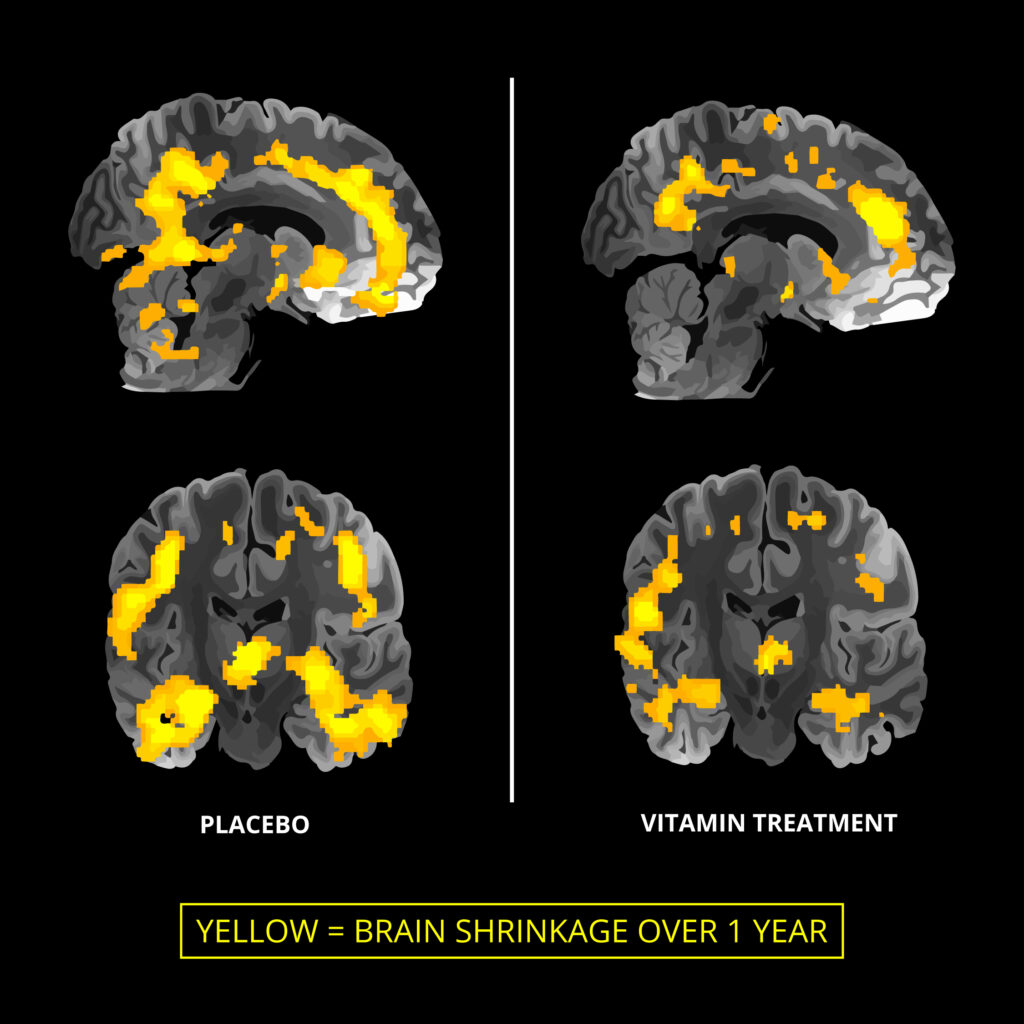
Accelerated brain shrinkage occurs below 500 pg/ml, as established by Professor David Smith’s research at Oxford University more than a decade ago. This is why several countries, such as Japan, set the “normal” range for serum B12 as above 500 pg/ml. Despite clear evidence over the past decade, both UK and US health authorities have failed to correct the reference range for vitamin B12, which is set at less than half this, namely around 180 pg/ml. (3)

Absorption, ageing, and how to know if you need more

A recent study of 3,000 EU children reported that the median B12 level was 347 pg/ml and one third were below 200 pg/ml. (4) This means that many children are already in the risk zone, and deficiency is more prevalent in vegan children. In older adults the problem is compounded by poor absorption, made worse by antacids, since stomach secretions are required to absorb vitamin B12. Hence, those taking PPI antacids such as omeprazole for more than 4.4 years have a 30% increased risk of dementia. (5) There is no realistic way for many older adults to achieve these required intakes of B12 from diet alone.

How do you know what you need? I recommend testing homocysteine, which tells you whether you are in the brain shrinkage risk zone above 10 µmol/L, or testing serum B12 and ensuring it is above 500 pg/ml, then supplementing accordingly with vitamin B12 or, better still, a homocysteine-lowering formula if levels fall outside the ideal range.

Vitamin D: Supplementation Is Essential In Winter Months

Vitamin D, also found in marine foods, is insufficient for a third of the year due to lack of synthesis from sunlight acting on the skin, if you rely solely on diet. A recent scientific report states: “Vitamin D3 plays a pivotal role not only in bone health but also in the functioning of the nervous system, particularly in the context of age-related neurodegenerative diseases such as Alzheimer’s disease, multiple sclerosis, and Parkinson’s disease.” (6)

Vitamin D Levels, Brain Health and Dementia Risk

Cognitive decline is far more likely if vitamin D is low, and Alzheimer’s risk is lower when levels are higher. In one large study, those who supplement vitamin D had a lower incidence of dementia. (7) Anyone who implies you can still get enough from food in winter is less enlightened than the UK Government, who recommend everyone supplements vitamin D from October to March.

Why Testing and Target Levels Matter in Winter

Vitamin D’s protective effect depends on your blood level. I supplement 800 IU in the summer months and 3,000 IU daily in the winter months. However, the true indicator is whatever keeps my blood vitamin D level above 75 nmol/L (30 ng/ml). Bear in mind that I also eat oily fish and make a point of getting at least 20 minutes of sun exposure a day in summer months, plus a winter holiday in the sun. Factors such as darker skin, excess weight, low fish intake or low sun exposure increase your needs. That is why we recommend testing vitamin D, ideally as winter approaches and again towards the end of winter, so you know you are on track with supplementation.

A recent Chinese study published earlier this year on women over 100 found those in the highest quarter for vitamin D had an 87% reduced risk of dementia compared to those in the lowest quarter. (8) Risk was lowest in those with a blood level above 73.5 nmol/L (29.3 ng/ml). This is remarkably consistent with levels associated with benefits for bone health, immunity and many other outcomes. It is also the level our scientists set to achieve “green” on the DRIfT test. The vast majority of people in the western world do not reach this level.

Vitamin C: An Essential Brain And Body Nutrient

This essential vitamin is produced by almost all animals but not humans. Guinea pigs also do not make it, which is why they became an experimental animal of choice: they share our vulnerability. We are dependent on vitamin C for many functions in the body, and thousands of studies support its roles, including as a key antioxidant, as a maker of collagen, and as a vital nutrient for immunity.

Why vitamin C is repeatedly underestimated

Yet I still read so-called experts who claim vitamin C “does nothing” for colds, cancer or anything else. Are they simply not reading the science? In very high intravenous doses, it has been used in some hospital settings, including trials in critical illness. Additionally, there are examples of trials in cancer therapy, such as a randomised trial of pharmacological ascorbate alongside chemotherapy which reported improved outcomes in metastatic pancreatic cancer. (9)

If you look at recent reviews, you’ll see statements like these:

Mounting evidence indicates that vitamin C has the potential to be a potent anti-cancer agent when administered intravenously and in high doses.” (10)

Supplementation with vitamin C appears to be able to both prevent and treat respiratory and systemic infections… treatment of established infections requires significantly higher (gram) doses.” (11)

Yet we still see claims that vitamin C does nothing for colds. One survey asked people if they took vitamin C and found no difference in incidence of COVID between those who did and did not supplement. But why would it? Vitamin C does not necessarily prevent infection. What it does, especially in higher doses upon infection, is support immune function and may reduce symptom severity and duration.

Even the critical comments in the media often refer to the meta-analysis of cold studies by Professor of Public Health Dr Harri Hemilä in Finland. What he actually concludes is that vitamin C shortens cold duration, with dose-response effects reported in some controlled trials, and evidence of reduced pneumonia risk in certain contexts. (12)

Vitamin C, dose, and long-term brain health

I take 2 grams a day. This is consistent with what many primates achieve in the wild. We struggle to get 100 mg from food alone, a fraction of what our biology seems designed to handle.

Vitamin C also appears relevant to dementia risk. In observational research, vitamin C (especially alongside vitamin E) has been associated with lower risk of cognitive decline and Alzheimer’s, and evidence reviews have included vitamin C and E among “grade 1” prevention factors in large-scale evidence mapping. (13,14)

Supplements Are Necessary For Good Health

Why deficiency-based nutrition targets are no longer fit for purpose

In conclusion, Professor David Smith, former Deputy Head of the Faculty of Medical Science at Oxford University, and I drafted this statement on supplements for Food for the Brain:

‘The conventional view regarding nutritional supplements is that they are largely unnecessary if a person eats a “well-balanced diet”. This is based on recommended intakes (RDAs, RNIs) designed to prevent classical symptoms of deficiency, such as scurvy in the case of vitamin C. Blood levels of nutrients that prevent classical deficiencies are then extended to imply that a person has sufficient nutrient status if they are above these levels.

But there is abundant evidence that levels above those used to define “deficiency” may be associated with better outcomes, and these levels define a zone of “nutritional insufficiency”. There is also a growing body of evidence from well-designed studies on specific diseases showing that supplements providing nutrients beyond basic RDAs can delay, reduce or ameliorate symptoms, and that risk often reduces steadily as nutrient status rises beyond arbitrary cut-offs.

Redefining sufficiency through disease risk and biological individuality

This illustrates that the definition of “deficiency” is outdated. Deficiency means a lack of efficiency. If deficiency, and its counterpart sufficiency, were to be defined as the level of a nutrient that reduces symptoms or lowers disease risk, that definition is scientifically supportable and takes into account biochemical individuality, including genetics, environment, the microbiome and an individual’s ability to absorb nutrients.

At Food for the Brain, our overarching principle is scientific integrity: consistency with the prevailing science. We share that growing body of knowledge in a way that enables people to restore, maintain, and improve mental health.

What To Do Next?

1. Get guidance, not guesswork

If you want ongoing support, the simplest place to start is by becoming a FRIEND of Food for the Brain. For £50 a year, you get access to our full programme of free education webinars and monthly group coaching. You also get access to the COGNITION programme. This programme is designed to help you turn evidence into practical, lasting habits. It is guidance you can trust, rooted in science. It is delivered with the support of a community working towards the same goal: better brain health for all.

2. Test your brain health with a validated tool

One of the most powerful free resources we offer is the Cognitive Function Test. The test is a validated, research-backed way to check how your brain is functioning right now, across key cognitive domains.

It provides a meaningful baseline. It also helps track change over time, and can highlight where nutrition and lifestyle support may be most needed. If you want to understand your brain health before symptoms appear, this is the place to begin.

3. Take supplements, but test first

Many people take supplements with good intentions but no real clarity about whether they are helping. This is where DRIfT comes in.

DRIfT allows you to measure key brain-related biomarkers. You can see whether what you are taking is actually working, and where your priorities should lie. Instead of guessing, you can focus on what your brain genuinely needs, based on objective data.

References:

  1. P. Clayton, J Rowbotham, ‘An unsuitable and degraded diet? Part one: Public health lessons from the mid-Victorian working class diet’. Journal of the Royal Society of Medicine 2008: 101: 282–289. DOI 10.1258/jrsm.2008.080112; also see P. Clayton, J Rowbotham, ‘An unsuitable and degraded diet?. Part two: Realities of the mid-Victorian diet’ Journal of the Royal Society of Medicine 2008: 101: 350– 357. DOI 10.1258/jrsm.2008.080113
  2. Ying-ying Niu, Hao-yu Yan, Jian-feng Zhong, Zhi-quan Diao, Jing Li, Cheng-ping Li, Lian-hong Chen, Wen-qi Huang, Miao Xu, Zhi-tong Xu, Xiao-feng Liang, Zhi-hao Li, Dan Liu. Association of dietary choline intake with incidence of dementia, Alzheimer disease, and mild cognitive impairment: a large population-based prospective cohort study. The American Journal of Clinical Nutrition, Volume 121, Issue 1, 2025, Pages 5-13, ISSN 0002-9165, https://doi.org/10.1016/j.ajcnut.2024.11.001
  3. Smith AD, Refsum H. Do we need to reconsider the desirable blood level of vitamin B12? J Intern Med. 2012 Feb;271(2):179-82. doi: 10.1111/j.1365-2796.2011.02485.x. Epub 2011 Dec 11. PMID: 22092891.
  4. Kara İS, Peker NA, Dolğun İ, Mertoğlu C. Vitamin B12 Level in Children. J Curr Pediatr. 2023 Aug;21(2):127-134. doi:10.4274/jcp . 2023.75688.
  5. Cumulative Use of Proton Pump Inhibitors and Risk of Dementia: The Atherosclerosis Risk in Communities Study. Carin Northuis, Elizabeth Bell, Pamela Lutsey, Kristen M George, Rebecca F. Gottesman, Tom H. Mosley, Eric A Whitsel, Kamakshi Lakshminarayan, Neurology Aug 2023, 10.1212/WNL.0000000000207747; DOI: 10.1212/WNL.0000000000207747
  6. Pietruszkiewicz J, Mrozek K, Zwierz M, Wińska A, Suprunowicz M, Oracz AJ, Waszkiewicz N. The Neuroprotective Potential of Vitamin D3. Nutrients. 2025 Oct 12;17(20):3202. doi: 10.3390/nu17203202. PMID: 41156455; PMCID: PMC12566728.
  7. Ghahremani M, Smith EE, Chen HY, Creese B, Goodarzi Z, Ismail Z. Vitamin D supplementation and incident dementia: Effects of sex, APOE, and baseline cognitive status. Alzheimers Dement (Amst). 2023 Mar 1;15(1):e12404. doi: 10.1002/dad2.12404. PMID: 36874594; PMCID: PMC9976297.
  8. Li Y, Wang X, Yu M, Wang F, Song D, Liu M,Liang X, Liu H, Liu J, Fu S and Liu X (2025). The relationship between vitamin D levels and Alzheimer’s disease risk: insights from a centenarian study of Chinese women. Front. Nutr. 12:1628732.doi: 10.3389/fnut.2025.1628732
  9. Bodeker KL, Smith BJ, Berg DJ, Chandrasekharan C, Sharif S, Fei N, Vollstedt S, Brown H, Chandler M, Lorack A, McMichael S, Wulfekuhle J, Wagner BA, Buettner GR, Allen BG, Caster JM, Dion B, Kamgar M, Buatti JM, Cullen JJ. A randomized trial of pharmacological ascorbate, gemcitabine, and nab-paclitaxel for metastatic pancreatic cancer. Redox Biol. 2024 Nov;77:103375. doi: 10.1016/j.redox.2024.103375. Epub 2024 Oct 2. PMID: 39369582; PMCID: PMC11491967.

Further info

Vitamin D: Your Brain’s Ally against Alzheimer’s and Dementia

Vitamin D: Your Brain’s Ally against Alzheimer’s and Dementia

Vitamin d capsule is held between fingers against the sun

Few people realise that vitamin D acts more like a brain fat than a vitamin – and your risk of cognitive decline can soar by up to 19 times if your levels are low. Often known as the sunshine vitamin, it is in fact a vital brain nutrient: helping neurons communicate, calming inflammation and defending against oxidative stress – all crucial for protecting memory, mood and long-term cognitive health. This highlights the important connection between vitamin D and dementia.

When vitamin D levels drop, the effects on the brain are striking.

Studies show that people with low vitamin D are far more likely to experience cognitive decline and dementia, while those with optimal levels have up to four times lower risk of developing Alzheimer’s disease. In older adults, falling vitamin D often mirrors worsening memory – yet the simple act of supplementing can reduce risk by a third. (That is why we offer our DRIfT at-home blood tests so you can know your levels are optimal and protect your brain.)

Read on to discover why optimising your vitamin D intake – and measuring it alongside other key brain biomarkers – could be one of the most powerful steps you can take to future-proof your brain.

Vitamin D and Dementia

Vitamin D and Dementia

Low vitamin D levels are significantly linked to a higher risk of dementia and cognitive decline. [1,2,3] One notable study carried out in France highlights an astonishing finding: older women with vitamin D deficiency were approximately 19 times more likely to develop dementia within seven years compared to those without vitamin D deficiency. [4] This research backs up several previous studies, including one that tracked 1,658 elderly adults for over five and a half years [5], concluding:

“Vitamin D deficiency is associated with a substantially increased risk of all-cause dementia and Alzheimer’s disease.”

Vitamin D Study: Our New Research

With more than 50 million people around the world affected by dementia, a figure forecast to triple by 2050, [6]) research into prevention is something that Food for the Brain takes seriously. Our Research Team is currently undertaking an independent study, commissioned by Dr William Grant, led by Tommy Wood, Assistant Professor at the University of Washington, Seattle, and supported by Simona Brucoli, data statistician. This research aims to contribute to the growing knowledge of the importance of Vitamin D in preserving brain health and staving off cognitive decline. More on this later in the year!

Understanding the Impact of Vitamin D on Overall Health

The impact of Vitamin D deficiency is a significant one, with links to not only dementia but also conditions such as osteoporosis, cardiovascular disease, cancer, stroke, diabetes, schizophrenia, psychosis, and autism [7], as well as behavioural problems in adolescents [8] and children with ADHD (9). Read more on how deficiency in Vitamin D impacts our overall health in our article here.  

How to Sustain Optimal Vitamin D Levels

Of course, we can get vitamin D from our diet: oily fish, including salmon, mackerel, sardines, egg yolks, red meat, and liver, are all excellent sources. However, our bodies struggle to produce and maintain optimal vitamin D levels as we age, even with a good diet. 

Our reliance on the sun, our natural provider of Vitamin D, is also compromised, especially in the Northern Hemisphere, as we begin to emerge from the long winter months and not, as yet, fully into the bright embrace of summer. It’s no wonder that our bodies are left vulnerable to notable decreases in vitamin D.  

What Exactly is Vitamin D Deficiency?

Deficiency is defined as serum 25(OH)D concentrations of less than 50 nmol/L. Our vitamin D expert, Dr William Grant, says:

“All the evidence regarding cardio-metabolic diseases, cancer, diabetes, infectious diseases, and pregnancy outcomes shows that you need a blood level of vitamin D above 75 nmol/L to be healthy, and the same is proving true for the brain.” 

This optimal level is impossible to achieve without supplementation in the winter. I recommend every adult and teenager supplements themselves with at least 1000 to 3000iu per day from October to March in line with a recent review by 35 vitamin D researchers. [10] The degree of obesity [11], darker skin colour [12] and living further North [13] increases need.

Supplementation: a Shield Against Risk?

According to recent research, turning to vitamin D supplements could reduce the risk of dementia.   Researchers at the University of Calgary’s Hotchkiss Brain Institute in Canada and the University of Exeter in the UK explored the relationship between vitamin D supplementation and dementia in 12,388 participants with a mean age of 71.  They were dementia-free when they signed up. Of the group, 37 percent (4,637) took vitamin D supplements. In the study, the team found that taking vitamin D was associated with living dementia-free for longer, and they also found 40 percent fewer dementia diagnoses in the group who took supplements. [10] 

But How Do You Know if You’re Getting Enough Vitamin D?

The answer lies in taking a proactive step: testing your vitamin D levels. 

Here at Food for the Brain, we don’t believe in guesswork. We champion the idea that we are all the architects of our own brain health and well-being. In the spirit of Citizen Scientists, we offer our accurate at-home blood tests so you can feel confident that you are protecting your mood, memory and future. Order your blood test here – available globally.

Awareness is the first step toward meaningful change. Discovering your vitamin D level is more than just informative; it’s a critical step toward optimising your cognitive and physical health. 

Take Action: Protect and Future-Proof Your Brain

Share the knowledge.

Encourage your family and friends to check their brain health and vitamin D levels too – prevention starts with awareness.

Check your brain health for free.

Take our quick, scientifically validated Cognitive Function Test to see how your brain is performing right now. It’s free, is validated and gives you a personalised Dementia Risk Index and tailored advice.

Know your vitamin D and brain biomarker status.

Order our DRIfT 5-in-1 at-home blood test to measure the five key markers that matter most — Vitamin D, Homocysteine, HbA1c, Glutathione and Omega-3. Your results come with clear guidance on how to optimise each one.

Boost your vitamin D naturally.

  • Spend 15–20 minutes outdoors daily if you are in summer or live near the equator (without sunscreen on arms or legs, when the sun is high). Avoid peak sun times.
  • Eat oily fish twice a week – salmon, mackerel, sardines or trout.
  • Add egg yolks, mushrooms, and fortified dairy alternatives to your meals.
  • Supplement between 1,000–3,000 iu daily from October to March (and year-round if you have darker skin or live in northern latitudes). Find out more about supplements here

References

  1. Jayedi A, Rashidy-Pour A, Shab-Bidar S. Vitamin D status and risk of dementia and Alzheimer’s disease: A dose-response meta-analysis. Nutr Neurosci. 2019 Nov;22(11):750-9. doi: 10.1080/1028415X.2018.1436639.
  2. Chai B, Gao F, Wu R, Dong T, Gu C, Lin Q, et al. Vitamin D deficiency as a risk factor for dementia and Alzheimer’s disease: an updated meta-analysis. BMC Neurol. 2019 Nov 13;19(1):284. doi: 10.1186/s12883-019-1500-6.
  3. Melo van Lent D, Egert S, Wolfsgruber S, Kleineidam L, Weinhold L, Wagner-Thelen H, et al. Low Serum Vitamin D Status Is Associated with Incident Alzheimer’s Dementia in the Oldest Old. Nutrients. 2023;15(1):61. https://doi.org/10.3390/nu15010061
  4. Annweiler C, Rolland Y, Schott AM, Blain H, Vellas B, Beauchet O. Serum vitamin D deficiency as a predictor of incident non-Alzheimer dementias: a 7-year longitudinal study. Dement Geriatr Cogn Disord. 2011;32(4):273-8. doi: 10.1159/000334944.
  5. Littlejohns TJ, Henley WE, Lang IA, Annweiler C, Beauchet O, Chaves PH, et al. Vitamin D and the risk of dementia and Alzheimer’s disease. Neurology. 2014 Sep 2;83(10):920-8. doi: 10.1212/WNL.0000000000000755.
  6. Gauthier S, Rosa-Neto P, Morais JA, Webster C. World Alzheimer Report 2021: Journey Through the Diagnosis of Dementia. Alzheimer’s Disease International; 2021.
  7. Anjum I, Jaffery SS, Fayyaz M, Samoo Z, Anjum S. The Role of Vitamin D in Brain Health: A Mini Literature Review. Cureus. 2018 Jul 10;10(7):e2960. doi: 10.7759/cureus.2960.
  8. Robinson SL, Marín C, Oliveros H, Mora-Plazas M, Lozoff B, Villamor E. Vitamin D Deficiency in Middle Childhood Is Related to Behavior Problems in Adolescence. J Nutr. 2020;150(1):140-8. https://doi.org/10.1093/jn/nxz185.
  9. Hemamy M, Pahlavani N, Amanollahi A, Islam SMS, McVicar J, Askari G, et al. The effect of vitamin D and magnesium supplementation on the mental health status of attention-deficit hyperactive children: a randomized controlled trial. BMC Pediatr. 2021 Apr 17;21(1):178. doi: 10.1186/s12887-021-02631-1.
  10. Ghahremani M, Smith EE, Chen HY, Creese B, Goodarzi Z, Ismail Z. Vitamin D supplementation and incident dementia: Effects of sex, APOE, and baseline cognitive status. Alzheimers Dement (Amst). 2023 Mar 1;15(1):e12404. doi: 10.1002/dad2.12404. PMID: 36874594; PMCID: PMC9976297.
  11. Ekwaru JP et al The importance of body weight for the dose response relationship of oral vitamin D supplementation and serum 25-hydroxyvitamin D in healthy volunteers. PLoS One. 2014 Nov 5;9(11):e111265. doi: 10.1371/journal.pone.0111265. PMID: 25372709; PMCID: PMC4220998.
  12. Ames BN, Grant WB, Willett WC. Does the High Prevalence of Vitamin D Deficiency in African Americans Contribute to Health Disparities? Nutrients. 2021 Feb 3;13(2):499. doi: 10.3390/nu13020499. PMID: 33546262; PMCID: PMC7913332.
  13. Engelsen O. The relationship between ultraviolet radiation exposure and vitamin D status. Nutrients. 2010 May;2(5):482-95. doi: 10.3390/nu2050482. Epub 2010 May 4. PMID: 22254036; PMCID: PMC3257661.
Further info

Are Supplements a Waste of Money For Your Brain?

We often get asked if supplements are necessary, usually in relation to some expert or opinion leader saying they are a waste of money or have no evidence of effect.

Anyone actively discouraging supplementation of vitamin B, C, D or omega-3, or claiming there is no scientific evidence to support their use, are both scientifically inaccurate and, perhaps inadvertently, driving more people towards dementia and Alzheimer’s by increasing their risk of cognitive decline. 

Here is why

B vitamin supplements – Two in five people over 60 in the UK and more than half in the US have raised homocysteine levels and accelerated brain shrinkage as a result and need to supplement high dose B12 (500mcg) to reduce the rate of brain shrinkage. This may be due to poor absorption and is not achievable by diet alone. Find out more about this here.

Omega-3 fish oil supplements – Those with higher omega-3 intake, both from food and supplements, have substantially reduced risk from UK BioBank data. Those with higher omega-3 index levels, which we test at Food for the Brain, have more brain mass, and even healthy, young people supplementing omega-3 have cognitive improvements. You can see the published scientific evidence for this here.

Vitamin D supplements – Those who have higher vitamin D levels or supplement vitamin D also have substantially reduced risk of cognitive decline. Find out more here but also we’ll be publishing a full report on vitamin D and dementia in the next two weeks.

Vitamin C and E supplements – according to the most comprehensive review of studies relating to Alzheimer’s prevention ‘‘either a high vitamin E or C intake showed a trend of attenuating risk by about 26 per cent’, making these nutrients ‘grade 1’ top level prevention’. Inadequate vitamin C status in otherwise healthy young adults is related to a low level of mental vitality. In a randomised controlled trial vitamin C supplementation effectively increased work motivation and attentional focus and contributed to better performance on cognitive tasks requiring sustained attention. These brain-friendly effects of vitamin C relate to the supplementation of 1 gram or more a day. See the scientific aevidence for antioxidants here.

In addition to exploring the links to the evidence above, these articles further explain the role of B vitamins, Omega-3, Vitamin D, Vitamin C, E and other antioxidants.

Other resources: 

So are supplements a waste of money?

At Food for the Brain, where prevention is better than cure, we report the science, based on the research, which tells us the opposite.

Further info

How to stop your brain cells dying

—-

Last week a discovery, published in the journal Science, showed that a high level of an abnormal ‘phosphorylated-tau’ protein triggers brain cells to self-destruct. It also gives a vital clue as to how to stop your brain cells dying with specific vitamins.

When cells become largely dysfunctional, they self-destruct. This process in neurons (brain cells) is called ‘necroptosis’. The recent discovery, made by researchers at the UK’s Dementia Research Institute at University College London (1), showed that an abnormal accumulation of a protein called tau that then becomes phosphorylated, making it tangled and dysfunctional, triggers a specific molecule called MEG3 that triggers brain cell death.

“For the first time we get a clue to how and why neurons die in Alzheimer’s disease. There’s been a lot of speculation for 30-40 years, but nobody has been able to pinpoint the mechanisms. It really provides strong evidence it’s this specific suicide pathway.” researcher Prof Bart De Strooper, from the UK’s Dementia Research Institute. told the BBC.

Even before this, too much phosphorylated-tau (abbreviated to p-tau) interferes with the cell’s energy factories (called mitochondria), potentially leading to brain fatigue. The more p-tau accumulates, the greater a person’s risk for cognitive problems and Alzheimer’s dementia. Also, those with memory decline have been shown to have relatively more p-tau to tau protein.

The critical prevention question is, then, what stops too much of the tau protein from turning into the potentially harmful p-tau and what helps restore p-tau to normal tau protein. 

—-

—-

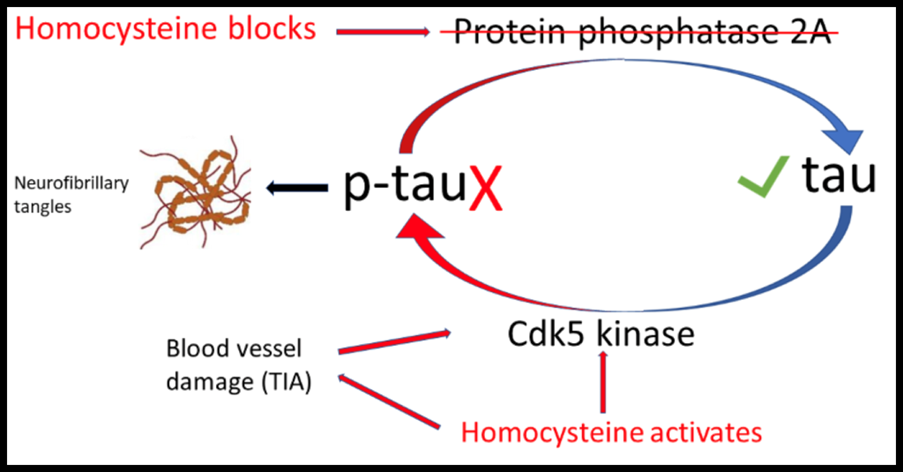
The answer is remarkably simple – a lack of B vitamins and raised blood levels of homocysteine which is an established risk factor for memory decline, measurable in the blood. When levels of B vitamins (B6, B12 and folate) are low, blood levels of homocysteine go up. This activates one enzyme (Cdk5 kinase) that adds the bad ‘p’ to tau and blocks another enzyme (protein phosphatase A2) which removes the dangerous ‘p’ restoring normal tau protein (2)(3).  High homocysteine also damages the tiny blood vessels in the brain, leading to ‘mini strokes’ or transient ischemic attacks (TIAs), which further raise levels of p-tau (4). Homocysteine both raises levels of the dangerous p-tau and can also bind to tau (5), further generating the neurofibrillary tangles that then trigger brain cell death.

So, the simplest way to stop the formation of p-tau, and neurofibrillary tangles, and keep your brain healthy, is to keep your plasma homocysteine level below 10 mcmol/L. Half of those above 65 have a level of homocysteine higher than this. The easiest way to lower your homocysteine below 10 mcmol/L is to supplement B6, B12 and folate. 

But it’s also good to eat greens and beans that are high in folate. While B12 is only in animal foods – meat, seafood, eggs and milk. While an optimal supplemental intake for a middle-aged person might be 20mg of B6, 10 mcg of B12, and 400 mcg of folate, many older people start to dramatically lose their ability to absorb B12, the absorption of which requires stomach secretions. Antacid ‘PPI’ medication such as omeprazole accelerates this decline, promoting B12 deficiency. And, over four years of use, increases dementia risk by a third (6). Then, as studies show, you might need a lot more B12, such as 500 mcg, to get a little more into your bloodstream, and possibly more supplemental folate, in the region of 500 to 800 mcg.

This is the cheapest, safest and most logical solution to lower p-tau and prevent brain cells from committing suicide. The problem is that these nutrients, invented by nature, cannot be patented. Therefore it is not in the interest of the pharmaceutical industry to research them.

Consequently, drugs are being developed and tested that block the kinase enzyme and activate the phosphatase enzyme (7), which is exactly what the homocysteine-lowering B vitamins do. But, so far, there are no human clinical trials reporting significant benefit. 

On the other hand, trials giving these kinds of doses of B6, B12 and folic acid have shown up to a two-thirds slower rate of brain shrinkage (8) and virtually no further memory loss in those with pre-dementia (9).

—-

Thank you for reading!
Food for the Brain is a non-for-profit educational and research charity that offers a free Cognitive Function Test and assesses your Dementia Risk Index to be able to advise you on how to dementia-proof your diet and lifestyle.

By completing the Cognitive Function Test you are joining our grassroots research initiative to find out what really works for preventing cognitive decline. We share our ongoing research results with you to help you make brain-friendly choices.

Please support our research by becoming a Friend of Food for the Brain.

———

Test Your Cognitive Function Now green banner.

References

1 https://www.science.org/doi/10.1126/science.abp9556 Balasu S et al. Science
14 Sep 2023 Vol 381, Issue 6663 pp. 1176-1182 DOI: 10.1126/science.abp9556

2 Smith AD, Refsum H. Homocysteine, B Vitamins, and Cognitive Impairment. Annu Rev Nutr. 2016 Jul 17;36:211-39. doi: 10.1146/annurev-nutr-071715-050947. PMID: 27431367.

3 LiJ-G,ChuJ,BarreroC,MeraliS,Pratico`D.2014.Homocysteine exacerbatesβ-amyloid, tau pathology, and cognitive deficit in a mouse model of Alzheimer’s disease with plaques and tangles. Ann. Neurol. 75:851–63 

4 Shirafuji N et al Homocysteine Increases Tau Phosphorylation, Truncation and Oligomerization. Int J Mol Sci. 2018 Mar 17;19(3):891. doi: 10.3390/ijms19030891. PMID: 29562600; PMCID: PMC5877752.

5 Bossenmeyer-Pourié C et al. N-homocysteinylation of tau and MAP1 is increased in autopsy specimens of Alzheimer’s disease and vascular dementia. J Pathol. 2019 Jul;248(3):291-303. doi: 10.1002/path.5254. Epub 2019 Mar 19. PMID: 307349

6 Northuis C, Bell E, Lutsey P, George KM, Gottesman RF, Mosley TH, Whitsel EA, Lakshminarayan K. Cumulative Use of Proton Pump Inhibitors and Risk of Dementia: The Atherosclerosis Risk in Communities Study. Neurology. 2023 Aug 9:10.1212/WNL.0000000000207747. doi: 10.1212/WNL.0000000000207747. Epub ahead of print. PMID: 37558503.

7 Xia, Y., Prokop, S. & Giasson, B.I. “Don’t Phos Over Tau”: recent developments in clinical biomarkers and therapies targeting tau phosphorylation in Alzheimer’s disease and other tauopathies. Mol Neurodegeneration 16, 37 (2021). https://doi.org/10.1186/s13024-021-00460-5

8 Smith AD, Refsum H. Homocysteine, B Vitamins, and Cognitive Impairment. Annu Rev Nutr. 2016 Jul 17;36:211-39. doi: 10.1146/annurev-nutr-071715-050947. PMID: 27431367; see also Jernerén F., et al. Am J Clin Nutr. 2015 Jul;102(1):215-21.

Further info

Two nutrients proven to stop your brain shrinking

By Jerome Burne &  Patrick Holford

New research shows that the combination of B vitamins and omega-3 are a dynamic duo against dementia, stopping the brain shrinkage that is the hallmark of Alzheimer’s. 

The discovery, hailed as the “a major step towards Alzheimer’s prevention” was first made at the University of Oxford, but has now been confirmed by research groups in Holland, Sweden and China.

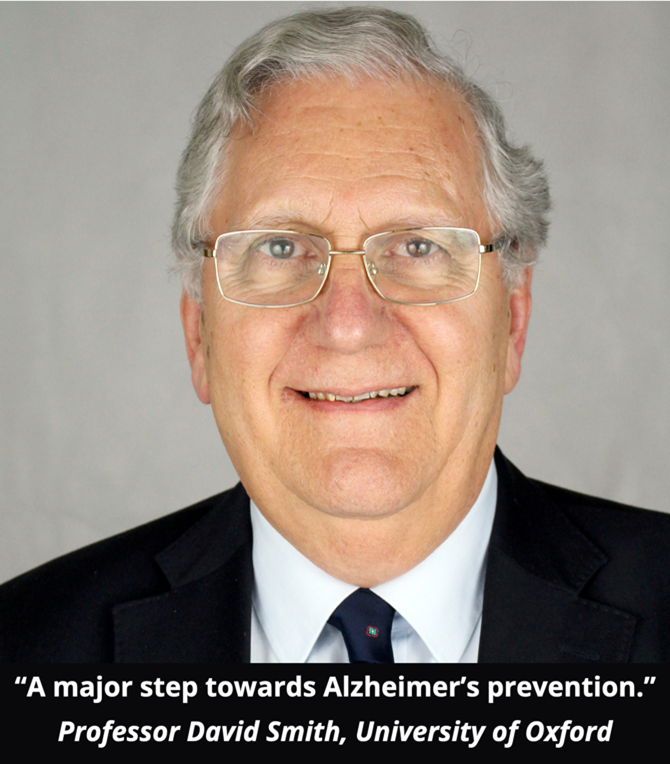
Headed by Professor David Smith, former Chair of Pharmacology and Deputy Head of the Division of Medical Sciences at Oxford University and director of the Oxford Project to Investigate Memory and Ageing (OPTIMA), the research has found that giving older people with the first signs of cognitive impairment supplemental B vitamins (B6, B12 and folic acid) at higher levels than can be achieved through diet to those with sufficient omega-3 fats produced 73% less brain shrinkage in a year, compared to placebo. This reduction brought brain shrinkage down to the level found in those elderly with no cognitive decline. The trial was part-funded by Alzheimer’s Research UK (ARUK). “The effect is greater than that of any drug treatment to date – with no adverse effects.” says Professor Smith. In contrast the recent trials of anti-amyloid drugs have reduced brain shrinkage by 2%.

“Brain shrinkage is the hallmark of Alzheimer’s so this was a vital discovery for its prevention” says Patrick Holford, director of the Alzheimer’s Prevention Project at foodforthebrain.org, the UK’s leading dementia prevention charity “However we needed confirmation from other research groups. Now we have it.”.

Three other research groups have confirmed the combined effect of omega-3 and B vitamins is greater than either nutrient on its own.

“You literally cannot build brain cells without both omega-3 fats and sufficient B vitamins” says Holford. “If you give a builder a hammer or a bag of nails you don’t get a house. But if you give them both they can build a house. The B vitamins drive a process called methylation which assembles the critical brain-building fats that make up the membrane of neurons, through which all brain communication happens. Both are vital for building brain cells. Neither can work without the other.”

Watch this one minute film, on how to build new brain cells at any age.

Realising that the combination of B vitamins and omega-3 fats is key, researchers in Holland, who had previously run a major trial called B-proof that had tested the effects of B vitamins on memory but had only found very modest benefits decided to take reanalyse the results of their B vitamin trial according to the participants blood levels of omega-3 at the start of the trial. Sure enough, they found no benefit at all from the B vitamins in those with low omega-3 status, but a massive improvement in cognition in those in the top third of omega-3 levels.[i]

Could this need for both explain why some trials testing omega-3 were also not successful?

The Oxford University researchers, led by Dr Frederik Jerneren, were given access to the blood samples from another trial in Sweden called OmegAD. This trial  had given older people a hefty dose of 2.3grams (two large capsules) of omega-3 fish oils. The trial had apparently failed, showing no significant cognitive benefit. Could faulty methylation, a result of lack of B vitamins, be the reason for the omega-3 fish oils not working?

The Oxford researchers therefore measured homocysteine, a consequence of a lack of B vitamins, in the samples from the OmegAD trial. Dr Jerneren split the participants into thirds – from the lowest to highest level of homocysteine. Those given omega-3 who had  the lowest homocysteine, in other words sufficient in B vitamins, had a highly significant improvement in their clinical dementia rating while those with high homocysteine (poor B vitamin status) had no benefit at all.[ii] The group with sufficient vitamin B showed a reduction in their clinical dementia score that was more than three times that reported from the recent Lecanemab drug trial.[iii]

Meanwhile another trial, this time in China, gave those with pre-dementia either the B vitamin folic acid, or omega-3, or both, compared to placebo. Although B vitamin treatment and omega-3 treatment did slightly improve cognitive cores, the improvement was much greater in those given both thee nutrients.[iv]

With 170 million people over 65, Chinese authorities are taking prevention of dementia extremely seriously to avoid a cerebral tsunami. So, one of their top researchers, Professor Jin-Tai Yu at Shanghai’s Institute of Neurology at Fudan University did one of the most thorough reviews of all risk factors for Alzheimer’s to date.[v]

“Lowering blood homocysteine levels, an established indicator of Alzheimer’s risk, with B vitamins is a most promising treatment.” he concluded. He was also given access to the UK’s Bio Bank data of almost half a million people “Our current research, using data from the UK Bio Bank, shows that having higher blood levels of polyunsaturated fats, including omega-3, and supplementing fish oils, is associated with less risk of dementia. [vi] Moreover, recent studies suggest these two factors – homocysteine lowering B vitamins, and omega-3 – may, in combination, be potentially more beneficial. They are easy to implement. This is worthy of further research”

The UK’s Bio Bank data showed that something as simple as taking fish oils had reduced dementia risk by 9%. This is equivalent to the risk reduction found from quitting smoking.[vii]

US researchers at the National Institutes of Health research have confirmed this, attributing almost a quarter (22%) of Alzheimer’s cases to lack of B vitamins and raised homocysteine levels and the same (22%) to a lack of omega-3 and seafood intake.[viii] This means that about one in three cases of Alzheimer’s could be avoided simply by taking a daily high dose B vitamin supplement and an omega-3 fish oil capsule. This could save 95,000 people a year in the UK from developing dementia. Currently, 790 people – seven double decker buses worth – are diagnosed every single day. However, the benefit is not just in preventing people from dementia in the future. A study of healthy 65-year-olds given omega-3 fish oils showed both improvement in memory and healthier brain tissue within six months.[ix]

The Alzheimer’s prevention charity, foodforthebrain.org, targets eight prevention steps in their on-line Cognitive Function test and Dementia Risk Index questionnaire, including B vitamins and omega-3. “These are the two easiest to change and most evidence based prevention steps anyone can take.” Say Patrick Holford who directs their ‘Alzheimer’s is Preventable’campaign.


[i] van Soest, A.P.M., van de Rest, O., Witkamp, R.F. et al. DHA status influences effects of B-vitamin supplementation on cognitive ageing: a post-hoc analysis of the B-proof trial. Eur J Nutr (2022). https://doi.org/10.1007/s00394-022-02924-w

[ii] Jernerén F, Cederholm T, Refsum H, Smith AD, Turner C, Palmblad J, Eriksdotter M, Hjorth E, Faxen-Irving G, Wahlund LO, Schultzberg M, Basun H, Freund-Levi Y. Homocysteine Status Modifies the Treatment Effect of Omega-3 Fatty Acids on Cognition in a Randomized Clinical Trial in Mild to Moderate Alzheimer’s Disease: The OmegAD Study. J Alzheimers Dis. 2019;69(1):189-197. doi: 10.3233/JAD-181148. PMID: 30958356.

[iii] Walsh S, Merrick R, Richard E, Nurock S, Brayne C. Lecanemab for Alzheimer’s disease. BMJ. 2022 Dec 19;379:o3010. doi: 10.1136/bmj.o3010. PMID: 36535691.

[iv] Li M, Li W, Gao Y, Chen Y, Bai D, Weng J, Du Y, Ma F, Wang X, Liu H, Huang G. Effect of folic acid combined with docosahexaenoic acid intervention on mild cognitive impairment in elderly: a randomized double-blind, placebo-controlled trial. Eur J Nutr. 2021 Jun;60(4):1795-1808. doi: 10.1007/s00394-020-02373-3. Epub 2020 Aug 28. PMID: 32856190.

[v] Yu JT, Xu W, Tan CC, Andrieu S, Suckling J, Evangelou E, Pan A, Zhang C, Jia J, Feng L, Kua EH, Wang YJ, Wang HF, Tan MS, Li JQ, Hou XH, Wan Y, Tan L, Mok V, Tan L, Dong Q, Touchon J, Gauthier S, Aisen PS, Vellas B. Evidence-based prevention of Alzheimer’s disease: systematic review and meta-analysis of 243 observational prospective studies and 153 randomised controlled trials. J Neurol Neurosurg Psychiatry. 2020 Nov;91(11):1201-1209. doi: 10.1136/jnnp-2019-321913. Epub 2020 Jul 20. PMID: 32690803; PMCID: PMC7569385.

[vi] Huang Y, Deng Y, Zhang P, Lin J, Guo D, Yang L, Liu D, Xu B, Huang C, Zhang H. Associations of fish oil supplementation with incident dementia: Evidence from the UK Biobank cohort study. Front Neurosci. 2022 Sep 7;16:910977. doi: 10.3389/fnins.2022.910977. PMID: 36161159; PMCID: PMC9489907.

[vii] Jeong SM, Park J, Han K, Yoo J, Yoo JE, Lee CM, Jung W, Lee J, Kim SY, Shin DW. Association of Changes in Smoking Intensity With Risk of Dementia in Korea. JAMA Netw Open. 2023 Jan 3;6(1):e2251506. doi: 10.1001/jamanetworkopen.2022.51506. PMID: 36656579; PMCID: PMC9857334.

[viii] Beydoun MA, Beydoun HA, Gamaldo AA, Teel A, Zonderman AB, Wang Y. Epidemiologic studies of modifiable factors associated with cognition and dementia: systematic review and meta-analysis. BMC Public Health. 2014 Jun 24;14:643. doi: 10.1186/1471-2458-14-643. PMID: 24962204; PMCID: PMC4099157.

[ix] Witte AV, Kerti L, Hermannstädter HM, Fiebach JB, Schreiber SJ, Schuchardt JP, Hahn A, Flöel A. Long-chain omega-3 fatty acids improve brain function and structure in older adults. Cereb Cortex. 2014 Nov;24(11):3059-68. doi: 10.1093/cercor/bht163. Epub 2013 Jun 24. PMID: 23796946.

Further info