because prevention is better than cure.

because prevention is better than cure.

Mini Cart 0

Your cart is empty.

Mini Cart 0

Your cart is empty.

Diet, not genes, is driving dementia says British Medical Journal

A hugely significant study in the British Medical Journal into age-related cognitive decline and dementia has stated that changing your diet and lifestyle from bad to good cuts your future risk of developing dementia by a massive nine times [1]

The study shows, significantly, that whether or not you inherit the ApoE4 ‘Alzheimer’s gene’ that one in five people carry, it makes no difference to the positive reduction in risk achievable by simple diet and lifestyle changes [2].

Eating a healthy diet was also the most important prevention step, followed by an active lifestyle, with one’s intellectual life, then physical activity, then social interactions being the next most important steps. Eating a healthy diet was about twice as important as exercise in predicting cognitive decline.

This study, published on 25th January 2023, followed over 30,000 people over a decade and found that those with a healthy diet were about seven times less likely to have age-related cognitive decline or dementia than those with an ‘average’ diet and about nine times less likely to develop dementia than those with an unfavourable diet.

The assessment of a healthy diet was based on intake of fish, eggs, fruits, vegetables, legumes, nuts and tea, among other foods known to predict lower risk.

Increasing evidence that Alzheimer’s and Dementia are preventable

“These results provide an optimistic outlook, as they suggest that although genetic risk is not modifiable, a combination of more healthy lifestyle factors are associated with a slower rate of memory decline, regardless of the genetic risk,” wrote the study authors.

This study has been warmly welcomed by charity Food for the Brain, as it backs up their own research and the work they have been actively carrying out for 10  years, to help people reduce their risk of age-related cognitive decline.

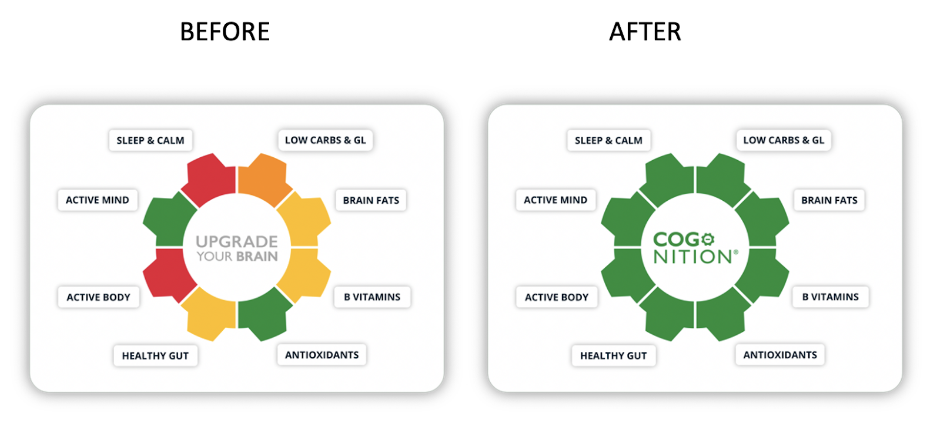
Food for the Brain offers a free online assessment of a participant’s diet and lifestyle, called the Dementia Risk Index, which works out a person’s overall risk. The assessment also includes a cognitive function test to assess your memory. This charitable ‘citizen science’ action group have also just launched COGNITION, an interactive, personalised ‘brain upgrade’ programme that then shows you, week-by-week, how to make positive changes to bring your risk closer to zero.

Indeed, the on-line test assesses all the same risk factors the British Medical Journal study has shown impact a person’s future risk – diet, active physical, intellectual, social lifestyle, smoking and drinking habits.  

According to Professor David Smith from the University of Oxford, one of the charity’s scientific advisors, “Genes can only exert effects via non-genetic mechanisms and these mechanisms are often susceptible to modification by, for example, improving one’s diet. This study shows that diet and lifestyle are much more important than inheriting a gene variant such as ApoE4. Less than 1% of Alzheimer’s is directly caused by genes. With no clinically effective drugs, and minimal role of genes, this study confirms that the focus must be on making diet and lifestyle changes that reduce risk of developing dementia, as foodforthebrain.org are doing. It also shows that switching from an average to a healthy lifestyle, with positive diet changes being key, can dramatically reduce a person’s future risk of developing cognitive decline and dementia.” 

Another member of the science team, Dr Celeste de Jager Loots, Research Associate at Imperial College’s  AGE Unit where she researches risk factors and prevention of Alzheimer’s and dementia, explains that “While having inherited certain genes can be used to predict risk of dementia, that risk is changed by making positive diet and lifestyle changes. The emphasis needs to be on changing diet and lifestyle, especially since one cannot change one’s genes. The earlier one starts with a healthy lifestyle the better the chance of preventing effects of genetic risk.”

Risk for dementia can be detected from the age of 35 and subtle changes, picked up by Food for the Brain’s cognitive function test, can be seen up to 40 years before a diagnosis. The charity wants anyone over 35 to take the test and start making positive diet and lifestyle changes. “The average person can cut their future risk by three quarters just by making simple diet and lifestyle changes.” says Patrick Holford, who is directing the Alzheimer’s prevention project. “This prevention approach, if we reach enough people, could cut cases of dementia in the UK by a third. That’s why we are urging everyone over 35 to tell everyone they know to take the free and scientifically – validated and free Cognitive Function Test. Alzheimer’s dementia, which accounts for the vast majority of dementia, is irreversible. But it is preventable, as this study shows.”

Two thousand people every month are joining this campaign, assessing and reducing their risk. Over 380,000 people have now taken the test.

References

Jia, J. et al. (2023) “Association between healthy lifestyle and memory decline in older adults: 10 year, population based, prospective Cohort Study,” BMJ [Preprint]. Available at: https://doi.org/10.1136/bmj-2022-072691. [1]

The evidence that only 1% of Alzheimer’s is caused by genes is here: Bekris, L.M. et al. (2010) “Review article: Genetics of Alzheimer Disease,” Journal of Geriatric Psychiatry and Neurology, 23(4), pp. 213–227. Available at: https://doi.org/10.1177/0891988710383571. [2]

Useful links

For more information on the citizen science campaign see ‘Alzheimer’s is Preventable – A Manifesto for Change’.

Patrick Holford, founder of Food for the Brain and voluntary director of the Alzheimer’s Prevention Project and Jessica Ferrari-Wells, Chair of the Board of trustees are available for interview, as are members of the the Scientific Advisory Board are available for interview and comment. 
Further info

Phospholipids and Choline: Vegan Sources and How Much You Need

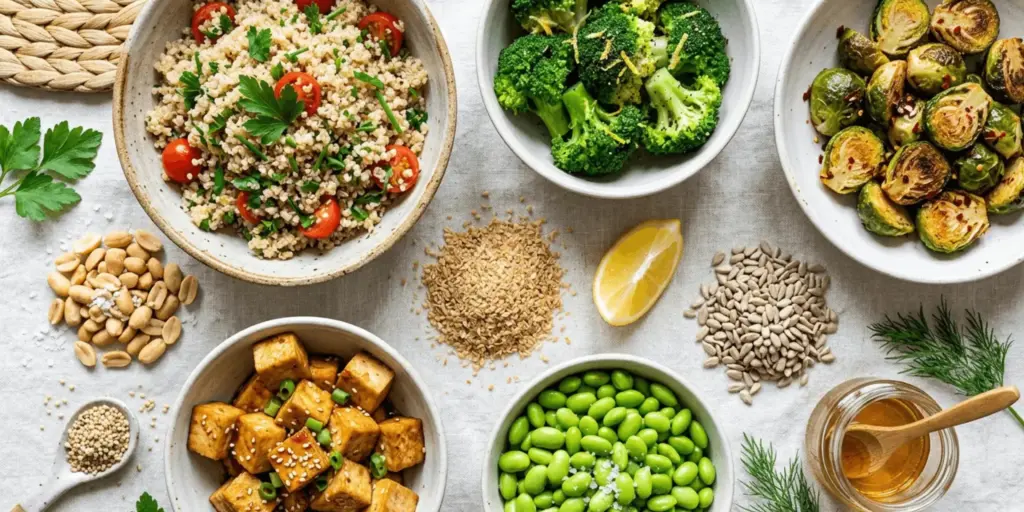
Vegan sources of choline including tofu, edamame, quinoa, broccoli, Brussels sprouts, peanuts and sunflower seeds, highlighting vegan choline, phospholipid food sources, choline vegetarian sources, and vegan phospholipids and choline.

Phospholipids and Choline: Vegan Sources and How Much You Need

Did you know your brain is largely built from fat? Phospholipids and choline are an important part of that story. Brain-cell membranes are rich in phospholipids, which combine with DHA, the long-chain omega-3 fat particularly important for the brain. Fish and eggs provide both these nutrients, but on a vegan diet you need to think about them separately: where your DHA is coming from, and whether you are getting enough choline to support phospholipid production. The good news is that both can be covered without eating fish or eggs. Here’s how, including the vegan choline sources that genuinely add up.

The DHA problem: plant foods don’t really solve it

Flaxseed, walnuts and chia give you ALA, a plant omega-3, but converting it into the DHA your brain actually needs is remarkably inefficient. The classic human tracer study found women convert around 9% of ALA into EPA at best, men considerably less, and conversion all the way to DHA is lower still, often under 1%.[1] In practice, that means a vegan diet without a direct DHA source usually falls short, whatever the flaxseed packet implies.

The fix is algae oil: it’s the same DHA fish get from eating algae in the first place, just without the fish, and a 2025 study found algae-derived EPA and DHA absorb just as well as fish oil at equivalent doses.[2] For brain health, research suggests that higher intakes may be needed than standard minimum omega-3 recommendations, with studies reporting cognitive benefits at DHA intakes above approximately 580mg a day. A practical target is around 750mg DHA a day, alongside EPA, giving a combined EPA and DHA intake of over 1,000mg a day. If you want to know where you actually stand rather than guess, an Omega-3 Index test measures it directly.

Why does choline matter just as much?

For DHA to become part of a brain-cell membrane, it needs to be incorporated into phospholipids. B vitamins, particularly B12, folate and B6, are involved in the methylation pathways that help make and regulate these phospholipids. Homocysteine gives us a useful window into how well these B-vitamin-dependent pathways are working: when levels are raised, it can be a sign that something in this system needs attention.

Think of DHA as the building material and phospholipids as the structure that puts it in the right place. Having plenty of DHA arriving at the building site is important, but you also need the machinery and materials to build it into the membranes your brain cells depend on.

Several phospholipid types exist (phosphatidyl choline, serine, inositol, ethanolamine), and your body makes some of each, but not enough on its own for optimal brain health. Egg yolk and liver are the richest phospholipid food sources, which is exactly why this needs a separate approach on a vegan diet. That’s why choline is best thought of as semi-essential, and why it’s increasingly treated as a nutrient worth tracking deliberately rather than assuming you’re getting enough.

The evidence for paying attention to choline has only grown stronger. In a large 2025 UK Biobank study of more than 125,000 people followed for almost 12 years, moderate choline intake was associated with a 17–23% lower risk of dementia compared with lower or higher intakes.[3] The relationship was U-shaped, with the lowest risk seen at around 330–354mg a day. Read FFB’s full coverage of that study here .

How much choline do you actually need?

Current EU guidance (EFSA) sets adequate intake at 400mg a day for adults generally, rising to 480mg in pregnancy and 520mg during breastfeeding.[4] There’s no separate UK (SACN) reference value, so this EU figure is what most UK sources, including in our founder Patrick Holford’s own books,

Vegan sources of choline: are you at risk of falling short?

Fish, eggs and organ meats remain the richest sources overall, but the best vegan choline sources are soya (tofu, soya milk), quinoa, nuts and seeds (flaxseed, almonds, peanuts), and cruciferous vegetables: broccoli, cauliflower, Brussels sprouts. Worth noting: serving size matters as much as the food itself. Soya flour looks unimpressive per serving but is one of the most concentrated sources by weight, so it’s worth using where you can (a smoothie or baking flour, for instance) rather than judging foods by the 100g figure alone.

Food Typical serving Choline per serving Choline per 100g
Egg, whole, hard-boiled 1 large 147mg Varies by preparation*
Salmon, Atlantic, farmed, cooked 100g 91mg 91mg
Roasted soya beans ½ cup 107mg Varies by product
Soya milk 250ml (~250g) 60mg 24mg
Shiitake mushrooms, cooked ½ cup 27mg Varies by preparation
Soya flour, defatted 12.5g 24mg 190mg
Green peas, cooked ½ cup (~80g) 24mg 28mg
Quinoa, uncooked 60g 42mg 70mg
Quinoa, cooked 1 cup 43mg ~23mg
Pinto beans, dry 60g 40mg 66mg
Kidney beans, canned ½ cup 45mg ~33–35mg
Broccoli, cooked ½ cup 31mg 40mg
Brussels sprouts, cooked ½ cup 32mg 41mg
Cauliflower, cooked ½ cup 24mg 39mg
Tofu, firm 125g 35mg 28mg
Chickpeas, cooked ½ cup ~35mg ~43mg
Baked beans, canned, plain or vegetarian 100g 32mg 32mg
Flaxseeds 28g 22mg 79mg
Pistachios, dry roasted 28g 20mg 71mg
Pine nuts 28g 16mg 56mg
Cashews, oil roasted 28g 17mg 61mg
Wholewheat bread 2 slices (~60g) ~16mg 27mg
Almonds 28g 15mg 52mg
Peanuts, dry roasted ¼ cup 24mg ~69mg
Peanut butter 1 tbsp (~16g) ~10mg 61–66mg
Wheat germ, toasted 1 tbsp (~7g) ~13mg 180mg
Avocado ½ medium (~75g) ~11mg 14mg

Sources: USDA Database for the Choline Content of Common Foods, Release 2; USDA FoodData Central; and NIH Office of Dietary Supplements. Values are approximate and may vary according to variety, brand, processing and cooking method.

*Egg values are best expressed per egg because choline concentration varies according to preparation and the specific database entry. NIH gives 147mg of choline for one large hard-boiled egg.

For context, there is currently no UK Dietary Reference Value specifically for choline. EFSA sets an Adequate Intake of 400mg/day for adults. US Adequate Intakes are 425mg/day for adult women and 550mg/day for adult men.

Put together, a full day of vegan eating looks like this:

Meal Foods Choline Meal total
Breakfast Soya milk
Small handful of nuts or seeds
57mg
20mg
77mg
Lunch Cooked quinoa (⅓ cup raw)
Broccoli, cauliflower or Brussels sprouts (100g)
Half an avocado
43mg
36mg
14mg
93mg
Snacks Almond or peanut butter (1 tbsp)
Hummus (½ cup)
Wholegrain bread (2 slices)
10mg
34mg
17mg
61mg
Dinner Tofu or beans (125g)
Shiitake mushrooms (½ cup)
Broccoli, cauliflower or Brussels sprouts (100g)
35–40mg
27mg
36mg
98–103mg
Daily total 329–334mg

That adds up to roughly 330mg across the day: a solid base, and still short of the 400mg+ target.

Closing the gap with lecithin

To get from around 330mg through food to 500mg or more, you may want to supplement rather than trying to eat your way there. Lecithin granules and capsules are the most concentrated phosphatidylcholine sources available, and soya is the source almost all vegan phosphatidylcholine supplements are made from (egg-derived lecithin isn’t vegan, so check the label). One tablespoon (7.5g) of standard soya lecithin granules provides roughly 200mg of choline. If you use a high-phosphatidylcholine lecithin (around 18% choline), you need less: around 5g provides a similar amount of choline.

In practice:

  • Eat one or two daily servings of dark green and cruciferous vegetables, such as kale, broccoli and Brussels sprouts or obtain EPA and DHA from a suitable algae-derived omega-3 source.

  • Have a daily serving of quinoa, beans or tofu.

  • Add one dessertspoon of high-PC lecithin, or two high-PC lecithin capsules, daily.

If you’re vegetarian rather than strictly vegan, meeting your choline needs is much easier. Eggs are one of the richest vegetarian sources, providing around 147 mg per large hard-boiled egg, so six eggs a week can make a significant contribution. Non-vegans can also get choline from fish, including varieties that aren’t particularly rich in omega-3.

The bigger picture is not about chasing one nutrient in isolation. Your brain-cell membranes depend on phospholipids, DHA and the B vitamins involved in bringing these systems together. On a vegan diet, all of these can be covered, but DHA and choline deserve particular attention rather than being left to chance.

The principle is simple: give your brain the raw materials it needs to build and maintain healthy cell membranes throughout life.

References
  1. Burdge GC, Wootton SA. Conversion of alpha-linolenic acid to eicosapentaenoic, docosapentaenoic and docosahexaenoic acids in young women. British Journal of Nutrition. 2002;88(4):411–421. The seminal human tracer study behind this figure; found ALA-to-EPA conversion of roughly 9% in women (negligible in men, per the companion Burdge & Calder study), with ALA-to-DHA conversion far lower still. Note: this replaces the citation I originally used, which was FFB’s own Brain Health and Vegan Eating article; that page cites the same figure to its own reference [3], which isn’t linked or traceable on the live page. Worth fixing on that page too, same issue as reference 2 below.
  2. Bailey E, Wojcik J, Rahn M, Roos F, Spooren A, Koshibu K. Comparative Bioavailability of DHA and EPA from Microalgal and Fish Oil in Adults. International Journal of Molecular Sciences. 2025;26(19):9343. Note: FFB’s own Algae Oil vs Fish Oil article cites this as “Bailey RL et al., Nutrients“, which appears to be a mis-citation on FFB’s own page; the real paper is by Bailey E et al. in Int J Mol Sci. Worth a correction on that page too, not just here.
  3. Niu YY, Yan HY, Zhong JF, et al. Association of dietary choline intake with incidence of dementia, Alzheimer disease, and mild cognitive impairment: a large population-based prospective cohort study. American Journal of Clinical Nutrition. 2025;121(1):5–13. 125,594 UK Biobank participants; median follow-up 11.8 years; moderate intake (332.89–353.93mg/d) associated with 17–23% lower odds of dementia in a U-shaped relationship.
  4. EFSA NDA Panel. Dietary Reference Values for choline. EFSA Journal. 2016;14(8):4484. Confirmed directly against EFSA’s own 2016 summary: adequate intake 400mg/day (adults), 480mg/day (pregnancy), 520mg/day (lactation).

This information is for educational purposes only and isn’t a substitute for personalised medical advice. If you’re pregnant, breastfeeding, or planning pregnancy, speak to your GP, midwife or a qualified nutrition professional before starting any new supplement.

Related reading:

Further info

Does HRT help prevent dementia?

A recent study of 1,178 women found that those carrying the APOE4 gene taking Hormone Replacement Therapy (HRT) had a better delayed memory score compared to APOE4 carriers that were not taking HRT, and to non-APOE4 carriers.[1] They also had slightly larger brain volumes in certain areas. This study suggested that HRT may help to prevent Dementia. This study was an observational trial, not a clinical trial, meaning the statement remains a hypotheses and requires further randomised controlled trials to investigate further. We analysed the paper and provided our comments below.

Hormone Replacement Therapy (HRT) are synthetic hormones commonly prescribed to menopausal women to reduce menopausal symptoms

Clinical Trials on HRT

Clinical trials to date have not shown benefit of HRT with improving cognitive function. A systematic review of the clinical trial evidence for the effect of HRT on cognitive outcomes did not find benefit.[2] The Women’s Health Initiative Memory Study (WHIMS) conducted a double-blind, placebo-controlled clinical trial examining 8300 women 65 years of age or older over a 2- year period to observe the effects of HRTs and dementia progression. The trial failed to find a beneficial effect for HRT in reducing dementia risk, instead finding an increase in all types of dementia.[3]

The ApoE4 Gene

Roughly 1 in 5 people carry the ApoE4 gene, which accounts for 4 to 6% of risk for dementia and can be modified, downregulating the gene, with positive diet, nutritional supplement and lifestyle changes.[1]

Find out your risk for Dementia

In our Dementia Risk Index, as part of the Cognitive Function test, and COGNITION programme to reduce dementia, we excluded HRT because the evidence was not conclusive or consistent.


Have you tried our free Cognitive Function Test yet? Find out your Alzheimer’s disease risk using our evidence backed Dementia Risk Index. If your risk is high, our clever new programme COGNITION can help you make the right nutrition and lifestyle changes to help improve your score.

The 8 Domains of the Dementia Risk Index from The Cognitive Function Test

References

[1] Saleh RNM, Hornberger M, Ritchie CW, Minihane AM. Hormone replacement therapy is associated with improved cognition and larger brain volumes in at-risk APOE4 women: results from the European Prevention of Alzheimer’s Disease (EPAD) cohort. Alzheimers Res Ther. 2023 Jan 9;15(1):10. doi: 10.1186/s13195-022-01121-5. PMID: 36624497; PMCID: PMC9830747.

[2] Marjoribanks J, Farquhar C, Roberts H, Lethaby A, Lee J. Long-term hormone therapy for perimenopausal and postmenopausal women. Cochrane Database Syst Rev. 2017;1(1):CD004143.

[3] Shumaker SA, Legault C, Rapp SR, et al. Estrogen plus progestin and the incidence of dementia and mild cognitive impairment in post- menopausal women: the Women’s Health Initiative Memory Study: a randomized controlled trial. JAMA. 2003;289(20):2651-2662.

Further info