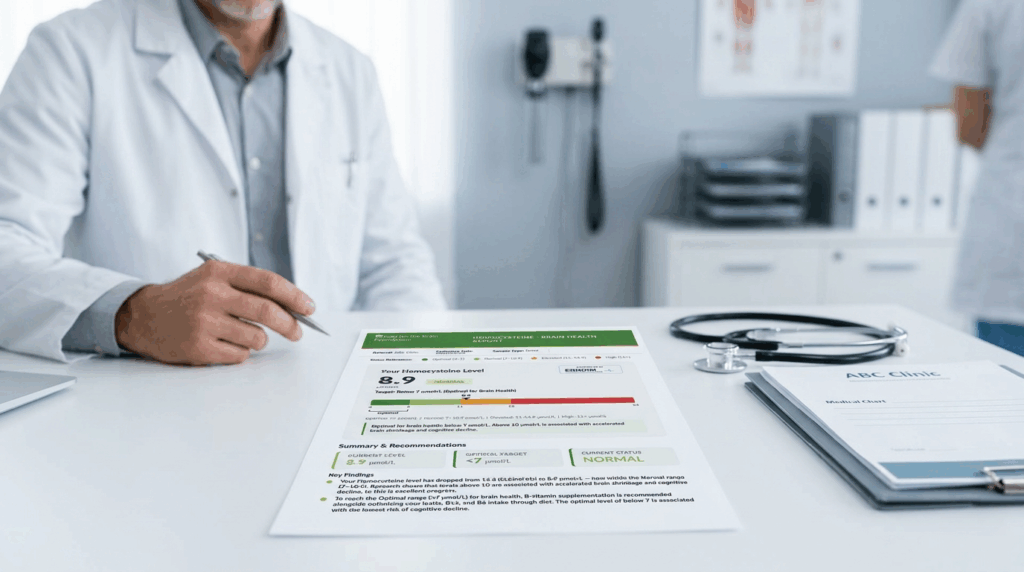
A homocysteine level tells you how much homocysteine is circulating in your blood. While many laboratories report anything below 15 µmol/L as “normal”, research suggests lower levels may be better for long term cardiovascular and brain health. This guide explains what your homocysteine level means, what different results may indicate, and what to do next.
If you’ve recently had a homocysteine blood levels test, your first question is probably simple:
“Is my result normal?”
The answer depends on more than the laboratory reference range.
While many laboratories report levels below 15 µmol/L as normal, a growing body of research suggests that lower levels may be associated with better long term brain and cardiovascular health [1, 2].
This guide explains how to interpret your homocysteine result, what may cause elevated levels, and the practical steps you can take next.
If you haven’t yet had a homocysteine test, read our guide to Homocysteine Testing first.
| Level | Range (µmol/L) | Health implications |
|---|---|---|
| Optimal | <7.0 | Lowest risk range and the ideal target for long-term brain and vascular health. |
| Normal (acceptable range) | 7.0 to 10.0 | Generally acceptable, though lower within this range may be preferable for prevention. |
| Moderately elevated | 10.1 to 15.0 | May indicate increased risk and should prompt closer attention to diet, nutrients, and lifestyle factors. |
| High | >15.0 | Associated with elevated cardiovascular and cognitive risk and may warrant testing and targeted intervention. |
Laboratory reference ranges differ. Your healthcare professional should interpret your result alongside your medical history, age, kidney function and nutritional status [1].
Use this chart to understand what your homocysteine level means and the actions you can take.
Continue eating a nutrient-rich diet and maintaining healthy lifestyle habits.
If you have risk factors for dementia or cardiovascular disease, continue monitoring as advised.
Although some laboratories still classify this range as normal, research suggests it may deserve attention, particularly if you have:
The most common are:
Homocysteine itself is not a disease, but it can indicate nutritional deficiencies or other health conditions that require attention.
Discuss your homocysteine result with your healthcare professional, who can interpret it alongside your medical history, symptoms and other test results. This helps identify whether any further investigation or treatment is needed.
An elevated homocysteine level is often a sign of an underlying issue rather than a condition itself. Your healthcare professional may investigate possible causes, such as vitamin deficiencies, certain medications or other health conditions, before recommending the most appropriate treatment.
Simple changes to your diet and lifestyle may help lower homocysteine levels. Eating a balanced diet rich in B vitamins, staying physically active, avoiding smoking and limiting alcohol can all play a role. Read our guide on Lowering Homocysteine for practical advice.
If your homocysteine is elevated due to low levels of vitamin B12, folate or vitamin B6, correcting these deficiencies may help lower your homocysteine. Speak to your healthcare professional before starting supplements, especially if you have an underlying health condition. Learn more in our guide to Homocysteine Lowering B Vitamins.
If you’ve made changes to your diet, lifestyle or supplements, consider repeating your homocysteine test after 8 to 12 weeks. Retesting can show whether your levels have improved and whether your current approach is working.
If your homocysteine remains elevated, speak to your healthcare professional about further investigation or treatment. Learn more in our Homocysteine Testing Guide or explore our Homocysteine Test.
Not necessarily. A high homocysteine level is a biomarker associated with more than 100 health conditions, but it does not diagnose any specific disease on its own. It is one indicator that may suggest the need for further assessment alongside your medical history, symptoms, and other tests.
If your result is high, it is a good idea to speak with your healthcare practitioner, especially if you already have an existing health condition or other risk factors.
If your homocysteine levels are elevated, the good news is that there are practical steps you can take to help lower them. This often includes improving your intake of key nutrients such as vitamin B6, B12, folate, and related nutrients that support methylation and healthy homocysteine metabolism. Diet and lifestyle changes, including reducing smoking, excess alcohol, and high coffee intake, may also help.
We recommend reading our guide: Lowering Homocysteine
If your result is significantly elevated, or you have existing health conditions, it is also sensible to discuss your results with your healthcare practitioner. Regular retesting can help track your progress over time.
We provide practical guidance to help you lower and optimise your homocysteine level, including information on diet, supplementation, and lifestyle to support brain and mental health.
As an educational charity, we do not offer personalised medical advice based on your individual history, age, or circumstances. However, we can direct you to qualified practitioners at our Brain Bio Centre who can provide personalised support, with details of their specialist areas.
Certain medications, supplements, and lifestyle factors can affect homocysteine levels and may influence your result.
These include antibiotics, metformin, proton pump inhibitors (PPIs), diuretics, and supplements containing vitamin B6, B12, folic acid, or folate. Coffee and alcohol may also temporarily affect levels.
For the most accurate result, we recommend avoiding these for 12 hours before taking your sample, and ideally 24 hours where possible, unless your doctor has advised otherwise. If you are taking antibiotics regularly, it may be best to wait until your course has finished before testing.
Yes. A homocysteine level of 12 µmol/L is considered higher than the optimal range. While reference ranges vary between laboratories, many experts recommend investigating levels above 10 µmol/L, as elevated homocysteine may be linked to vitamin B12, folate, or vitamin B6 deficiency and an increased risk of cardiovascular and cognitive health problems.
Yes. A homocysteine level of 15 µmol/L is considered elevated. It may indicate a vitamin B12, folate, or vitamin B6 deficiency and has been associated with an increased risk of cardiovascular disease and cognitive declin [2, 3]e. If your level is 15 µmol/L or higher, speak with your healthcare provider about further testing and appropriate treatment.
Yes. In many cases, homocysteine levels can be lowered by addressing the underlying cause, such as deficiencies in vitamin B12, folate, or vitamin B6, along with dietary and lifestyle changes. Learn more in our Lowering Homocysteine guide.
Yes. Chronic stress may contribute to higher homocysteine levels by affecting nutrient status, inflammation, and hormone balance. However, elevated homocysteine is more commonly linked to deficiencies in vitamin B12, folate, or vitamin B6, as well as certain medical conditions and genetic factors.
Some researchers consider levels below 7 µmol/L to be optimal for long term brain and vascular health, although laboratories typically use a higher reference range and there is no universally accepted clinical target [2].
This article is based on current scientific evidence and educational resources. Research on homocysteine continues to evolve, and your healthcare professional should interpret your results in the context of your individual medical history.