An Enlightening Double Whammy For Alzheimer’s
By Jerome Burne

For the last couple of weeks I have been wearing a modified bicycle helmet for half an hour at a time. It glows with what’s known as Near Infrared Light (NIR) bathing my skull in rays aimed at reversing any unhealthy patterns in my brain that are likely to be affecting thinking and memory in ways that make Alzheimer’s more likely.
Although this may seem deep in mad inventor territory, it is cutting-edge science. For years the accepted driver of Alzheimer’s has been the clumps of sticky protein, known as amyloid plaques and p’tau tangles, that build up in the brain as you age, killing off cells and pushing you deeper into a mental darkness.
Hundreds of billions of dollars have been spent by pharmaceutical companies developing drugs that clear them out. But while they do the job, the clean-up does remarkably little to smarten up your mental processes and come with undesirable side-effects, such as bleeding in the brain.
So, research attention has been turning to ways of manipulating the clean-up squads already present in the brain. One way of doing this is with NIR, another is to target the patterns of brain activity, known as gamma oscillations, linked with such vital mental activities as attention, memory, consciousness and dreaming. The brains of cognitively intact individuals sing in harmony with these gamma brain waves while cognitively impaired brains do not.
Research has shown that exposing the brain to oscillations of 40Hz light, delivered by looking at or being in the field of a light screen, can reduce the build-up of amyloid plaques and tau, as well as improve thinking and memory.
This is because it affects the immune cells of the brain known as microglia, which have a number of remarkable properties.
One type, sometimes described as “the butler to the brain” or M2, can clear plaques and tangles and the left-over fats and proteins involved in making energy and running the body’s multiple processes.
But recently research at the Massachusetts Institute of Technology has discovered that sometimes those butlers can go rogue if they are not getting enough resources or dirty fuel from the powerhouses of the cells, the mitochondria. These make the energy that powers the brain but when they become clogged up and inefficient, a scenario created by an unhealthy diet with too much sugar, smoking, burnt fats, and not enough B vitamins and antioxidants, they trigger a transformation trick worthy of a horror movie changing the function of the normally friendly microglial cells into the brain’s enemy. They begin destroying vital protective features of the brain such as the blood brain barrier or the system for controlling sugar and insulin in the blood, transforming from the supportive M2 ‘butler’ mode into M1, known as the “evil twin”.
One of the valuable effects of 40Hz oscillation is that it can reverse the evil twin effect. Recent research, however, suggests that those less desirable M1 microglial cells may also have benefits. The M2 “butler” is very valuable when all well in the brain, but of little use when it comes under attack from the viruses or bacteria which it is designed to destroy.
These attacks, which cause damaging inflammation, often originate from what is called “barrier tissue” which is in contact with the outside world, such as the lungs, gut bacteria, the mouth – periodontal disease -, liver and kidneys.
The implication of the new view is that targeting the build-up of the sticky proteins plaque and tau in the brain as we age, may be the wrong target. Instead focusing on keeping body’s systems and organs healthy, as Food for the Brain does, emerges as a much better protective strategy.
Another is that when microglia are in M2 mode they can swell to a size large enough to munch up the damaging plaque and tau. But if this ability is overworked, it can stop, causing brain cells to become inflamed and making plaque even more toxic. Exposure to 40Hz oscillations is likely to be able to reverse this too.
Another of the natural clean up systems that can benefit from a boost is called the ‘glymphatic flush’, a deep clean that uses cerebrospinal fluid to clear out cluttering proteins left by energy creation.
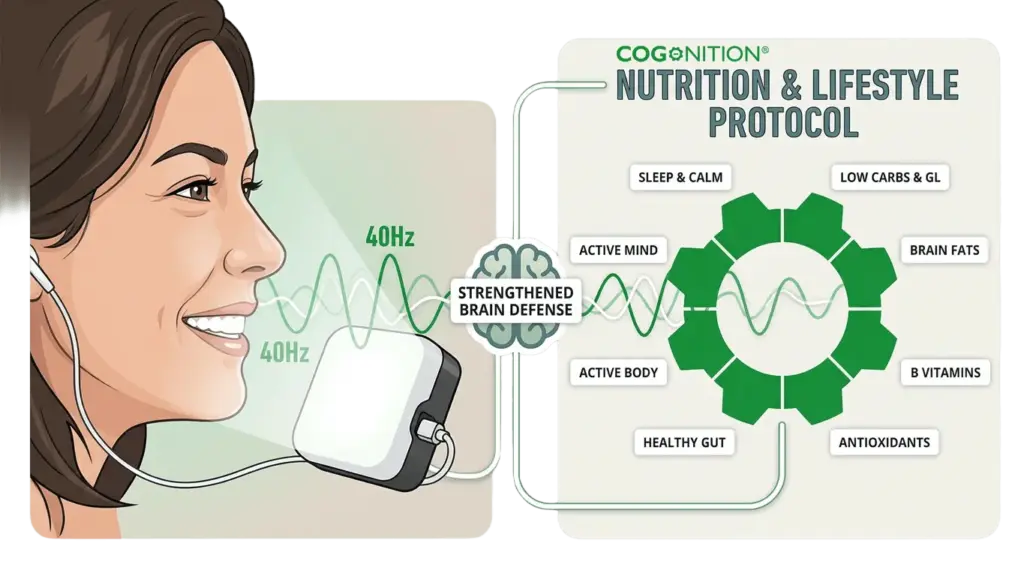
This is a new and sophisticated form of preventative medicine that is delivered by wearing a type of ear and eye headset, called Cognito, worn often before bed, with eyes closed, for 30 minutes to an hour a day, asleep or awake. The first human clinical trial conducted by scientists at Yale University’s Department of Comparative Medicine, has shown remarkable effects in arresting both cognitive decline and brain shrinkage in a group of 76 of patients with mild to moderate Alzheimer’s given either the 40Hz therapy for an hour a day or a sham treatment over a six month period. While those given the sham treatment had the usual steady decline in cognitive function, determined by a Mini-Mental State Exam (MMSE) and a measure of functional abilities called ADAS-ADL, those given the real 40Hz therapy barely declined at all. Also, their brain shrinkage was substantially less, with the usual reduction in whole brain volume, which is the hallmark of Alzheimer’s, being 69 per cent less.
Another 40Hz device, called EVY, made by optoceutics.com, is in the trial phase in a race to achieve a licensed medical device. I also found a device available on Amazon called Digipace that delivers 40Hz therapy but without substantiated trial results.
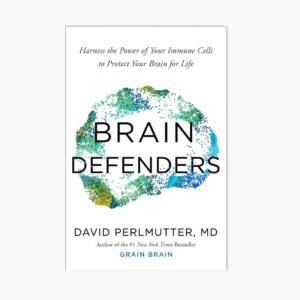
But targeted gamma oscillation is only part of a new and radical idea about how best to cut Alzheimer’s risk. It is one approach that I first became aware of in a new book Brain Defenders (Hodder and Stoughton) by Neurologist Dr David Perlmutter, a New York Times best-selling author and part of Food for the Brain’s think tank.
Besides the NIR helmet or 40Hz devices I have also been following a protocol devised by the Alzheimer’s prevention charity, foodforthebrain.org that aims to ensure you have a heathy brain in a healthy body. This fits much better with the latest research about the threat from “barrier tissue” problems and how the brain defencers itself from threats. Think of it as a sort of biochemical gamma stimulation.
This involves strategies such as regular exercise, getting enough sleep, upping your intake of omega-3 from fish and fish oil, supplementing B vitamins, dramatically reducing sugary foods and drinks, plus two tablespoons of Ketofast, a ketogenic fuel called C8, all designed to switch your brain towards running on ketones. Ketones are an alternative fuel for defective brain cells, gunked up from too much glucose. and following a ‘ketogenic’ diet which means you cut back on carbohydrates – especially sugar, cereals, and sugar-sweetened beverages – now dominating much of the modern diet.
The result is that you start producing energy packets known as ketones, which the brain can use for energy rather than glucose. It’s been used since the 1920’s to treat brain disorders such as epilepsy and more recently Alzheimer’s anorexia and Parkinsons. Ketones, which are created in the liver from a type of fat known as C8, derived from coconut oil, also help give defective mitochondria a full service, which has the knock on effect of bringing M2 microglial cells, the brain’s butlers, back to life and turning off the more aggressive evil twin – the M1 microglia.
Ketones are also fuel for your energy- making mitochondria which often are dysfunctional in people with Alzheimer’s.
Food for the Brain’s strategy is being adopted in China as part of a nationwide ‘Silver Haired Healthy Lifestyle Popularisation’ campaign to prevent Alzheimer’s and their free online Cognitive Function Test is being trialled both in China and in the NHS to give GPs instant access to a digital assessment that anyone can do on a computer or smartphone. In China 10 million ‘silver haired’ Chines citizens attended or watched a conference broadcast across twenty TV stations with Food for the Brain’s founder, Patrick Holford, presenting the way forward for prevention. With over 300 million people over 60, almost a quarter of their population, preventing Alzheimer’s in China has become a government imperative.
There are two more key ingredients of the Food for the Brain recipe for brain and physical health – B vitamins to bring down the level of an amino acid called homocysteine, linked with brain shrinkage, and omega three oil, which boosts the vitamin’s effect.
So, the dream team to ensure Alzheimer’s has a hard time getting a grip on your brain would be a combination of 40hz gamma oscillations and the nutrition and the healthy lifestyle protocol advocated by and developed by foodforthebrain.org.
About the author
Jerome Burne has been a health journalist for twenty years and has written for most of the UK’s national newspapers, as well as a variety of magazines. Before becoming a health journalist, he edited the extensive reference work Chronicle of the World. Prior to that, he was co-editor of Time Out in the mid-1980s.
In recent years, he has written mainly for the Daily Mail. He has also contributed regularly to Reader’s Digest and occasionally to the Times Literary Supplement.
In 2012, Jerome won the Medical Journalist’s Association award in the category of Medical Science Explained. He was also runner-up in the Best National Newspaper Feature category.
Research behind 40 Hz stimulation and light therapy for Alzheimer’s
Editor’s note: Research into light-based approaches to Alzheimer’s disease is developing rapidly. The studies discussed in this article include both laboratory research and early human trials. Importantly, findings from animal studies should not be interpreted as evidence that these approaches have been proven to prevent or treat Alzheimer’s disease in people.
Research into 40 Hz gamma stimulation has shown intriguing results in animal models of Alzheimer’s disease. In a landmark study, Iaccarino and colleagues found that inducing 40 Hz gamma oscillations reduced amyloid-beta levels and altered microglial activity in Alzheimer’s mouse models. Subsequent research found effects in additional brain regions and reported that combined 40 Hz visual and auditory stimulation could influence Alzheimer’s-associated pathology and cognitive performance in mice.
Early studies in people are encouraging but much less conclusive. Small pilot studies have shown that 40 Hz light and sound stimulation can induce gamma activity in the human brain and have reported exploratory findings involving brain atrophy, functional connectivity, sleep, memory and activities of daily living. Larger, independent clinical trials are needed to establish whether these effects translate into meaningful prevention or slowing of Alzheimer’s disease.
Near-infrared photobiomodulation (PBM) is a related but distinct field of research. Unlike 40 Hz sensory stimulation, which aims to entrain neural oscillations, photobiomodulation uses red or near-infrared wavelengths and is thought to act through cellular and mitochondrial mechanisms. Early clinical research has reported potentially beneficial cognitive effects, but this approach also remains investigational.
View key research and scientific references
40 Hz gamma stimulation
Iaccarino HF et al. (2016).
Gamma frequency entrainment attenuates amyloid load and modifies microglia.
Nature, 540, 230–235.
Landmark preclinical study demonstrating effects of 40 Hz gamma entrainment on amyloid-beta and microglia in mouse models of Alzheimer’s disease.
Adaikkan C et al. (2019).
Gamma Entrainment Binds Higher-Order Brain Regions and Offers Neuroprotection.
Neuron, 102, 929–943.e8.
Preclinical research investigating the effects of gamma entrainment across brain regions, including areas important for learning and memory.
Martorell AJ et al. (2019).
Multi-sensory Gamma Stimulation Ameliorates Alzheimer’s-Associated Pathology and Improves Cognition.
Cell, 177, 256–271.e22.
Mouse study examining auditory and combined visual-auditory 40 Hz stimulation and its effects on Alzheimer’s-associated pathology and cognition.
Human studies
Cimenser A et al. (2021).
Sensory-Evoked 40-Hz Gamma Oscillation Improves Sleep and Daily Living Activities in Alzheimer’s Disease Patients.
Frontiers in Systems Neuroscience, 15, 746859.
Early clinical research examining 40 Hz sensory stimulation, sleep and activities of daily living in people with Alzheimer’s disease.
Chan D et al. (2022).
Gamma frequency sensory stimulation in mild probable Alzheimer’s dementia patients: Results of feasibility and pilot studies.
PLOS ONE, 17, e0278412.
Small human feasibility and pilot studies examining daily 40 Hz light and sound stimulation, including exploratory measures of brain structure, connectivity, sleep and memory.
Near-infrared photobiomodulation
Chao LL (2021).
Transcranial Near Infrared Light Stimulations Improve Cognition in Patients with Dementia.
Aging and Disease, 13, 642–651.
Early human research investigating transcranial near-infrared photobiomodulation and cognition in people with dementia.
Review of the evidence
Blanco-Duque C et al. (2024).
Audiovisual gamma stimulation for the treatment of neurodegeneration.
Review of the experimental and emerging clinical evidence surrounding gamma-frequency sensory stimulation and neurodegenerative disease.
What does this mean?
The research provides an intriguing new direction for understanding how brain rhythms, light and other forms of sensory
stimulation might influence processes associated with Alzheimer’s disease. However, much of the strongest mechanistic
evidence still comes from animal models, while human trials remain relatively small. These approaches should therefore
be regarded as promising areas of research rather than established treatments for Alzheimer’s disease.
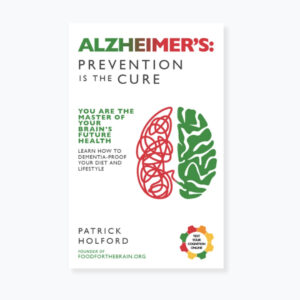
To find out more read Dr David Perlmutter’s book ‘Brain Defenders: harness the power of your immune cells to safeguard your brain’s destiny’ while the nutritional approach being adopted in China is explained in the book ‘Alzheimer’s:Prevention is the Cure’ by Patrick Holford.