🟢 BRAIN HEALTH Archives - Page 2 of 4 - Food for the Brain

because prevention is better than cure.

Intelligence is the Missing Survival Link

By Patrick Holford

Quite a few intelligent people extrapolate a rather apocalyptic future for humanity. Whether we nuke ourselves, run out of resources, become infertile, overtaken by AI robots or are struck by a meteor, some go so far as to recommend space travel to secure humanity’s future.

The two fundamental problems

My ponderings conclude that there are two fundamental problems – and one essential requirement to solve them. The first problem is corruption, primarily driven by greed. The second is a lack of design, for truly sustainable living in the areas of health, ecology and economy. The essential requirement to solve both of these problems is benevolent intelligence – that is, intelligence for the benefit of all, with the right motive and not driven by greed for money, power or status.

Here lies a key problem to add to the list of dwindling resources, pollution and war mongering, and it is the undeniable decline in that unique attribute which makes Homo sapiens dominant in the world, perhaps even the universe – that is his intelligence. IQ, brain size and mental health are all in rapid decline. Scandinavian research says IQ is falling by about 7% a generation. Brain volume, based on skull size, has decreased by 20% in the last 20,000 years or so. Rates of mental illness and neurodegeneration are escalating across all ages and seemingly in all countries.

We do not just need a few super-bright people, although that helps, if the populous in general is dumbing down. That’s a recipe for dictatorship. We need the majority to ‘wise up’ – including both the young, because they are the future and the elders, because they hold knowledge from experience. (I like Isabelle Allende’s – the best selling Chilean American novelist – definition of experience as ‘what you learn just after you need to know it’.)

At risk of losing all that we have learned…

In China for example, the ‘silver haired’ economy of people over the age of 60 comprises 300 million people. The tragedy of course, is that many are drifting into dementia and losing the memory of all that has been learned.

That is why, along with peace, climate, ecology and sustainable energy activism, the mission of foodforthebrain.org is to protect and promote intelligence and mental health and must expand to become global if we are to survive as a species.

The acceleration of societal change in the digital age, compared to the industrial age, will be rapidly surpassed by the age of artificial intelligence. Resistance is futile. For us, on a mission to protect and promote mental health and enhance intelligence, AI opens up the possibility to make our COGNITION programme available to all, in any language, and to learn from the experience of thousands, what specific messaging really helps drive positive behaviour change to promote mental health and intelligence.

Of course, we would like all this taught in schools and prioritised in healthcare but we cannot afford to wait for the corrupted governmental bureaucracies to paradigm shift. So called healthcare, in most countries, remains deeply in the claws of big Pharma and big Food. 

Putting prevention before profit is not even in their futuristic sights, whether one votes left or right. In the UK, for example, the NHS remains the fastest growing failing business, with no plans for preventing disease. The latest person put in charge of prevention, Professor John Deanfield, is paid by and has shares in, pharma. He considers prevention to be achieved by more drugs to more people earlier, despite the fact that the crippling diseases we have created in the 21st century were never caused by a lack of drugs.

Prevention before profits – let’s do it together!

Hence, we have to ‘do it ourselves’, direct to the public, people telling people, funded by people – citizen science and education at its best. Our impact may be small to start with, lacking significant funding or buy-in from progressive countries but both are increasingly likely as the mental health meltdown becomes epidemic. The cost of dementia crises will linger and the breakdown in children’s mental health, upon which our future depends, looms as catastrophic. Who will care for the billions with neurodegeneration? This is not a problem that is going away.

China is a case in point. There are 300 million people over 60 and the estimated annual cost of dementia will exceed $1 trillion in the next decade. Do we ‘make Britain dementia friendly’ and pour yet more money into our failing health services or do we end dementia? The scientific fact is that less than one in a hundred cases of Alzheimer’s are caused by genes. Theoretically, 99 percent could be prevented with nutrition and lifestyle changes. It isn’t actually that difficult.

Global mission

This is not a pipe dream. We can do so much together to change this – anything is possible!

Next year we are targeting 18 million over 60 year olds in China with the blessing and collaboration of the former minister and vice minister of health, both now ‘silver-haired’. What we are doing – personalising and popularising prevention – is doable on a global scale, precisely because we are in a digital age. AI allows us to break down the barrier of language. 

3 ways to join the mission

You can support us with this vital mission in three ways:

  1. Take the Cognitive Function test yourself at foodforthebrain.org. That 30 minutes of your time makes you a Citizen Scientist because your anonymised data helps us research what really works for prevention.
  2. Become a FRIEND of foodforthebrain.org contributing £50 a year. That is how we have reached several million so far, tested half a million and funded building the technology to reach millions more with translations in all languages. 
  3. Donate whatever you can – time, skills or money. We are a small but mighty team and literally every £10 helps. For example, right now, we are building the same things for children, teens and their parents – COGNITION for Smart Kids. It’s a £25,000 build and we’ve raised about £10,000. We hope to launch in April – 100 days to go – £100 a day. That’s what we need. If 100 people give £100 we can reach millions of parents and children.  Alternatively, volunteer and share your skills.

There is so much hope for our future humanity if we work together!

Further info

The Connection Between the Mouth and the Brain: How Oral Health Influences Brain Health

Written by Dr Victoria Sampson BDS MFDS RCS Ed Pg Dip

Did you know that similar to your gut, the mouth has its own microbiome?

Not only that, it is in fact, the second most diverse microbiome after the gut and houses approximately 700 different species of bacteria that make up 2 billion bacteria!

Unlike its relatives the gut, skin and vaginal microbiomes, the oral microbiome unfortunately has remained in the shadows, with very few even knowing they have one. What people also may not know, is how important their oral microbiome is for not only their oral health, but also their general health. When the oral microbiome is imbalanced and there are more bad bacteria than good, problems occur. In the mouth, these problems can show as tooth decay, gum disease, ulcers and bad breath to name a few. For the rest of the body, an imbalanced oral microbiome can contribute to systemic diseases such as neurological diseases, metabolic diseases, cardiovascular diseases and the list goes on.

Why is Alzheimer’s a leading cause of mortality

In the last twenty years we have witnessed an unexplainable rise in the diagnosis of neurological conditions and a decline in brain function in our population. Alzheimer’s Disease is a disease that is currently a leading cause of mortality and morbidity globally (1). It presents as one of the greatest medical challenges that we face this century due to its increasing prevalence worldwide and as yet, no effective treatment developed for it. 

Furthermore, the cause of Alzheimer’s is believed to be multifactorial and a combination of genetic, environmental and lifestyle factors. Whilst some of the risk factors for Alzheimer’s cannot be altered such as our genetic makeup, the link between Alzheimer’s and oral health has gained significant traction. Not only can it be altered (and easily), but it also can be tested in a painless and easy way through saliva collection.

Inflammation: Why The Mouth is a Gateway to the Brain

One of the primary ways in which oral health affects brain function is through low grade chronic inflammation. 

The oral microbiome is a delicate and beautiful balance of good and bad bacteria. If more bad bacteria are able to proliferate in the mouth, this balance can shift into what we call dysbiosis (or an imbalanced oral microbiome). Things that may cause our microbiome to shift into imbalance are things like poor oral hygiene, smoking, diet, medications we take, dry mouth and mouth breathing to name a few. Once the oral microbiome shifts into dysbiosis, this can increase our risk of local diseases such as decay and gum disease, but more importantly causes the release of inflammatory markers from the mouth to the brain.

These inflammatory markers can enter the bloodstream and cross the blood-brain barrier; a protective shield that typically prevents harmful substances from reaching the brain. Once inflammation spreads to the brain, it can contribute to the development of neurological disorders. Chronic inflammation has been linked to cognitive decline and neurodegenerative diseases such as Alzheimer’s disease, as it can damage brain cells and interfere with brain function (2).

Oral Bacteria and Brain Health

Another significant link between the mouth and the brain involves the direct effects of oral bacteria. Researchers have found that bacteria from the mouth can travel to the brain, particularly in cases of poor oral health or severe gum disease. These bacteria can enter the bloodstream through infected gums or the roots of decayed teeth, and eventually reach the brain, where they can contribute to the formation of harmful plaques.

A notable example is the bacterium Porphyromonas gingivalis, commonly found in patients with chronic gum disease. Studies have detected this bacterium in the brains of patients with Alzheimer’s disease, and it has been suggested that the bacteria’s presence may contribute to the development of amyloid plaques—a hallmark of Alzheimer’s. A 2019 study published in Science Advances (3).  showed that P. gingivalis not only reaches the brain but also releases toxins known as gingipains, which can damage brain cells and accelerate cognitive decline. Another study in Taiwan performed a retrospective cohort study on 18,672 citizens and found that having gum disease for over ten years was associated with a 70% increase in the risk of developing Alzheimer’s disease (4). 

If you’re still not convinced, a study published in the journal of Alzheimer’s Disease (5) further illustrated that there is a direct correlation between periodontal disease and Alzheimer’s Disease. The research looked at 6000 participants spanned over multiple age groups and followed them for up to 26 years. They performed dental examinations for gum disease as well as testing for bacteria and antibodies. The bacteria that seemed to be elevated in patients who went on to suffer Alzheimer’s disease was again, Porphyromonas gingivalis. 

This discovery has sparked interest in the potential role of oral bacteria in neurodegenerative diseases. Although more research is needed to establish a definitive cause-and-effect relationship, the evidence suggests that maintaining good oral hygiene could play an important role in preventing or slowing the progression of conditions like Alzheimer’s disease. It also opens the door to saliva testing to test for bacteria such as Porphyromonas gingivalis in the microbiome and eradicating this before it can cause problems.

Stroke and Oral Health

The connection between oral health and the brain is also evident in the relationship between gum disease and stroke. Stroke occurs when blood flow to the brain is interrupted, leading to brain cell death and potentially severe neurological impairment. Gum disease is associated with an increased risk of stroke due to the systemic inflammation it causes and the potential for oral bacteria to contribute to the formation of blood clots.

A 2018 study published in the journal Stroke, (6 Sen, 2018) found that individuals with severe gum disease were at a higher risk of ischemic stroke, which occurs when a blood clot blocks an artery supplying blood to the brain. The study suggested that the chronic inflammation caused by gum disease may contribute to the formation of clots, which can travel to the brain and cause a stroke.

Moreover, researchers have found that treating gum disease can reduce markers of inflammation in the body, potentially lowering the risk of stroke. This highlights the importance of oral health not only for preventing gum disease but also for reducing the risk of serious neurological events like stroke.

The Mouth and Brain are Deeply Connected

The connection between the mouth and the brain is a reminder that the body’s systems are deeply interconnected. Poor oral health, particularly in the form of gum disease and oral infections, can have far-reaching effects on brain function and overall neurological health. Inflammation and the spread of harmful oral bacteria are two key mechanisms by which oral health can influence conditions such as Alzheimer’s disease and stroke.

As research continues to shed light on this important connection, it becomes increasingly clear that maintaining good oral hygiene is essential not only for a healthy mouth but also for a healthy brain. 

For individuals looking to protect their cognitive function and reduce the risk of neurological diseases here are a few tips:

  • Regular brushing
  • Flossing 
  • Keeping up to date with dental check-ups
  • Saliva testing should be considered – get on a wait list here 
  • Complete the Cognitive Function Test here today so you can get a personalised plan on how to improve your overall cognition.
  • All the above alongside a balanced diet and regular exercise.
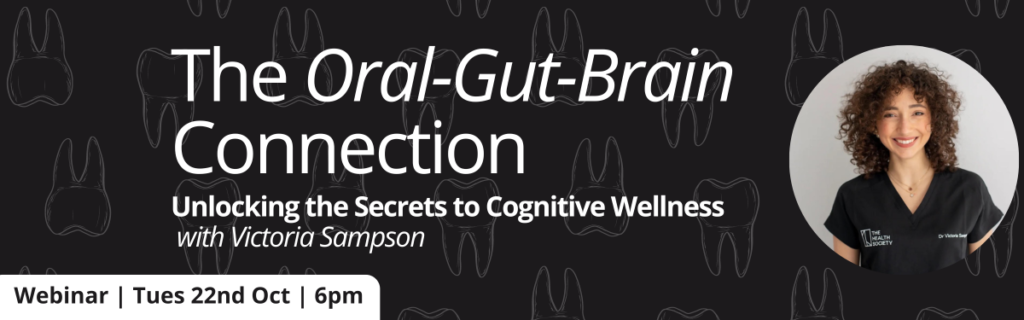
If you want to learn more about the Oral Microbiome then make sure you join us for the Oral-Gut-Brain Connection Webinar with Victoria Sampson.
Find out more here.

REFERENCES

  1. Vos T. Estimating the global mortality from Alzheimer’s disease and other dementias: A new method and results from the Global Burden of Disease study 2019. J Alzheimers Assoc. 2020.
  2. Kamer, A. R. (2020). Inflammation and Alzheimer’s disease: Possible role of periodontal diseases. Alzheimer’s & Dementia.
  3. Dominy S, et al. Porphyromonas gingivalis in Alzheimer’s disease brains: Evidence for disease causation and treatment with small-molecule inhibitors. Sci Adv. 2019.
  4. Chang-Kai C, et al. Association between chronic periodontitis and the risk of Alzheimer’s disease: a retrospective, population-based, matched-cohort study. Alzheimers Res Ther. 2017.
  5. Beydoun M, et al. Clinical and bacterial markers of periodontitis and their association with incident all-cause and Alzheimer’s disease dementia in a large national survey. J Alzheimers Dis. 2020;57–172.
  6. Sen E. Periodontal Disease, Regular Dental Care Use, and Incident Ischemic Stroke. Stroke. 2018.
Further info

Facts and Fallacies about Folic Acid, Homocysteine and Methylation

By Patrick Holford

Raised homocysteine, the best indicator of your ‘methylation’ ability, is not only causal for Alzheimer’s disease but probably also for strokes and several other diseases in the 100 diseases for which homocysteine is a biomarker.

However, homocysteine is easily measured and is also easily optimised. It is most directly lowered by vitamin B12, folate and B6. There are other nutrients that also help, but these B vitamins are the most essential.

If you’re new to understanding why improving methylation lowers homocysteine, this film will give you an idea of what’s going on thousands of times every second in your brain and body. Watch it below.

This further exploration into some close-up details regarding homocysteine comes from lengthy articles I’ve read which have made things too complicated and often inaccurate; such as people being either over- or under-methylated, and folic acid being the devil incarnate and other such things. So, I thought I’d clarify some misconceptions floating around the world of nutritional therapy.  

What is homocysteine? 

It is a toxic amino acid, an intermediary made from the essential amino acid methionine in your proteinous food, en route to make S-Adenosyl Methionine (SAMe) which juggles methyl groups (CH3) as a methyl donor/acceptor and as the master of the brain and body’s orchestra, with several billion such reactions every minute. And that’s only half the story.

There is no good reason to want homocysteine in your blood because it damages arteries. But if you had absolutely none that would be weird. It would be like having no garbage in your house at all and none in the bins. Now, you don’t want to accumulate garbage, but you’ve always got a rubbish bin on the go. 

While a homocysteine level above 11 mcmol/l is strongly associated with accelerated rate of brain shrinkage and is probably also an appropriate reference point for increasing stroke and cardiovascular risk, problems can occur in children if their mothers had a level above 9 mcmol/l during pregnancy. In one study cognitive decline seemed to increase from 8 mcmol/l. In another study chromosomal damage to genes occurs above a level of 7.3 mcmol/l. My best guess, having seen hundreds of clients, is that having a homocysteine between 4 and 7 mcmol/l is probably optimal, with older people in their 80’s or 90’s often struggling to keep below 9 despite doing the right things.

Can homocysteine be too low?

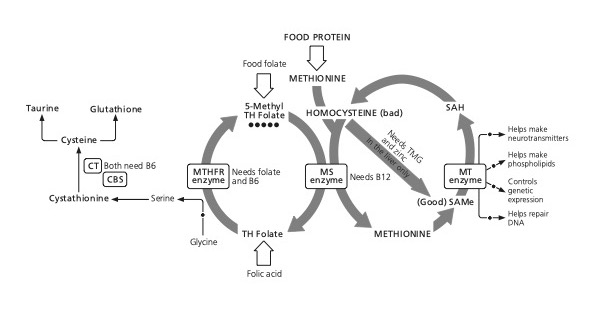
Can homocysteine be too low? I think this answer is ‘possibly’. Having a level below 4 is rare in and of itself. Even rarer is for someone to have a level below 4 and a problem. Why could too low be a problem? The second part of the story is that homocysteine can be turned into glutathione, the master antioxidant via the ‘sulphuration’ pathway, through the interaction of B vitamins on homocysteine in the presence of glycine (a sulphur container amino acid). This involves an enzyme, CBS (cystathionine beta synthase) which is dependent on vitamin B6.

Theoretically, if there wasn’t enough homocysteine, then this pathway for making glutathione would be in short supply. Such a finding has been shown in some children with autism, but it is very rare. And how would you know that the very low homocysteine, below 4 mcmol/l, was a bad thing, leading to less glutathione? I’d test the person’s glutathione or, more accurately, their Glutathione Index. Think of glutathione as the good guy, made from recycling rubbish, and homocysteine as the bad guy. 

If both were low I’d be thinking ‘where is the log jam’? You can see in the diagram above that the cheap, stable, inexpensive folic acid should turn into TH Folate, then, via the action of the MTHFReductase enzyme, into 5-methylfolate, or reduced, fully loaded folate, used in the body and brain in a thousand ways. But we must also note that CBS enzyme, dependent on vitamin B6 (itself dependent on zinc to be ‘activated’) must be fully functional. This pathway, if working properly, would naturally create glutathione, the body and brain’s master antioxidant.

A diagram of a complex of folic acid

Description automatically generated

If this pathway is not working effectively, and both homocysteine and Glutathione are low, I’d suspect two ‘faulty’ enzymes. That is either the enzyme DHFR that does the first step in activating folic acid or MTHFR, which does the second step. This is dependent on vitamin B2 (riboflavin).

Enzymes are built from a genetic blueprint. If you inherit a slightly dodgy blueprint, your enzyme factory turns out cheap goods. You might then need a little help from riboflavin (B2) for those who inherited the gene MTHFR677T or TT. We all need B2, but this enzyme won’t work nearly so well if you’re deficient and have this genetic ‘polymorphism’. That is why having MTHFR677T or TT, which is present in about 24% of people (10% in Africans, 34% of Europeans) puts up a person’s risk for Alzheimer’s. But, in studies giving the three main co-factor nutrients – B6, folic acid and B12 – it makes no difference whether or not you have this dodgy gene. Homocysteine still gets lowered. That’s right. Folic acid works, both in combination, and on its own, in lowering high homocysteine and is turned into the activated form methylfolate without a problem. So that suspected enzyme variation, especially if you have enough B12, is not looking so critical. In all studies I’ve seen, where B6, B12 and folic acid is given, the beneficial effect is the same in both those with or without this gene ‘defect’.

The gene that makes the enzyme DHFR…

The second suspect is a variation in the gene that makes the enzyme DHFR. Think of these gene ‘defects’ as resulting in less of the enzyme. As a consequence your body’s biochemistry wouldn’t be able to turn all folic acid into methyl folate. You’d then accumulate UnMetabolised Folic Acid (UMFA for short). Why would that be a problem? Well, folic acid still looks like methylfolate, and enzymes have a lock shaped for the key – that is their co-factor, such as folate. Too much folic acid in the blood could block all those enzyme receptors such that the enzymes don’t work so well, effectively inducing a folate deficiency. The net result in this scenario would be less glutathione.

A good example of how a less effective form of a vitamin can induce a vitamin deficiency in certain circumstances is vitamin B6. Those familiar with vitamin B6 (pyridoxine) know that it has to be turned into pyroxidal-5-phosphate (P5P) to become active, which requires zinc. If you supplement way too much vitamin B6 – 1 gram for example – and especially if you are zinc deficient, the unmetabolized B6 can block B6 dependent enzymes from working and you end up with similar symptoms of neuropathy also reported in those deficient in vitamin B6.

So, too much folic acid – for example over 1 gram – coupled with a dodgy DHFR gene would be bad news inducing something equivalent to folate deficiency. This then raises two questions: how much folic acid is too much? How many people have DHFR gene mutations?

The first answer depends somewhat on the second since those with a ‘bad DHFR gene’ are less able to cope with folic acid. The worse DHFR status is called a double deletion. How common is it? Not common in Europeans. It is very common in Asian ethnicities. These people would be less likely to benefit from folic acid because they can’t activate it. This is exactly what studies have shown. Folic acid lowers homocysteine and improves cognitive function less well in those with this gene polymorphism. Giving these people lots of folic acid will result in lots of unmetabolized folic acid (UMFA) accumulating and blocking real folate enzyme activity. This is effectively a B vitamin deficiency induced by a B vitamin.

While it could be argued that these people shouldn’t really be supplementing any folic acid there is little evidence to show that a lowish amount, let’s say up to 200 mcg in a multi, for example, is likely to be a great cause for concern.

But, especially for DHFR gene defectives, it is so much better to cut to the chase and supplement the activated methyl-folate form of this vitamin or its precursor folinic acid. An example of this is a study on autistic children, which gave folinic acid and tested an indicator of glutathione status. Those children with poorer glutathione status did better.  Unfortunately they didn’t test DHFR gene status.

They could have given methylfolate but the trouble with methylfolate is that it is very unstable, until the recent developments of three stable versions of methlyfolate:

  • calcium stabilised methyl folate, (Metafolin, process patented by DSM)
  • glucosamine stabilised methylfolate, (Quatrafolic, process patented by Gnosis/Lesaffre)
  • or choline stabilised methylfolate (Ocufolin, made by Aprofol/Generis)

Unlike folic acid, originally patented by Roche, but now expired, these other superior methylfolate forms of the vitamin are more expensive and with that comes more marketing muscle to switch buyers and makers of supplements and food fortification from folic acid to methylfolate. Leaving money to one side, it is generally a good idea to switch to methylfolate. It does lower homocysteine and raise red blood cell folate more effectively.

But it is wrong to say that folic acid doesn’t work in lowering homocysteine. It does and especially in the majority of Europeans without the DHFR gene defect. In East Asians I’d be more inclined to give methylfolate.

Methylfolate has been shown to raise folate levels better than folic acid and to lower homocysteine more effectively. In one study, 100µg of methylfolate lowered homocysteine by 14.6% compared to folic acid which lowered it by 9.3% in 24 weeks.  In another it both raised red blood cell folate by 30% more than folic acid and it also lowered Hcy by 13.8% compared to 9.9% for folic acid.  This means that methylfolate lowers homocysteine 40-50% more than folic acid.

Now, if you’ve had a homocysteine test, which I strongly advise in anyone over 50 or with any of the 100 diseases for which homocysteine is a biomarker, the great news is that almost all homocysteine lowering supplements (see here for more guidance on supplements) only use methylfolate alongside B6, B12, TMG, zinc and NAC or glutathione. 

If your level is below 4 mcmol/l AND you have any symptoms that also occur with folate deficiency (those 100 diseases that homocysteine is a biomarker of is a good starting point) then I’d recommend two things:

  1. Test for the DHFR polymorphism here. The test is offered by Lifecode GX who will give you a discount as a Friend of Food for the Brain.
Is too much unmetabolised folic acid or even natural food folate a problem?

The short answer regarding unmetabolised folic acid is probably yes, it probably is bad for you. 

Cancer cells are growing fast and need folates to do so. Having lots of folic acid in your bloodstream, seems to be a problem. Could too much folate in your bloodstream be a problem? Theoretically yes but generally, those eating a high folate diet rich in vegetables for example, have lower risk. But there’s a lot more in vegetables than just folate. 

I asked a folate expert, Dr Martin Ullman, regarding the cancer connection. “Folates are micronutrients, and any micronutrients are growth factors for healthy cells but even more for fast growing cancer cells. If there are precancerous conditions, “high” intake of folate may promote the progression to a cancerous condition. On the other hand, regular satisfactory intake of folate (before any precancerous condition) is preventive.”

Perhaps the riskiest scenario would be in those with that dodgy DHFR polymorphism that’s much more common in Asians, combined with a bad diet fortified with folic acid and unable to metabolise it and also with a pre-cancerous condition. Colorectal polyps, potentially pre-cancerous cells, would grow faster with more folic acid.

Also, bear in mind that raised homocysteine is, in any event, bad news for cancer. The majority of cancers are associated with faulty methylation so it’s one of the first things I’d check for. If raised, bring it down with a homocysteine lowering formula containing methylfolate, not folate.

What next:
  • Read more about homocysteine lowering supplementation here
  • Not sure what your homocysteine level is? Order one of our test kits here and support our research and charitable work.
  • Test for the DHFR genetic polymorphism here. The test is offered by Lifecode GX who will give you a discount as a Friend of Food for the Brain.
  • Want to know more about how you can upgrade your brain? Complete the free, validated Cognitive Function Test here to see what you can do to reclaim your brain.

For those who would like to dig even deeper, these papers are most relevant:

Further info

Your Glutathione Index Defines How Your Cells Are Ageing

Your Glutathione Index Defines How Your Cells Are Ageing

Glutathione Index

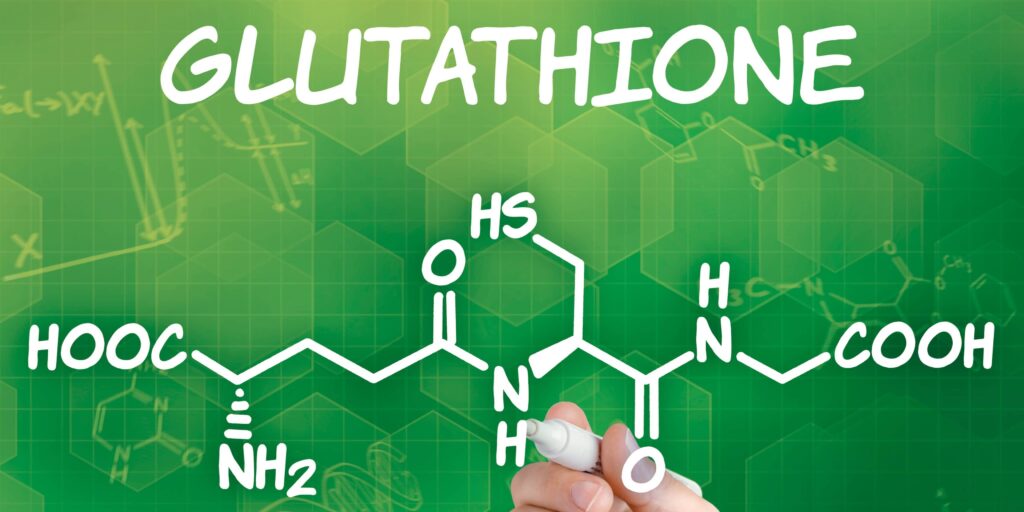
Nutritional therapists have been measuring red cell glutathione and supplementing glutathione or its precursor N-Acetyl-Cysteine (NAC) for decades. But it’s really hard, and expensive, to measure accurately. Until now.

So how does the Glutathione Index work? 

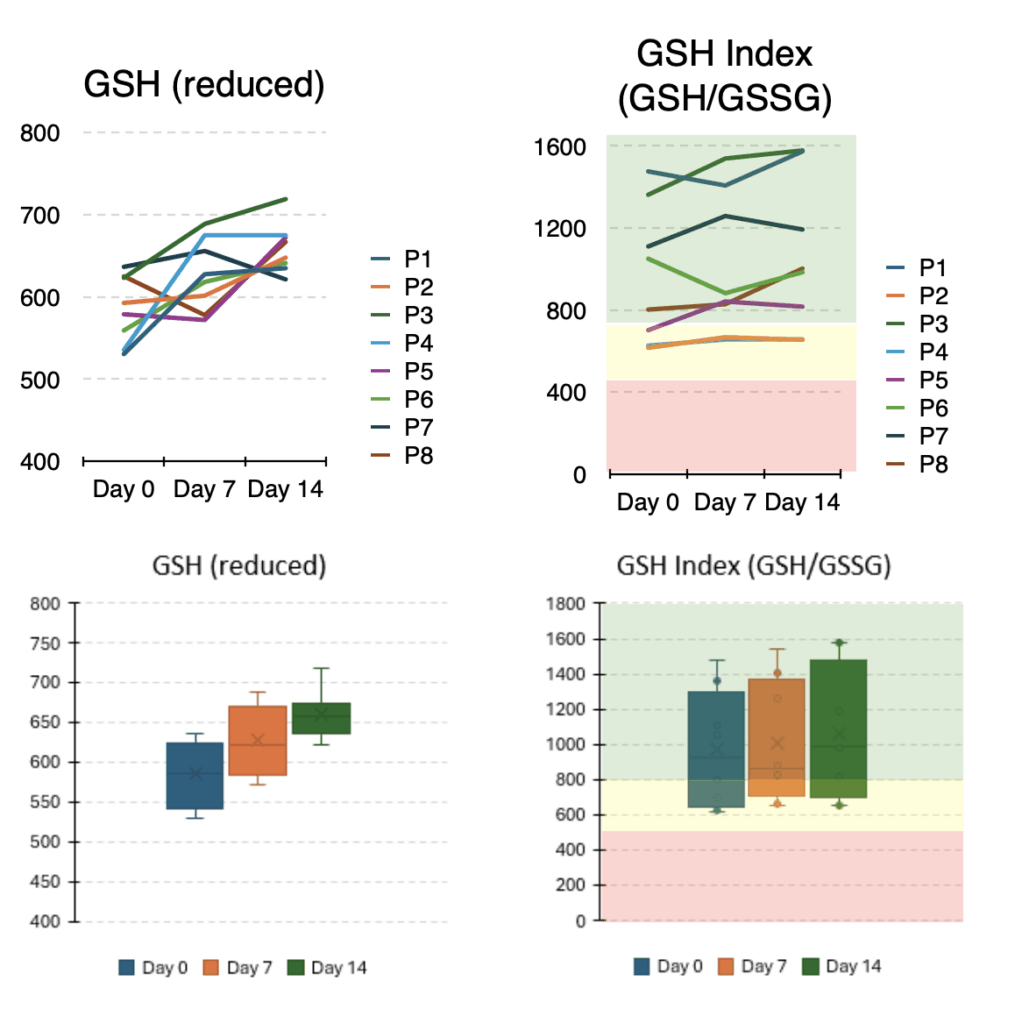
All of life is a balance between antioxidants and oxidants. That is why we, an oxygen based lifeform, have a finite life. Inside your cells glutathione (GSH) is working every second to stop harmful oxidants from ageing you. The result is spent or oxidised glutathione (GSSG). Our new test – a world first – measures the ratio between fully loaded glutathione (GSH) and oxidised glutathione (GSSG). The Glutathione index (GSH/GSSG) shows you how much antioxidant potential you have and how many metabolic fires you’ve extinguished. This ratio is the difference between mental health and mental illness.

Why does knowing this single marker help with Alzheimer’s, diabetes, schizophrenia, severe autism, depression & more?

Why Does Knowing This Single Marker Help With Alzheimer’s, Diabetes, Schizophrenia, Severe Autism, Depression and More?

The Science

NAC has plenty of evidence to support its use as a promoter of glutathione and mental health, thus reducing the brain’s oxidative stress. The latest 2022 review states:

N-acetyl-L-cysteine (NAC) is a compound of increasing interest in the treatment of psychiatric disorders. Primarily through its antioxidant, anti-inflammatory, and glutamate modulation activity, NAC has been investigated in the treatment of neurodevelopmental disorders, schizophrenia spectrum disorders, bipolar-related disorders, depressive disorders, anxiety disorders, obsessive compulsive-related disorders, substance-use disorders, neurocognitive disorders, and chronic pain. Currently NAC has the most evidence of having a beneficial effect as an adjuvant agent in the negative symptoms of schizophrenia, severe autism, depression, and obsessive compulsive and related disorders.” (1)

Glutathione and Schizophrenia

Quoting Lorraine Wilder (whose MSc in schizophrenia we funded) “Glutathione (GSH) is an important antioxidant and free radical scavenger that has been found to be decreased in the brains of people with schizophrenia [2, 3]. Although oral GSH supplementation has poor bioavailability [4], N-Acetyl Cysteine (NAC) has been shown to successfully raise plasma glutathione levels in those with schizophrenia [5]”.

Clinical Evidence and Case Studies

In a case study of a 24 year old woman with chronic and worsening paranoid-type schizophrenia that was generally unresponsive to anti-psychotic treatment, the addition of NAC supplementation improved the patient’s symptomatology in seven days. In addition to the schizophrenia-specific symptoms, improvements were observed in spontaneity, social skills and family relations by both the patient and family members. A randomised placebo-controlled trial (RCT) including 42 participants with schizophrenia, who were experiencing an acute phase of symptomatology, were randomly assigned to receive up to 2 g/d of NAC plus up to 6 mg/d of risperidone for 8 weeks as an adjunct intervention. Significant negative symptoms were found in the active treatment group compared to controls but not in positive or general psychopathology [6].

Larger Trials and Longer-Term Findings

Furthermore, a larger RCT of 140 participants observed significant improvements on global symptomatology and general and negative symptoms of schizophrenia in the NAC supplementation (2 g/d; in addition to anti-psychotic medication) group in comparison to the placebo group over a 24-week period, but not positive symptoms [7]. Notably, after a 4-week washout period these beneficial effects diminished, with the exception of clinical severity scores. 

Expert Perspective on Brain Oxidative Stress

According to Dr Chris Palmer, assistant professor at HarvaWhy the Glutathione Index Is the Best Indicator of Brain Oxidative Stress
rd Medical School:

Glutathione (GSH), the brain’s primary antioxidant, plays a crucial role in maintaining redox balance. Magnetic resonance studies have provided mixed results regarding GSH levels in schizophrenia patients, with some studies indicating decreased levels in chronic schizophrenia, while others found no significant differences. However, these inconsistencies may be due to variations in disease chronicity, age, and symptom severity among study participants. The findings from these studies suggest several potential therapeutic targets for schizophrenia. Addressing mitochondrial dysfunction, redox imbalance, and impaired energy metabolism could lead to more effective treatments. For instance, N-acetylcysteine (NAC), a precursor to GSH, has shown promise in increasing brain GSH levels and improving symptoms in first episode psychosis patients.

Why the Glutathione Index Is the Best Indicator of Brain Oxidative Stress

The GSH/GSSG ratio reflects the activity of the enzyme glutathione reductase which is responsible for the transformation of GSSG (used, oxidised) to GSH (the reduced or fully loaded form that acts as a radical scavenger). 

Glutathione Reductase and Dementia

Reductions in glutathione reductase (GR) enzyme levels in patients with dementia are well established. GR levels alone are therefore a fairly good biomarker of dementia. But the mere presence of the enzyme does not guarantee its high activity. GR needs to consume NADP molecules to function properly. The advantage of our test is, therefore, that it shows changes in GR activity not only due to higher/lower GR gene activity but also due to the absence of the reaction cofactor NADP. 

Impaired Glutathione Recycling in Dementia

As shown by Irene Martinez de Toda et al 2019 (8) data, patients with dementia have a reduction in both the enzymes (GR and GP) that recycle glutathione. Thus, in general, it can be said that the glutathione metabolism (recycling) loop in those with dementia ‘spins’ much slower than in healthy patients. As a result, dementia patients have a lower potential to dynamically fight free radicals and will have a worse Glutathione Index.

What Happens When Recycling Slows Down

In patients, the enzyme GR, which is responsible for recycling spent/oxidised glutathione back to fully loaded, slows down, which leads to the accumulation of oxidised glutathione (GSSG) and the depletion and inability to produce GSH. 

Thus, the concentration of GSH decreases while that of GSSG increases. Hence the Glutathione Index gets worse / is lower.

Developing the Glutathione Index Test

This is why we have created the Glutathione Index test alongside analytic chemist, Dr Konrad Kowalski. “This ratio, the Glutathione Index, is a biomarker for many diseases, including both type 1 and 2 diabetes, liver cirrhosis, multiple sclerosis and Alzheimer’s disease.” says Dr Kowalski, “As a result of having good data, our scientists are currently reviewing the reference ranges to be even more accurate. Having a way to measure brain ageing with a home test kit from a pin prick of blood, means we can realistically see what the impact of specific diet changes and antioxidant supplements might be.

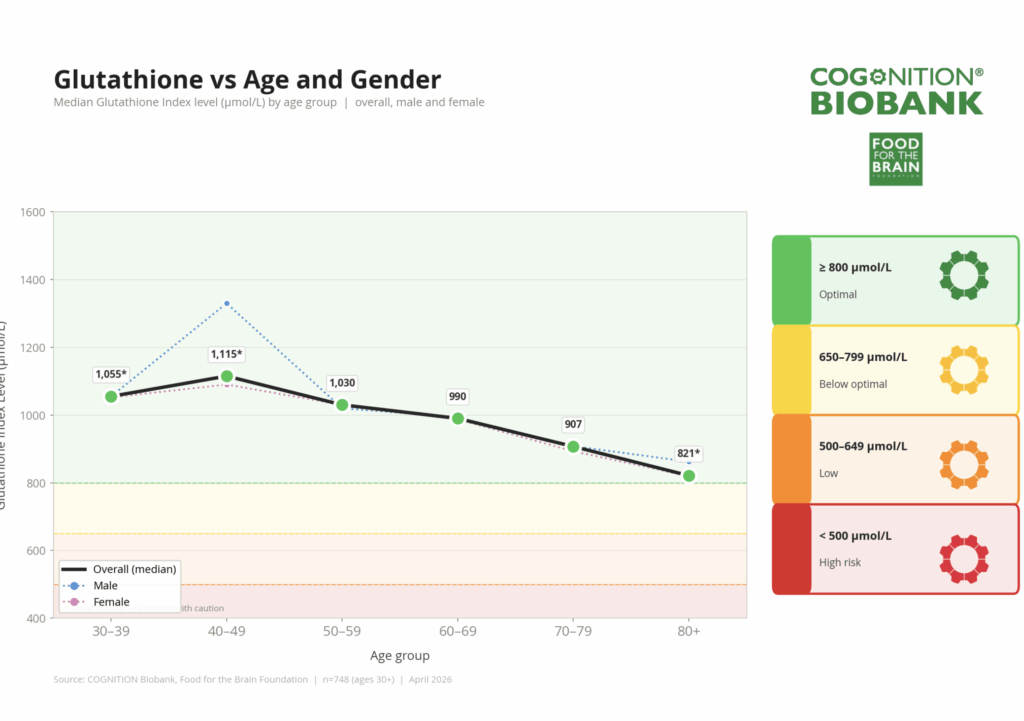
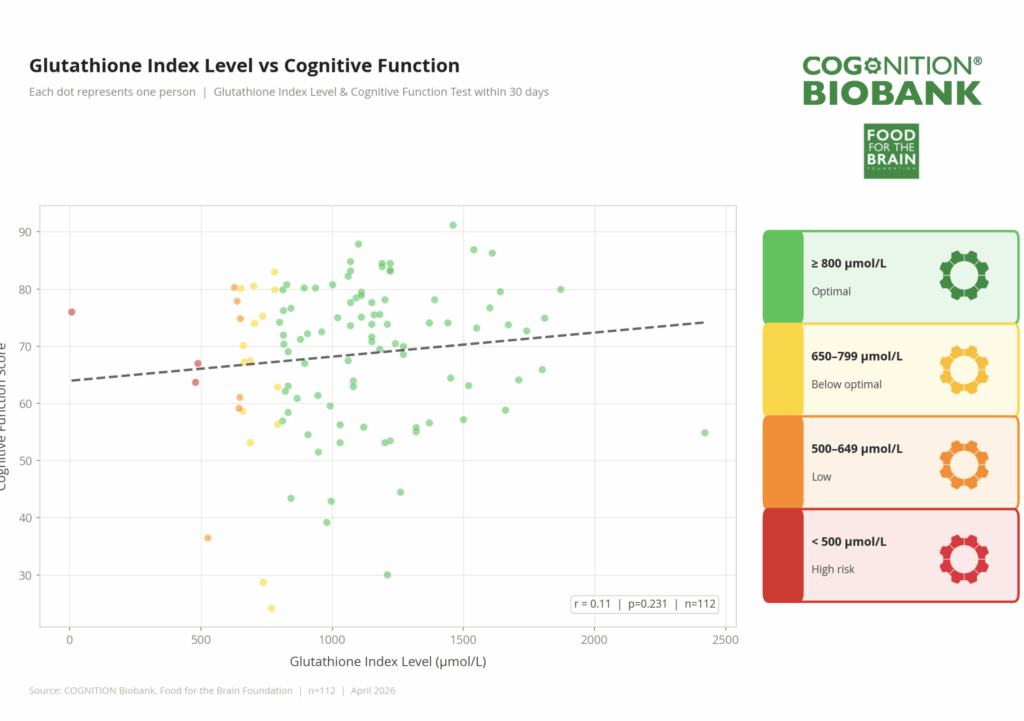
We now know that a desirable level is above 800. Below 500 is an indicator that you need to increase your intake of antioxidants from food and/or supplements, and/or reduce your intake of oxidants from smoking, pollution or fried food.

So will you join us and become a part of our Anti-Age Your Brain Campaign? We need Citizen Scientists to order and complete the test so you can start to protect your brain from ageing and so we can research what the ‘perfect number’ is.

References

1. Bradlow RCJ, Berk M, Kalivas PW, Back SE, Kanaan RA. The Potential of N-Acetyl-L-Cysteine (NAC) in the Treatment of Psychiatric Disorders. CNS Drugs. 2022 May;36(5):451-482. doi: 10.1007/s40263-022-00907-3. Epub 2022 Mar 22. Erratum in: CNS Drugs. 2022 Apr 28;: PMID: 35316513; PMCID: PMC9095537.

2 Yao JK, Leonard S, Reddy R: Altered glutathione redox state in schizophrenia. Dis Markers 2006, 22(1):83–93.

3 Gawryluk JW, Wang J-F, Andreazza AC, Shao L, Young LT: Decreased levels of glutathione, the major brain antioxidant, in post-mortem prefrontal cortex from patients with psychiatric disorders. Int J Neuropsychopharmacol 2011, 14(01):123–130.

4  Witschi A, Reddy S, Stofer B, Lauterburg B: The systemic availability of oral glutathione. Eur J Clin Pharmacol 1992, 43(6):667–669.

5. Lavoie S, Murray MM, Deppen P, Knyazeva MG, Berk M, Boulat O, Bovet P, Bush AI, Conus P, Copolov D, Fornari E, Meuli R, Solida A, Vianin P, Cuénod M, Buclin T, Do KQ:Glutathione precursor, N-acetyl-cysteine, improves mismatch negativity in schizophrenia patients. Neuropsychopharmacology 2008, 33(9):2187–2199.

6. Farokhnia M, Azarkolah A, Adinehfar F, Khodaie-Ardakani M-R, Hosseini S-M-R, Yekehtaz H, Tabrizi M, Rezaei F, Salehi B, Sadeghi S-M-H, Moghadam M, Gharibi F, Mirshafiee O:, Akhondzadeh S: N-acetylcysteine as an adjunct to risperidone for treatment of negative symptoms in patients with chronic schizophrenia: a randomized, double-blind, placebo-controlled study. Clin Neuropharmacol 2013, 36(6):185–192.

7. Berk M, Copolov D, Dean O, Lu K, Jeavons S, Schapkaitz I, Anderson-Hunt M, Judd F, Katz F, Katz P, Ording-Jespersen S, Little J, Conus P, Cuenod M, Do KQ, Busha AI: N-acetyl cysteine as a glutathione precursor for schizophrenia—a double-blind, randomized, placebo-controlled trial. Biol Psychiatry 2008, 64(5):361–368.

8. Martínez de Toda I, Vida C, Sanz San Miguel L, De la Fuente M. Function, Oxidative, and Inflammatory Stress Parameters in Immune Cells as Predictive Markers of Lifespan throughout Aging. Oxid Med Cell Longev. 2019 Jun 2;2019:4574276. doi: 10.1155/2019/4574276. PMID: 31281577; PMCID: PMC6589234.

Further info

Why Our Brains Are Shrinking & What To Do About It.

By Professor Michael Crawford

The brain of H. sapiens evolved from a chimpanzee cranial capacity of 340cc to the peak of 1,500 to 1,700cc about 28,000 – 32,000 years ago. That encephalization was powered by the epigenetic force of wild foods, in which marine foods would have been essential to provide omega 3 DHA, and trace elements including iodine, essential for brain growth, function and maintenance. (Encephalization is an evolutionary increase in the complexity or relative size of the brain, involving a shift of function from non-cortical parts of the brain to the cortex.) The brain evolved in the sea some 500 million years ago using such nutrients and science shows they are still required today.

In recent times, the brain has been shrinking, likely due to the increasing reliance on intensively produced land foods and the decline in fish and seafoods.  

Since 1950 there has been a 40% per capita decrease in fish landings in the UK and a decline in the fishing communities and ports.  At the same time, there has been a decline in average IQs and an escalation of mental ill-health. Just recently the Children’s Society declared that there had been a 3-fold increase in hospital referrals for mental ill-health in children in the last 3 years. In March 2023, the Federation of European Neuroscientists declared that brain health was now a global emergency. 

The continued shrinking of the brain and escalation of mental ill health can only end in disaster. 

How do you know if you are eating enough seafood? Check your omega-3 levels! Buy youR 4 in 1 DRIft at home test kit here OR buy the single omega-3 test kit here.

The solution lies in the restoration of destroyed sea beds with marine pastures, planting of kelp forests, farming of shellfish and the planting of artificial reefs to provide surfaces for marine flora to flourish and as with the seagrass, enhance the natural productivity. 

At the same time this solution of marine enhancement fixes CO2. This has been done in Japan, starting in 1991. It is also being started in many other places including Scotland, Korea, Oman, Saudi, Australia, and in the US.  It now needs to be escalated with energy which could create a new industrial revolution and a sea change in nutrition and brain health. It is all in our book, The Shrinking Brain by Crawford and Marsh, just published.

Totally essential for everyone to see

Other resources:

Further info

Neurodivergent or Neurodeficient? Is some Neurodivergence Preventable?

By Patrick Holford

If you look up the Oxford Dictionary definition of the word neurodivergent it is this: ‘divergence in mental or neurological function from what is considered typical or normal (frequently used with reference to autistic spectrum disorders).’ 

Other types of neurodivergence include Tourette’s, dyspraxia, synaesthesia, dyscalculia, Down syndrome, epilepsy, and chronic mental health illnesses such as bipolar disorder, obsessive-compulsive disorder, borderline personality disorder, anxiety, depression and ADHD.  More recently the overlapping of symptoms within diagnoses of ADHD and ASD has led to the term AuDHD.  

So the word refers to the idea that a person’s brain is processing things differently.

Before getting into the nutrition and potential driving forces that lead to some neurodivergent traits, it is important to understand the difference between ‘neurodiversity’ and ‘neurodivergence’.  Neurodiversity includes us all and works on the assumption that every human is unique. I’ve long argued how biologically and biochemically unique we are. “Neurodiversity as a biological fact applies to everyone” says Psychology Today.

However, differences do not have to be seen as a disorder, but as natural variations of the human brain. Although some neurodivergent people really struggle to fit in, as they think, process information and communicate in ways that are different from the norm, some of the brightest and most creative people have been diagnosed as neurodiverse.

Dr Rona Tutt, former president of the National Association of Head teachers and a scientific advisor and Trustee of the charity says “sometimes people are divided into a majority who are described as ‘neurotypical’ – although it’s debatable whether there’s such a thing as ‘typical’ – and a minority who are described as ‘neurodivergent’ or ‘neurodiverse’. (These 2 adjectives are used interchangeably, which sometimes causes confusion).” Rona was one of the first to highlight ‘overlapping dis-orders’.  She says “At one time, it was thought that if you had one diagnosis, you couldn’t have another. Then it became obvious that neurodevelopmental disorders in particular, such as autism, ADHD, Developmental Language Disorder (DLD) – formerly known as Specific Language Impairment (SLI) and the Specific Leaning Difficulties of dyslexia, dysgraphia, dyscalculia and dyspraxia, have a tendency to co-occur with each other – hence AuDHD – and with other disorders such as OCD, Tourette’s etc.”

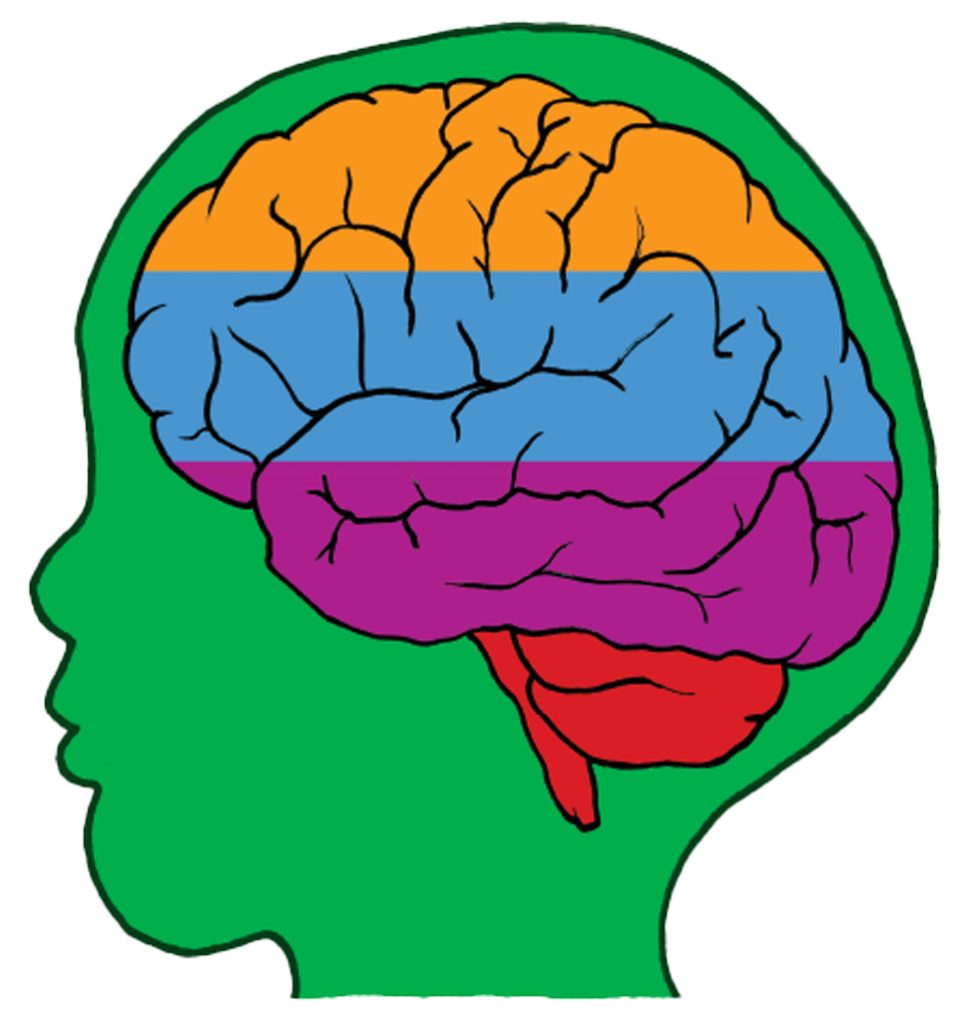
Vector image of the cross section of a multi coloured human brain against a green head.

“It is the case that these neurodevelopmental disorders run in families – there’s plenty of evidence of this in some special school populations, including where I’ve worked.” She goes on to say, “But this is only part of the story and most agree that the environment is another part of the equation. At least part of the rise in these conditions might be attributed, as you’ve said, to the unnatural environment in which we live, with the polluted air we breathe, the chemically-laden food we eat, and perhaps the way technology dominates our lives, having an adverse effect both before and after we are born.”

I’d also like to point out a common error when issues or traits run in families these are often described in as inherited, implying that it is genetic, when it may be the shared environment – be it nutritional, environmental or psycho-social that drives the heritability, not ‘genes.’ The fact that so many of these conditions have escalated beyond what could reasonably be fobbed off as ‘more awareness hence more diagnoses’ suggests a large part of the problem is not ‘genetic’. 

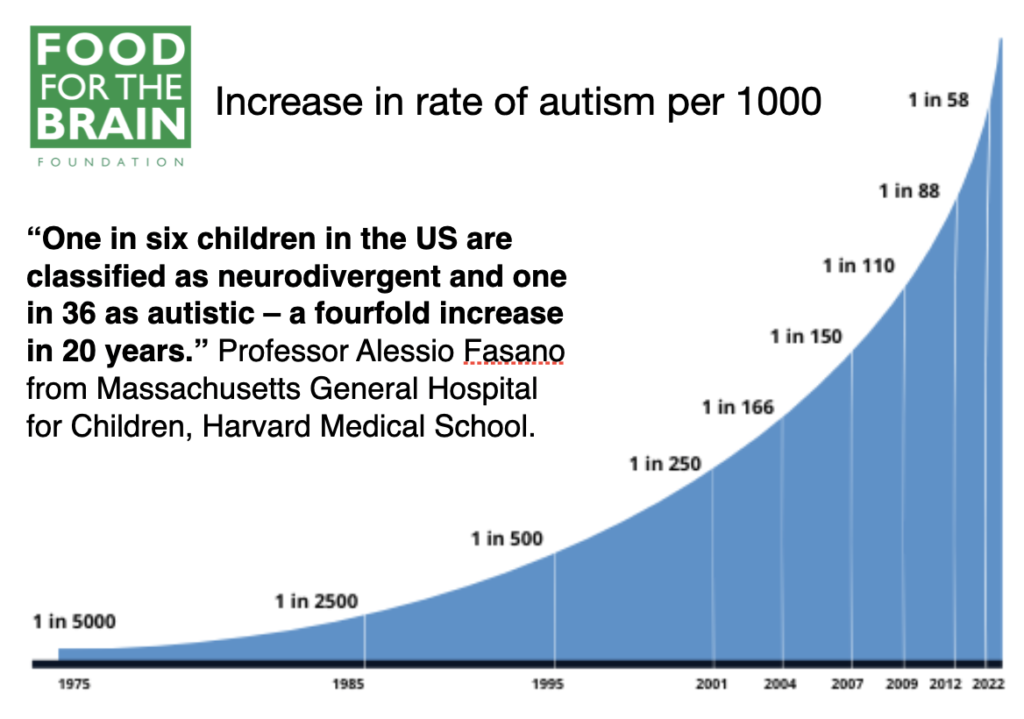
An example of this is that the number of children diagnosed with ADHD and autism and other developmental problems classifying them as ‘neurodivergent’ has rocketed in both the UK and US. “Now, one in six children in the US are classified as neurodivergent and one in 36 as autistic – a fourfold increase in 20 years.” says professor of paediatrics, Alessio Fasano from Harvard Medical School. (1) 

A practical measure of neurodivergence is whether a child is classified as SEN – in need of Special Education. One in six children now are. While it is possible to argue that some of this might be to do with ‘better diagnosis’, classifying a child as in need of special education is one that both parents and schools are keen to avoid unless absolutely necessary. 

Some children cannot cope with the noise, the number of children and the intensity of interactions hence prefer not to be in mainstream school. My first teacher, Dr Carl Pfeiffer, taught me back in the 1970’s that zinc deficiency and pyroluria are biological imbalances that lead to difficulties with such sensory overload.  

Is autism, ADHD and other such conditions preventable?

In a wider sense, the question ‘is neurodivergence preventable?’ also means, are autism, ADHD, Tourette’s, dyspraxia, synesthesia, dyscalculia, Down syndrome, epilepsy, and chronic mental health illnesses such as bipolar disorder, obsessive-compulsive disorder, borderline personality disorder, anxiety, and depression all preventable? 

Preventable in this context doesn’t have to mean ‘completely preventable’ but rather ‘can prevent to an extent’. Thus, anything that lessens the chance of someone becoming neurodivergent or alleviates any of the unpleasant or undesirable symptoms of neurodivergence is helping achieve a degree of prevention.

Since it is not reasonable to argue that the increase in neurodivergence over the past two decades is simply down to better diagnosis, it must follow that part of what is driving the increase is not ‘in the genes’ but in the environment. This could be the nutritional environment, the psychosocial environment and exposure to potential neurotoxins; possibly from industrial, building, agricultural, cosmetic or food chemicals and medicines. Vaccines and ingredients of vaccines would potentially fit in this category.

As a psychologist and nutritionist, my primary interest is in relieving suffering. Many, but certainly not all those either classified as ‘neurodivergent’ or autistic are ‘suffering’. The definition of suffering in this instance could include for example, emotional problems from anxiety and aggression to depression or cognitive problems including a hyperactive and inattentive mind, sleeping problems and feeling stressed, to name a few. Psychologically, Oscar Ichazo proposes that some of us use panic, anxiety, fears, phobias, obsessions, compulsions, hypochondria and even psychosis as a ‘door of compensation’ – a way to let off psychological steam when unable to cope with reality. Building resilience, both physically, biochemically and psychologically, is a key part of my integral medicine model.

Since there has been an escalation in the number of children classified as neurodivergent, autistic, or with attention-deficit-hyperactive disorder (ADHD), with special educational needs to the point where one in six children are so classified, we do need to ask why? Also, can a child so classified, be helped to feel, think or behave better in a way that helps them fulfil their potential enough to be happy and able to socialise with peers?

Neurodivergent or Neurodeficient?

In the chart below I’ve listed the most common characteristics in those with autistic spectrum disorder by the US Center for Disease Control and Prevention 

I’ve added a column for the nutrients, when deficient, that have been shown to induce these symptoms.

COMMON ASD CHARACTERISTICSASSOCIATED DEFICIENCY
Avoids eye contactVitamin A, Omega-3 DHA
Delayed language skillsOmega-3 DHA, Hcy/B vitamins, vitamin A
Delayed movement skillsOmega-3 DHA, Hcy/B vitamins, vitamin A
Delayed cognitive or learning skillsOmega-3 DHA, Hcy/B vitamins, vitamin A
Hyperactive, impulsive, and/or inattentive behaviourOmega-3 DHA, Hcy/B vitamins, dysglycemia (sugar), additives eg MSG)
Epilepsy or seizure disorderOmega-3 DHA, Hcy/B vitamins, dysglycemia (sugar), magnesium
Unusual eating and sleeping habitsFood intolerance, sugar, magnesium, zinc, tryptophan, 
Gastrointestinal issues (for example, constipation)Food intolerance (eg coeliacs), gut dysbiosis, zinc
Unusual mood or emotional reactionsOmega-3 DHA, Hcy/B vitamins, dysglycemia (sugar), additives eg MSG), food intolerance, iron 
Anxiety, stress, or excessive worryOmega-3 DHA, Hcy/B vitamins, dysglycemia (sugar), vitamin C
Lack of fear or more fear than expectedOmega-3 DHA, Hcy/B vitamins, dysglycemia (sugar), vitamin C
Hcy stands for homocysteine which is the best indicator of lack of methylating B vitamins
The hard truth…

Most importantly, the hard truth is that many of the brain cells, neurons in the brain are formed by birth; literally 70% of all neurons are already there. What happens at every stage of pregnancy, and especially early on, has a major impact on the child’s development. Consequently, some neurodevelopmental issues that result in these symptoms are largely irreversible. Foetal alcohol syndrome is such an example. Knowing this makes it imperative to encourage as much as we can, women who are likely to become pregnant to first optimise their diet and nutrients intake and avoid anti-nutrients – alcohol and smoking are two such anti-nutrients.

As well as avoiding alcohol and smoking during pregnancy we know from a study of 11,875 pregnant women, there is a clear relationship between the amount of seafood consumed by a pregnant woman and their child’s development. The less seafood consumed, the worse the child’s social behaviour, fine motor skills, communication and social development, and verbal IQ.(2) 

Also, a lack of vitamin A during pregnancy, which is another nutrient rich in seafood, can affect brain development and lead to long-term or even permanent impairment in the learning process, memory formation, and cognitive function. (3) 

You can do the DRIfT test on children over 2 years old.

We also know that a mother’s folate intake predicts the child’s performance in cognitive tests at the age of nine to ten (4) and the higher a baby’s B-vitamin status, the higher their cognitive function at the age of 25. (5) Supplementing mothers-to-be with folic acid (400mcg/day) during the second and third trimesters of pregnancy is associated with better cognition in their children at the age of three and better word reasoning and IQ (verbal and performance) at seven. (6) 

Folate is required for healthy methylation and nothing can be built properly in the brain without healthy methylation, which is reflected by a low homocysteine level. Raised homocysteine is a well-known predictor of miscarriage and pregnancy problems, which is why I recommend no woman attempts pregnancy until her homocysteine level is below 7mcmol/l. While we have learned that a homocysteine level above 11 means increased brain shrinkage, even a homocysteine level of above 9 during pregnancy predicts more problems, specifically withdrawn behaviour, anxiety, depression, social problems and aggressive behaviour in the child at the age of six. (7) 

We hope that some of the deficit in brain function can be recovered. The starting point is to provide all brain-dependent nutrients at an optimal level and see what happens. In the UK, fewer than 5 per cent of children achieve the basic dietary recommendations for omega-3 and fish. (8) Lower DHA concentrations are associated with poorer reading ability, poorer memory, oppositional behaviour and emotional instability. (9) Several studies have shown increased aggression in those with low omega-3 DHA and EPA, and giving more omega-3 reduces aggression. (10)

Fish and omega-3 are associated with better cognition in children. A study of 541 Chinese schoolchildren found that fish consumption predicted sleep quality and that those who ate the most fish had the highest IQ; 4.8 points higher than those who ate none. Improved sleep quality, linked to fish intake, was correlated with IQ level. (11) 

A study in Northern Ireland found that half of schoolchildren were deficient in vitamin D, with a level below 50nmol/l (I recommend above 75 nmol/l). Another found that low vitamin D levels in childhood were related to behaviour problems in adolescence. (12) 

There is, for many children, plenty of room for improvement and relief from suffering. Additionally, for parents-to-be, it is of vital importance to optimise nutrition throughout pregnancy.  It is critical that we don’t ‘normalise’ the consequences of sub-optimum nutrition either during pregnancy or childhood development.

Summary

In summary, to build healthy young brains and minimize the risk of developing undesirable symptoms associated with neurodivergence, including ADHD and autism, it is important for mothers-to-be, pregnant women and breastfeeding mothers and their children to: 

  • Avoid alcohol and smoking, especially during pregnancy but also while breast-feeding.
  • Limit or avoid foods with added sugar and follow a low-GL diet 
  • Avoid chemical colouring and flavour additives such as MSG 
  • Optimise omega-3 intake, as phospholipids, from seafood and eggs, and supplement omega-3 DHA and EPA 
  • Optimise vitamins A and D, with sufficient sun exposure to encourage good body stores of vitamin D 
  • Ensure healthy methylation with B vitamins, especially vitamin B12 in vegans and those on a largely plant-based diet 
  • Check for food intolerances, including gluten, if digestive symptoms are present. 
  • Also note you can do the DRIfT test on any child over 2 years old. Find out more about the DRIfT test here
Vector image of the cross section of a multi coloured human brain against a green head.

References

2. Hibbeln JR, Davis JM,] Steer C, Emmett P, Rogers I, Williams C, Golding J. Maternal seafood consumption in pregnancy and neurodevelopmental outcomes in childhood (ALSPAC study): an observational cohort study. Lancet. 2007 Feb 17;369(9561):578-85. doi: 10.1016/S0140-6736(07)60277-3. PMID: 17307104.

3.  Z.Liu Behav Neurol. 2021 Dec 7;2021:5417497

4. Veena SR, Krishnaveni GV, Srinivasan K, Wills AK, Muthayya S, Kurpad AV, Yajnik CS, Fall CH. Higher maternal plasma folate but not vitamin B-12 concentrations during pregnancy are associated with better cognitive function scores in 9- to 10- year-old children in South India. J Nutr. 2010 May;140(5):1014-22. doi: 10.3945/jn.109.118075. Epub 2010 Mar 24. PMID: 20335637; PMCID: PMC3672847.

5. Qin B, Xun P, Jacobs DR Jr, Zhu N, Daviglus ML, Reis JP, Steffen LM, Van Horn L, Sidney S, He K. Intake of niacin, folate, vitamin B-6, and vitamin B-12 through young adulthood and cognitive function in midlife: the Coronary Artery Risk Development in Young Adults (CARDIA) study. Am J Clin Nutr. 2017 Oct;106(4):1032-1040. doi: 10.3945/ajcn.117.157834. Epub 2017 Aug 2. PMID: 28768650; PMCID: PMC56117

6. McNulty H, Rollins M, Cassidy T, Caffrey A, Marshall B, Dornan J, McLaughlin M, McNulty BA, Ward M, Strain JJ, Molloy AM, Lees-Murdock DJ, Walsh CP, Pentieva K. Effect of continued folic acid supplementation beyond the first trimester of pregnancy on cognitive performance in the child: a follow-up study from a randomized controlled trial (FASSTT Offspring Trial). BMC Med. 2019 Oct 31;17(1):196. doi: 10.1186/s12916-019-1432-4. PMID: 31672132; PMCID: PMC6823954.

7. Roigé-Castellví J, Murphy M, Fernández-Ballart J, Canals J. Moderately elevated preconception fasting plasma total homocysteine is a risk factor for psychological problems in childhood. Public Health Nutr. 2019 Jun;22(9):1615-1623. doi: 10.1017/S1368980018003610. Epub 2019 Jan 14. PMID: 30636652; PMCID: PMC10261079.

8. Kranz, S., Jones, N.R.V., Monsivais, P., Intake Levels of Fish in the UK Paediatric Population. Nutrients 2017, 9, 392. https://doi.org/10.3390/nu9040392

9. Montgomery P, Burton JR, Sewell RP, Spreckelsen TF, Richardson AJ. Low blood long chain omega-3 fatty acids in UK children are associated with poor cognitive performance and behavior: a cross-sectional analysis from the DOLAB study. PLoS One. 2013 Jun 24;8(6):e66697. doi: 10.1371/journal.pone.0066697. Erratum in: PLoS One. 2013;8(9). doi:10.1371/annotation/26c6b13f-b83a-4a3f-978a-c09d8ccf1ae2. PMID: 23826114; PMCID: PMC3691187.

10. Raine A, Ang RP, Choy O, Hibbeln JR, Ho RM, Lim CG, Lim-Ashworth NSJ, Ling S, Liu JCJ, Ooi YP, Tan YR, Fung DSS. Omega-3 (ω-3) and social skills interventions for reactive aggression and childhood externalizing behavior problems: a randomized, stratified, double-blind, placebo-controlled, factorial trial. Psychol Med. 2019 Jan;49(2):335-344. doi: 10.1017/S0033291718000983. Epub 2018 May 10. PMID: 29743128; see also Choy O, Raine A. Omega-3 Supplementation as a Dietary Intervention to Reduce Aggressive and Antisocial Behavior. Curr Psychiatry Rep. 2018 Apr 5;20(5):32. doi: 10.1007/s11920-018-0894-y. PMID: 29623453; see also Gow RV, Hibbeln JR. Omega-3 fatty acid and nutrient deficits in adverse neurodevelopment and childhood behaviors. Child Adolesc Psychiatr Clin N Am. 2014 Jul;23(3):555-90. doi: 10.1016/j.chc.2014.02.002. Epub 2014 May 27. PMID: 24975625; PMCID: PMC4175558.

11. Liu, J., Cui, Y., Li, L. et al. The mediating role of sleep in the fish consumption – cognitive functioning relationship: a cohort study. Sci Rep 7, 17961 (2017). https://doi.org/10.1038/s41598-017-17520-w12. Sonia L Robinson, Constanza Marín, Henry Oliveros, Mercedes Mora-Plazas, Betsy Lozoff, Eduardo Villamor, Vitamin D Deficiency in Middle Childhood Is Related to Behavior Problems in Adolescence, The Journal of Nutrition, Volume 150, Issue 1, 2020, pp.140–148, ISSN 0022-3166, https://doi.org/10.1093/jn/nxz185.

Further info

The ApoE4 Exaggeration 

Author of the article is Patrick Holford and the Alzheimer’s Prevention Expert Group.

The single greatest genetic predictor of Alzheimer’s disease is the presence of the ApoE4 variant of the ApoE gene, carried by about one in five people. Having this contributes 4% to 6% of the absolute risk for Alzheimer’s disease. (1)


This is often exaggerated as a risk factor because, if a person is an Apoe4 carrier, and changes nothing, they have about a 20% greater chance of developing Alzheimer’s later in life than someone who doesn’t. This is called ‘relative risk’. It doesn’t mean, however, that someone with the ApoE4 gene has a 20% chance of developing Alzheimer’s. This is because, as an example, a person without the ApoE4 gene at a certain age might have a 4% chance of developing Alzheimer’s, while someone with the ApoE4 gene might have a 5% chance, so their risk has gone up by, in this example, 20%. In absolute terms, the risk would be only 1% higher.

This new study 2 shows two things: the first is that most ApoE4 carriers show some of the biomarkers for developing Alzheimer’s later on, namely higher levels of toxic amyloid and – p-tau proteins. This is not surprising. However, and this is key, quoting the paper “In the dementia stage, there were no differences in amyloid or tau despite earlier clinical and biomarker changes.” In other words, even these indicators of risk had vanished, or were no longer more prevalent in those with vs without this gene variant. This means that, even if you could lower levels of amyloid earlier in the disease process, this is highly unlikely to have any effect.

This so-called ‘Alzheimer’s gene’ can only exert effects via non-genetic mechanisms, and these mechanisms are often susceptible to modification with a person’s nutrition having the most direct influence. In other words, genes only tell us about susceptibilities, tendencies – they are not (at least in this case) determinative of whether one does or does not develop Alzheimer’s in their lifetime because other factors can modify the effects of carrying the ApoE4 gene variant. In other words, a gene variant such as ApoE4 it is more like a dimmer switch and can be ‘over-expressed’ or ‘down-regulated’, turned up or dimmed down by a variety of lifestyle factors.

The ApoE4 gene is downregulated by eating a low-glycemic load (GL) or low sugar diet or more ketogenic diet with specific Mediterranean-style food choices including fatty fish, cruciferous vegetables, olive oil, low alcohol consumption. Four supplemental nutrients have reasonably good evidence of blunting the effects of the ApoE4 variant. These are omega-3 DHA, B vitamins (B2, B6, B12 and folate) and vitamin D. (3)

But what happens to risk if a person is well-nourished with these dietary factors already? A good example of this is a recent study in China, involving 29,072 people of which 20% had the ApoE4 gene. 4 Each participant had their diet and lifestyle assessed over the 10 year period of the study to see who would or wouldn’t develop cognitive decline or dementia.

What the study showed was that whether or not a person had the ApoE4 ‘Alzheimer’s gene’ made no difference to the positive reduction in risk achievable by simple diet and lifestyle changes. “These results provide an optimistic outlook, as they suggest that although genetic risk is not modifiable, a combination of more healthy lifestyle factors is associated with a slower rate of memory decline, regardless of the genetic risk,” wrote the study authors. Eating a healthy diet was also the most important prevention step, followed by an active lifestyle, with one’s intellectual life, then physical activity, then social interactions being the next most important steps. Eating a healthy diet was about twice as important as exercise in
predicting cognitive decline. Those with a healthy diet were about seven times less likely to have age-related cognitive decline or dementia than those with an ‘average’ diet and about nine times less likely to develop dementia than those with an unfavourable diet.

All major studies on people at risk of, or already with, dementia or Alzheimer’s have measured whether the study participants do or don’t have the ApoE4 variant. We’ve looked at the major studies that have measured the impact of a change in diet or nutrition or lifestyle and they almost all show no difference in outcome if you do or don’t have the gene.

A good analogy is that having the ApoE4 gene variant is like a weak beam of light which, in the darkness, increases one’s risk a bit, but once you shine the strong light of actually doing something such as changing your diet or supplementing omega-3 fish oils, B vitamins or vitamin D, the effect of being an ApoE4 carrier seems to be invisible in that there is no significant difference in outcome between those who had or didn’t have this gene variant.

Please note: the pharmaceutical industry is keen to promote a drug that lowers amyloid or p-tau. 14 trials have shown that anti-amyloid drugs do lower amyloid but none has had clinically significant effect on actual dementia or cognitive decline. 5 In other words the amyloid theory is bust. Amyloid is not a cause of Alzheimer’s – it’s a result. Raised toxic P-tau is a direct consequence of raised homocysteine, driven by a lack of B vitamins. See the p-tau delusion article here. Lowering homocysteine with B vitamins, which is an established cause, lowers p-tau.

Order Patrick’s NEW book Upgrade Your Brain (Harper Collins)

Where to start in reducing your risk:
References

1 Heininger, K. (2000), A unifying hypothesis of Alzheimer’s disease. III. Risk factors. Hum.
Psychopharmacol. Clin. Exp., 15: 1-70. https://doi.org/10.1002/(SICI)1099-
1077(200001)15:1<1::AID-HUP153>3.0.CO;2-1; see also Ridge PG, Mukherjee S, Crane PK,Kauwe JSK, (2013) Alzheimer’s Disease: Analyzing the Missing Heritability. PLoS ONE 8(11): e79771. doi: 10.1371/journal.pone.0079771

2 https://www.nature.com/articles/s41591-024-02931-w.pdf

3 Norwitz,N.G.;Saif,N.; Ariza, I.E.; Isaacson, R.S. Precision Nutrition for Alzheimer’s
Prevention in ApoE4 Carriers. Nutrients 2021, 13, 1362. https://doi.org/10.3390/
nu13041362

4 Jia J, Zhao T, Liu Z et al., Association between healthy lifestyle and memory decline in olderadults: 10 year, population based, prospective cohort study BMJ 2023;380:e072691
http://dx.doi.org/10.1136/ bmj-2022-072691

5 https://www.bmj.com/content/372/bmj.n156/rr

Further info

Building Young Brains: Shaping Your Child’s Future

By Patrick Holford

In recent years the number of children diagnosed with learning, behavioural and mental health problems has escalated. Attention-deficit hyperactivity disorder (ADHD), autistic spectrum disorder (ASD) and other neurodevelopmental disorders, all classifying children as ‘neurodivergent’, as opposed to ‘neurotypical’, have rocketed in both the UK and USA.

Over the past decade there has also been a steady increase in young people with now four in ten reporting persistent feelings of sadness or hopelessness and almost a quarter (22%) reporting contemplating suicide. (1) 

‘Now, one in six children in the USA are classified as neurodivergent and one in 36 as autistic – a fourfold increase in 20 years,’(2) says paediatric Professor Alessio Fasano from Massachusetts General Hospital for Children, Harvard Medical School.

Rising numbers are being reported in the UK. According to Dr Rona Tutt, OBE, past president of the National Association of Headteachers, ‘There has been a dramatic increase in the number of people being diagnosed with ASD. Although some of this is due to a broader definition of autism, as well as better diagnosis, it raises the question of whether it may also be the result of environmental changes, which have also been dramatic.’ Some UK schools are reporting as many as one in four children having problems.

For clarification, the University of Washington defines a ‘neurodivergent’ person as ‘a person on the autism spectrum or, more generally, someone whose brain processes information in a way that is not typical of most individuals. These people may have learning disabilities, attention deficit and anxiety disorders, obsessive-compulsive disorder, and Tourette’s syndrome. Through a neurodiversity lens, such conditions reflect different ways of being that are all normal human experiences. Although “neurodiversity” is usually used to describe a group of neurodivergent individuals, it also refers to all of humankind, because everyone has a unique way of processing information.’

For those with neurodivergent traits that cause individuals immense difficulty, the question is, why do they occur in some and not others, and can they be prevented?

Making healthy babies

Autistic spectrum disorder has often been positioned as being genetically linked. However, since the genes cannot have changed this rapidly, this suggests the influence of environmental factors, of which diet and maternal nutrition are big contributors.

Brain development starts from conception

Brain development is influenced from the moment of conception. That is why a mother’s nutrition before conception is so critical.

Nothing can be built without healthy methylation, which means a low homocysteine level. Raised homocysteine is a well-known predictor of miscarriage and pregnancy problems, which is why I recommend no woman attempts pregnancy until her homocysteine level is below 7mcmol/l. While we have learned that a homocysteine level above 11 means increased brain shrinkage, even a homocysteine level of above 9 during pregnancy predicts more problems, specifically withdrawn behaviour, anxiety, depression, social problems and aggressive behaviour in the child at the age of six. (3)

That’s why building a healthy child’s brain starts with ensuring mothers-to-be are optimally healthy.

(Find out your Homocysteine levels with our accurate, at home blood test here)

We already know that pioneering researcher Professor Michael Crawford can predict which babies are going to be born preterm with a greater risk of having developmental problems from the fats in the pregnant woman’s blood. But the most convincing evidence comes from a study of 11,875 pregnant women which showed a clear relationship between the amount of seafood consumed by a pregnant woman and their child’s development. The less seafood consumed, the worse the child’s social behaviour, fine motor skills, communication and social development, and verbal IQ. (4)

Also, a lack of vitamin A during pregnancy can affect brain development and lead to long-term or even permanent impairment in the learning process, memory formation, and cognitive function. (5)

Supplementing mothers-to-be with folic acid (400 µg/day) during the second and third trimesters of pregnancy is associated with better cognition in their children at the age of three and better word reasoning and IQ (verbal and performance) at seven. (6)

Nourishing infants with optimum nutrition

Once a baby is born, 75 percent of all the energy derived from breastmilk goes to build the brain, as brain development continues at the mind-boggling rate of something like 1 million connections a minute. Babies use ketones to power their early brain development, but they also need the raw materials – essential fats, phospholipids and vitamins. Without sufficient omega-3, vitamin A, D and B vitamins, especially folate and B12, as well as minerals such as iodine, magnesium, iron and zinc, the brain cannot develop optimally.

This means that a breastfeeding mother must, at least, supplement omega-3 fish oils, but many other nutrients are also necessary. Without sufficient nutrients, not only do brain cells not make the connections, but the production and flow of neurotransmitters doesn’t happen optimally.

Low vitamin D status in both the mother and newborn baby increases the likelihood of the child developing ASD by 54 per cent. (7)

Bruce Ames, Emeritus Professor of Biochemistry and Molecular Biology at the University of California, thinks that ‘serotonin synthesis, release, and function in the brain are modulated by vitamin D and the two marine omega-3 fatty acids, eicosapentaenoic acid, EPA, and docosahexaenoic acid, DHA’. He says, ‘Insufficient levels of vitamin D, EPA, or DHA, in combination with genetic factors and at key periods during development, would lead to dysfunctional serotonin activation and function and may be one underlying mechanism that contributes to neuropsychiatric disorders and depression in children.’(8)

We know that a mother’s folate intake predicts the child’s performance in cognitive tests at the age of nine to ten (9) and the higher a baby’s B-vitamin status, the higher their cognitive function at the age of 25. (10)

Nourishing the growing child

In the UK, fewer than 5 percent of children achieve the basic dietary recommendations for omega-3 and fish. (11) Lower DHA concentrations are associated with poorer reading ability, poorer memory, oppositional behaviour and emotional instability. (12) Several studies have shown increased aggression in those with low omega-3 DHA and EPA, and giving more omega-3 reduces aggression. (13)

Fish and omega-3 are associated with better cognition in children. 

A study of 541 Chinese schoolchildren found that fish consumption predicted sleep quality and that those who ate the most fish had the highest IQ, 4.8 points higher than those who ate none. Improved sleep quality, linked to fish intake, was correlated with IQ. (14)

A study in Northern Ireland found that half of schoolchildren were deficient in vitamin D, with a level below 50 nmol/l (I recommend above 75 nmol/l). Another found that low vitamin D levels in childhood were related to behaviour problems in adolescence. (15)

Is it any wonder so many children are neurodivergent?

Another nutrient that is rich in marine food is vitamin A. Cod liver oil is a rich source of vitamin A, vitamin D and omega-3 fats. Vitamin A is vital for proper black and white vision and the proper functioning of the retina in the eye, hence its name, retinol, and the idea of eating carrots to see in the dark. Dr Mary Megson, a paediatrician in the USA, identified a particular genetic weakness in several children on the spectrum which would affect their ability to use vitamin A. She associates this with children who won’t look you in the eye because they see better on the periphery of their visual field. (16) Giving a source of retinol such as cod liver oil improves eye coordination and vision, helping those with autism who don’t make eye contact.

Think zinc and magnesium

My teacher, Dr Carl Pfeiffer, was the first to put zinc on the map for mental health, in the 1970s, thanks to a girl called Lisa.

Lisa was mentally unwell, but her parents had learned how to keep her sane: oysters. If she had a couple of oysters a day, her mind calmed down.

Dr Pfeiffer worked out it was zinc. Zinc is essential for cellular growth and repair, and thus found in all seeds, nuts, beans and lentils, as well as eggs, meat and fish, but nothing beats oysters. Zinc is one of the most essential minerals in pregnancy, along with iron, and babies and children, due to their rapid growth, need more.

Bear in mind that vegetarian sources of zinc, such as nuts and seeds, also contain phytates, which inhibit zinc’s absorption, so those on an exclusively plant-based diet might need more.

The basic calculation for our zinc needs to support growth is 7.5mg a day. (An oyster gives 5.5mg.) But is that really the minimum? What’s the optimum? The Nutrient Reference Value is 10mg. Many children fail to achieve this.

Few have explored what zinc intake is needed for optimal mental health. Researchers in North Dakota gave 200 schoolchildren in the 7th grade zinc supplements and found that those taking 20mg of zinc a day, as opposed to those taking 10mg (the RDA) or a placebo, had faster and more accurate memories and better attention spans within three months.(17) The girls, also, behaved better.

Children with ADHD tend to have lower levels of zinc, chromium and magnesium. 

Some have low levels of copper, according to research in New Zealand. (18)

One study of ADHD children found higher levels of copper. (19) Copper, the main source of which is copper water pipes, and zinc compete, so if zinc is low the body’s copper levels tend to rise. It was the copper-to-zinc ratio that was especially high in neurodivergent versus neurotypical children and predicted the degree of ADHD.(20)

The same applies to schizophrenia, with some of those diagnosed having low zinc levels (21) and higher copper levels (22) Copper is likely to be higher in softer water areas and in newer houses with copper pipes. Blue staining in baths or sinks is an indication of a high copper level in the water. Both zinc and magnesium levels tend to be lower in those with depression.

Magnesium, a commonly deficient mineral, is calming. Zinc deficiency is linked to disperceptions both in eating disorders and schizophrenia, as well as depression and anxiety. Both zinc and magnesium are critical co-factor nutrients, activating enzymes that make the all-important brain fats such as DHA and EPA, as well as neurotransmitters, from the food we eat.

Checking a child’s zinc, chromium and magnesium status, which can be done with a hair or blood sample, is a standard practice in nutritional therapy, but not routine in mainstream medicine. Red cell magnesium levels and serum zinc are perhaps more reliable, but hair is less invasive in children. A small study found lower hair levels of chromium in those with ADHD.(23) 

Nuts and seeds are high in all three nutrients, and correcting deficiencies with diet and/or supplementation is a must for neurodivergent children. Greens and other vegetables are rich in magnesium. A placebo-controlled trial giving ADHD children magnesium together with vitamin D for eight weeks showed a major reduction in emotional, conduct and peer problems and improved socialisation compared with children given a placebo.(24)

A Polish study from 1997 which examined the magnesium status of 116 children with ADHD found that magnesium deficiency occurred far more frequently in them than in healthy children (95 per cent of the children with ADHD were deficient), and also noted a correlation between the levels of magnesium in the body and severity of symptoms. The children were divided into two groups, one supplemented with 200mg of magnesium a day for six months and the other receiving no supplements. The magnesium status of the group receiving supplements improved and their hyperactivity was significantly reduced, while hyperactive behaviour worsened in the control group.(25)

Andrew’s story is a classic example of how effective magnesium can be in helping restless, hyperactive children:

When he was three years old, Andrew’s sleep-deprived parents brought him to our Brain Bio Centre. He was hyperactive and seemed never to sleep. Not surprisingly, he was grumpy most of the time.

We recommended that his parents give him 65mg of magnesium daily in a pleasant-tasting powder added to a drink before bed. Two weeks later, his mum phoned to say that he was sleeping right through every night and had been transformed into a delightful child during the day too.

The four drivers of ADHD

Optimum nutrition has a big role to play in helping neurodivergent children. 

Multi-nutrient trials have shown improvements in irritability, hyperactivity and self-harm.(26) Raised homocysteine and low B12 or folate are associated with greater risk of developing ASD and worse symptoms,(27) creating methylation abnormalities that could explain many of the symptoms (28). Supplementing homocysteine-lowering B vitamins makes symptoms better. (29)

Conditions like ADHD may be the result of either:

  • a high-GL diet, with too much sugar
  • a lack of essential omega-3 fats
  • a lack of critical nutrients such as B vitamins, zinc and magnesium
  • unidentified food intolerances.

Adolescents with blood sugar problems and diagnosed with metabolic syndrome, already show the same kind of cognitive deficiencies and hippocampal brain shrinkage found in adults with pre-dementia. (164)

That’s how important it is to stop children developing a sweet tooth.

Studies by Dr Alex Richardson from the University of Oxford, giving children with ADHD these vital brain fats, have shown an improvement in learning and the behavioural problems that define ADHD. (30) Her book They Are What You Feed Them, based on a lifetime of research, explains how diet affects children’s behaviour and learning.

Over in New Zealand, Professor Julia Rucklidge tested the effects of giving children aged 7 to 12 who had been diagnosed with ADHD a high-strength comprehensive multivitamin and mineral supplement, including plenty of B vitamins (B6 23mg, folate 267mcg, B12 300mcg, magnesium 200mg, zinc 16mg). A total of 47 children were given the supplement and 46 a placebo. At the end of the 10-week trial, almost four times more children (32 per cent versus 9 per cent) had shown a clinically meaningful improvement in their attention. Also, based on a clinician’s assessment and parent and teacher reports, those on micro-nutrients showed greater improvements in emotional regulation, aggression and general functioning compared to those on the placebo. (31)

Autism and the gut

Many children on the spectrum complain of gut problems. Some, though certainly not all, respond well to gluten and casein-free diets (32) My strong advice is to test a child for IgG-based food intolerance before embarking on a restrictive diet.

But it’s not just milk and wheat that can be a problem, nor do food intolerances only affect those with ASD.

Michael, a five-year-old we saw at the Brain Bio Centre, used to be so hyperactive that he could only go to school on a part-time basis.

He was unable to concentrate on anything, was disruptive in class and also found it difficult to socialize with other children. After taking a YorkTest 113 food intolerance test, Michael discovered he was intolerant to a range of foods, mainly dairy, wheat, oranges, carrots, soya, chicken and pork.

Staff at Michael’s school were amazed by the changes in his behaviour just one week after making the dietary changes. He could sit still and calmly draw pictures and went back to school on a full-time basis.

Putting all these pieces together, US researchers ran a 12-month study of a comprehensive nutritional and dietary intervention, enrolling 67 children and adults with autism spectrum disorder (ASD) aged 3–58 years and using 50 non-sibling neurotypical controls of similar age and gender. Treatment began with a comprehensive vitamin/mineral supplement, and additional treatments were added sequentially, including essential fatty acids, Epsom salts baths, carnitine, digestive enzymes and a healthy, gluten-free, casein-free, soy-free (HGCSF) diet. There was a major improvement in both autistic symptoms and non-verbal intellectual ability (non-verbal IQ) in the treatment group compared to the non-treatment group, with a gain of 7 IQ points. This is equivalent to what we found in the first vitamin IQ study back in 1987, when adolescents put on a B-vitamin-rich multivitamin had a 7-point increase in IQ compared to those on a placebo over seven months. (33)

Parents in the ASD study reported that the vitamin/mineral supplements, essential fatty acids and HGCSF diet were the most beneficial. (34)

I did a similar thing in a south London school for the BBC. They had challenged me to change the behaviour of disruptive kids in a week.

Of the 30 children, aged six to seven, the teacher said 10, roughly a third, were disruptive or had learning or behaviour problems. The worst was Reece. He couldn’t sit still or pay attention and was constantly getting into trouble.

I enrolled Reece’s mother and the other parents in a one-week experiment in which they’d give their children no sweets or food with added sugar, additives or colourings, a drink containing vitamins and minerals, and try to eat more fish, fruit, vegetables, nuts and seeds. To measure change, the teacher asked the children to write a story on the day before we started and then again one week later. You can see the change in one week in Reece’s stories below.

In the following month, his reading and writing age went up by a year. Now able to sit still and concentrate, he went from close to the bottom of the class to close to the top. His parents noticed he was worse after eating Monster Munch, which contains monosodium glutamate. Some children are particularly sensitive to this flavour enhancer.

Reece’s handwriting before and after ‘optimum nutrition’

Dr Alessio Fasano, who is also both Professor of Paediatrics at Harvard Medical School and Professor of Nutrition at Harvard’s Chan School of Public Health, thinks something is going wrong in the gut, with many ASD children reporting gut problems, including diarrhoea, constipation, belching and excessive flatulence and dysbiosis indicated by an abnormal pattern of gut bacteria. (35)

His findings support a connection between metabolism, gastrointestinal physiology and complex behavioural traits. This has been confirmed by a small trial ‘cleansing’ the gut with an antibiotic, then giving ‘healthy’ faecal transplants to 18 children with ASD. (36) This resulted in significant improvements in constipation, diarrhoea, indigestion and abdominal pain, as well as behavioural ASD symptoms. The improvements persisted eight weeks after treatment.

In some children, wheat and milk may contribute to these symptoms. Professor Fasano’s research finds that neurodivergent children show high levels of zonulin, which can lead to leaky gut. (37) The gluten in wheat makes the zonulin levels go up.

ASD children have also been found to have opioid-like wheat and milk proteins in their urine, making these foods especially ‘addictive’. This was the discovery of researchers at the Autism Research Unit at the University of Sunderland, headed by Paul Shattock, now known as ESPA Research. They developed successful strategies for helping children with autism known as the Sunderland Protocol. (38)

Summary

In summary, to build healthy young brains and help prevent neurodivergence, including ADHD and autism, it is important for mothers-to-be, pregnant women and breastfeeding mothers and their children to:

  • limit or avoid foods with added sugar and follow a low-GL diet
  • avoid chemical colouring and flavour additives such as MSG
  • optimize omega-3 intake, as phospholipids, from seafood and eggs, and supplement omega-3 DHA and EPA
  • optimize vitamins A and D, with sufficient sun exposure to encourage good body stores of vitamin D
  • ensure healthy methylation with B vitamins, especially vitamin B12 in vegans and those on a largely plant-based diet
  • check for food intolerances, including gluten, if digestive symptoms are present.
Shape Your Child’s Future: Join COGNITION® For Smart Kids & Teens.

We don’t just want to share the research about how to upgrade your child’s brain, we want to help you do it! We are developing our COGNITION for Smart Kids & Teens and we need your help.

References

1 van Os J, Guloksuz S. Population Salutogenesis—The Future of Psychiatry? JAMA Psychiatry. Published online December 20, 2023. doi:10.1001/jamapsychiatry.2023.4582

3 Roigé-Castellví J, Murphy M, Fernández-Ballart J, Canals J. Moderately elevated preconception fasting plasma total homocysteine is a risk factor for psychological problems in childhood. Public Health Nutr. 2019 Jun;22(9):1615-1623. doi: 10.1017/S1368980018003610. Epub 2019 Jan 14. PMID: 30636652; PMCID: PMC10261079. 

4. Hibbeln JR, Davis JM,] Steer C, Emmett P, Rogers I, Williams C, Golding J. Maternal seafood consumption in pregnancy and neurodevelopmental outcomes in childhood (ALSPAC study): an observational cohort study. Lancet. 2007 Feb 17;369(9561):578-85. doi: 10.1016/S0140-6736(07)60277-3. PMID: 17307104.

5. Z.Liu Behav Neurol. 2021 Dec 7;2021:5417497

6. McNulty H, Rollins M, Cassidy T, Caffrey A, Marshall B, Dornan J, McLaughlin M, McNulty BA, Ward M, Strain JJ, Molloy AM, Lees-Murdock DJ, Walsh CP, Pentieva K. Effect of continued folic acid supplementation beyond the first trimester of pregnancy on cognitive performance in the child: a follow-up study from a randomized controlled trial (FASSTT Offspring Trial). BMC Med. 2019 Oct 31;17(1):196. doi: 10.1186/s12916-019-1432-4. PMID: 31672132; PMCID: PMC6823954.

7. Wang Z, Ding R, Wang J. The Association between Vitamin D Status and Autism Spectrum Disorder (ASD): A Systematic Review and Meta-Analysis. Nutrients. 2020 Dec 29;13(1):86. doi: 10.3390/nu13010086. PMID: 33383952; PMCID: PMC7824115.

8. Patrick RP, Ames BN. Vitamin D and the omega-3 fatty acids control serotonin synthesis and action, part 2: relevance for ADHD, bipolar disorder, schizophrenia, and impulsive behavior. FASEB J. 2015 Jun;29(6):2207-22. doi: 10.1096/fj.14-268342. Epub 2015 Feb 24. PMID: 25713056.

9. Veena SR, Krishnaveni GV, Srinivasan K, Wills AK, Muthayya S, Kurpad AV, Yajnik CS, Fall CH. Higher maternal plasma folate but not vitamin B-12 concentrations during pregnancy are associated with better cognitive function scores in 9- to 10- year-old children in South India. J Nutr. 2010 May;140(5):1014-22. doi: 10.3945/jn.109.118075. Epub 2010 Mar 24. PMID: 20335637; PMCID: PMC3672847.

10. Qin B, Xun P, Jacobs DR Jr, Zhu N, Daviglus ML, Reis JP, Steffen LM, Van Horn L, Sidney S, He K. Intake of niacin, folate, vitamin B-6, and vitamin B-12 through young adulthood and cognitive function in midlife: the Coronary Artery Risk Development in Young Adults (CARDIA) study. Am J Clin Nutr. 2017 Oct;106(4):1032-1040. doi: 10.3945/ajcn.117.157834. Epub 2017 Aug 2. PMID: 28768650; PMCID: PMC5611785.

11. Kranz, S., Jones, N.R.V., Monsivais, P., Intake Levels of Fish in the UK Paediatric Population. Nutrients 2017, 9, 392. https://doi.org/10.3390/nu9040392

12. Montgomery P, Burton JR, Sewell RP, Spreckelsen TF, Richardson AJ. Low blood long chain omega-3 fatty acids in UK children are associated with poor cognitive performance and behavior: a cross-sectional analysis from the DOLAB study. PLoS One. 2013 Jun 24;8(6):e66697. doi: 10.1371/journal.pone.0066697. Erratum in: PLoS One. 2013;8(9). doi:10.1371/annotation/26c6b13f-b83a-4a3f-978a-c09d8ccf1ae2. PMID: 23826114; PMCID: PMC3691187.

13. Raine A, Ang RP, Choy O, Hibbeln JR, Ho RM, Lim CG, Lim-Ashworth NSJ, Ling S, Liu JCJ, Ooi YP, Tan YR, Fung DSS. Omega-3 (ω-3) and social skills interventions for reactive aggression and childhood externalizing behavior problems: a randomized, stratified, double-blind, placebo-controlled, factorial trial. Psychol Med. 2019 Jan;49(2):335-344. doi: 10.1017/S0033291718000983. Epub 2018 May 10. PMID: 29743128; see also Choy O, Raine A. Omega-3 Supplementation as a Dietary Intervention to Reduce Aggressive and Antisocial Behavior. Curr Psychiatry Rep. 2018 Apr 5;20(5):32. doi: 10.1007/s11920-018-0894-y. PMID: 29623453; see also Gow RV, Hibbeln JR. Omega-3 fatty acid and nutrient deficits in adverse neurodevelopment and childhood behaviors. Child Adolesc Psychiatr Clin N Am. 2014 Jul;23(3):555-90. doi: 10.1016/j.chc.2014.02.002. Epub 2014 May 27. PMID: 24975625; PMCID: PMC4175558.

14. Liu, J., Cui, Y., Li, L. et al. The mediating role of sleep in the fish consumption – cognitive functioning relationship: a cohort study. Sci Rep 7, 17961 (2017). https://doi.org/10.1038/s41598-017-17520-w

15. Sonia L Robinson, Constanza Marín, Henry Oliveros, Mercedes Mora-Plazas, Betsy Lozoff, Eduardo Villamor, Vitamin D Deficiency in Middle Childhood Is Related to Behavior Problems in Adolescence, The Journal of Nutrition, Volume 150, Issue 1, 2020, pp.140–148, ISSN 0022-3166, https://doi.org/10.1093/jn/nxz185.

16. Megson MN. Is autism a G-alpha protein defect reversible with natural vitamin A? Med Hypotheses. 2000 Jun;54(6):979-83. doi: 10.1054/mehy.1999.0999. PMID: 10867750.

17. Zinc Affects Cognition and Psychosocial Function of Middle-School Children, April 2005, The FASEB Journal Conference: Experimental Biology

18. Rucklidge JJ, Eggleston MJF, Darling KA, Stevens AJ, Kennedy MA, Frampton CM. Can we predict treatment response in children with ADHD to a vitamin-mineral supplement? An investigation into pre-treatment nutrient serum levels, MTHFR status, clinical correlates and demographic variables. Prog Neuropsychopharmacol Biol Psychiatry. 2019 Mar 8;89:181–192. doi: 10.1016/j.pnpbp.2018.09.007. Epub 2018 Sep 12. PMID: 30217770.

19. This has not been observed in New Zealand; see: https://pubmed.ncbi.nlm.nih.gov/30217770/.

20. Skalny AV, Mazaletskaya AL, Ajsuvakova OP, Bjørklund G, Skalnaya MG, Chao JC, Chernova LN, Shakieva RA, Kopylov PY, Skalny AA, Tinkov AA. Serum zinc, copper, zinc-to-copper ratio, and other essential elements and minerals in children with attention deficit/hyperactivity disorder (ADHD). J Trace Elem Med Biol. 2020 Mar;58:126445. doi: 10.1016/j.jtemb.2019.126445. Epub 2019 Dec 6. PMID: 31869738.

21. Joe P, Petrilli M, Malaspina D, Weissman J. Zinc in schizophrenia: A meta-analysis. Gen Hosp Psychiatry. 2018 Jul-Aug;53:19-24. doi: 10.1016/j.genhosppsych.2018.04.004. Epub 2018 Apr 27. PMID: 29727763.

22. Vidović B, Dorđević B, Milovanović S, Škrivanj S, Pavlović Z, Stefanović A, Kotur-Stevuljević J. Selenium, zinc, and copper plasma levels in patients with schizophrenia: relationship with metabolic risk factors. Biol Trace Elem Res. 2013 Dec;156(1-3):22-8. doi: 10.1007/s12011-013-9842-1. Epub 2013 Oct 24. PMID: 24150923.

23. Perham JC, Shaikh NI, Lee A, Darling KA, Rucklidge JJ. Toward ‘element balance’ in ADHD: an exploratory case control study employing hair analysis. Nutr Neurosci. 2022 Jan;25(1):11-21. doi: 10.1080/1028415X.2019.1707395. Epub 2020 Jan 3. PMID: 31900097.

24. Hemamy M, Pahlavani N, Amanollahi A, Islam SMS, McVicar J, Askari G, Malekahmadi M. The effect of vitamin D and magnesium supplementation on the mental health status of attention-deficit hyperactive children: a randomized controlled trial. BMC Pediatr. 2021 Apr 17;21(1):178. doi: 10.1186/s12887-021-02631-1. Erratum in: BMC Pediatr. 2021 May 12;21(1):230. PMID: 33865361; PMCID: PMC8052751.

25. B. Starobrat-Hermelin and T. Kozielec, ‘The effects of magnesium physiological supplementation on hyperactivity in children with attention deficit hyperactivity disorder (ADHD): Positive response to magnesium oral loading test’, Magnes Res, Vol 10(2), 1997, pp. 149-56

26. Mehl-Madrona L. Journal of Alternative and Complementary Medicine 2017 , 23(7), 526–533.

27. Li B, Xu Y, Pang D, Zhao Q, Zhang L, Li M, Li W, Duan G, Zhu C. Interrelation between homocysteine metabolism and the development of autism spectrum disorder in children. Front Mol Neurosci. 2022 Aug 15;15:947513. doi: 10.3389/fnmol.2022.947513. PMID: 36046711; PMCID: PMC9421079.

28. Antonio Belardo, Federica Gevi, Lello Zolla, The concomitant lower concentrations of vitamins B6, B9 and B12 may cause methylation deficiency in autistic children, The Journal of Nutritional Biochemistry, Volume 70, 2019, Pages 38-46, ISSN 0955-2863, https://doi.org/10.1016/j.jnutbio.2019.04.004; see also James SJ, Melnyk S, Fuchs G, Reid T, Jernigan S, Pavliv O, Hubanks A, Gaylor DW. Efficacy of methylcobalamin and folinic acid treatment on glutathione redox status in children with autism. Am J Clin Nutr. 2009 Jan;89(1):425-30. doi: 10.3945/ajcn.2008.26615. Epub 2008 Dec 3. PMID: 19056591; PMCID: PMC2647708.

29. Rossignol DA, Frye RE. The Effectiveness of Cobalamin (B12) Treatment for Autism Spectrum Disorder: A Systematic Review and Meta-Analysis. J Pers Med. 2021 Aug 11;11(8):784. doi: 10.3390/jpm11080784. PMID: 34442428; PMCID: PMC8400809; see also ref xx below; Adams JB, Audhya T, Geis E, Gehn E, Fimbres V, Pollard EL, Mitchell J, Ingram J, Hellmers R, Laake D, Matthews JS, Li K, Naviaux JC, Naviaux RK, Adams RL, Coleman DM, Quig DW. Comprehensive Nutritional and Dietary Intervention for Autism Spectrum Disorder-A Randomized, Controlled 12-Month Trial. Nutrients. 2018 Mar 17;10(3):369. doi: 10.3390/nu10030369. PMID: 29562612; PMCID: PMC5872787; see also James SJ, Melnyk S, Fuchs G, Reid T, Jernigan S, Pavliv O, Hubanks A, Gaylor DW. Efficacy of methylcobalamin and folinic acid treatment on glutathione redox status in children with autism. Am J Clin Nutr. 2009 Jan;89(1):425-30. doi: 10.3945/ajcn.2008.26615. Epub 2008 Dec 3. PMID: 19056591; PMCID: PMC2647708.

30. Yau PL, Castro MG, Tagani A, Tsui WH, Convit A. Obesity and metabolic syndrome and functional and structural brain impairments in adolescence. Pediatrics. 2012 Oct;130(4): e856–64. doi: 10.1542/peds.2012-0324. Epub 2012 Sep 3. PMID: 22945407; PMCID: PMC3457620; see also Mangone A, Yates KF, Sweat V, Joseph A, Convit A. Cognitive functions among predominantly minority urban adolescents with metabolic syndrome. Appl Neuropsychol Child. 2018 Apr-Jun;7(2):157-163. doi: 10.1080/21622965.2017.1284662. Epub 2017 Feb 22. PMID: 28631969

31. Richardson AJ. Review: ω-3 fatty acids produce a small improvement in ADHD symptoms in children compared with placebo. Evid Based Ment Health. 2012 May;15(2):46. doi: 10.1136/ebmental-2011-100523. Epub 2012 Feb 18. PMID: 22345102.

32. Rucklidge JJ, Eggleston MJF, Johnstone JM, Darling K, Frampton CM. Vitamin-mineral treatment improves aggression and emotional regulation in children with ADHD: a fully blinded, randomized, placebo-controlled trial. J Child Psychol Psychiatry. 2018 Mar;59(3):232-246. doi: 10.1111/jcpp.12817. Epub 2017 Oct 2. PMID: 28967099; PMCID: PMC7779340.

33. Piwowarczyk A, Horvath A, Łukasik J, Pisula E, Szajewska H. Gluten- and casein-free diet and autism spectrum disorders in children: a systematic review. Eur J Nutr. 2018 Mar;57(2):433-440. doi: 10.1007/s00394-017-1483-2. Epub 2017 Jun 13. PMID: 28612113.

34. Benton D, Roberts G. Effect of vitamin and mineral supplementation on intelligence of a sample of schoolchildren. Lancet. 1988 Jan 23;1(8578):140-3. doi: 10.1016/s0140-6736(88)92720-1. PMID: 2892988.

35. Adams JB, Audhya T, Geis E, Gehn E, Fimbres V, Pollard EL, Mitchell J, Ingram J, Hellmers R, Laake D, Matthews JS, Li K, Naviaux JC, Naviaux RK, Adams RL, Coleman DM, Quig DW. Comprehensive Nutritional and Dietary Intervention for Autism Spectrum Disorder-A Randomized, Controlled 12-Month Trial. Nutrients. 2018 Mar 17;10(3):369. doi: 10.3390/nu10030369. PMID: 29562612; PMCID: PMC5872787.

36. Needham BD, Adame MD, Serena G, Rose DR, Preston GM, Conrad MC, Campbell AS, Donabedian DH, Fasano A, Ashwood P, Mazmanian SK. Plasma and Fecal Metabolite Profiles in Autism Spectrum Disorder. Biol Psychiatry. 2021 Mar 1;89(5):451-462. doi: 10.1016/j.biopsych.2020.09.025. Epub 2020 Oct 10. PMID: 33342544; PMCID: PMC7867605.

37. Kang DW, Adams JB, Gregory AC, Borody T, Chittick L, Fasano A, Khoruts A, Geis E, Maldonado J, McDonough-Means S, Pollard EL, Roux S, Sadowsky MJ, Lipson KS, Sullivan MB, Caporaso JG, Krajmalnik-Brown R. Microbiota Transfer Therapy alters gut ecosystem and improves gastrointestinal and autism symptoms: an open-label study. Microbiome. 2017 Jan 23;5(1):10. doi: 10.1186/s40168-016-0225-7. PMID: 28122648; PMCID: PMC5264285.

38. Asbjornsdottir, Birna, et al. “Zonulin-dependent intestinal permeability in children diagnosed with mental disorders: a systematic review and meta-analysis.” Nutrients 12.7 (2020): 1982.

Further info

The Four Horsemen of the Mental Health Apocalypse #2 – Brain Fuel & Antioxidants

By Patrick Holford

Few people realise the catastrophic decline in mental health that has occurred over the past 50 years.

‘Brain health conditions have become a global health emergency,’ according to the Federation of European Neuroscience Societies last year (1).

The big question is: why?

Introducing the four horsemen (recap)

I’m proposing that there are four main biological drivers of our demise which I’m calling the four horsemen of the mental health apocalypse: a lack of brain fats, messed up methylation, loss of glucose control and excessive oxidation.

The first two – brain fats and methylation – are vital for the integral structure of neuronal membranes.

The second two are vital for the function of brain cells, supplying fuel and coping with the oxidant ‘exhaust fumes’ of energy metabolism.

Brain fuel

While omega-3 and B vitamins literally build a healthy brain, it is glucose and ketones that fuel it.

As a result of this process, oxidants are created which age the brain through the process of oxidation. Of course, oxidation can also occur through external causes, which is why smoking and air pollution are also established risk factors for Alzheimer’s.

Which leads us to the next two ‘horses of the mental health apocalypse’: the brain’s fuel supply and antioxidant protection. The brain consumes more energy than any other organ of the body. Neurons can only run on glucose or ketones. The irony is that the consequence of eating too many carbs and sugar is that the brain develops insulin resistance – effectively blocking the glucose from entering the mitochondria within the neurons. Starved of their energy source, we experience the consequences as mental fatigue and forgetfulness. According to Dr Robert Lustig,  Emeritus Professor of Pediatrics at the University of California, San Francisco and a member of our Scientific Advisory Board, “This cognitive decline starts young. Cognitive decline in overweight children is associated with a high GL diet (1), and adolescents with metabolic dysfunction, driven by a high GL diet, have been shown to have shrinkage of the hippocampal area of the brain, as well as other structural changes and cognitive deficits (2).” This particular study showed actual shrinkage of the Alzheimer’s associated area of the brain in teenagers with metabolic syndrome as a consequence of too much sugar and ‘white’ carbs. The youngest age of an Alzheimer’s diagnosis, which requires proof of shrinkage of the hippocampal area of the brain, is age 19, in a young man in China who had no genetic risk factors (2).

It’s a biochemical storm.

As well as the fuel starvation that insulin resistance generates, the converse of blood sugar spikes, create Advanced Glycation End-products, or AGEs, that literally damage neurons. This ‘glycosylation’ is also seen in red blood cells, and why the HbA1c test which measures glycosylated haemoglobin is so good at predicting our health. If over 6.5% (or 48 mmol/mol) of these erythrocytes are sugar damaged, it’s a clear basis for a diabetes diagnosis. Just as for the omega-3 index, HbA1c is a reliable long-term measure showing the average sugar spikes over the past three months. You can assume what’s happening in the membranes of red blood cells is also happening to the neuronal membranes in the brain. 

This is why the next brain essential is to measure HbA1c.

If 6.5% is the cut-off for a diabetes diagnosis, the ideal level is actually considerably lower. In what is usually considered to be the ‘normal range’, teenagers with HbA1c above 5.4% show cognitive decline and shrinkage of the hippocampus in the central area of the brain compared to those with lower HbA1c levels (3). “In teenagers with raised, but normal levels of HbA1c, there is clear evidence of the same kind of memory problems, and the same areas of brain shrinkage seen in patients with Alzheimer’s Disease” says Dr Robert Lustig.

Shrinkage of the hippocampus is the hallmark of Alzheimer’s and is used to diagnose the disease. A new study shows that 40-year-old adults with so-called normal glucose levels, but at the higher end of the normal range, have increased their risk of Alzheimer’s by 15%. (4) 

A primary function of sleep is to repair all the neuronal membrane damage that occurs during the day. No sleep, no repair and the brain ages fast. This is mainly why lack of sleep is also a strong risk factor for Alzheimer’s.

Do ketones fill the energy gap?

There’s a growing interest in the role of ketogenic diets and ketone promoting supplements for brain health. Professor Stephen Cunnane, our expert in the new science of ‘keto therapeutics’ has shown that giving C8 oil or supplementing ketones can help to prevent Alzheimer’s, slow down cognitive decline, improve mood and lessen anxiety. His studies showed, in those with mild cognitive impairment, that taking 30g (two tablespoons) of mainly C8 oil, resulted in a 230% increased brain energy production from ketones with no change in energy derived from glucose (5), thus filling the ‘energy gap’ so often experienced by older people or those drifting towards insulin resistance. “Our research shows that the areas of the brain that have trouble using glucose for energy are able to use ketones perfectly well, even in moderately advanced dementia. This may explain why many people later in life who are given a supplement of C8 oil or MCT oil have improvements on a battery of cognitive tests. They often feel it brings their brain power back to life” says Cunnane. 

Many people also report feeling calmer, less anxious and less depressed on ketogenic diets. A new book, Change Your Diet, Change Your Mind, out next month by psychiatrist Dr Georgia Ede digs deep into the growing evidence that a ketogenic diet, or at least one low in carbohydrates, is brain-friendly and helps people out of various mental health disorders. Or you can watch the recent webinar she did with us here.

Antioxidant and polyphenol power

The more biologically active an essential fat is (with DHA at the top), the more prone it is to oxidation.

It is literally this ability of DHA to absorb energy (photons from light) that creates the impulse that passes information from the eye to the brain. It explains the origin of the brain and nervous system, going back a billion years to a rudimentary single cell called dynoflagellate. This little organism basically used the electric shock from photons to create the first ‘twitch’ towards light. Where there was light, there was food, and ultimately the evolution of the nervous system and brain. In simple terms, we can see that the brain is really an extension of the eye. How do we see with such precision and speed? Until now, no-one has been able to explain this satisfactorily. At the age of 93, Professor Michael Crawford, who helped our charity get started, has worked out how this occurs and how we see in colour. It requires knowledge of quantum physics, explained in a recent paper entitled ‘Docosahexaenoic Acid Explains the Unexplained in Visual Transduction’.(6)

With all this volatile fatty acid and mitochondrial energy production, cleaning up the oxidant exhaust fumes is a vital function for a healthy brain. So how do we achieve protection and how do we measure it?

There are hundreds, if not thousands of antioxidants and polyphenols in our food. Foods can be measured for their ‘Total Antioxidant Capacity’ or TAC for short. It’s worked out from an equation involving eight key antioxidants from vitamin A, carotenes (think carrots), lycopenes (rich in tomatoes), lutein and zeaxanthine (rich in green vegetables), vitamin E (in nuts and seeds), but most of all vitamin C (rich in berries, broccoli, peppers and other vegetables).

Vitamin C is a keystone nutrient as far as swinging the antioxidant equation in our favour. Individually, the impact of these nutrients on our health may be less than when combined. For example, a study of 4,740 Cache County Utah elderly residents found that those supplementing both vitamin E and C cut their risk of developing Alzheimer’s by two thirds (66%). Taking just one cut the risk by a mere quarter (25%).  (7)

The higher the TAC score of our diet, the lower our risk of memory decline becomes. This was the finding of a recent study of 2,716 people over age 60. Higher TAC scores correlated with better memory function (8). Those in the highest quarter of TAC scores had half the risk of decreasing memory. Powerful stuff!

Tea, cacao, red wine, red onions, olives and berries are rich sources of polyphenols. Many of these polyphenol-rich foods improve circulation, lower blood pressure and dampen down inflammation which lies behind many brain and heart health problems. 

More than a decade ago research in Norway (9) found that the more tea you drink the better; a small glass of wine (125ml) a day (preferably red, as it is rich in resveratrol) reduces the risk of cognitive decline. Cacao is also beneficial, ideally no more than 10g, (about 3 pieces) of dark, 70 percent or more. Other studies based on adding cacao to the diet have shown improved cognition, possibly by improving circulation. This was recently confirmed in a big ‘COSMOS’ trial involving over 20,000 people given a cacao extract supplement versus a placebo for five years (10). The reduction in cardiovascular risk was even greater than that of a Mediterranean diet.

The take-away message? Polyphenols are a vital part of a healthy diet for both our heart and our brain.

So, what do we need to eat and drink to protect our brain and body? Basically, eat a Mediterranean-style ‘rainbow coloured’ diet. A Mediterranean diet has more fish, less meat and dairy, more olive oil, fruit and vegetables including tomatoes, legumes (beans and lentils), and whole grain cereals than a standard Western diet. It also includes small quantities of red wine. There are variations of this kind of diet, called the MIND diet and the DASH diet, but the core components are the same. As researchers drill down, we are learning what to eat and drink and how much, to keep our minds sharp and brain young.

The trick is to really start thinking of the colours we are eating and gravitate to the strong colours, choosing organic where possible. Mustard and turmeric, for example, are strong yellows. Bright oranges include butternut squash, sweet potato, carrots. For red, think tomatoes and watermelons. Anything purple, magenta or blue is brilliant for us too. From beetroots (eat them raw, grated into salads) to blueberries, blackberries to raspberries, all these foods are fantastically good for us, so tuck in!

In addition to food, as a health aspiring 65-year-old, I both supplement 1 gram of vitamin C twice a day and take an AGE Antioxidant containing Co-Q10, alpha lipoic acid, n-acetyl cysteine (NAC – as a precursor to glutathione which is the master antioxidant) and resveratrol as well as vitamin E and A – both beta-carotene and retinol. Many people think that there is no point supplementing glutathione because it is so rapidly oxidised, or sacrificed, to disarm oxidants, but it is also rapidly recycled by anthocyanidins in blue/red berries. So, combining the two reloads glutathione. This film shows how.

But how do we measure our antioxidant status?

My research team is working on exactly this challenge and we are finding that the ratio between reduced glutathione (GSH) and oxidised glutathione (GSSG) in red blood cells is probably the best biological determinant. We hope to introduce that into our panel of functional indicators, and research how it correlates with dietary intake and lifestyle habits as well as cognitive function.

We are due to launch a DRIfT Test as part of a global prevention initiative, which will be a 4 in 1 test

The UK Biobank has collected data on 500,000 people since 2006, inviting people to fill in questionnaires, give blood and carry out certain tests. We are funded by ‘Friends’ who pay £50/$60/€60 a year.  So far we have collected data on 410,000 people and this number is growing by about a hundred a day. 

In addition to taking the blood test, participants are invited to complete a validated online Cognitive Function Test (not a questionnaire), followed by a comprehensive 144 question Dementia Risk Index diet and lifestyle questionnaire which takes 20-25 minutes. This works out a person’s future risk and shows what’s driving the risk. This is a free service.

We run the UK’s leading dementia prevention charity which is running the prevention project together with Dr Tommy Wood, Assistant Professor at the University of Washington. “By tracking a person’s blood sugar, vitamin B, D and omega-3 status against changes in cognitive function over time, in addition to lifestyle factors such as sleep and physical activity, we can learn what really helps prevent cognitive decline.” says Dr Wood, the principal investigator for the study. 

Test Your Cognitive Function Now green banner.
Citizen Science

All donations are put back into research, and the results of the research are shared back to the people. 

This is science for the people, funded by the people, shared back with the people. We call them Citizen Scientists and we hope to reach a million people around the world within a year or so making this the biggest prevention-focussed study of its kind. The purpose of research is to help people. Too often great scientists do great studies, which get published and ignored. We have to face the fact that, in the UK as an example, the Government has commissioned four reports on mental health and Wellcome did a further independent report, all showing we have a cerebral tsunami with brain and mental health disorders ahead of every other disease.

They have ignored every single one.

Change is not going to come from the Government or the NHS. It is going to have to come from us, the people. I urge everyone in natural medicine to take the test themselves, share it with others and support us by becoming Friends and donating £50 a year, getting so much in return.

This is how we are funding our amazing research team. We are a lean, keen, small but mighty team. 

Every donation, big or small, goes right back into helping people prevent these preventable and terrible diseases such as dementia. 

Together, we can change the world. 

We need to because time is running out. 

We will lose our humanity if we don’t stop this brain drain.

Want to learn more about homocysteine and how to reclaim your brain? Join us for the Homocysteine Unplugged webinar.

References

1 Lakhan, S.E., Kirchgessner, A. The emerging role of dietary fructose in obesity and cognitive decline. Nutr J 12, 114 (2013). 

3 Yau PL, Castro MG, Tagani A, Tsui WH, Convit A. Obesity and metabolic syndrome and functional and structural brain impairments in adolescence. 

Pediatrics. 2012 Oct;130(4):e856-64. doi: 10.1542/peds.2012-0324. Epub 2012 Sep 

4  Zhang X, et al Midlife lipid and glucose levels are associated with Alzheimer’s disease. Alzheimers Dement. 2023

5  Fortier M, Castellano CA, St-Pierre V, Myette-Côté É, Langlois F, Roy M, Morin MC, Bocti C, Fulop T, Godin JP, Delannoy C, Cuenoud B, Cunnane SC. A ketogenic drink improves cognition in mild cognitive impairment: Results of a 6-month RCT. Alzheimers Dement. 2021 Mar;17(3):543-552. doi: 10.1002/alz.12206. Epub 2020 Oct 26. PMID: 33103819; PMCID: PMC8048678.

6 Crawford, M.A..; Sinclair, A.J.; Wang, Y.;
Schmidt, W.F.; Broadhurst, C.L.; Dyall, S.C.; Horn, L.; Brenna, J.T.; Johnson, M.R.; Docosahexaenoic Acid Explains the Unexplained in Visual Transduction. Entropy 2023, 25, x. https://doi.org/10.3390/xxxxx 

7  Basambombo LL, Carmichael PH, Côté S, Laurin D. Use of Vitamin E and C Supplements for the Prevention of Cognitive Decline. Ann Pharmacother. 2017 Feb;51(2):118-124. doi: 10.1177/1060028016673072. Epub 2016 Oct 5. PMID: 27708183.

8 Peng, M., Liu, Y., Jia, X. et al. Dietary Total Antioxidant Capacity and Cognitive Function in Older Adults in the United States: The NHANES 2011–2014. J Nutr Health Aging 27, 479–486 (2023). https://doi.org/10.1007/s12603-023-1934-9

9 Nurk E, Refsum H, Drevon CA, Tell GS, Nygaard HA, Engedal K, Smith AD. Intake of flavonoid-rich wine, tea, and chocolate by elderly men and women is associated with better cognitive test performance. J Nutr. 2009 Jan;139(1):120-7. doi: 10.3945/jn.108.095182. Epub 2008 Dec 3. PMID: 19056649.

10 Sesso HD, Manson JE, Aragaki AK, Rist PM, Johnson LG, Friedenberg G, Copeland T, Clar A, Mora S, Moorthy MV, Sarkissian A, Carrick WR, Anderson GL; COSMOS Research Group. Effect of cocoa flavanol supplementation for the prevention of cardiovascular disease events: the COcoa Supplement and Multivitamin Outcomes Study (COSMOS) randomized clinical trial. Am J Clin Nutr. 2022 Jun 7;115(6):1490-1500. doi: 10.1093/ajcn/nqac055. PMID: 35294962; PMCID: PMC9170467.

Further info

The Four Horsemen of the Mental Health Apocalypse #1 – Brain Fats & Methylation

By Patrick Holford. This is part one, read part two here.

Few people realise the catastrophic decline in mental health that has occurred over the past 50 years.

‘Brain health conditions have become a global health emergency,’ according to the Federation of European Neuroscience Societies last year (1).

Globally, 15 per cent of all disability is due to brain and mental health disorders. The lifetime cost of Alzheimer’s in 2022 was estimated to be €1.2 trillion across the EU which is half the UK’s total GDP! This burden and costs exceeds that of all diseases, including cancer and heart disease. But most worrying are the trends of falling IQ at a rate of about 7 per cent a generation and the steady increase in young people with four in ten now reporting persistent feelings of sadness or hopelessness and almost a quarter (22 per cent) contemplating suicide (2).

On this flight path, by 2080, suicide may well become the leading cause of death in those under 24. Also, more than a third of children will have severe neurodevelopmental impairment, defined as significantly below the norm for IQ. That’s the conclusion of Professor Michael Crawford who discovered the essentiality of omega-3 DHA for the brain. Alarmingly, brain size, deduced from cranial capacity of skulls, has shrunk by a staggering 20 per cent over a mere 30,000 years. It took over six million years for brain size to increase from that of a chimpanzee (350cc) to a peak of 1,600 to 1,700 cc with Cro Magnon man thirty thousand years ago. Today, brain size averages 1,350cc (3). There is no question that we are devolving mentally with an endless escalation of rates of ADHD, autism, depression, anxiety, insomnia, schizophrenia, dementia and Alzheimer’s, as well as strokes, Parkinson’s and multiple sclerosis.

The big question is: why?

Introducing the four horsemen…

I’m proposing that there are four main biological drivers of our demise which I’m calling the four horsemen of the mental health apocalypse: a lack of brain fats, messed up methylation, loss of glucose control and excessive oxidation.

The first two – brain fats and methylation – are vital for the integral structure of neuronal membranes. The second two are vital for the function of brain cells, supplying fuel and coping with the oxidant ‘exhaust fumes’ of energy metabolism.

Brain fats in short supply

The dry weight of the brain is 60 per cent fat, and omega-3 DHA makes up the majority of the structural fat of neurons, followed closely by Arachidonic Acid (AA), an omega-6 fat. ALL BRAINS OF ALL ANIMALS contain predominantly these two essential brain fats. It is the available supply of these that determine whether an animal ends up with a big or small brain. The link between omega-3 DHA and brain function is beyond doubt, with study after study confirming the scientific evidence. Only last month, a study from the UK BioBank reported a 30 per cent lower risk of dementia in those with a higher omega-3 status in their blood (4). This confirmed the results of a US study (5) that found a 49 per cent reduced risk for dementia in those with the highest DHA level (top fifth) in their red blood cells versus the lowest (bottom fifth). A meta-analysis of 48 studies in the American Journal of Clinical Nutrition in 2023 (6) concludes that ‘a moderate-to-high level of evidence suggested that dietary intake of omega-3 fatty acids could lower risk of all-cause dementia or cognitive decline by about 20 per cent, especially for docosahexaenoic acid (DHA) intake’. Each 100mg increment of DHA was associated with an 8–10 per cent lower risk of dementia. And a 2023 study, by psychologists at the Linda Loma University in California and published in the journal Brain Sciences (7), reported that the higher a person’s omega-3 blood index was, the more white matter there was in their brain, and the better they performed on cognitive tests that predict less risk for dementia.

It’s compelling science. That is why my first recommendation is to always test your omega-3 index.

Buy Blood test here button.

This is the percentage of omega-3 DHA and EPA in the membrane of red blood cells, and it is a direct reflector of the membrane levels in your brain. Red cells last for three months so this is a long-term measure of your omega-3 status. In countries such as Japan, known for a high fish diet, the omega-3 index is around 10 per cent on average. Ideally, a level of above 8 per cent is optimal. I thought I was doing well, supplementing daily 575mg of EPA and DHA combined, plus eating oily fish three times a week but I scored just under – 7.7 per cent. I’ve since upped my intake of DHA by 500 mg, to 750 mg total daily intake.

In its pure form, DHA isn’t enough, it has to become ‘phosphorylated’ to work. It’s a bit like using those glues where you have two tubes and have to mix a squeeze of one with the other for the glue to work. The ‘mixer’ in this case is the B vitamins in your body attaching the DHA to the phospholipids such as phosphatidylcholine (PC). If you have no phospholipids, or no DHA or B vitamins, the mix is not going to work. While the body can synthesise DHA, to reach the levels we need requires good quality food sources such as seafood, by far the richest source of (already) phosphorylated DHA. If fish isn’t your thing, supplementing with lecithin (granules or capsules) is a must – aim for two 1200mg capsules or 250mg of PC per day.

Vitamin D is a mental health essential

The other essential brain fat, which is actually a hormone, is vitamin D.

A large-scale study earlier this year, involving over twelve thousand dementia-free 70+ year olds (8), found that more than a third (37 per cent) took supplements of vitamin D and those that did had a 40 per cent lower incidence of dementia. Many nutrition professionals recommend supplementing around 3,000 iu in the winter to achieve an adequate blood level of 75 nmol/L or more, advice that is backed up by a consortium of some 35 vitamin D researchers.(9)  The UK Government also recommends supplementing vitamin D, although the recommended 400iu falls far short of the amount needed for brain health. In a study in France, those with low vitamin D levels, below 50 nmol/L, had a nearly three-fold increased risk of Alzheimer’s (10) and worryingly, over sixty per cent of people in the UK have lower levels than this (11), while half are unaware of the need to supplement in the winter and only one in ten actually do (12). (Back in 2010, I was reported to the Advertising Standards Agency for suggesting that people had to supplement vitamin D in the winter because diet alone was not sufficient – how times change!)

Research continues to investigate whether having a higher blood level of vitamin D, perhaps 100 nmol/L, is even better for brain health. If you know your vitamin D level, you can help with this research by completing the Cognitive Function Test, and providing your vitamin D level. Or you can join our MIND project which includes a home test kit to measure your vitamin D level. We’ve tested 410,000 people’s cognitive function so far but need more people who know, or are willing to test their vitamin D.

Buy Blood test here button.
Methylation and homocysteine-lowering B vitamins

Omega-3 DHA can only become active by the process of methylation, which attaches the DHA to a phospholipid and thereby enables it to be incorporated into the neuronal membrane. The process of methylation is totally dependent on vitamins B6, B12 and folate. Our methylation-ability is beautifully defined by our homocysteine level. Homocysteine rises if the biochemical pathway between the amino acid methionine converting to the methyl-donor SAMe is blocked. Without adequate vitamin B6, B12, folate or, in the liver, zinc and tri-methyl glycine (TMG), homocysteine will rise.

Lowering homocysteine with B vitamins is the greatest evidenced disease-modifying treatment, as shown in the best meta-analysis of 396 trials (13) by China’s leading Alzheimer’s prevention expert, Professor Jin-Tai Yu, whom we are honoured to have in our Scientific Advisory Board. It was also rated so by the US National Institutes of Health researchers (14). 

The four horsemen of the mental health apocalypse

Homocysteine is also a biomarker for over 100 diseases including almost all mental and neurological diseases. The seminal paper by Professors David Smith and Helga Refsum on the subject is vital for all to read. For example, just one recent meta-analysis showed that both homocysteine, vitamin B12, and folic acid predict the onset and development of Parkinson’s. Homocysteine levels above 11µmol/L are a clear indicator that the brain is shrinking. Professor David Smith, another member of our Scientific Advisory Board, recommends treatment with B vitamins for anyone with a homocysteine above 10µmol/L , giving 20 mg of B6, 400 mcg of methylfolate and 500µg of B12.

Increasingly, raised homocysteine is extremely common. In America, 40 per cent of those over 60 have a homocysteine of over 11 (15). In China ‘the mean (average) homocysteine levels in adult males less than 30 years of age and greater than 60 years were higher than the upper limit of normal (15 µmol/L).’ And in the UK, two in five adults over 61 have insufficient B12 to prevent accelerated brain shrinkage (16).

Homocysteine not only predicts Alzheimer’s dementias but also vascular dementia which, combined, make up almost 90 per cent of all dementias. Raised homocysteine is a major driver of cardiovascular and cerebrovascular disease. Raised homocysteine increases the risk of cerebrovascular disease by seventeen times (17)! Joe Rogan dedicated his recent show to exactly this (18) and stressed why testing homocysteine is vital for anyone with any form of cardiovascular, neurological or mental health disease.

The trouble with homocysteine is you just don’t know if your level is raised without testing it, which is why we have create our own at-home, highly accurate test kit. While up to 20 per cent of people have a methylation gene mutation (MTHFR677TT) making them more likely to have a raised level, it’s likely that most people with raised homocysteine are just not good at absorbing vitamin B12, a condition that becomes more common with age. This is why antacid proton pump inhibitor (PPI) drugs are such bad news. They drive down B12 and four years use cranks up Alzheimer’s risk by over 33 per cent (19). 

Buy Blood test here button.
Breakthrough in homocysteine testing

It is essential to test homocysteine level for anyone over 50 and anyone with any brain or mental health or cardiovascular disorder including hypertension. Treatment with B vitamins is also essential if the level is above 10µmol/L. While a homocysteine level above 11 means increased brain shrinkage, research shows that even a homocysteine level of above 9 during pregnancy predicts more problems, specifically withdrawn behaviour, anxiety/depression, social problems and aggressive behaviour in the child by the age of six (20). Raised homocysteine is a well known predictor of miscarriage and pregnancy problems, which is why I recommend that women can best prepare for a healthy pregnancy by ensuring their homocysteine level is below 7.5 mcmol/l. Above this, the evidence points to chromosomal damage (21).

All these studies refer to plasma homocysteine, that is the level found in the clear serum part of blood (rather than the red blood cells). The difficulty with many test kits is the need to separate or spin the blood shortly after taking the sample or pass the blood through a plasma separator. Many fall short of the correlation with serum/plasma homocysteine, the gold standard of testing. Excitingly, a breakthrough with both the fixing of blood (taken using a dry blood spot) and the testing process now means that we now have an accurate and inexpensive way to test homocysteine with our home test kit. This is going to be made available all over the world, starting with the UK and EU in January 2024. The validation of this test is extremely good, with no false positives or negatives. Accuracy can be further improved if the test is taken after fasting for 12 hours with water only. Both coffee and alcohol affect homocysteine levels, as does eating a protein-rich meal.

Please, join our Citizen Science research by both testing homocysteine and completing the Cognitive Function Test here

A consensus of world experts (22) has concluded that lowering homocysteine with B vitamins is the easiest and most cost-effective prevention action, which Oxford University’s health economists estimate would save the UK £66 million per year (23).

However, it’s vital to test both homocysteine and Omega-3 levels, as they are co-dependent. Homocysteine-lowering B vitamins only work in those with sufficient omega-3, and omega-3 only works if homocysteine is low. This short film shows how this works here.

It explains why studies giving omega-3 or giving B vitamins have not consistently been effective. However, in re-analyses of three studies, B vitamins are highly effective, both in reducing the rate of brain shrinkage and improving cognition, in those with sufficient omega-3, and conversely, omega-3 is highly effective, but only in those with homocysteine below 11 mcmol/L (24). 

Want to learn more about homocysteine and how to reclaim your brain? Join us for the Homocysteine Unplugged webinar.

Test Your Cognitive Function Now green banner.

References

2  van Os J, Guloksuz S. Population Salutogenesis—The Future of Psychiatry? JAMA Psychiatry. Published online December 20, 2023. doi:10.1001/jamapsychiatry.2023.4582

3 Crawford M, Marsh, D ‘The Shrinking Brain’ 2023

4 Sala-Vila, A.; Tintle, N.; Westra, J.; Harris, W.S. Plasma Omega-3 Fatty Acids and Risk for Incident Dementia in the UK Biobank Study: A Closer Look. Nutrients 2023, 15,4896. https://doi.org/10.3390/ nu15234896

5 Sala-Vila, A.; Satizabal, C.L.; Tintle, N.; Melo van Lent, D.; Vasan, R.S.; Beiser, A.S.; Seshadri, S.; Harris, W.S. Red Blood Cell DHA Is Inversely Associated with Risk of Incident Alzheimer’s Disease and All-Cause Dementia: Framingham Offspring Study. Nutrients 2022, 14, 2408. https://doi.org/10.3390/ nu14122408

6 Wei BZ, Li L, Dong CW, Tan CC; Alzheimer’s Disease Neuroimaging Initiative; Xu W. The Relationship of Omega-3 Fatty Acids with Dementia and Cognitive Decline: Evidence from Prospective Cohort Studies of Supplementation, Dietary Intake, and Blood Markers. Am J Clin Nutr. 2023

7 Loong, S.; Barnes, S.; Gatto, N.M.; Chowdhury, S.; Lee, G.J. Omega-3 Fatty Acids, Cognition, and Brain Volume in Older Adults. Brain Sci.2023,13,1278. https://doi.org/ 10.3390/brainsci13091278 

8 Ghahremani M et al. Vitamin D supplementation and incident dementia: Effects of sex, APOE, and baseline cognitive status. Alzheimers Dement (Amst). 2023 Mar 1;15(1):e12404. doi: 10.1002/dad2.12404. PMID: 36874594; PMCID: PMC9976297.

9 Płudowski P et al Guidelines for Preventing and Treating Vitamin D Deficiency: A 2023 Update in Poland. Nutrients. 2023 Jan 30;15(3):695. doi: 10.3390/nu15030695. PMID: 36771403; PMCID: PMC9920487.

10 Jia J et al. Effects of vitamin D supplementation on cognitive function and blood Aβ-related biomarkers in older adults with Alzheimer’s disease: a randomised, double-blind, placebo-controlled trial. J Neurol Neurosurg Psychiatry. 2019 Dec;90(12):1347-1352. doi: 10.1136/jnnp-2018-320199. Epub 2019 Jul 11. PMID: 31296588.

11 https://www.ncbi.nlm.nih.gov/pmc/articles/PMC7353432/pdf/nutrients-12-01868.pdf

12 https://www.nutrition.org.uk/news/2021/british-nutrition-foundation-survey-reveals-49-adults-unaware-of-uk-government-guidelines-for-vitamin-d/

13 Yu JT, Xu W, Tan CC, Andrieu S, Suckling J, Evangelou E, Pan A, Zhang C, Jia J, Feng L, Kua EH, Wang YJ, Wang HF, Tan MS, Li JQ, Hou XH, Wan Y, Tan L, Mok V, Tan L, Dong Q, Touchon J, Gauthier S, Aisen PS, Vellas B. Evidence-based prevention of Alzheimer’s disease: systematic review and meta-analysis of 243 observational prospective studies and 153 randomised controlled trials. J Neurol Neurosurg Psychiatry. 2020 Nov;91(11):1201-1209. doi: 10.1136/jnnp-2019-321913. Epub 2020 Jul 20. PMID: 32690803; PMCID: PMC7569385.

14 Beydoun MA, Beydoun HA, Gamaldo AA, Teel A, Zonderman AB, Wang Y. Epidemiologic studies of modifiable factors associated with cognition and dementia: systematic review and meta-analysis. BMC Public Health. 2014 Jun 24;14:643. doi: 10.1186/1471-2458-14-643. PMID: 24962204; PMCID: PMC4099157.

15 Pfeiffer C, Clin Chem. 2008; R. Xu, Nature Scientific Reports 2022; Vogiatzlou A, Neurology, 2008

16 Vogiatzoglou A, Refsum H, Johnston C, Smith SM, Bradley KM, de Jager C, Budge MM, Smith AD. Vitamin B12 status and rate of brain volume loss in community-dwelling elderly. Neurology. 2008 Sep 9;71(11):826-32. doi: 10.1212/01.wnl.0000325581.26991.f2. PMID: 18779510.

17 Teng Z, Feng J, Liu R, Ji Y, Xu J, Jiang X, Chen H, Dong Y, Meng N, Xiao Y, Xie X, Lv P. Cerebral small vessel disease mediates the association between homocysteine and cognitive function. Front Aging Neurosci. 2022 Jul 15;14:868777. doi: 10.3389/fnagi.2022.868777. PMID: 35912072; PMCID: PMC9335204.

18  See the Joe Rogan show https://www.youtube.com/watch?v=-oqYoNwnOs0.

19 Northuis CA, Bell EJ, Lutsey PL, George KM, Gottesman RF, Mosley TH, Whitsel EA, Lakshminarayan K. Cumulative Use of Proton Pump Inhibitors and Risk of Dementia: The Atherosclerosis Risk in Communities Study. Neurology. 2023 Oct 31;101(18):e1771-e1778. doi: 10.1212/WNL.0000000000207747. Epub 2023 Aug 9. PMID: 37558503; PMCID: PMC10634644.

20 Roigé-Castellví J, Murphy M, Fernández-Ballart J, Canals J. Moderately elevated preconception fasting plasma total homocysteine is a risk factor for psychological problems in childhood. Public Health Nutr. 2019 Jun;22(9):1615-1623. doi: 10.1017/S1368980018003610. Epub 2019 Jan 14. PMID: 30636652; PMCID: PMC10261079.

21 Fenech M, Aitken C, Rinaldi J. Folate, vitamin B12, homocysteine status and DNA damage in young Australian adults. Carcinogenesis. 1998 Jul;19(7):1163-71. doi: 10.1093/carcin/19.7.1163. PMID: 9683174.

22 Smith AD, Refsum H, Bottiglieri T, Fenech M, Hooshmand B, McCaddon A, Miller JW, Rosenberg IH, Obeid R. Homocysteine and Dementia: An International Consensus Statement. J Alzheimers Dis. 2018;62(2):561-570. doi: 10.3233/JAD-171042. PMID: 29480200; PMCID: PMC5836397.

23 Tsiachristas A, Smith AD. B-vitamins are potentially a cost-effective population health strategy to tackle dementia: Too good to be true? Alzheimers Dement (N Y). 2016 Aug 11;2(3):156-161. doi: 10.1016/j.trci.2016.07.002. PMID: 29067302; PMCID: PMC5651357.

24 Jernerén F, Elshorbagy AK, Oulhaj A, Smith SM, Refsum H, Smith AD (2015). Brain atrophy in cognitively impaired elderly: the importance of long-chain ω-3 fatty acids and B vitamin status in a randomized controlled trial. Am J Clin Nutr. 2015 Jul;102(1):215-21; see also van Soest, A.P.M., van de Rest, O., Witkamp, R.F. et al. DHA status influences effects of B-vitamin supplementation on cognitive ageing: a post-hoc analysis of the B-proof trial. Eur J Nutr 61, 3731–3739 (2022). https://doi.org/10.1007/s00394-022-02924-w; see also Jernerén F, Cederholm T, Refsum H, Smith AD, Turner C, Palmblad J, Eriksdotter M, Hjorth E, Faxen-Irving G, Wahlund LO, Schultzberg M, Basun H, Freund-Levi Y. Homocysteine Status Modifies the Treatment Effect of Omega-3 Fatty Acids on Cognition in a Randomized Clinical Trial in Mild to Moderate Alzheimer’s Disease: The OmegAD Study. J Alzheimers Dis. 2019;69(1):189-197. doi: 10.3233/JAD-181148. PMID: 30958356.

25 Lakhan, S.E., Kirchgessner, A. The emerging role of dietary fructose in obesity and cognitive decline. Nutr J 12, 114 (2013). 

Further info