⚙️ DOMAIN Archives - Page 3 of 5 - Food for the Brain

because prevention is better than cure.

because prevention is better than cure.

Mini Cart 0

Your cart is empty.

Mini Cart 0

Your cart is empty.

The Four Horsemen of the Mental Health Apocalypse #1 – Brain Fats & Methylation

By Patrick Holford. This is part one, read part two here.

Few people realise the catastrophic decline in mental health that has occurred over the past 50 years.

‘Brain health conditions have become a global health emergency,’ according to the Federation of European Neuroscience Societies last year (1).

Globally, 15 per cent of all disability is due to brain and mental health disorders. The lifetime cost of Alzheimer’s in 2022 was estimated to be €1.2 trillion across the EU which is half the UK’s total GDP! This burden and costs exceeds that of all diseases, including cancer and heart disease. But most worrying are the trends of falling IQ at a rate of about 7 per cent a generation and the steady increase in young people with four in ten now reporting persistent feelings of sadness or hopelessness and almost a quarter (22 per cent) contemplating suicide (2).

On this flight path, by 2080, suicide may well become the leading cause of death in those under 24. Also, more than a third of children will have severe neurodevelopmental impairment, defined as significantly below the norm for IQ. That’s the conclusion of Professor Michael Crawford who discovered the essentiality of omega-3 DHA for the brain. Alarmingly, brain size, deduced from cranial capacity of skulls, has shrunk by a staggering 20 per cent over a mere 30,000 years. It took over six million years for brain size to increase from that of a chimpanzee (350cc) to a peak of 1,600 to 1,700 cc with Cro Magnon man thirty thousand years ago. Today, brain size averages 1,350cc (3). There is no question that we are devolving mentally with an endless escalation of rates of ADHD, autism, depression, anxiety, insomnia, schizophrenia, dementia and Alzheimer’s, as well as strokes, Parkinson’s and multiple sclerosis.

The big question is: why?

Introducing the four horsemen…

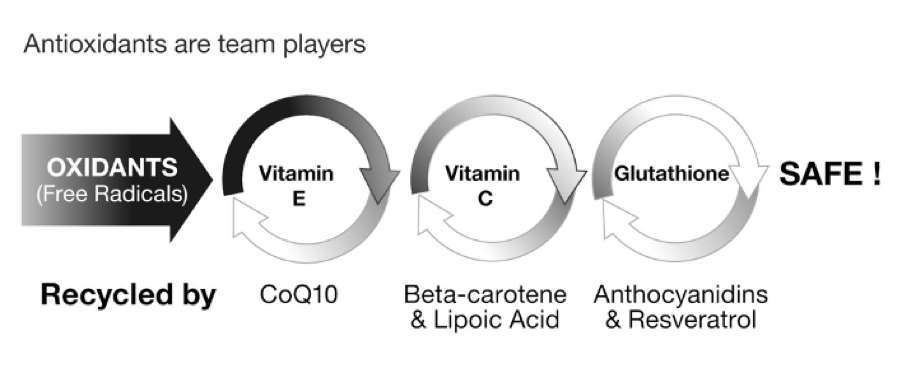
I’m proposing that there are four main biological drivers of our demise which I’m calling the four horsemen of the mental health apocalypse: a lack of brain fats, messed up methylation, loss of glucose control and excessive oxidation.

The first two – brain fats and methylation – are vital for the integral structure of neuronal membranes. The second two are vital for the function of brain cells, supplying fuel and coping with the oxidant ‘exhaust fumes’ of energy metabolism.

Brain fats in short supply

The dry weight of the brain is 60 per cent fat, and omega-3 DHA makes up the majority of the structural fat of neurons, followed closely by Arachidonic Acid (AA), an omega-6 fat. ALL BRAINS OF ALL ANIMALS contain predominantly these two essential brain fats. It is the available supply of these that determine whether an animal ends up with a big or small brain. The link between omega-3 DHA and brain function is beyond doubt, with study after study confirming the scientific evidence. Only last month, a study from the UK BioBank reported a 30 per cent lower risk of dementia in those with a higher omega-3 status in their blood (4). This confirmed the results of a US study (5) that found a 49 per cent reduced risk for dementia in those with the highest DHA level (top fifth) in their red blood cells versus the lowest (bottom fifth). A meta-analysis of 48 studies in the American Journal of Clinical Nutrition in 2023 (6) concludes that ‘a moderate-to-high level of evidence suggested that dietary intake of omega-3 fatty acids could lower risk of all-cause dementia or cognitive decline by about 20 per cent, especially for docosahexaenoic acid (DHA) intake’. Each 100mg increment of DHA was associated with an 8–10 per cent lower risk of dementia. And a 2023 study, by psychologists at the Linda Loma University in California and published in the journal Brain Sciences (7), reported that the higher a person’s omega-3 blood index was, the more white matter there was in their brain, and the better they performed on cognitive tests that predict less risk for dementia.

It’s compelling science. That is why my first recommendation is to always test your omega-3 index.

Buy Blood test here button.

This is the percentage of omega-3 DHA and EPA in the membrane of red blood cells, and it is a direct reflector of the membrane levels in your brain. Red cells last for three months so this is a long-term measure of your omega-3 status. In countries such as Japan, known for a high fish diet, the omega-3 index is around 10 per cent on average. Ideally, a level of above 8 per cent is optimal. I thought I was doing well, supplementing daily 575mg of EPA and DHA combined, plus eating oily fish three times a week but I scored just under – 7.7 per cent. I’ve since upped my intake of DHA by 500 mg, to 750 mg total daily intake.

In its pure form, DHA isn’t enough, it has to become ‘phosphorylated’ to work. It’s a bit like using those glues where you have two tubes and have to mix a squeeze of one with the other for the glue to work. The ‘mixer’ in this case is the B vitamins in your body attaching the DHA to the phospholipids such as phosphatidylcholine (PC). If you have no phospholipids, or no DHA or B vitamins, the mix is not going to work. While the body can synthesise DHA, to reach the levels we need requires good quality food sources such as seafood, by far the richest source of (already) phosphorylated DHA. If fish isn’t your thing, supplementing with lecithin (granules or capsules) is a must – aim for two 1200mg capsules or 250mg of PC per day.

Vitamin D is a mental health essential

The other essential brain fat, which is actually a hormone, is vitamin D.

A large-scale study earlier this year, involving over twelve thousand dementia-free 70+ year olds (8), found that more than a third (37 per cent) took supplements of vitamin D and those that did had a 40 per cent lower incidence of dementia. Many nutrition professionals recommend supplementing around 3,000 iu in the winter to achieve an adequate blood level of 75 nmol/L or more, advice that is backed up by a consortium of some 35 vitamin D researchers.(9)  The UK Government also recommends supplementing vitamin D, although the recommended 400iu falls far short of the amount needed for brain health. In a study in France, those with low vitamin D levels, below 50 nmol/L, had a nearly three-fold increased risk of Alzheimer’s (10) and worryingly, over sixty per cent of people in the UK have lower levels than this (11), while half are unaware of the need to supplement in the winter and only one in ten actually do (12). (Back in 2010, I was reported to the Advertising Standards Agency for suggesting that people had to supplement vitamin D in the winter because diet alone was not sufficient – how times change!)

Research continues to investigate whether having a higher blood level of vitamin D, perhaps 100 nmol/L, is even better for brain health. If you know your vitamin D level, you can help with this research by completing the Cognitive Function Test, and providing your vitamin D level. Or you can join our MIND project which includes a home test kit to measure your vitamin D level. We’ve tested 410,000 people’s cognitive function so far but need more people who know, or are willing to test their vitamin D.

Buy Blood test here button.
Methylation and homocysteine-lowering B vitamins

Omega-3 DHA can only become active by the process of methylation, which attaches the DHA to a phospholipid and thereby enables it to be incorporated into the neuronal membrane. The process of methylation is totally dependent on vitamins B6, B12 and folate. Our methylation-ability is beautifully defined by our homocysteine level. Homocysteine rises if the biochemical pathway between the amino acid methionine converting to the methyl-donor SAMe is blocked. Without adequate vitamin B6, B12, folate or, in the liver, zinc and tri-methyl glycine (TMG), homocysteine will rise.

Lowering homocysteine with B vitamins is the greatest evidenced disease-modifying treatment, as shown in the best meta-analysis of 396 trials (13) by China’s leading Alzheimer’s prevention expert, Professor Jin-Tai Yu, whom we are honoured to have in our Scientific Advisory Board. It was also rated so by the US National Institutes of Health researchers (14). 

The four horsemen of the mental health apocalypse

Homocysteine is also a biomarker for over 100 diseases including almost all mental and neurological diseases. The seminal paper by Professors David Smith and Helga Refsum on the subject is vital for all to read. For example, just one recent meta-analysis showed that both homocysteine, vitamin B12, and folic acid predict the onset and development of Parkinson’s. Homocysteine levels above 11µmol/L are a clear indicator that the brain is shrinking. Professor David Smith, another member of our Scientific Advisory Board, recommends treatment with B vitamins for anyone with a homocysteine above 10µmol/L , giving 20 mg of B6, 400 mcg of methylfolate and 500µg of B12.

Increasingly, raised homocysteine is extremely common. In America, 40 per cent of those over 60 have a homocysteine of over 11 (15). In China ‘the mean (average) homocysteine levels in adult males less than 30 years of age and greater than 60 years were higher than the upper limit of normal (15 µmol/L).’ And in the UK, two in five adults over 61 have insufficient B12 to prevent accelerated brain shrinkage (16).

Homocysteine not only predicts Alzheimer’s dementias but also vascular dementia which, combined, make up almost 90 per cent of all dementias. Raised homocysteine is a major driver of cardiovascular and cerebrovascular disease. Raised homocysteine increases the risk of cerebrovascular disease by seventeen times (17)! Joe Rogan dedicated his recent show to exactly this (18) and stressed why testing homocysteine is vital for anyone with any form of cardiovascular, neurological or mental health disease.

The trouble with homocysteine is you just don’t know if your level is raised without testing it, which is why we have create our own at-home, highly accurate test kit. While up to 20 per cent of people have a methylation gene mutation (MTHFR677TT) making them more likely to have a raised level, it’s likely that most people with raised homocysteine are just not good at absorbing vitamin B12, a condition that becomes more common with age. This is why antacid proton pump inhibitor (PPI) drugs are such bad news. They drive down B12 and four years use cranks up Alzheimer’s risk by over 33 per cent (19). 

Buy Blood test here button.
Breakthrough in homocysteine testing

It is essential to test homocysteine level for anyone over 50 and anyone with any brain or mental health or cardiovascular disorder including hypertension. Treatment with B vitamins is also essential if the level is above 10µmol/L. While a homocysteine level above 11 means increased brain shrinkage, research shows that even a homocysteine level of above 9 during pregnancy predicts more problems, specifically withdrawn behaviour, anxiety/depression, social problems and aggressive behaviour in the child by the age of six (20). Raised homocysteine is a well known predictor of miscarriage and pregnancy problems, which is why I recommend that women can best prepare for a healthy pregnancy by ensuring their homocysteine level is below 7.5 mcmol/l. Above this, the evidence points to chromosomal damage (21).

All these studies refer to plasma homocysteine, that is the level found in the clear serum part of blood (rather than the red blood cells). The difficulty with many test kits is the need to separate or spin the blood shortly after taking the sample or pass the blood through a plasma separator. Many fall short of the correlation with serum/plasma homocysteine, the gold standard of testing. Excitingly, a breakthrough with both the fixing of blood (taken using a dry blood spot) and the testing process now means that we now have an accurate and inexpensive way to test homocysteine with our home test kit. This is going to be made available all over the world, starting with the UK and EU in January 2024. The validation of this test is extremely good, with no false positives or negatives. Accuracy can be further improved if the test is taken after fasting for 12 hours with water only. Both coffee and alcohol affect homocysteine levels, as does eating a protein-rich meal.

Please, join our Citizen Science research by both testing homocysteine and completing the Cognitive Function Test here

A consensus of world experts (22) has concluded that lowering homocysteine with B vitamins is the easiest and most cost-effective prevention action, which Oxford University’s health economists estimate would save the UK £66 million per year (23).

However, it’s vital to test both homocysteine and Omega-3 levels, as they are co-dependent. Homocysteine-lowering B vitamins only work in those with sufficient omega-3, and omega-3 only works if homocysteine is low. This short film shows how this works here.

It explains why studies giving omega-3 or giving B vitamins have not consistently been effective. However, in re-analyses of three studies, B vitamins are highly effective, both in reducing the rate of brain shrinkage and improving cognition, in those with sufficient omega-3, and conversely, omega-3 is highly effective, but only in those with homocysteine below 11 mcmol/L (24). 

Want to learn more about homocysteine and how to reclaim your brain? Join us for the Homocysteine Unplugged webinar.
Test Your Cognitive Function Now green banner.

References

2  van Os J, Guloksuz S. Population Salutogenesis—The Future of Psychiatry? JAMA Psychiatry. Published online December 20, 2023. doi:10.1001/jamapsychiatry.2023.4582

3 Crawford M, Marsh, D ‘The Shrinking Brain’ 2023

4 Sala-Vila, A.; Tintle, N.; Westra, J.; Harris, W.S. Plasma Omega-3 Fatty Acids and Risk for Incident Dementia in the UK Biobank Study: A Closer Look. Nutrients 2023, 15,4896. https://doi.org/10.3390/ nu15234896

5 Sala-Vila, A.; Satizabal, C.L.; Tintle, N.; Melo van Lent, D.; Vasan, R.S.; Beiser, A.S.; Seshadri, S.; Harris, W.S. Red Blood Cell DHA Is Inversely Associated with Risk of Incident Alzheimer’s Disease and All-Cause Dementia: Framingham Offspring Study. Nutrients 2022, 14, 2408. https://doi.org/10.3390/ nu14122408

6 Wei BZ, Li L, Dong CW, Tan CC; Alzheimer’s Disease Neuroimaging Initiative; Xu W. The Relationship of Omega-3 Fatty Acids with Dementia and Cognitive Decline: Evidence from Prospective Cohort Studies of Supplementation, Dietary Intake, and Blood Markers. Am J Clin Nutr. 2023

7 Loong, S.; Barnes, S.; Gatto, N.M.; Chowdhury, S.; Lee, G.J. Omega-3 Fatty Acids, Cognition, and Brain Volume in Older Adults. Brain Sci.2023,13,1278. https://doi.org/ 10.3390/brainsci13091278 

8 Ghahremani M et al. Vitamin D supplementation and incident dementia: Effects of sex, APOE, and baseline cognitive status. Alzheimers Dement (Amst). 2023 Mar 1;15(1):e12404. doi: 10.1002/dad2.12404. PMID: 36874594; PMCID: PMC9976297.

9 Płudowski P et al Guidelines for Preventing and Treating Vitamin D Deficiency: A 2023 Update in Poland. Nutrients. 2023 Jan 30;15(3):695. doi: 10.3390/nu15030695. PMID: 36771403; PMCID: PMC9920487.

10 Jia J et al. Effects of vitamin D supplementation on cognitive function and blood Aβ-related biomarkers in older adults with Alzheimer’s disease: a randomised, double-blind, placebo-controlled trial. J Neurol Neurosurg Psychiatry. 2019 Dec;90(12):1347-1352. doi: 10.1136/jnnp-2018-320199. Epub 2019 Jul 11. PMID: 31296588.

11 https://www.ncbi.nlm.nih.gov/pmc/articles/PMC7353432/pdf/nutrients-12-01868.pdf

12 https://www.nutrition.org.uk/news/2021/british-nutrition-foundation-survey-reveals-49-adults-unaware-of-uk-government-guidelines-for-vitamin-d/

13 Yu JT, Xu W, Tan CC, Andrieu S, Suckling J, Evangelou E, Pan A, Zhang C, Jia J, Feng L, Kua EH, Wang YJ, Wang HF, Tan MS, Li JQ, Hou XH, Wan Y, Tan L, Mok V, Tan L, Dong Q, Touchon J, Gauthier S, Aisen PS, Vellas B. Evidence-based prevention of Alzheimer’s disease: systematic review and meta-analysis of 243 observational prospective studies and 153 randomised controlled trials. J Neurol Neurosurg Psychiatry. 2020 Nov;91(11):1201-1209. doi: 10.1136/jnnp-2019-321913. Epub 2020 Jul 20. PMID: 32690803; PMCID: PMC7569385.

14 Beydoun MA, Beydoun HA, Gamaldo AA, Teel A, Zonderman AB, Wang Y. Epidemiologic studies of modifiable factors associated with cognition and dementia: systematic review and meta-analysis. BMC Public Health. 2014 Jun 24;14:643. doi: 10.1186/1471-2458-14-643. PMID: 24962204; PMCID: PMC4099157.

15 Pfeiffer C, Clin Chem. 2008; R. Xu, Nature Scientific Reports 2022; Vogiatzlou A, Neurology, 2008

16 Vogiatzoglou A, Refsum H, Johnston C, Smith SM, Bradley KM, de Jager C, Budge MM, Smith AD. Vitamin B12 status and rate of brain volume loss in community-dwelling elderly. Neurology. 2008 Sep 9;71(11):826-32. doi: 10.1212/01.wnl.0000325581.26991.f2. PMID: 18779510.

17 Teng Z, Feng J, Liu R, Ji Y, Xu J, Jiang X, Chen H, Dong Y, Meng N, Xiao Y, Xie X, Lv P. Cerebral small vessel disease mediates the association between homocysteine and cognitive function. Front Aging Neurosci. 2022 Jul 15;14:868777. doi: 10.3389/fnagi.2022.868777. PMID: 35912072; PMCID: PMC9335204.

18  See the Joe Rogan show https://www.youtube.com/watch?v=-oqYoNwnOs0.

19 Northuis CA, Bell EJ, Lutsey PL, George KM, Gottesman RF, Mosley TH, Whitsel EA, Lakshminarayan K. Cumulative Use of Proton Pump Inhibitors and Risk of Dementia: The Atherosclerosis Risk in Communities Study. Neurology. 2023 Oct 31;101(18):e1771-e1778. doi: 10.1212/WNL.0000000000207747. Epub 2023 Aug 9. PMID: 37558503; PMCID: PMC10634644.

20 Roigé-Castellví J, Murphy M, Fernández-Ballart J, Canals J. Moderately elevated preconception fasting plasma total homocysteine is a risk factor for psychological problems in childhood. Public Health Nutr. 2019 Jun;22(9):1615-1623. doi: 10.1017/S1368980018003610. Epub 2019 Jan 14. PMID: 30636652; PMCID: PMC10261079.

21 Fenech M, Aitken C, Rinaldi J. Folate, vitamin B12, homocysteine status and DNA damage in young Australian adults. Carcinogenesis. 1998 Jul;19(7):1163-71. doi: 10.1093/carcin/19.7.1163. PMID: 9683174.

22 Smith AD, Refsum H, Bottiglieri T, Fenech M, Hooshmand B, McCaddon A, Miller JW, Rosenberg IH, Obeid R. Homocysteine and Dementia: An International Consensus Statement. J Alzheimers Dis. 2018;62(2):561-570. doi: 10.3233/JAD-171042. PMID: 29480200; PMCID: PMC5836397.

23 Tsiachristas A, Smith AD. B-vitamins are potentially a cost-effective population health strategy to tackle dementia: Too good to be true? Alzheimers Dement (N Y). 2016 Aug 11;2(3):156-161. doi: 10.1016/j.trci.2016.07.002. PMID: 29067302; PMCID: PMC5651357.

24 Jernerén F, Elshorbagy AK, Oulhaj A, Smith SM, Refsum H, Smith AD (2015). Brain atrophy in cognitively impaired elderly: the importance of long-chain ω-3 fatty acids and B vitamin status in a randomized controlled trial. Am J Clin Nutr. 2015 Jul;102(1):215-21; see also van Soest, A.P.M., van de Rest, O., Witkamp, R.F. et al. DHA status influences effects of B-vitamin supplementation on cognitive ageing: a post-hoc analysis of the B-proof trial. Eur J Nutr 61, 3731–3739 (2022). https://doi.org/10.1007/s00394-022-02924-w; see also Jernerén F, Cederholm T, Refsum H, Smith AD, Turner C, Palmblad J, Eriksdotter M, Hjorth E, Faxen-Irving G, Wahlund LO, Schultzberg M, Basun H, Freund-Levi Y. Homocysteine Status Modifies the Treatment Effect of Omega-3 Fatty Acids on Cognition in a Randomized Clinical Trial in Mild to Moderate Alzheimer’s Disease: The OmegAD Study. J Alzheimers Dis. 2019;69(1):189-197. doi: 10.3233/JAD-181148. PMID: 30958356.

25 Lakhan, S.E., Kirchgessner, A. The emerging role of dietary fructose in obesity and cognitive decline. Nutr J 12, 114 (2013). 

Further info

Sugar Shrinks the Brain & Messes Up Memory

Back in the decade that gave us neon shell suits, the first space shuttle, and the birth of the pop video (the unforgettable 1980s) we also believed that glucose (the sugar used by our bodies) gave us extra energy. Lucozade, a liquid form of glucose with a good dose of preservatives, artificial sweeteners and artificial colourants, was advertised as ‘energy for the human race.’ 

Yet, new studies are showing that too much glucose, and especially fructose, over time starves the brain of energy, leading to both memory loss and brain shrinkage.

These two sugars interfere with the energy factories within cells, called mitochondria, and deprive the brain of the energy it needs to function properly.

The link between diabetes and dementia is well known – those with diabetes have four times the risk of dementia. 

Haemoglobin A1c (HbA1c) is a long-term measure of glucose bound to red blood cells (haemoglobin) and is used by doctors to diagnose diabetes and monitor its therapy. HbA1c is a measure of damage produced by sugar spikes on red blood cells; a HbA1c of 6.5% or greater is diagnostic of diabetes. But long before this, in what is usually considered to be the ‘normal range’ teenagers with HbA1c above 5.4% show cognitive decline and shrinkage of the hippocampus in the central area of the brain compared to those with lower HbA1c levels (1). 

Shrinkage of the hippocampus is the hallmark of Alzheimer’s and is used to diagnose the disease. A new study shows that 40-year-old adults with so-called normal glucose levels, but at the higher end of the normal range, have increased their risk of Alzheimer’s by 15% (2). 

Furthermore, “In teenagers with raised, but normal levels of HbA1c, there is clear evidence of the same kind of memory problems and the same areas of brain shrinkage seen in patients with Alzheimer’s Disease” says Robert Lustig, Emeritus Professor of Pediatrics at University of California, San Francisco.

“Keeping your HbA1c below 5.4% with a no-added-sugar diet, and for some a low-carbohydrate diet, is one of the most direct ways you can protect your brain at any age.” says Lustig

“The irony is that having too much sugar over a number of years makes a person resistant to insulin. We need insulin in order to deliver glucose into our brain cells, so insulin resistance, the direct consequence of too much glucose, ends up starving the brain of energy with the consequent loss of concentration and memory.” says nutritionist and psychologist Patrick Holford, our CEO and founder.

“We are calling for people to test both their cognitive function with our free online test and measure their HbA1c with our new home pin prick blood test kit, so we can really find out when problems occur and how to prevent cognitive decline.” So far, over 400,000 people have done our Cognitive Function Test – our FREE, validated, online cognitive function test which tells you your future dementia risk and what to do to lower it.

Professor Robert Lustig thinks the problem got even worse when the food industry switched from sucrose, derived from cane, to high-fructose corn syrup, derived from corn; “High-fructose corn syrup is not more biologically evil; it’s economically evil, because it’s half the price of sucrose, so it found its way into all sorts of foods…

The key message is to test HbA1c early if it is over 5.4% and act to bring it down by cutting right back on foods and drinks with added sugar including carbohydrate-rich foods such as bread, rice, pasta, potatoes, and especially fruit juice. Nature never provides fructose without the requisite fibre. When God made the poison, he packaged it with the antidote. Eat your fruit, don’t drink it.” says Lustig.

REFERENCES

BRAIN SHRINKAGE IN ADOLESCENTS

MIDLIFE GLUCOSE INCREASING ALZHEIMER’S DISEASE RISK

BACKGROUND ON SUGAR AND DEMENTIA

and 

Further info

Vitamin D – the Mind, Memory & Mood Essential

By Patrick Holford

Did you know the length of your shadow can tell you if you’re able to generate vitamin D from sunlight?

If your shadow is longer than your body – you can’t produce vitamin D from sunlight. If you are in winter and live in a country of higher latitude (like the UK), this is happening now!

Vitamin D is an all-rounder as far as your brain and mental health is concerned.

It helps neurotransmission and exerts anti-inflammatory and neuroprotective activities within the brain by reducing both inflammation and oxidative stress (1).  

We are all deficient in winter

Generally speaking, the lower your vitamin D, the worse your mood which makes vitamin D especially important to supplement from October to March if you live in the UK or a similar latitude, when the angle of the sun is too low and you’re also less likely to get outdoors exposing your skin to sunlight. It’s best to assume that we are all deficient in winter, unless you travel to the sun, and therefore need to supplement at least 25mcg (1000iu) although two or three times may be optimal and necessary to correct deficiency.

Vitamin D and depression

The lower your vitamin D level, the more depressed you are likely to feel. If your mood takes a dip in winter months this is a key sign that you might need more. That’s what researchers at the University of Tromso in Norway found on testing 441 volunteers who were given a test for depression and also a test for blood levels of vitamin D. The volunteers were then given Vitamin D supplements or placebo. Tested one year on, those given vitamin D, but not those given the placebos, had substantially lower depression ratings (2).

However, you don’t have to wait for a year to get a lift in your mood. An eight-week study in Australia found that some of those given vitamin D supplements had an improvement in mood in only five days (3). Another study, in Iran, gave a single vitamin D injection and reported improvement in depression when measured 3 months on (4).

Since vitamin D stores, there is no need to supplement daily. You can take a weekly dose. In the Norwegian study above they gave 20,000iu or 40,000iu weekly. Both worked and there wasn’t a big difference in the effects on mood. So, you can assume that 20,000iu weekly, or 3,000iu daily would likely be sufficient.

It’s what is in your blood that matters

However, the yardstick for what you need is really whatever gets your blood level into the optimal range.

In the study above, those given 20,000iu a week averaged a blood level of 88 nmol/l, while those given 40,000iu averaged 111nmol/l. It is now well recognised that levels above 75nmol/l (30 ng/ml) correlate with good health for many health measures, while levels above 100nmol/l (40ng/ml) might be even better in some respects. My recommendation is to test yourself and consider anything below 50 to be deficient, and above 75 to be sufficient with an optimal level being closer to 100nmol/l (40ng/ml). If you then supplement 3,000iu daily, or seven times this weekly, especially from October to March, retest yourself against these yardsticks.

It’s not JUST about vitamin D

But it isn’t just vitamin D we need – it’s sunlight.

During the summer months, if you are spending half an hour outdoors, with short sleeves, shorts or even more skin exposure, in the sunlight, even a multivitamin that provides you 800iu (a quarter of what you need in the darker months) might be sufficient.

Sunlight promotes serotonin, the happy neurotransmitter.

Having good vitamin D levels is a vital part of your brain upgrade since it helps optimise your brain’s serotonin levels. That’s because a vital enzyme called TPH, which converts the amino acid tryptophan into serotonin, is enhanced in the brain by vitamin D, and selectively shut down in the gut. So, with sufficient vitamin D you get higher brain levels of serotonin, promoting good mood, and lower serotonin levels in the gut (5), protecting against gut inflammation. 

The other way to boost your light exposure is with light therapy. Canadian researchers compared the effects of an anti-depressant (fluoxetine), placebo or 30 minutes daily of light therapy as soon as possible on waking for people with major depression. Light therapy was both superior to placebo and anti-depressants, which were also no better than placebo. I have a full spectrum light in my study, which I put on in the winter, when I’m writing in the early morning, before the sun comes up.

Vitamin D and addiction

Interestingly, vitamin D deficiency is also associated with greater opioid addiction (7), suggesting the need to up vitamin D intake to reduce cravings. There’s also something else interesting about vitamin D, sun exposure and addiction. People can become addicted to sunbeds. In relation to opioids, the lower one’s vitamin D levels, the more addictive they become. Sun exposure, which promotes higher vitamin D levels, reduces opioid addiction.

What to eat?

The best food sources of vitamin D are oily fish and eggs. A serving of salmon or mackerel is likely to give you 400iu of vitamin D. Two eggs will provide about 130iu. In some countries, not the UK, milk is fortified with vitamin D but otherwise, it is not a great source. Some mushrooms are purposely fortified with vitamin D by exposing them to UV light.

In summary, the way up from down is to eat a low GL diet, with plenty of oily fish and eggs, avoid sugar, cut back on stimulants and alcohol, and make sure your daily supplements include omega-3, B vitamins, with extra B12 if your homocysteine level is high, vitamin D, zinc, magnesium, chromium, plus the amino acids 5-HTP with is the precursor of serotonin.

Vitamin D protects your brain and memory.

Vitamin D deficiency increases the risk of Alzheimer’s (9). In a study in France involving 912 elderly patients followed for 12 years, a total of 177 dementia cases occurred. Those with low vitamin D levels had a nearly three-fold increased risk of Alzheimer’s (10). Supplementing 800iu (20mcg) a day for 12 months has also been shown to improve cognitive function (11). 

Supplements may also help ward off dementia, according to a recent, large-scale study involving over twelve thousand dementia-free 70+ year-olds in the US (12). More than a third (37%) took supplements of vitamin D. Those who did had a 40% lower incidence of dementia. Professor Zahinoor Ismail, of the University of Calgary and University of Exeter, who led the research, said: “We know that vitamin D has some effects in the brain that could have implications for reducing dementia, however so far, research has yielded conflicting results. Overall, we found evidence to suggest that earlier supplementation might be particularly beneficial, before the onset of cognitive decline.”

Vitamin D helps recovery from strokes and brain injury

Having a higher vitamin D level or supplementing vitamin D at levels above 2,000iu a day also helps people recover from strokes (13) and other forms of brain injury.

I recommend 3,000iu a day or 21,000iu a week in winter but most importantly, monitoring your vitamin D level to keep it above 75nmol/l (30 ng/ml). A level of 100nmol/l may be optimal. That is why testing is so vital as winter approaches. Test again 3 months later so you know if you’re taking enough or too much and that will give you a good gauge as spring approaches when you can probably lower your intake to 600 to 1,000iu depending on sun exposure and diet to top up to over 1,000iu.

Vitamin D is vital in pregnancy and for children

A breastfeeding mother must, at least, supplement omega-3 fish oils and ensure enough B vitamins for homocysteine to be below 7 mcmol/L, but many other nutrients are also necessary. Low vitamin D status in both the mother and newborn baby increases the likelihood of developing autistic spectrum disorder by 54% (14).

Without sufficient nutrients not only do brain cells not make the connections but the production and flow of neurotransmitters doesn’t happen optimally. Bruce Ames, Emeritus professor of Biochemistry and Molecular Biology at the University of California, thinks that “serotonin synthesis, release, and function in the brain are modulated by vitamin D and the 2 marine omega-3 fatty acids, eicosapentaenoic acid (EPA) and docosahexaenoic acid (DHA).” He says that ”insufficient levels of vitamin D, EPA, or DHA, in combination with genetic factors and at key periods during development, would lead to dysfunctional serotonin activation and function and may be one underlying mechanism that contributes to neuropsychiatric disorders and depression in children”. (15) 

A study in Northern Ireland found that half of schoolchildren were deficient in vitamin D, with a level below 50nmol/l (I recommend above 75 nmol/l). Another finds that low vitamin D levels in childhood are related to behaviour problems in adolescence (16). Is it any wonder so many children are neurodivergent?

A placebo-controlled trial giving ADHD children magnesium together with vitamin D for eight weeks showed a major reduction in emotional, conduct and peer problems and improved socialisation compared with children treated with the placebo (17).

The bottom line – we all need to supplement vitamin D

The bottom line is everyone, from children to older people, and especially anyone considering pregnancy, suffering with low mood or memory problems, must test their vitamin D, ideally, at the start of winter to guide them as to what to supplement, during winter perhaps at 3 months, and 6 months later, to learn what amount of vitamin D supplementation they need in summer and winter.

In summary, you want to get your blood level above 75nmol/l (30 ng/ml) which usually means supplementing 3,000iu from October to March for those in the Northern Hemisphere. The optimal level is, however,  likely to be above 100nmol/l (40mg/ml).  Your need for vitamin D is likely to be greater if you are overweight and have darker skin and live further North.

When spring returns, and throughout summer, 1,000iu a day may be enough depending on your sun exposure.


Thank you for reading!
Food for the Brain is a non-for-profit educational and research charity that offers a free Cognitive Function Test and assesses your Dementia Risk Index to be able to advise you on how to dementia-proof your diet and lifestyle.

By completing the Cognitive Function Test you are joining our grassroots research initiative to find out what really works for preventing cognitive decline. We share our ongoing research results with you to help you make brain-friendly choices.

Please support our research by becoming a Friend of Food for the Brain.

References

1 Jayedi A, Rashidy-Pour A, Shab-Bidar S. Vitamin D status and risk of dementia and Alzheimer’s disease: A meta-analysis of dose-response †. Nutr Neurosci. 2019 Nov;22(11):750-759. doi: 10.1080/1028415X.2018.1436639. Epub 2018 Feb 15. PMID: 29447107

2 Jorde R, Sneve M, Figenschau Y, Svartberg J, Waterloo K. Effects of vitamin D supplementation on symptoms of depression in overweight and obese subjects: randomized double blind trial. J Intern Med. 2008 Dec;264(6):599-609. doi: 10.1111/j.1365-2796.2008.02008.x. Epub 2008 Sep 10. PMID: 18793245.

3 Khoraminya N, Tehrani-Doost M, Jazayeri S, Hosseini A, Djazayery A. Therapeutic effects of vitamin D as adjunctive therapy to fluoxetine in patients with major depressive disorder. Aust N Z J Psychiatry. 2013 Mar;47(3):271-5. doi: 10.1177/0004867412465022. Epub 2012 Oct 23. PMID: 23093054. Xxxx check the some in 5 days

4 Mozaffari-Khosravi H, Nabizade L, Yassini-Ardakani SM, Hadinedoushan H, Barzegar K. The effect of 2 different single injections of high dose of vitamin D on improving the depression in depressed patients with vitamin D deficiency: a randomized clinical trial. J Clin Psychopharmacol. 2013 Jun;33(3):378-85. doi: 10.1097/JCP.0b013e31828f619a. PMID: 23609390.

5 Patrick RP, Ames BN. Vitamin D hormone regulates serotonin synthesis. Part 1: relevance for autism. FASEB J. 2014 Jun;28(6):2398-413. doi: 10.1096/fj.13-246546. Epub 2014 Feb 20. PMID: 24558199.

6 Lam RW, Levitt AJ, Levitan RD, Enns MW, Morehouse R, Michalak EE, Tam EM. The Can-SAD study: a randomized controlled trial of the effectiveness of light therapy and fluoxetine in patients with winter seasonal affective disorder. Am J Psychiatry. 2006 May;163(5):805-12. doi: 10.1176/ajp.2006.163.5.805. PMID: 16648320.Psychiary, No015

7 Kemény LV, Robinson KC, Hermann AL, Walker DM, Regan S, Yew YW, Lai YC, Theodosakis N, Rivera PD, Ding W, Yang L, Beyer T, Loh YE, Lo JA, van der Sande AAJ, Sarnie W, Kotler D, Hsiao JJ, Su MY, Kato S, Kotler J, Bilbo SD, Chopra V, Salomon MP, Shen S, Hoon DSB, Asgari MM, Wakeman SE, Nestler EJ, Fisher DE. Vitamin D deficiency exacerbates UV/endorphin and opioid addiction. Sci Adv. 2021 Jun 11;7(24):eabe4577. doi: 10.1126/sciadv.abe4577. PMID: 34117054; PMCID: PMC8195487.

8 Jayedi A, Rashidy-Pour A, Shab-Bidar S. Vitamin D status and risk of dementia and Alzheimer’s disease: A meta-analysis of dose-response †. Nutr Neurosci. 2019 Nov;22(11):750-759. doi: 10.1080/1028415X.2018.1436639. Epub 2018 Feb 15. PMID: 29447107

9 Chai B, Gao F, Wu R, Dong T, Gu C, Lin Q, Zhang Y. Vitamin D deficiency as a risk factor for dementia and Alzheimer’s disease: an updated meta-analysis. BMC Neurol. 2019 Nov 13;19(1):284. doi: 10.1186/s12883-019-1500-6. PMID: 31722673; PMCID: PMC6854782.

10 Jia J, Hu J, Huo X, Miao R, Zhang Y, Ma F. Effects of vitamin D supplementation on cognitive function and blood Aβ-related biomarkers in older adults with Alzheimer’s disease: a randomised, double-blind, placebo-controlled trial. J Neurol Neurosurg Psychiatry. 2019 Dec;90(12):1347-1352. doi: 10.1136/jnnp-2018-320199. Epub 2019 Jul 11. PMID: 31296588.

11 Feart C, Helmer C, Merle B, Herrmann FR, Annweiler C, Dartigues JF, Delcourt C, Samieri C. Associations of lower vitamin D concentrations with cognitive decline and long-term risk of dementia and Alzheimer’s disease in older adults. Alzheimers Dement. 2017 Nov;13(11):1207-1216. doi: 10.1016/j.jalz.2017.03.003. Epub 2017 May 16. PMID: 28522216.

12 Ghahremani M, Smith EE, Chen HY, Creese B, Goodarzi Z, Ismail Z. Vitamin D supplementation and incident dementia: Effects of sex, APOE, and baseline cognitive status. Alzheimers Dement (Amst). 2023 Mar 1;15(1):e12404. doi: 10.1002/dad2.12404. PMID: 36874594; PMCID: PMC9976297.

13 Marek K, Cichoń N, Saluk-Bijak J, Bijak M, Miller E. The Role of Vitamin D in Stroke Prevention and the Effects of Its Supplementation for Post-Stroke Rehabilitation: A Narrative Review. Nutrients. 2022 Jul 4;14(13):2761. doi: 10.3390/nu14132761. PMID: 35807941; PMCID: PMC9268813.

14 Wang Z, Ding R, Wang J. The Association between Vitamin D Status and Autism Spectrum Disorder (ASD): A Systematic Review and Meta-Analysis. Nutrients. 2020 Dec 29;13(1):86. doi: 10.3390/nu13010086. PMID: 33383952; PMCID: PMC7824115.

15 Patrick RP, Ames BN. Vitamin D and the omega-3 fatty acids control serotonin synthesis and action, part 2: relevance for ADHD, bipolar disorder, schizophrenia, and impulsive behavior. FASEB J. 2015 Jun;29(6):2207-22. doi: 10.1096/fj.14-268342. Epub 2015 Feb 24. PMID: 25713056.

16 Sonia L Robinson, Constanza Marín, Henry Oliveros, Mercedes Mora-Plazas, Betsy Lozoff, Eduardo Villamor, Vitamin D Deficiency in Middle Childhood Is Related to Behavior Problems in Adolescence, The Journal of Nutrition, Volume 150, Issue 1,

2020, Pages 140-148, ISSN 0022-3166, https://doi.org/10.1093/jn/nxz185.

17 Hemamy M, Pahlavani N, Amanollahi A, Islam SMS, McVicar J, Askari G, Malekahmadi M. The effect of vitamin D and magnesium supplementation on the mental health status of attention-deficit hyperactive children: a randomized controlled trial. BMC Pediatr. 2021 Apr 17;21(1):178. doi: 10.1186/s12887-021-02631-1. Erratum in: BMC Pediatr. 2021 May 12;21(1):230. PMID: 33865361; PMCID: PMC8052751.

Further info

Sleep, Stress and the Brain: Why Quality Rest Matters

By Patrick Holford

What does any animal, perhaps your dog, do after exercising or going for a walk?

Sleep.

Sleep is how the brain recovers. There is now overwhelming evidence that sleep is a ‘brain essential’ and just like Goldilocks, it seems we need just the right amount. Getting too much, or too little, increases our risk for cognitive decline.

The optimal amount of sleep for brain health appears to be a total of seven hours. This does not necessarily need to be in one uninterrupted stretch – a study found that napping after physical activity can reduce the risk of cognitive impairment (1).

However, those consistently getting less than seven hours of sleep may be doubling their risk of age-related cognitive decline (2). A UK study of Whitehall civil servants, which began in the 1980s, found that persistent short sleep at ages 50, 60, and 70 was associated with a 30% increased risk of dementia (3). Sleep loss does not just increase long-term dementia risk – it also reduces empathy, increases negative emotions, and impairs next-day functioning (4).

Why Sleep Is Essential to Brain Health?

Think of sleep as the brain’s housekeeper. During sleep, circulation of blood and cerebrospinal fluid improves, helping to clear out waste products from brain metabolism (5). These include harmful oxidants and amyloid protein, the latter linked to Alzheimer’s and brain inflammation – which can begin accumulating after just one night of poor sleep (6).

One key agent in this nightly brain cleanse is melatonin. As night falls, our brains convert serotonin into melatonin, primarily in the pineal gland – referred to by Descartes as the seat of the soul, and known in yoga as the ‘third eye’ chakra.

Sensitive to light via receptors behind the eyes, the pineal gland is the only endocrine organ in direct contact with the external world. Darkness triggers melatonin production, while exposure to light – including screen use before bed – suppresses it.


Melatonin helps keep us in sync with the circadian cycle. Some frequent flyers even use melatonin supplements to overcome jet lag and adjust their sleep rhythms more easily (7).

More than just a sleep aid, melatonin acts as a powerful antioxidant – disarming damaging oxidants, restoring mitochondrial energy production, and acting as an anti-inflammatory. It has been used to support recovery in cancer, COVID-19, and cardiovascular conditions (8,9). Reduced brain melatonin levels and circadian disruption are also observed in individuals with cognitive decline.

Why Dreaming Matters?

Sleep isn’t just for rest – it’s a deeply active process. About 30 minutes after falling asleep, we enter deep sleep, marked by slower breathing, a reduced heart rate, and lower blood pressure. This phase restores and repairs bodily tissues. About 90 minutes in, we shift into REM (rapid eye movement) sleep – where most dreaming occurs.

REM sleep is critical for brain health. Each night, we cycle between deep, light, and REM sleep three to five times, with REM ideally making up about 25% of total sleep.

REM and deep sleep phases also see increased production of growth hormone, which supports tissue repair. Meanwhile, melatonin helps clear metabolic waste. However, under stress, cortisol levels rise and suppress REM sleep and growth hormone production, reducing the brain’s ability to recover. Sleep-deprived individuals tend to experience more REM when they finally do sleep, suggesting REM plays a key role in emotional processing.

One theory suggests that dreams help us metabolise suppressed emotions – fear, anger, sadness – stored during our busy days. If you have a vivid, emotional dream, it may be worth tracing it back to unresolved feelings from the previous day.

How Chronic Stress Disrupts Sleep and Brain Function?

Chronic or intense stress – such as bereavement, illness, or financial strain – has been shown to increase the risk of cognitive decline and dementia (10). However, good sleep can help process a stressful day.

The perception of control matters, too. Studies show that high job demands combined with low control are strongly linked to an increased risk of depression and cognitive impairment (11). Examples might include caregiving for a loved one with dementia while navigating health services, or working in a high-stress job without the resources to make meaningful changes.

Your Brain on Cortisol: The Hippocampus Feedback Loop

Two hormones mediate stress: adrenaline (short-acting) and cortisol (longer-acting). Adrenaline prepares you to act quickly – it’s the fight-or-flight hormone. Cortisol helps regulate energy and alertness throughout the day.

In the morning, cortisol naturally rises to get us going. It should fall in the evening to support sleep. But chronic stress disrupts this rhythm. If cortisol stays high at night, sleep is disturbed. If it’s too low in the morning, you may feel foggy and reach for caffeine.

Excess cortisol impairs memory, slows thinking, lowers social functioning, and raises the risk of dementia (12). What’s happening in the brain is that cortisol overstimulates the hippocampus, which is responsible for memory and emotional regulation. With prolonged stress, this feedback loop fails – the hippocampus shrinks, and cortisol levels remain elevated, accelerating brain ageing.

Short-Term Relief, Long-Term Harm: Sugar and Alcohol as Stress Crutches

Oscar Ichazo described how we reach for compensations under stress. Unfortunately, many – like alcohol and sugar – backfire.

Alcohol temporarily boosts GABA, calming the nervous system and reducing adrenaline. But the effect is short-lived. Drinking too much reduces GABA receptor sensitivity the next day, leaving us more anxious. In the long term, alcohol is neurotoxic and increases dementia risk (12). It also disrupts sleep architecture, impairing the brain’s ability to repair itself.

Sugar triggers dopamine and activates the brain’s reward circuits, making us crave more. It also spikes the adrenal system, amplifying stress and cortisol levels (13). Fats and proteins do not have this effect – this is unique to sugar.

So, when we use sugar or alcohol to manage stress, we often wake up feeling more anxious and foggy. This leads us to reach for caffeine and more sugar, which spikes cortisol again, leaving us even more depleted by evening – creating a cycle of stress, poor sleep, and accelerated brain ageing.

Simple Ways to Break the Cycle

The good news? You can reverse this pattern. Start here:

  • Become a FRIEND and get access to your personalised COGNITION® programme which which includes:
    – A whole module dedicated to sleep and calm
    – Another focused on helping you reduce sugar
    – Plus monthly live group coaching to help you stay focused and on track
  • Prioritise seven hours of quality sleep each night.
  • Identify and reduce common stress triggers.
  • Be mindful of alcohol and sugar intake.
  • Find positive outlets: yoga, walking, journaling, a good book – like Upgrade Your Brain.

Thank you for reading!
Food for the Brain is a non-for-profit educational and research charity that offers a free Cognitive Function Test and assesses your Dementia Risk Index to be able to advise you on how to dementia-proof your diet and lifestyle.

By completing the Cognitive Function Test you are joining our grassroots research initiative to find out what really works for preventing cognitive decline. We share our ongoing research results with you to help you make brain-friendly choices.

Please support our research by becoming a Friend of Food for the Brain.

———

References:

1 Qian YX, Ma QH, Sun HP, Xu Y, Pan CW. Combined effect of three common lifestyle factors on cognitive impairment among older Chinese adults: a community-based, cross-sectional survey. Psychogeriatrics. 2020 Nov;20(6):844-849. doi: 10.1111/psyg.12604. Epub 2020 Aug 31. PMID: 32869429.

2 Bubu OM, Brannick M, Mortimer J, Umasabor-Bubu O, Sebastião YV, Wen Y, Schwartz S, Borenstein AR, Wu Y, Morgan D, Anderson WM. Sleep, Cognitive impairment, and Alzheimer’s disease: A Systematic Review and Meta-Analysis. Sleep. 2017 Jan 1;40(1). doi: 10.1093/sleep/zsw032. PMID: 28364458.

3 Sabia S, Fayosse A, Dumurgier J, van Hees VT, Paquet C, Sommerlad A, Kivimäki M, Dugravot A, Singh-Manoux A. Association of sleep duration in middle and old age with incidence of dementia. Nat Commun. 2021 Apr 20;12(1):2289. doi: 10.1038/s41467-021-22354-2. PMID: 33879784; PMCID: PMC8058039.

4 Krause AJ, Simon EB, Mander BA, Greer SM, Saletin JM, Goldstein-Piekarski AN, Walker MP. The sleep-deprived human brain. Nat Rev Neurosci. 2017 Jul;18(7):404-418. doi: 10.1038/nrn.2017.55. Epub 2017 May 18. PMID: 28515433; PMCID: PMC6143346.

56 Xie L, Kang H, Xu Q, Chen MJ, Liao Y, Thiyagarajan M, O’Donnell J, Christensen DJ, Nicholson C, Iliff JJ, Takano T, Deane R, Nedergaard M. Sleep drives metabolite clearance from the adult brain. Science. 2013 Oct 18;342(6156):373-7. doi: 10.1126/science.1241224. PMID: 24136970; PMCID: PMC3880190.

6 Shokri-Kojori E, Wang GJ, Wiers CE, Demiral SB, Guo M, Kim SW, Lindgren E, Ramirez V, Zehra A, Freeman C, Miller G, Manza P, Srivastava T, De Santi S, Tomasi D, Benveniste H, Volkow ND. β-Amyloid accumulation in the human brain after one night of sleep deprivation. Proc Natl Acad Sci U S A. 2018 Apr 24;115(17):4483-4488. doi: 10.1073/pnas.1721694115. Epub 2018 Apr 9. PMID: 29632177; PMCID: PMC5924922.

7 Herxheimer A, Petrie KJ. Melatonin for the prevention and treatment of jet lag. Cochrane Database Syst Rev. 2002;(2):CD001520. doi: 10.1002/14651858.CD001520. PMID: 12076414.

8 Keithahn C, Lerchl A. 5-hydroxytryptophan is a more potent in vitro hydroxyl radical scavenger than melatonin or vitamin C. J Pineal Res. 2005 Jan;38(1):62-6. doi: 10.1111/j.1600-079X.2004.00177.x. PMID: 15617538.

9 Chitimus DM, Popescu MR, Voiculescu SE, Panaitescu AM, Pavel B, Zagrean L, Zagrean AM. Melatonin’s Impact on Antioxidative and Anti-Inflammatory Reprogramming in Homeostasis and Disease. Biomolecules. 2020 Aug 20;10(9):1211. doi: 10.3390/biom10091211. PMID: 32825327; PMCID: PMC7563541; regarding covid see also Tan DX, Reiter RJ. Mechanisms and clinical evidence to support melatonin’s use in severe COVID-19 patients to lower mortality. Life Sci. 2022 Apr 1;294:120368. doi: 10.1016/j.lfs.2022.120368. Epub 2022 Jan 30. PMID: 35108568; PMCID: PMC8800937.; see also Begum R, Mamun-Or-Rashid ANM, Lucy TT, Pramanik MK, Sil BK, Mukerjee N, Tagde P, Yagi M, Yonei Y. Potential Therapeutic Approach of Melatonin against Omicron and Some Other Variants of SARS-CoV-2. Molecules. 2022 Oct 16;27(20):6934. doi: 10.3390/molecules27206934. PMID: 36296527; PMCID: PMC9609612.; regarding cancer see Reiter RJ, Rosales-Corral SA, Tan DX, Acuna-Castroviejo D, Qin L, Yang SF, Xu K. Melatonin, a Full Service Anti-Cancer Agent: Inhibition of Initiation, Progression and Metastasis. Int J Mol Sci. 2017 Apr 17;18(4):843. doi: 10.3390/ijms18040843. PMID: 28420185; PMCID: PMC5412427.

10 Franks KH, Bransby L, Saling MM, Pase MP. Association of Stress with Risk of Dementia and Mild Cognitive Impairment: A Systematic Review and Meta-Analysis. J Alzheimers Dis. 2021;82(4):1573-1590. doi: 10.3233/JAD-210094. PMID: 34366334.

11 Wang HX, Wahlberg M, Karp A, Winblad B, Fratiglioni L. Psychosocial stress at work is associated with increased dementia risk in late life. Alzheimers Dement. 2012;8(2):114-20. doi: 10.1016/j.jalz.2011.03.001. PMID: 22404853; see also Gonzalez-Mulé, E., & Cockburn, B. S. (2021). This job is (literally) killing me: A moderated-mediated model linking work characteristics to mortality. Journal of Applied Psychology, 106(1), 140–151. https://doi.org/10.1037/apl0000501; see also Gonzalez-Mulé E, Kim MM, Ryu JW. A meta-analytic test of multiplicative and additive models of job demands, resources, and stress. J Appl Psychol. 2021 Sep;106(9):1391-1411. doi: 10.1037/apl0000840. Epub 2020 Sep 21. PMID: 32955269.

12 Ouanes S, Popp J. High Cortisol and the Risk of Dementia and Alzheimer’s Disease: A Review of the Literature. Front Aging Neurosci. 2019 Mar 1;11:43. doi: 10.3389/fnagi.2019.00043. PMID: 30881301; PMCID: PMC6405479.13 Gonzalez-Bono E, Rohleder N, Hellhammer DH, Salvador A, Kirschbaum C. Glucose but not protein or fat load amplifies the cortisol response to psychosocial stress. Horm Behav. 2002 May;41(3):328-33. doi: 10.1006/hbeh.2002.1766. PMID: 11971667.

Further info

Use it or Lose it. Why an active lifestyle is a brain essential.

Keeping our brain’s structure and neural network healthy may seem like a mystery at times, but often the best advice is simple: ‘use it or lose it!’

The exercise and stimulation your brain gets from an active physical, social and intellectual lifestyle is vital to keeping it healthy. Just like our bodies need movement and exercise to function well, our brains need their own workout to thrive, too.

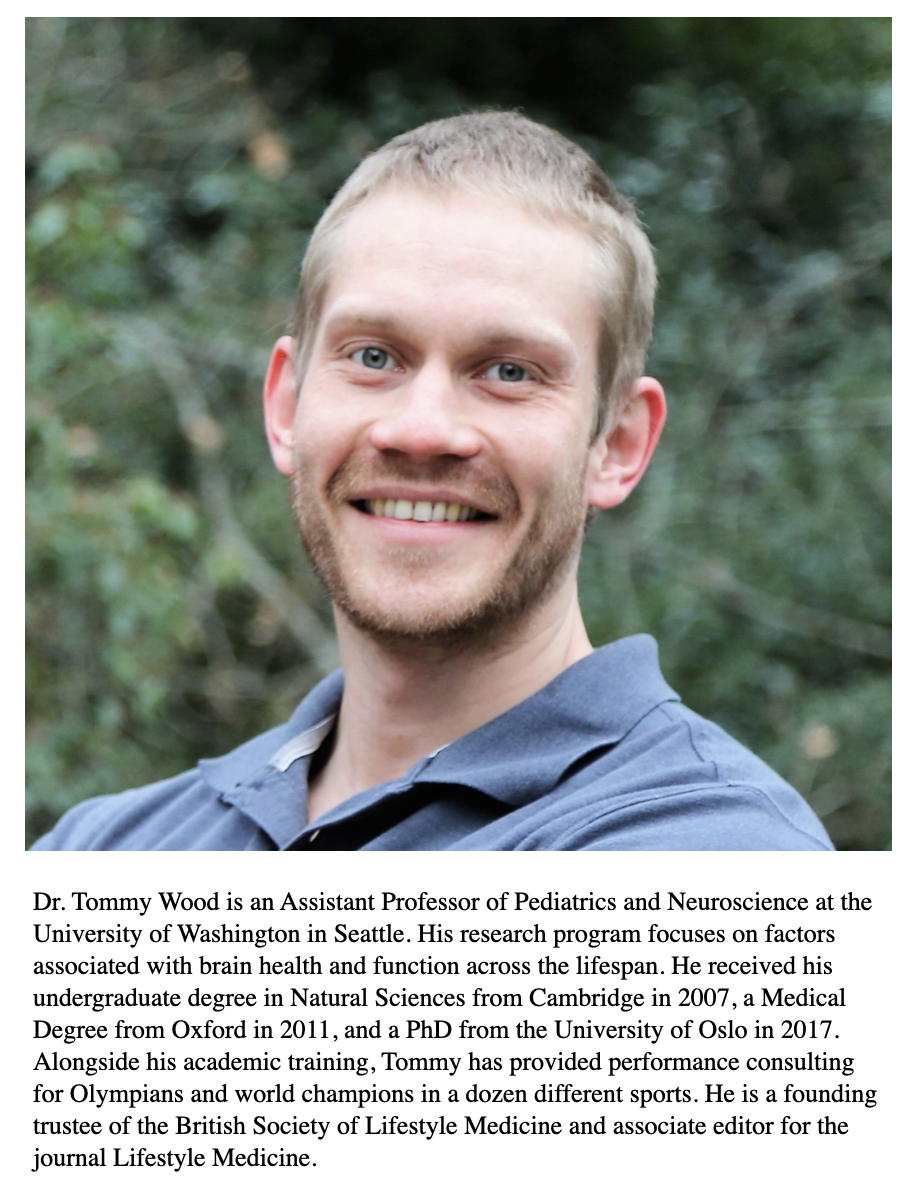
Lifestyle expert at Food for the Brain, Assistant Professor Tommy Wood, from the University of Washington has advised people at the top of their game, from Formula 1 drivers and Olympians to world champions, on how to maximise their performance, both mentally and physically.  His top tip for keeping our brains sharp?  

“In short, use it or lose it. The brain is an amazing organ, and it’s more resilient and adaptable than we’ve been led to believe. I’m sure you’ve heard that adults have a fixed amount of brain cells. Then, as we get older (or every time we take a sip of wine) we “lose” some of those brain cells as part of an unstoppable decline towards dementia or Alzheimer’s disease.”

“That’s not necessarily true” says Professor Wood. “I like to think about the brain like I think about muscles. In order to grow our muscles, we need to provide a stimulus – like lifting weights in the gym – followed by a period of rest. The opposite also happens – if we stop going to the gym or if we stop using a limb after breaking a bone – our muscles get smaller. Most have experienced this personally, and there’s every indication that your cognitive “muscle” behaves in the same way.”

A classic example of this is a study of London taxi drivers in training who have to learn ‘The Knowledge’. Many spend three years driving the 25,000 streets of London, logging up tens of thousands of miles, on foot or on a scooter. Not all pass the first time. Katherine Woollett at University College London decided to find out if acquiring the knowledge actually changed a person’s brain by measuring the density of grey matter as an indicator of brain volume. About half of her group of training taxi drivers passed first time and the other half failed. She also had a control group of people of the same age, most in their late 30’s with similar other demographics such as IQ. Sure enough, those who passed had increased their brain density of grey matter, and specifically in the central hippocampus area most associated with cognitive resilience. (1)

Keep Cognitively Active

There’s a pattern in our society – we are meant to learn every day as we go through school in childhood and teenage years, then we get a job, which, past a training phase, may not require much more learning, then around 65 we are meant to retire, with no more ‘need’ to work or learn.

Every indicator that you can think of – leaving school early, having a lower educational standard (2), or retiring early (3), has been associated with an increasing risk of cognitive decline.

When Professor May Beydoun, at the US National Institutes of Health (NIH) did a comprehensive study of the biggest risk factors for developing Alzheimer’s, she attributed 24% of risk to educational status and 32% of risk to physical activity(4). So, using our brains, reflected in educational and physical activity, is a huge part of keeping your brain healthy. (It’s worth remembering that  omega-3/seafood and homocysteine-lowering B vitamins account for 22% each while smoking racks up 31% in the risk stakes).

Think about how you use your mind. How much time do you spend stimulated, learning something? How much time do you spend engaged in relatively mindless mental activities? 

Television can be stimulating, or mind-numbing – engaging your attention but not really making you think. Social media activity, like scrolling through TikTok or Instagram, could be mind-numbing, while digital engagement with others could be stimulating. A simple yardstick is to ask ‘am I learning anything? Am I using my mind?’ 

While these activities are keeping your brain busy, what our brains really needs is to be engaged in learning or working something out, ideally without too much stress. Many films are designed to engage you by stimulating a stress response, keeping you on the edge of our seat. On the other hand, doing Wordle or a crossword, or playing a game of backgammon or chess involves concentration and thinking without cranking up your stress response. 

Two high-rating apps designed to engage our minds Brain HQ and Lumosity. Brain HQ (www.brainhq.com) adapts according to your needs – do you want better memory, better attention or faster processing? Three 20-minute sessions weekly are recommended. Lumosity (www.lumosity.com) is also adaptive and achieves much the same improvement in cognition. In just the same way you become physically fitter by increasing the duration or intensity of an exercise, it seems the same is true with your mind.

Reading books, or listening to podcasts can also be a great way to stimulate the old grey matter, mind but it does depend on what you are reading or listening to. The golden question is  ‘am I learning anything from this?’. Even better – join a bookclub for the social stimulation, sharing views, hearing others, and working out where you stand. 

Learn by failing

Land on any social media platform and we are bombarded with stories of people succeeding, urging us to try the latest self-help, diet or exercise programme, meditation or music app (who didn’t try and learn the guitar in lockdown!) but failure, according to Professor Tommy Wood, is when the magic really happens for our brains:

“Failure constitutes protective cognitive demand. The cocktail of hormones released as we try, fail, repeat, and learn, provides the ideal environment for the brain to grow and adapt. This is a real sticking point for improving brain health – as adults we hate the feeling of being bad at something.”

Professor Wood recommends picking an activity that’s truly challenging. “Cognitive demand requires failure, so pick something you’ll be bad at initially. What’s cognitively challenging is personal, but learning a new language is better than sudoku, picking up a guitar is better than listening to music, building model airplanes is probably better than reading the news, and playing chess is definitely better than scrolling through Instagram. As you get better, add challenges to keep stimulating your brain.”

“A fascinating study looked at the brains of musicians.  While both professional and amateur musicians’ brains looked younger compared to non-musicians of the same age, the benefit was greatest in amateur musicians (5) – it’s harder, so they got more benefit. The cocktail of hormones released as we try, fail, repeat, and learn, provides the ideal environment for the brain to grow and adapt.”

In fact, learning an instrument, or a language, are considered heavy lifters when it comes to brain stimulation – it’s challenging and can take a long time to become completely proficient. But every step along the way, even just a few minutes a day, learning new words, processing the grammar, learning chords and finger positions, is a significant mental challenge.  And there are so many language learning apps, like DuoLingo now, playing on the ‘reward’ and game theory to keep us cognitively engaged and coming back for more. 

Speaking two languages is not only associated with less risk of cognitive decline but, according to one study, ‘the neuroprotective effects of lifelong bilingualism act both against neurodegenerative processes and through the modulation of brain networks connectivity.’ (6) Your brain ends up more connected – literally hardwired for brain health.

Keep physically active

The brain also benefits from physical exercise, especially if it involves complex movements and learning – think dance, yoga or t’ai chi or trail running or walking on uneven surfaces. The brain is processing a lot of information, triggering patterns of muscle movement, keeping you in balance. You want a bit of both – movement and balance. Just working out on a fixed machine or walking on a flat, straight, tarmacked path, is not nearly as challenging as hill walking up an uneven path, cycling, surfing, skateboarding or anything where your body is micro-adjusting to keep you in balance.

One study of retired people assigned to walk briskly for 40 minutes three times a week showed increased hippocampal brain volume (7).  Another study showed benefits from doing one or two sessions of resistance or strength training twice a week (8).

Of all the measures relating to how fit or fat we are, muscle mass best predicts brain volume and risk of cognitive decline in later years. 

One big study from the UK Biobank data found that those with a lower fat-to-muscle ratio) in their legs had around 40% less risk for dementia later in life (9). Muscle uses energy and ‘soaks up’ glucose. This helps keep your blood sugar stable and prevent insulin resistance. Often, as we age, it can seem like an uphill battle to keep our weight down, even if we are not eating any more than we used to. This is often simply because we’ve lost muscle mass with age. So hitting those weights can be extra beneficial in later years and many gyms offer classes especially for older clients. Even body weight exercise can build resistance, though, and there are plenty of free videos on the internet – just check with your GP first.

Step it up

A good general guideline is to aim for 30 minutes of brisk walking every day. Some days you may do none and others twice this, so this is a good weekly average to shoot for. Over time you can step it up by walking faster, jogging or including some hills in your circuit. 

A good way to monitor and up our exercise level is to count steps. Smart phones and watches have apps that do this for you. Shoot for increasing daily steps between 10% and 20% a week. If you start at 2,000 and add 200 steps per day each week, that’s a great start. If you’re at 4,000 steps already then getting up to 4,400 daily in this week is also going to stimulate our muscles and brains. While 8,000 steps a day is considered optimal, what’s much more important is to make sustainable improvements as you ‘activate’ your lifestyle.

But, we don’t need to limit ourselves to ‘exercise’. Gardening, mowing the lawn, playing a sport, vigorous cleaning, or clearing out a yard – anything that gives us a faster heart rate, a bit of sweat and engages different sets of muscles, thus including ‘resistance’(10), counts as well, especially if we can do them faster or more energetically.

Aerobic plus resistance exercise anti-ages your brain

As previously mentioned, of all the measures relating to how fit or fat we are, muscle mass best predicts brain volume and risk of cognitive decline in later years. 

Including exercise that helps build and maintain muscle tone correlates most strongly with brain health. A good weekly guideline is to include two resistance training sessions a week. Perhaps you are a member of a gym, go to a pilates or yoga class or have some equipment at home for your own workout.

If you’re not sure where to start, “Burn Fat Fast” (Piatkus, 2013), written by Patrick Holford and exercise guru and former Gladiator (Zodiac) Kate Staples, is a great resource.  Staples devised a series of strength building exercises that anyone can do at home in eight minutes, three times a week, including  beginner version, and intermediate and advanced versions (light to medium weight dumbbells (2kg – 6kg) are needed for these).

The exercises are all explained in the book and  Kate Staples demonstrates each one HERE so you can follow along until you feel comfortable. A five minute warm-up (marching on the spot is great, or stepping side to side) will get your heart rate up and help avoid injury. 

The beginner sequence includes wall sits and reverse lunges, while the advance sequence progresses to jumping squats and mountain climbers. It’s important to build up gradually, keep hydrated, and learn to do the moves safely, so watching the videos is a great way to get started. 

The secret is to find an activity that engages both mind and body, builds muscle, and is not too repetitive. As an example, our very own Patrick Holford says “I’ve taken up paragliding, and qualified at the age of 65. I had to pass an exam on meteorology, aerodynamics and air law, and failed the first time, but now I have to think about these things before and during flight. Then there’s the exercise of carrying an 11 kg pack up a mountain, and the balance and strength and adjustments my brain is having to make to keep the canopy stable even before take off.” This may not be your thing but it shows how one activity can tick so many brain boxes. It is good to learn new sports for this very reason.

Be Social

A lack of meaningful social interaction, and loneliness, is also a major driver of both low mood and cognitive decline later in life (11). 

How often do you go to social gatherings, meet new people and have engaging conversations? This could be meeting friends, going to the movies, a museum, a gallery, a show, church or temple, or a restaurant?

There are times in your lives where you might find yourself more isolated. For example, when relationships break up and you lose connection with ‘their’ friends, or if a partner dies and most of your social interaction was with them. These are extremely challenging times, but facing our fears and getting out there to meet friends can help us on the road to recovery. 

Unset your mind

It’s all too easy to get locked into routines that remove any form of challenging social interaction yet this is not only how we learn, it also nourishes the social aspect of who we are. A good strategy is to make sure you have a significant social event or interaction every week, starting with this week.

As we age, and friends move away, or pass on, it’s important to find ways to expose ourselves to new ideas and new ways of thinking and feeling differently and swapping ideas. Travelling and exploring other cultures can be an incredibly enriching way to broaden our mindset and there are lots of companies that cater for the solo traveller these days.

But there’s no need to go far from home to get the benefits of brain gain. There are many opportunities to ‘use it or lose it’, for example, volunteering at a local garden or school or supporting the local arts club. The brain boost from being out of your comfort zone will reap dividends, whether it’s joining a group of new people, engaging in a new activity you’ve never tried, like drawing, writing or yoga – or even just catching up with old friends you haven’t seen for ages, or striking up a conversation with someone you meet on the daily dog walk.

Local bookshops, art centres, churches or schools can be great sources of information, so check them out. 

Be inquisitive

As Tommy Wood says “The key is to push right at the boundaries of what you’re capable of – with occasional failure showing that you’re at the right level of difficulty. Keep at it, and you’ll be more likely to be healthy and sharp for decades to come.”

And if you want more personalised information on how you can improve and support your brain through nutrition and lifestyle changes then make sure you complete our Cognitive Function Test. A FREE, online and validated test to assess your current cognitive function and dementia risk and then get a clear plan of action on how you can improve your brain health and score over the next 6 months.

—-

Thank you for reading!
Food for the Brain is a non-for-profit educational and research charity that offers a free Cognitive Function Test and assesses your Dementia Risk Index to be able to advise you on how to dementia-proof your diet and lifestyle.

By completing the Cognitive Function Test you are joining our grassroots research initiative to find out what really works for preventing cognitive decline. We share our ongoing research results with you to help you make brain-friendly choices.

Please support our research by becoming a Friend of Food for the Brain.

Test Your Cognitive Function Now green banner.

References:

1 Woollett K, Maguire EA. Acquiring “the Knowledge” of London’s layout drives structural brain changes. Current biology: CB. 2011;21(24):2109-14. Epub 2011/12/08. doi: 0.1016/j.cub.2011.11.018. PubMed PMID: 22169537.

2 Yu JT, Xu W, Tan CC, Andrieu S, Suckling J, Evangelou E, Pan A, Zhang C, Jia J, Feng L, Kua EH, Wang YJ, Wang HF, Tan MS, Li JQ, Hou XH, Wan Y, Tan L, Mok V, Tan L, Dong Q, Touchon J, Gauthier S, Aisen PS, Vellas B. Evidence-based prevention of Alzheimer’s disease: systematic review and meta-analysis of 243 observational prospective studies and 153 randomised controlled trials. J Neurol Neurosurg Psychiatry. 2020;91(11):1201-9. Epub 2020/07/22. doi: 10.1136/jnnp-2019-321913. PubMed PMID: 32690803; PMCID: PMC7569385.

3 Hale JM, Bijlsma MJ, Lorenti A. Does postponing retirement affect cognitive function? A counterfactual experiment to disentangle life course risk factors. SSM – Population Health. 2021;15:100855. doi: https://doi.org/10.1016/j.ssmph.2021.100855; see also Dufouil C, Pereira E, Chêne G, Glymour MM, Alpérovitch A, Saubusse E, Risse- Fleury M, Heuls B, Salord JC, Brieu MA, Forette F. Older age at retirement is associated with decreased risk of dementia. Eur J Epidemiol. 2014;29(5):353-61. Epub 2014/05/06. doi: 10.1007/s10654-014-9906-3. PubMed PMID: 24791704.

4 Beydoun MA, Beydoun HA, Gamaldo AA, Teel A, Zonderman AB, Wang Y. Epidemiologic studies of modifiable factors associated with cognition and dementia: systematic review and meta-analysis. BMC Public Health. 2014 Jun 24;14:643. doi: 10.1186/1471-2458-14-643. PMID: 24962204; PMCID: PMC4099157.

5 Erickson KI, Voss MW, Prakash RS, Basak C, Szabo A, Chaddock L, Kim JS, Heo S, Alves H, White SM, Wojcicki TR, Mailey E, Vieira VJ, Martin SA, Pence BD, Woods JA, McAuley E, Kramer AF. Exercise training increases size of hippocampus and improves memory. Proceedings of the National Academy of Sciences. 2011;108(7):3017. doi: 10.1073/pnas.1015950108.

6 Sala A, Malpetti M, Farsad M, Lubian F, Magnani G, Frasca Polara G, Epiney JB, Abutalebi J, Assal F, Garibotto V, Perani D. Lifelong bilingualism and mechanisms of neuroprotection in Alzheimer dementia. Hum Brain Mapp. 2022;43(2):581-92. Epub 2021/11/04. doi: 10.1002/hbm.25605. PubMed PMID: 34729858; PMCID: PMC8720191.

7 Ludyga S, Gerber M, Pühse U, Looser VN, Kamijo K. Systematic review and meta- analysis investigating moderators of long-term effects of exercise on cognition in healthy individuals. Nature Human Behaviour. 2020;4(6):603-12. doi: 10.1038/s41562-020-0851-8.

8 Herold F, Törpel A, Schega L, Müller NG. Functional and/or structural brain changes in response to resistance exercises and resistance training lead to cognitive improvements – a systematic review. Eur Rev Aging Phys Act. 2019;16:10. Epub 2019/07/25. doi: 10.1186/s11556-019-0217-2. PubMed PMID: 31333805; PMCID: PMC6617693.

9 Wang W, Luo Y, Zhuang Z, Song Z, Huang N, Li Y, Dong X, Xiao W, Zhao Y, Huang T. Total and regional fat-to-muscle mass ratio and risks of incident all-cause dementia, Alzheimer’s disease, and vascular dementia. J Cachexia Sarcopenia Muscle. 2022 Oct;13(5):2447-2455. doi: 10.1002/jcsm.13054. Epub 2022 Jul 20. PMID: 35856185; PMCID: PMC9530585.

100 Gallardo-Gómez D, Del Pozo-Cruz J, Noetel M, Álvarez-Barbosa F, Alfonso-Rosa RM, Del Pozo Cruz B. Optimal dose and type of exercise to improve cognitive function in older adults: A systematic review and bayesian model-based network meta-analysis of RCTs. Ageing Res Rev. 2022 Apr;76:101591. doi: 10.1016/j.arr.2022.101591. Epub 2022 Feb 17. PMID: 35182742.

111 Penninkilampi R, Casey AN, Singh MF, Brodaty H. The Association between Social Engagement, Loneliness, and Risk of Dementia: A Systematic Review and Meta-Analysis. J Alzheimers Dis. 2018;66(4):1619-33. Epub 2018/11/20. doi: 10.3233/jad- PubMed PMID: 30452410.

Further info

Warning: Your Brain Is Being Hijacked… by Junk Food, Tech & Stimulants

We now know that today’s diet, lacking in brain-friendly fats and other nutrients, yet high in sugar and ultra-processed food, is likely to be shrinking our brains, dumbing us down and triggering a big increase in mental health problems. But it isn’t just nutrition that is creating the perfect storm for our mental demise.

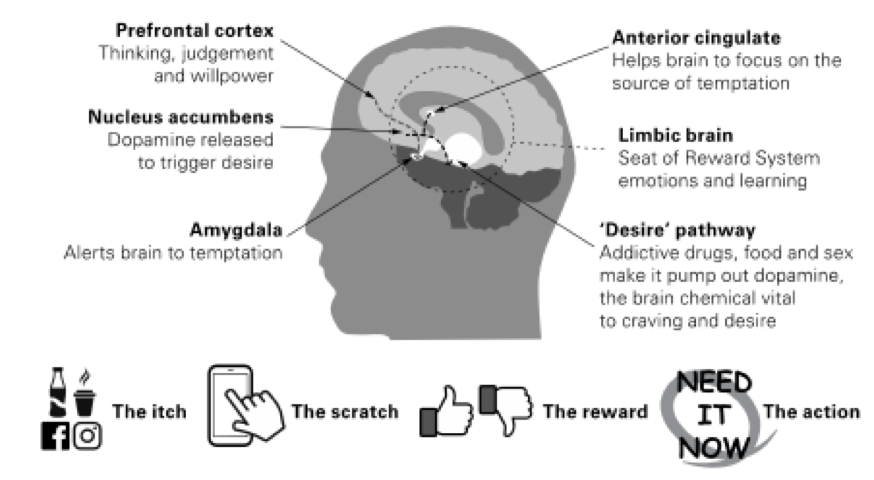
The digital culture we exist in is pushing us towards a whole new paradigm of background stress. This is partly because the marketeers have learnt how to get us addicted to their products – applying a level of stress and variable reward to trick the brain’s reward system – leaving you with a ‘gotta have it’ feeling.

This mechanism of ‘variable reward’

This was first discovered in the 1930’s by the psychologist B.F. Skinner. He found that mice responded most frequently to reward-associated stimuli when the reward was given after a varying number of responses – so the animal didn’t know when it would get the prize. It seems we are no different; if we perceive a reward to be delivered at random, and if checking for that reward comes at little or no cost, we end up checking habitually.

So is this where smartphone addiction comes from?

This manipulation of the stress/reward response is one of the oldest mechanisms of the brain. It is both core for our survival, but also makes us more impulsive, manipulatable and, effectively, stupid.

Most of all, it makes us good consumers. Reward, based on dopamine, equals pleasure. We are living in space-age times with stone age minds and multinational companies have learnt how to get us hooked – literally neurochemically addicted to consuming their products.

We are being sold pleasure in the guise of happiness: the happy hour, the happy meal, happiness in a can. But joy and happiness are regulated by the neurotransmitter serotonin, not the latest special offer. And in fact, this pleasure-seeking may be counterproductive.

“The more pleasure you seek, the more unhappy you get” says Professor Robert Lustig, author of ‘Hacking the American Mind’. This is because too much dopamine (the ‘reward’ neurotransmitter) suppresses serotonin (the ‘happy’ neurotransmitter) and we end up feeling unhappy and depressed. This brain hijack may be why depression, suicide and psychiatric drug prescriptions have rocketed to the point where, in the UK and US (and probably elsewhere), there are almost twice as many prescriptions for psychiatric drugs per year than there are people.  

“We are the most in debt, the most obese, the most medicated and the most drugged up adult population in human history” says Lustig. We have literally learnt how to fool our brains and in doing so have fooled ourselves, by creating addictive behaviours and addictive foods. 

An example of this is what happens in your brain if you eat sugar and/or fat. 

Sugar…just like cocaine and heroin?

Sugar, just like cocaine and heroin, stimulates dopamine and endorphins. It triggers the reward system but with overuse, leads to reward deficiency (1). Dr Candace Pert, Research Professor in the Department of Physiology and Biophysics at Georgetown University Medical Center in Washington DC, and author of the seminal book ‘The Molecules of Emotion’, was the first to point this out in no uncertain terms: “I consider sugar to be a drug, a highly purified plant product that can become addictive. Relying on an artificial form of glucose – sugar – to give us a quick pick-me-up is analogous to, if not as dangerous as, shooting heroin. (2)” At the time, this was heresy but, today, most people are well aware of this. But it’s not just sugar that’s feeding our addiction.

Neuropharmacologist Professor Paul Kenny, a Dubliner now working in his Manhattan lab at Mount Sinai Hospital, discovered this when he started feeding rats different diets. When he fed one group of rats either lots of sugary foods and another group lots of fatty foods, neither group would gain much weight. They’d control their intake and it would take over a month to see a small weight gain. 

However, when he fed them a combination of 50% sugar and 50% fat, such as in a cheesecake, he noted the mice would “dive head first into a slice and gorge so vigorously that it covered its fur in blobs. It’s not pleasant.” After a binge on cheesecake they continued to graze, constantly eating food, he says, as if the off-switch telling them they were full had malfunctioned. “It completely changed them.” They stopped exercising and gained significant weight after only seven days. They also became addicted (3). When he took away the junk food and replaced it with healthy food they went on a hunger strike, refusing to eat it. 

He even tried to stop them by giving them an electric shock to their feet. “We then warned the rats as they were eating—by flashing a light—that they would receive a nasty foot shock. Rats eating the bland chow would quickly stop and scramble away, but time and again the obese rats continued to devour the rich food, ignoring the warning they had been trained to fear. Their hedonic desire overruled their basic sense of self-preservation.” 

Overeating, he found, juices up the reward systems in the brain — so much so, that in some people, it can overpower the brain’s ability to tell them to stop eating when they have had enough. As with alcoholics and drug addicts, the more they have, the more they want, creating a vicious cycle of dopamine resistance, eventually leading to the brain’s receptors for dopamine to shut down. 

It seems dopamine, the brain’s main neurotransmitter of reward and desire, is the key. 

Obese people and drug addicts have been shown to have less dopamine D2 receptors (D2R)s (4). People who are born with reduced levels of D2R are therefore at greater genetic risk of developing obesity and drug addiction – so you can be genetically predisposed to addiction. Researchers at Brookhaven National Laboratory and the Oregon Research Institute have shown that the reward system in obese people responds weakly to food, even to junk food(5). How does an individual overcome this absence of pleasure? By eating more pleasure foods to gain a temporary boost, thereby perpetuating the cycle. The researchers found that obese people may overeat just to experience the same degree of pleasure that lean individuals enjoy from less food.

Nicole Avena of the University of Florida, and others, have found that particular fats or sugars, sugars together with fats, and possibly salt, are the most addictive (6). A study by Professor David Ludwig of Boston Children’s Hospital suggests that highly processed, quickly digested fast carbs could trigger cravings (7). But research overall indicates that no one ingredient stokes food addiction better than the combo of fats and sugars, high in calories. Nature just doesn’t make these kinds of foods. Only the food industry does.

Similarly, cola drinks combine the stimulant caffeine, with sugar and salt, to make you drink more. And we crave sugary food and drink even more when fructose is used instead of glucose. Why? Because our cells run on glucose and quickly feedback when we’ve had enough. Fructose (or high fructose corn syrup, derived from corn) takes longer to send us that signal, leading us to consume more. No wonder then that glucose has been replaced by fructose and is a key ingredient in today’s ultra-processed foods.

Are you addicted to your smartphone?

Of all the changes that have taken place in the 21st century, the ‘digital revolution’ has changed our world beyond recognition, seemingly speeding up time. Yes, our diet and environment have changed a lot, but what’s really changed, especially in cities that now house half of humanity and an estimated two-thirds of the world’s population by 2035, is the pace of life. People all over the world are sleeping less, having less downtime, feeling more anxious and stressed and burning out at a far higher rate. This is reflected in the increasing rate of work absenteeism, depression and suicide, especially in cities.

The speeding up of communication – emails, smartphones and digital media – means that we are supposed to react to demands, and are bombarded with them, at an ever-increasing speed. 

We have literally become addicted to our phones(8). The average person picks up their phone 352 times a day – more than every three minutes, and swipes it thousands of times a day. A UK survey reports 62% cannot make it through dinner without checking their phone. Almost half of us report anxiety if we don’t have our phone, or a signal, suffering ‘nomophobia’. We are going to sleep with our phones and checking them first thing on waking up. One survey found that one in ten university students in the US admitted to having checked their smartphones during sex! 

Why? Basically, to sell stuff. “I feel tremendous guilt,” admitted Chamath Palihapitiya, former Vice President of User Growth at Facebook, to an audience of Stanford students. “The short-term, dopamine-driven feedback loops that we have created are destroying how society works.” Whether it’s Facebook, Instagram, Twitter, Snapchat, LinkedIn or any other platform, the core design is to get your attention, then show you ads tailored to your attributes and behaviours which the technology learns about you. Facebook, for example, has learnt how to do this with prompts, swipe downs, red icons that you press and don’t know what you receive. Is it a ‘like’? Do I have more ‘friends’? Or has another person ‘linked’ to me on LinkedIn etc. 

Facebook even knows when you’re feeling ‘insecure’, ‘worthless’ and ‘need a confidence boost’ or are ‘bored’, and can make sure you receive a notification of a ‘like’ at just the right time to keep you hooked. If you find yourself checking your phone at the slightest feeling of boredom, purely out of habit, know that programmers work very hard behind the screens to keep you doing exactly that. A study of 143 undergraduates at the University of Pennsylvania, limiting use to 30 minutes a day versus a control group found significant reductions in loneliness and depression (9). The researchers concluded, “Our findings strongly suggest that limiting social media use to approximately 30 minutes per day may lead to significant improvement in well-being.”

Whether it’s a text, a notification or a ‘like’, just like sugar, this digital consumption triggers a reward signal in our brains. The marketing algorithms schedule the precise times to deliver our digital diet and serve up the extra addictive quality of a variable reward.

Your brain’s reward system

It’s to do with a tiny organ in the central hippocampal area of the brain called the nucleus accumbens. This is the headquarters of our dopamine-based ‘reward’ system.

The more dopamine you release the more receptors shut down, so you seek more pleasurable behaviours and foods. Insidiously and unknowingly your brain has been hijacked and the symptoms you feel are the direct consequences of an intended addiction. Gambling, gaming, overeating, sex, drugs, food, social media and other digital addictions are all part of it. We end up needing this constant stimulation and, to fuel that, need instant energy foods and drinks – sugar and coffee. 

Alcohol – the opiate of the masses

Whether you’ve become addicted to sugar, food, caffeinated drinks, social media, gambling, gaming or non-stop stimulation, or simply get caught in the stress trap, perhaps due to work and life demands and debts, this often results in an inability to switch off with a background feeling on anxiety and stress without alcohol, and difficulty sleeping. 

You may find, in time, that your need for alcohol increases – from a glass a night to two, three, half a bottle or even more. Alcohol, a well-established neurotoxin (10), surely is the opiate of the masses. Consumption keeps going up. It’s the currency of a good time, normalised as a response to stress, glorified in movies and at the core of our modern culture, with a 1.5 trillion dollar industry, expected to rise to 2 trillion by 2027 (11), promoting its use. While smoking has become frowned upon, anything other than heavy drinking is considered socially acceptable. Yet according to WHO alcohol is in the top five causes of death and disability, and has become the most common cause of death in men under 50 (and soon will be for women), accounting for one-fifth of all deaths under 50 and almost 30,000 deaths a year overall, roughly a third that of smoking and ten times more than opioids (inc heroin) and is ranked more harmful than any other drug, including opioids (12). This addictive drug is so socially acceptable that governments avoid attempts to curtail its use for fear of voter reprisals.

A commonly unknown fact is that death or disability from alcohol doesn’t only occur in heavy drinkers. The risk goes up exponentially with the quantity you drink. The good news is that small reductions have big positive effects on your health. To make this real, a 12.5% vol. bottle of wine contains 75g alcohol: drinkers who have 2/3rds of a bottle of wine (two large glasses) or the equivalent 50g of alcohol, have a lifetime risk of death of 16%. But one medium glass (175ml) of wine (17.5g of alcohol) brings that risk below 1%. In terms of mitigating serious health risks, including death, the advice of the UK government’s former advisor, Professor David Nutt, is for women to consume no more than 15g of alcohol per day  and for men no more than 20g alcohol per day, and to have at least two alcohol-free days per week. Sadly, Professor Nutt was sacked for saying that alcohol was a ‘time bomb’ and more dangerous than Ecstasy, but the statistics point to this being true.

The trouble is, when you get stuck in the cycle of seeking rewards, needing stimulants and relaxants, you become more tired, more anxious and may even have started to feel more depressed. 

When things get bad and you visit your doctor they may prescribe antidepressants, tranquillisers (short-term use only) or sleeping pills. Others learn to use illicit uppers and downers.

Are you addicted to stimulants?

The other major acceptable and glorified drug is caffeine, mainly in the form of coffee, although many people don’t realise that strong tea has as much caffeine as a regular cup of coffee. Like sugar, alcohol and our digital diet, it stimulates dopamine release and the feeling of pleasure or reward. Imagine a day with no coffee, tea, sugar, chocolate or that well-earned glass of something! If you shout, ‘No way!’ there is a very real possibility that you have some level of addiction to these stimulants. This can range from a mild addiction that you can live with quite happily to a major problem that is controlling your life. 

However, whatever the level of addiction, the net consequence is always less energy, not more. One of my clients, Bobbie, serves as a case in point. She was already eating a healthy diet and took a sensible daily programme of vitamin and mineral supplements. She had only two problems: a lack of energy in the morning and occasional headaches. She also had one vice: three cups of coffee a day. After some persuasion, she agreed to stop the coffee for a month. To her surprise, her energy levels rose and the headaches stopped. 

Like Bobbie, it’s useful to audit your stimulant consumption from time to time. Using a Stimulant Inventory below can be helpful, but in making an accurate assessment of your current relationship to stimulants, you need to be honest with yourself about how you use them. There’s a space for alcohol which, while not a stimulant, still triggers those dopamine receptors.

It’s useful to write down the time of day you consume the above and to spend time thinking about what your relationship to these substances is. 

  • Do you, for example, ever buy sweets and hide the wrappers so other people don’t know you’ve eaten them? 
  • Do you swoon at the dessert menu in restaurants? 
  • How much do you think about and look forward to that morning cup of coffee or a mid-morning second cup? 
  • How important is that drink after work?
  • Does everyone really know how much you smoke? 
  • Have you cranked up your caffeine intake to ‘double espresso’ equivalent drinks using more coffee at home than you used to? 
  • Do you need more to get a ‘kick’ if you even get one, or does coffee now just relieve the fuzzy tiredness you feel without it?

This kind of relationship to stimulants, often cloaked in an attitude that they are just some of the innocent pleasures of life, is indicative of an underlying chemical imbalance that depletes your energy and peace of mind and, at its worst, feeds into mental health issues.

Coffee and Caffeine Withdrawal and Sleep

If you wake up feeling good and can function without a coffee, and have no major mental health issues, sleeping well for example, but enjoy one coffee a day which will give you a dopamine kick, that’s not a problem. The best measure of your relationship with coffee or caffeine, and whether your brain has ‘downregulated’ dopamine and adrenaline receptors is what happens when you quit. If the answer is nothing then there’s no issue. If, on the other hand, you get a variety of withdrawal symptoms (13), including headaches, tiredness and irritability that means your neurotransmitter receptors have downregulated and it will take a few days for them to upregulate and bring you back to normal. For many just one cup of coffee a day can result in withdrawal effects if stopped (14). It’s also worth knowing that coffee, or caffeine, consumed 6 hours before sleep, which is about as long as caffeine stays in the system, is associated with disturbed sleep (15) – either difficulty falling asleep or waking in the night so, at least, it is wise to consume no caffeine after noon, especially if you have issues with sleeping.

Tea or coffee?

The caffeine in both coffee and tea increases the release of adrenalin, cortisol and dopamine in your body and brain, while inhibiting the absorption of adenosine, a brain-calming chemical. The release of adrenaline into your system gives you a temporary boost, but frequently makes you fatigued and depressed later. If you take more caffeine to counteract these effects, you end up spending the day in an agitated state, and might find yourself jumpy and edgy by night.

Tea contains caffeine, but also theanine, which has a more calming amino acid shown to enhance cognitive abilities (16). It also protects GABA receptors, which is the brain’s adrenalin off switch. Overall then, tea is better for you. Green tea may also have some benefits over black tea (the same plant, but processed differently such that green tea contains more antioxidants and polyphenols, which are good guys as far as our bodies are concerned).

Benefits or excuses?

Many things could be written on the apparent benefits of tea, coffee, even some forms of alcohol. We read about the beneficial effects of resveratrol in red wine, polyphenols in coffee and cacao and other antioxidants in tea. However, the nature of ANY dependence creates a psychological set of ‘excuses’ that we use to justify our addictive behaviour. 

This could be anything from ‘that’s a lovely sauce’ (sugar), ‘a little bit of what you fancy won’t harm you’ ‘I’m so stressed I have to have a drink’, ‘I’ve got to focus so I need a coffee’ and so on. Of course, all these substances work, otherwise we wouldn’t be attracted to them and, in that sense, mindful consumption in certain circumstances makes sense. For example, if someone experiences a shock, a sugary drink can help. And when a deadline looms and you need to burn the candle at both ends, caffeine can certainly help.

The issue here is to understand how the combination of sugar, caffeinated stimulants, alcohol, tech and social media addiction, shopping, gambling, gaming and so on can hijack your brain’s natural reward system and result in the opposite – you feeling more tired, anxious, unfulfilled and depressed. If that’s happened to you, rest assured there are some simple suggestions that will help you reclaim your brain’s full potential for feeling good, energised, clear, focussed and purposeful.

Simple ways to win back your brain
  • Limit your time spent on social media – 30 minutes a day max is a good target but you may need to build down to this. Turn your phone off (or to ‘airplane’ mode) at least an hour before bed and keep it that way for at least an hour in the morning. If you have to have it on, don’t check social media for a couple of hours. 
  • Limit your intake of caffeine to under 100 grams a day – that’s one strong cup of coffee or two weaker cups of tea. If you have a second cup, use the same tea bag, or have a filter coffee ‘run through’. Avoid all caffeine after noon.
  • Avoid buying food that contains added sugar, dates or raisins – if in doubt, read the label and remember sugar is often disguised as high fructose corn syrup. When looking at food labels remember 5g is a teaspoon of sugar and foods with more than 22.5g per 100g of sugar are considered high sugar and those with 5g or less per 100g are considered low sugar. Ideally, only have sugar in whole fresh fruits. Fruit juice is also high in sugar so best avoided or limited. 
  • Limit your daily intake of alcohol to 20 grams, or a maximum of two small glasses (125ml is one small glass) of wine. Have at least two days a week alcohol-free.

——–

Food for the Brain is a non-for-profit educational and research charity that offers a free Cognitive Function Test and assesses your Dementia Risk Index to be able to advise you on how to dementia-proof your diet and lifestyle.

By completing the Cognitive Function Test you are joining our grassroots research initiative to find out what really works for preventing cognitive decline. We share our ongoing research results with you to help you make brain-friendly choices.

Please support our research by becoming a Friend of Food for the Brain.


Test Your Cognitive Function Now green banner.

References

1 P. Holford, How to Quit Without Feeling S**t, Piatkus, 2008.

2 P. Holford, How to Quit Without Feeling S**t, Piatkus, 2008.

3 P.M. Johnson and P.J. Kenny ‘Dopamine D2 receptors in addiction-like reward dysfunction and compulsive eating in obese rats’, Nature Neuroscience (2010), vol. 13(5), pp. 635-641. 

4 .P. Kenny ‘Reward Mechanisms in Obesity: New Insights and Future Directions’ Neuron. 2011 Feb 24; vol 69(4): pp.664–679. 

 5  See ref 4 above

6 N.M. Avena and M.S. Gold, ‘Food Addiction – Sugars, Fats and Hedonic Eating’, Addiction (2011), vol. 106(7), pp. 1214-1215.

7 B. Lennerz et al., ‘Effects of dietary glycemic index on brain regions related to reward and craving in men’ The American Journal of Clinical Nutrition, Volume 98, Issue 3, 1 September 2013, Pages 641–647

9 https://guilfordjournals.com/doi/10.1521/jscp.2018.37.10.751

10 Nutt, D.;Hayes,A.; Fonville, L.; Zafar, R.; Palmer, E.O.; Paterson, L.; Lingford-Hughes, A. Alcohol and the Brain. Nutrients 2021, 13,3938. https://doi.org/10.3390/ nu13113938

11 https://www.statista.com/forecasts/696641/market-value-alcoholic-beverages-worldwide

12  David J Nutt and Jürgen Rehm J Psychopharmacol 2014 28: 3 DOI: 10.1177/0269881113512038 

The online version of this article can be found at: http://jop.sagepub.com/content/28/1/3

13 https://www.ncbi.nlm.nih.gov/books/NBK430790/

14 Juliano LM, Griffiths RR. A critical review of caffeine withdrawal: empirical validation of symptoms and signs, incidence, severity, and associated features. Psychopharmacology (Berl). 2004 Oct;176(1):1-29. doi: 10.1007/s00213-004-2000-x. Epub 2004 Sep 21. PMID: 15448977.

15 Drake C, Roehrs T, Shambroom J, Roth T. Caffeine effects on sleep taken 0, 3, or 6 hours before going to bed. J Clin Sleep Med. 2013 Nov 15;9(11):1195-200. doi: 10.5664/jcsm.3170. PMID: 24235903; PMCID: PMC3805807.

16 Anas Sohail A, Ortiz F, Varghese T, Fabara SP, Batth AS, Sandesara DP, Sabir A, Khurana M, Datta S, Patel UK. The Cognitive-Enhancing Outcomes of Caffeine and L-theanine: A Systematic Review. Cureus. 2021 Dec 30;13(12):e20828. doi: 10.7759/cureus.20828. PMID: 35111479; PMCID: PMC8794723.

Further info

Polyphenol Power. Keep your Brain Young with Antioxidants.

—–

By Patrick Holford

Life is a balancing act between making energy by combusting glucose or ketones with oxygen, which generates ‘oxidant’ exhaust fumes and dealing with these ‘oxidant fumes’ which harm the body.

Skin goes crinkly, age spots develop all due to oxidation. That’s what makes apples go brown, leaves change colour and iron rust. In the end, we lose, which is why all oxygen-based life forms have a finite life – and why your brain and body do inevitably age.

However, you can not only add years to your life, but also life to your years by improving your intake of antioxidants and polyphenols found in whole foods, fruits, vegetables and herbs and spices. A study in Finland and Sweden compared those with a ‘healthy’ versus ‘unhealthy’ diet in mid-life for future risk of developing Alzheimer’s disease and dementia 14 years later (1). Those who ate the healthiest diet had an 86-90% decreased risk of developing dementia and a 90-92% decreased risk of developing Alzheimer’s disease. Some of the benefit comes from low sugar diets, high in omega-3 and B vitamins and some from foods high in antioxidants and polyphenols which we will focus on here.

Your intake of these versus your intake and generation of oxidants, for example from smoking and pollution, is a major determinant of brain health. An illustration of this is the fact that both smoking and pollution exposure increase risk of cognitive decline and dementia, while vitamin C, which is the antioxidant par excellence, reduces risk.

(This is why we have developed our brand new Glutathione at home blood test – the first of its kind where you can accurately test your antioxidant status from home and support our further research into this important area. You can find out more and pre order the test here )

Oxidants vs antioxidants – moving the balance in your favour

Smoking increases risk of Alzheimer’s just as much as having low B vitamin or omega-3 status, according to the US National Institute of health’s analysis (2). Smoking is something a person can easily change. Air pollution, for many, is not. It is measured in the amount of particulate matter (PMs) and people living in polluted cities are exposed to more. A study of women living in cities in the US found that those exceeding the ‘safe’ levels (greater than 12 μg/m3) had ‘increased the risks for global cognitive decline and all-cause dementia respectively by 81% and 92%’. (3)

While you may not be able to change where you live, can you mitigate the effects of pollution? The answer is yes – in two ways. Firstly, by increasing your intake of antioxidants and also by improving your B vitamin status since the body detoxifies many toxins, including toxic metals from lead to mercury, by methylation. A similar study to the one above found that residing in locations with PM exposure above the safe level was associated with a higher risk of dementia but only among people with lower intakes of the homocysteine lowering B vitamins (B6, folate, b12) (4). ‘Vitamin C in the diet or taken as supplements might help’ concludes another.(5)

Smokers need at least twice as much vitamin C as non-smokers just to have basic vitamin C levels in their blood (serum). Men do worse than women. Even with an intake of 200mg a day they do not achieve this basic blood level, which is already two to three times the recommended dietary intake and what you’d get in four oranges (6). It is certainly wise for any smoker to supplement vitamin C, perhaps adding 50mg per cigarette – 500mg if you smoke 10 a day, although there is a good case for everyone to supplement 1,000mg a day, or 2,000mg a day if over 50.

Nature always provides a solution to help us with our evolution. It seems obvious to me we need vitamin C to combat excessive pollution.

Vitamin C is a keystone nutrient as far as swinging the antioxidant equation in your favour. It’s made in all living things, from animals to plants, including yeasts and funghi. It’s probably been the essential ‘exhaust recycler’ of all oxygen-based lifeforms. Production is even activated when oxidants are sensed. Animals also make more when stressed or exposed to viruses. Us humans, and all other primates, are one of very few species who can’t make it. The first non-vitamin C making animal to be discovered was the guinea pig. That’s how it became the ‘guinea pig’ for research since, like us, it’s dependent every second of every day on vitamin C from diet. Bats, a few birds and the teleost family of fish have also lost the ability to make vitamin C. 

You’ll see in this figure below and from watching the film above, that vitamin C disarms water-based oxidants, such as smoke, and vitamin E disarms fat-based oxidants such as burnt fat. Then, there are other key antioxidant team players that help to neutralise the reactive oxidants that damage our brain and body.

Your best bet is probably to both eat a diet with a broad spectrum of antioxidants and also supplement them. The older you are the more you are likely to need. Key antioxidants are:

  • Vitamin A, C and E – associated with reducing Alzheimer’s risk
  • Lipoic acid (7) – protects the memory-friendly neurotransmitter acetylcholine and dampens down brain oxidation and inflammation)
  • Glutathione (8) or N-acetyl Cysteine (NAC)(9) – protects the brain and improves methylation thus having potential in dementia prevention.
  • Co-enzyme Q10 – protects the mitochondria in the brain from oxidative stress (10)
  • Resveratrol – resveratrol has antioxidant, anti-inflammatory and neuroprotective properties and prevents hippocampal brain damage. (11)

It doesn’t really make a lot of sense to supplement one without the others.

Individually, their impact on your brain health may be less than when combined. A study of 4,740 Cache County Utah elderly residents found that those supplementing both vitamin E and C cut their risk of developing Alzheimer’s by two thirds. Taking either cut risk by a quarter (12). A recent meta-analysis of all studies on factors that could prevent Alzheimer’s by one of our Scientific Advisory Board members – Professor Jin Tai Yu of Fudan University in Shanghai, China – shows that ‘either a high vitamin E or C intake showed a trend of attenuating risk by about 26%’ making these nutrients ‘grade 1’ top level prevention risk factors (13).

All those listed above – vitamin C, E, glutathione and N-acetyl cysteine, Coenzyme Q10 and resveratrol – work together and are often found in combined antioxidant supplement formulas. There are many other team player ‘cousins’ from B vitamins to minerals such as magnesium, selenium and zinc found respectively in greens, seafood, nuts and seeds.

There are two ways to increase your intake – through food and from supplements. Foods can be measured for their ‘Total Antioxidant Capacity’ or TAC for short. It’s worked out from an equation involving eight key antioxidants from vitamin A, carotenes (think carrots), lycopenes (rich in tomatoes), lutein and zeaxanthine (rich in green vegetables), vitamin E (is nuts and seeds), but most of all vitamin C (rich in berries, broccoli, peppers and other vegetables).

The higher the TAC score of your diet the lower is your risk of cognitive and memory decline. This was the finding of a recent study of 2,716 people over age 60. The researchers measured the TAC score from their diet, splitting them into the highest to lowest quarter of TAC score, and compared this to a number of memory tests. Those in the highest quarter, eating the most antioxidant-rich foods had half the risk of decreasing memory. The higher the TAC score the better their memory function was. (14)

Go Rainbow, ‘Mediterranean’ and eat five or more servings of fruit and vegetables a day

So, what do you need to eat and drink to preserve your memory and protect your brain?

Basically, eat a Mediterranean style ‘rainbow coloured’ diet. A Mediterranean diet has more fish, less meat and dairy, more olive oil, fruit and vegetables including tomatoes, legumes (beans and lentils) and whole grain cereals than a standard Western diet. It also includes small quantities of red wine. There are variations of this kind of diet, called the MIND diet and the DASH diet, but the core components are the same and as researchers drill down, we are learning what to eat and drink to keep your mind sharp and brain young, and how much.

The trick is to really start thinking of the colours you’re eating and gravitate for the strong colours.

Mustard and turmeric, for example, are strong yellows. Dijon mustard is great – no sugar. But if you like good old-fashioned English mustard go for it. Have a teaspoon every other day.

Add turmeric to almost any steam-fry, curry or soup. 

Bright oranges include butternut squash, sweet potato, carrots – but do buy organic. Translucent mass produced carrots are tasteless and have a higher water content, ie less actual carrot. 

Tomatoes are particularly good for you. Buy seeded, not seedless watermelons. Blend the flesh in a blender, perhaps with some ice. The black husk of the seeds drops to the bottom. The flesh of the seeds, full of essential nutrients, becomes part of this mouth-wateringly refreshing drink. Great for detox. Strawberries are a low GL fruit. Red, yellow, green and orange peppers are all rich in vitamin C.

Anything purple, magenta or blue is brilliant for you. From beetroots (eat them raw, grated into salads) to blueberries, blackberries and raspberries. Strawberries are particularly good. According to a study, part of the Rush Memory and Aging Project at Rush University, Chicago, having a higher intake cut Alzheimer’s risk by a quarter. They are high in both vitamin C and flavanoids, a high level of which were also confirmed to cut risk by a third. (15)

Strong greens are always beneficial – from spinach, kale, Brussels sprouts, broccoli, tender stem, watercress, rocket, asparagus, artichoke, green beans, peas, kohlrabi, and cauliflower (although not green).

Polyphenol power

Some of these foods are particularly rich in ‘polyphenols’ a group of health promoting molecules which also includes flavonoids, sometimes called flavanols.  Blue foods such as blueberries contain another polyphenol called anthocyanins. Tea, the cacao in chocolate, red wine, red onions, olives and all the blueish berries are rich sources of polyphenols. Many of these polyphenol rich foods act as antioxidants but they do much more than this. They improve circulation in the brain, lower blood pressure and dampen down inflammation which lies behind many conditions from depression to dementia. Once again, the principle of what’s good for the heart is good for the brain.

One of the first important studies was carried out in Norway more than a decade ago by Eha Nurk and Helga Refsum and colleagues in Norway. (16)(17) They found that:

Tea – the more you drink the better. The tea benefit has been confirmed more recently in a study in Singapore, with green tea being marginally better than black tea.(18) However, this benefit was not found in a UK Biobank study, which reported tea and coffee drinking to be associated with worsening cognition compared to abstainers. (19)

Chocolate – peaks at 10g, or about 3 pieces – and let’s say dark, 70 or more percent, thus with less sugar, is likely to be better, as sugar is a strong indicator of cognitive decline. If a chocolate is 80% cacao that means almost 20% will be sugar. More recent studies giving cocoa, a rich source of flavanols, have shown improved cognition, possibly by improving circulation.(20) This has been confirmed in a big COSMOS trial involving over 20,000 people given a cacao extract supplement rich in flavanols versus a placebo for five years. (21) The reduction in cardiovascular risk was even greater than that of a Mediterranean diet.

Wine – consumption reduces risk of cognitive decline up to an intake of 125ml a day, which is a small glass. A thorough study in the British Medical Journal in 2018, which had followed over 9,000 people over 23 years, showed that both abstinence and drinking more than 14 units of alcohol a week, which is equivalent to a medium glass of wine (2.3 units) every day, also increases risk (22). This is consistent with studies showing that a small glass of wine a day decreases risk of cardiovascular disease. Red wine, high in resveratrol is likely to be most beneficial.

All the above are rich in a polyphenol called epicatechin. Jeremy Spencer, an advisor to Food for the Brain, who is Professor of Nutritional Biochemistry and Medicine at the University of Reading, where he specialises in studying the health benefits of polyphenols and other compounds in plants, has shown that these polyphenol rich plants improve blood brain flow in specific regions of the brain that improve attention, decision-making, impulse control and emotion, thus improving overall ‘executive’ function (23). What’s more, the level of flavanols you have in your bloodstream predicts your memory. The biggest impact of increasing flavanols, was seen in the COSMOS study, in those in the lowest third for dietary intake specifically seeing improvement in aspects of memory that link to the hippocampus, that central area of the brain that degenerates in Alzheimer’s (24).

The Best Fruit and Veg to Eat for Your Brain

Which vegetables pack the biggest punch as far as polyphenols and antioxidants are concerned and are also lower in sugar or low GL?

Taking all these factors into account – the GL, antioxidants and polyphenols these are the dozen best rated fruit and veg. But do not think of this list as finite as more and more research reveals the amazing healing power of nature’s fruits and vegetables.

 Lowest GLAntioxidantPolyphenol
Cacao*********
Olives*********
Blueberries*********
Kale********
Blackcurrants*******
Strawberries********
Broccoli********
Artichokes********
Cabbage (red)********
Asparagus*******
Onions (red)******
Avocado*******
Apples******
Beetroot*****
Cherries******
The optimal intake for brain protection is 5 to 6 servings of fruit and veg a day

Half a plate of a main meal counts as two. A handful of berries would count as one. So, if half your plate for two main meals is vegetables, and you had some berries with your breakfast and another piece of fresh fruit or perhaps some broccoli heads or tenderstem or carrots dipped in hummus as a snack, or half an avocado with some high polyphenol olive oil, you’ve achieved six servings.

The first step is to eat ‘whole’ foods, and especially fresh plant foods with an emphasis on those listed above that are more likely to be high in antioxidants and polyphenols. (Also see the Alzheimers Prevention Diet.) There are some nutrients such as vitamin C for which just eating whole foods doesn’t guarantee you are achieving an optimal intake and are well worth supplementing.

My advice is to supplement 500mg to 1,000mg of vitamin C twice a day and also take an antioxidant formula or antioxidant rich multivitamin containing vitamins A, C, E, lipoic acid, glutathione or NAC, resveratrol and CoQ10.

Summary
  • Support our research and be one of the first to test your antioxidant status with the Glutathione Index test. Pre order here
  • Take the FREE Cognitive Function Test here.
  • Want to get recipes to help you increase your antioxidant intake? Pre order the Upgrade Your Brain Cook App here

Food for the Brain is a non-for-profit educational and research charity that offers a free Cognitive Function Test and assesses your Dementia Risk Index to be able to advise you on how to dementia-proof your diet and lifestyle.

By completing the Cognitive Function Test you are joining our grassroots research initiative to find out what really works for preventing cognitive decline. We share our ongoing research results with you to help you make brain-friendly choices.

Please support our research by becoming a Friend of Food for the Brain.


Test Your Cognitive Function Now green banner.

References

  1. Eskelinen MH, Ngandu T, Tuomilehto J, Soininen H, Kivipelto M. Midlife healthy-diet index and late-life dementia and Alzheimer’s disease. Dement Geriatr Cogn Dis Extra. 2011 Jan;1(1):103-12. doi: 10.1159/000327518. Epub 2011 Apr 27. PMID: 22163237; PMCID: PMC3199886.
  2. Beydoun MA, Beydoun HA, Gamaldo AA, Teel A, Zonderman AB, Wang Y. Epidemiologic studies of modifiable factors associated with cognition and dementia: systematic review and meta-analysis. BMC Public Health. 2014 Jun 24;14:643. doi: 10.1186/1471-2458-14-643. PMID: 24962204; PMCID: PMC4099157.
  3. Cacciottolo M, Wang X, Driscoll I, Woodward N, Saffari A, Reyes J, Serre ML, Vizuete W, Sioutas C, Morgan TE, Gatz M, Chui HC, Shumaker SA, Resnick SM, Espeland MA, Finch CE, Chen JC. Particulate air pollutants, APOE alleles and their contributions to cognitive impairment in older women and to amyloidogenesis in experimental models. Transl Psychiatry. 2017 Jan 31;7(1):e1022. doi: 10.1038/tp.2016.280. PMID: 28140404; PMCID: PMC5299391.
  4.  Chen C, Whitsel EA, Espeland MA, Snetselaar L, Hayden KM, Lamichhane AP, Serre ML, Vizuete W, Kaufman JD, Wang X, Chui HC, D’Alton ME, Chen JC, Kahe K. B vitamin intakes modify the association between particulate air pollutants and incidence of all-cause dementia: Findings from the Women’s Health Initiative Memory Study. Alzheimers Dement. 2022 Nov;18(11):2188-2198. doi: 10.1002/alz.12515. Epub 2022 Feb 1. PMID: 35103387; PMCID: PMC9339592.
  5.  Yu JT, Xu W, Tan CC, Andrieu S, Suckling J, Evangelou E, Pan A, Zhang C, Jia J, Feng L, Kua EH, Wang YJ, Wang HF, Tan MS, Li JQ, Hou XH, Wan Y, Tan L, Mok V, Tan L, Dong Q, Touchon J, Gauthier S, Aisen PS, Vellas B. Evidence-based prevention of Alzheimer’s disease: systematic review and meta-analysis of 243 observational prospective studies and 153 randomised controlled trials. J Neurol Neurosurg Psychiatry. 2020 Nov;91(11):1201-1209. doi: 10.1136/jnnp-2019-321913. Epub 2020 Jul 20. PMID: 32690803; PMCID: PMC7569385.
  6.  Carr AC, Lykkesfeldt J. Factors Affecting the Vitamin C Dose-Concentration Relationship: Implications for Global Vitamin C Dietary Recommendations. Nutrients. 2023 Mar 29;15(7):1657. doi: 10.3390/nu15071657. PMID: 37049497; PMCID: PMC10096887.
  7.  A. Maczurek, et al., ‘Lipoic acid as an anti-inflammatory and neuroprotective treatment for Alzheimer’s disease’, Advance Drug Delivery Review, 2008;60(13-14):1463-70 
  8.  Pocernich CB, Butterfield DA. Elevation of glutathione as a therapeutic strategy in Alzheimer disease. Biochim Biophys Acta. 2012 May;1822(5):625-30. doi: 10.1016/j.bbadis.2011.10.003. Epub 2011 Oct 12. PMID: 22015471; PMCID: PMC3277671.
  9.  Hara Y, McKeehan N, Dacks PA, Fillit HM. Evaluation of the Neuroprotective Potential of N-Acetylcysteine for Prevention and Treatment of Cognitive Aging and Dementia. J Prev Alzheimers Dis. 2017;4(3):201-206. doi: 10.14283/jpad.2017.22. PMID: 29182711.
  10.  Yang X, Zhang Y, Xu H, Luo X, Yu J, Liu J, Chang RC. Neuroprotection of Coenzyme Q10 in Neurodegenerative Diseases. Curr Top Med Chem. 2016;16(8):858-66. doi: 10.2174/1568026615666150827095252. PMID: 26311425.
  11.  Gomes BAQ, Silva JPB, Romeiro CFR, Dos Santos SM, Rodrigues CA, Gonçalves PR, Sakai JT, Mendes PFS, Varela ELP, Monteiro MC. Neuroprotective Mechanisms of Resveratrol in Alzheimer’s Disease: Role of SIRT1. Oxid Med Cell Longev. 2018 Oct 30;2018:8152373. doi: 10.1155/2018/8152373. PMID: 30510627; PMCID: PMC6232815.
  12.  Basambombo LL, Carmichael PH, Côté S, Laurin D. Use of Vitamin E and C Supplements for the Prevention of Cognitive Decline. Ann Pharmacother. 2017 Feb;51(2):118-124. doi: 10.1177/1060028016673072. Epub 2016 Oct 5. PMID: 27708183.
  13.  See reference 5.
  14.  Peng, M., Liu, Y., Jia, X. et al. Dietary Total Antioxidant Capacity and Cognitive Function in Older Adults in the United States: The NHANES 2011–2014. J Nutr Health Aging 27, 479–486 (2023). https://doi.org/10.1007/s12603-023-1934-9
  15.  Agarwal P, Holland TM, Wang Y, Bennett DA, Morris MC. Association of Strawberries and Anthocyanidin Intake with Alzheimer’s Dementia Risk. Nutrients. 2019 Dec 14;11(12):3060. doi: 10.3390/nu11123060. PMID: 31847371; PMCID: PMC6950087.
  16.  Nurk E, Refsum H, Drevon CA, Tell GS, Nygaard HA, Engedal K, Smith AD. Intake of flavonoid-rich wine, tea, and chocolate by elderly men and women is associated with better cognitive test performance. J Nutr. 2009 Jan;139(1):120-7. doi: 10.3945/jn.108.095182. Epub 2008 Dec 3. PMID: 19056649.
  17.  Nurk E, Refsum H, Drevon CA, Tell GS, Nygaard HA, Engedal K, Smith AD. Cognitive performance among the elderly in relation to the intake of plant foods. The Hordaland Health Study. Br J Nutr. 2010 Oct;104(8):1190-201. doi: 10.1017/S0007114510001807. Epub 2010 Jun 16. PMID: 20550741.
  18.  Feng L, Chong MS, Lim WS, Lee TS, Kua EH, Ng TP. Tea for Alzheimer Prevention. J Prev Alzheimers Dis. 2015;2(2):136-141. doi: 10.14283/jpad.2015.57. PMID: 29231231.
  19.  Cornelis MC, Weintraub S, Morris MC. Caffeinated Coffee and Tea Consumption, Genetic Variation and Cognitive Function in the UK Biobank. J Nutr. 2020 Aug 1;150(8):2164-2174. doi: 10.1093/jn/nxaa147. PMID: 32495843; PMCID: PMC7398783.
  20.  Lamport DJ, Pal D, Moutsiana C, Field DT, Williams CM, Spencer JP, Butler LT. The effect of flavanol-rich cocoa on cerebral perfusion in healthy older adults during conscious resting state: a placebo controlled, crossover, acute trial. Psychopharmacology (Berl). 2015 Sep;232(17):3227-34. doi: 10.1007/s00213-015-3972-4. Epub 2015 Jun 7. PMID: 26047963; PMCID: PMC4534492.
  21.  Sesso HD, Manson JE, Aragaki AK, Rist PM, Johnson LG, Friedenberg G, Copeland T, Clar A, Mora S, Moorthy MV, Sarkissian A, Carrick WR, Anderson GL; COSMOS Research Group. Effect of cocoa flavanol supplementation for the prevention of cardiovascular disease events: the COcoa Supplement and Multivitamin Outcomes Study (COSMOS) randomized clinical trial. Am J Clin Nutr. 2022 Jun 7;115(6):1490-1500. doi: 10.1093/ajcn/nqac055. PMID: 35294962; PMCID: PMC9170467.
  22.  Sabia S, Fayosse A, Dumurgier J, Dugravot A, Akbaraly T, Britton A, Kivimäki M, Singh-Manoux A. Alcohol consumption and risk of dementia: 23 year follow-up of Whitehall II cohort study. BMJ. 2018 Aug 1;362:k2927. doi: 10.1136/bmj.k2927. PMID: 30068508; PMCID: PMC6066998.
  23.  See Professor Peremy Spencer’s presentation at the Alzheimer’s is preventable masterclass (2022); also see Spencer JP. The impact of fruit flavonoids on memory and cognition. Br J Nutr. 2010 Oct;104 Suppl 3:S40-7. doi: 10.1017/S0007114510003934. PMID: 20955649.
  24.  Brickman AM, Yeung LK, Alschuler DM, Ottaviani JI, Kuhnle GGC, Sloan RP, Luttmann-Gibson H, Copeland T, Schroeter H, Sesso HD, Manson JE, Wall M, Small SA. Dietary flavanols restore hippocampal-dependent memory in older adults with lower diet quality and lower habitual flavanol consumption. Proc Natl Acad Sci U S A. 2023 Jun 6;120(23):e2216932120. doi: 10.1073/pnas.2216932120. Epub 2023 May 30. PMID: 37252983; PMCID: PMC10265949.
Further info

Choline crisis in the UK?

This was the title of a report in the British Medical Journal (1), pointing out that choline is an essential nutrient, much like omega-3 fats, that is vital for health and especially the brain, but not sufficiently supplied in many people’s diets, and especially those who are largely vegan.

While the body can make a little, it does not make enough and thus choline is being reclassified as an essential nutrient with an adequate intake defined as between 400mg and 520mg a day, the latter for pregnant and breast-feeding women. But these levels don’t relate to brain function. They relate to the EFSA allowed claims of “choline is needed for lipids metabolism”, “maintaining healthy liver functioning” and “reduction in homocysteine levels”. You need choline to do the right thing with cholesterol in the liver. 

But even more important is choline’s role in building and maintaining a healthy brain. A pregnant woman’s intake defines the cognitive abilities of their child. Twenty years ago we knew that pregnant rats fed choline half way through their pregnancy have more connections between brain cells, plus improved learning ability and better memory recall. Now we know it’s true for babies. In fact, a lack of choline can lead to a shrinking of a woman’s brain as the foetus robs their brain to build its own – a case of ‘Mummy I shrank your brain’. Babies are born with blood choline levels three times higher than their mother, illustrating how vital this nutrient is for building neuronal connections, which newborn babies do at a rate of up to a million new connections a second! An optimal intake for brain function is likely to be a lot higher than the 400mg recommended for adults.

Brain cells are made of a membrane containing choline (and other phospholipids) attached to the omega-3 fat DHA. Without choline the omega-3 doesn’t work. The attaching of the two depends on methylation, a process that is dependent on B vitamins, especially B12, folate and B6. Choline helps methylation and healthy methylation, indicated by low homocysteine, helps synthesize choline.

The reason the BMJ says ‘crisis’ is that more people are eating a plant-based diet and shunning eggs, fish and meat, which are the best sources of, not only choline, but also B12. There’s a tiny bit of choline in broccoli and in nuts, but not enough. An egg provides around 120mg, a 50g beef or salmon steak around 50mg. The same amount of almonds or broccoli is about 25mg. Cow’s milk has a little, but a fraction of that found in human milk. Beef liver is the richest source.

Twenty years ago I found the evidence sufficiently compelling to recommend eating an egg a day, three servings of fish and one of meat (or another portion of fish) a week, a handful of nuts, plus daily supplementation of circa 100mg, which is what I do in my ‘brain food’ formula. If you also ate a serving of broccoli a day, you’d be achieving something like 2,100mg a week, or 300mg a day – still short of daily requirements.

If you don’t eat eggs, fish or meat and don’t supplement there’s no way of getting even close. That’s why it’s time to add choline, along with omega-3 DHA and B12, to the list of nutrients that must be supplemented by those eating a vegan diet. Lecithin granules and capsules are the richest vegan source of choline, derived from soya. It will not work in building the brain, without a source of DHA which can be derived, in supplements, from algae or seaweed. 

If you want more strategies on what to eat and do to support ad upgrade your brain make sure you complete the Cognitive Function Test below to get your plan of action for improving your brain over the next 6 months.
Test Your Cognitive Function Now green banner.

Reference:

Further info

Ketones & Your Brain

Our brains have a dual fuel mechanism. The brains of large-brained animals like us can run on either glucose or ketones, derived from fat. If given the choice they prefer ketones. The rise in popularity in high fat ketogenic diets is partly to do with the ability of ketones to nourish and improve brain function when things go wrong, as well as weight loss benefits and the potential to reverse diabetes.

Epilepsy, for example, has been successfully treated in both children and adults with a high-fat ketogenic diet since the 1920’s often halving the frequency of fits. A recent study on people with Parkinson’s found that those placed on a high-fat diet had 41 per cent reduction in shaking, compared to 11 percent on a low-fat diet. There’s also a potential benefit in chronic fatigue syndrome.

The reason these high-fat keto diets work is that if a cell’s sugar metabolism is all messed up, a consequence of insulin resistance promoted by a high-sugar diet, then the cell struggles to get enough energy and you feel mentally and physically tired. But if, like a hybrid car, you can switch to a different fuel, ketones, then the cell comes back to life. This is especially true in struggling brain cells. When you fast, and switch to burning your body fat, the brain derives two-thirds of its energy from ketones.

Ketones are made from medium-chain triglycerides, known as MCTs. The rise in sales of MCT oil, which can be derived from palm or coconut oil. Also gaining in popularity are ketone salts and pure synthetic ketones, although these are yet to clear EU Novel Foods so are not yet available in Europe.

Fats are chains of carbon molecules and MCTs contain C6, C8, C10 and C12 oil. Of these C8 oil (called tricaprylin or caprylic acid triglyceride) makes ketones fastest. While coconut oil is 60 percent MCTs only 12 percent of MCTs is C8. That means that only 7 percent of coconut oil is C8.

The growth in bullet-proof coffee, adding a blob of coconut oil to your morning brew, is one way to up ketone levels but it’s much less effective than adding pure C8 oil. Patrick Holford’s Hybrid Latté – a coffee with carb-free almond milk, almond butter, C8 oil, cacao and cinnamon, is a step up. While coffee gives you energy like a bank loan gives you wealth it does speed up conversion to running on ketones.

Case studies with coconut oil have shown short-term beneficial effects in people with Alzheimer’s, with improved mental clarity. Two breakthrough studies in Canada, by Dr Melanie Fortier and Professor Stephen Cunnane from Sherbrooke University in Canada have established that C8 oil can be extremely helpful as an energy source for those with cognitive decline. Cunnane is an expert on fatty acid metabolism in the brain who has held the ‘Canada Research Chair on Dietary Fatty Acids and Cognitive Function during Ageing’.

Are there any downsides? A few people report abdominal or stomach discomfort. This can be minimized by building up slowly – starting with a teaspoon, then a dessert spoon, then a tablespoon, then two, then three tablespoons taken at different times of day, with food or in drinks or neat.

If glucose is petrol ketones are electricity. If your brain needs a service, switching from running on carbs to running on ketones by eating a low-carb, high-fat diet for a week, may be a good idea. It takes only 12 hours to start to run out of glucose fuel and start switching to ketones. Also good is an 18-hour carb fast – eg dinner at 6pm, lunch at 1pm. My brain stays sharp and I don’t feel hungry.

Want to know more about ketones and your brain? Then make sure you join us for our webinar: KETONES – A Key Brain Fuel During Ageing’ With Professor Stephen Cunnane

Find out more about the Ketones Webinar HERE >>>

References

  1.  M. Nei et al., Seizure. 2014;23(6):439-42.
  2.  M. Phillips et al., Movement Disorders 2018; 33(8):1306-1314 
  3.  Craig C. Med Hypotheses. 2015;85(5):690-3
  4.  C. Vandenberghe et al., Current Developments in Nutrition 2017; 1(4):e000257
  5.  Vanderberghe et al., Can J Physiol Pharmacol. 2017 Apr;95(4):455-458.

Further info

Staying Active & Failing Keeps you Sharp

By Research Professor Tommy Wood from the University of Washington

Most of us have two types of elderly relatives.

One of them is old – they have trouble walking, they’re in and out of the doctor’s office, and they always seem to repeat the same stories. The other type seems younger than their years they play tennis twice a week, they’re social, and they’re sharp as a tack. How can we become part of the latter group?

When it comes to aging in general and cognitive function in particular, genes obviously play a role, but did you know that lifestyle choices matter even more?[1] So, what are the top lifestyle choices to keep our brains sharp into old age?

As a neuroscientist, this is a question I often get.

Besides the obvious ones – physical activity, strength, sleep, a healthy diet, not smoking – my top tip is this: If you want to stay mentally sharp into old age, keep your brain active. In short, “use it or lose it”.

But what does “using it” look like? In this post I’ll cover some of the evidence around cognitive decline, as well as some practical take-aways for anybody wanting to improve their brain health as they get older.

Use it or lose it

The brain is an amazing organ, and it’s more resilient and adaptable than we’ve been led to believe. I’m sure you’ve heard that adults have a fixed amount of brain cells. Then, as we get older (or every time we take a sip of wine) we “lose” some of those brain cells as part of an unstoppable decline towards dementia or Alzheimer’s disease.

But that’s not necessarily true. I like to think about the brain like I think about muscles. In order to grow our muscles, we need to provide a stimulus – like lifting weights in the gym – followed by a period of rest. The opposite also happens – if we stop going to the gym or if we stop using a limb after breaking a bone – our muscles get smaller. Most have experienced this personally, and there’s every indication that your cognitive “muscle” behaves in the same way.

How do we know this? One type of evidence is that longer education seems to reduce dementia in later life. [2]* You might think of education as early cognitive muscle building that you then benefit from throughout life. We see similar effects from other forms of early cognitive stimulus – like protection from neurodegenerative disease in people who grew up bilingual.[3]

But we’re not cognitively doomed after adolescence. One of my favourite studies looked at adults studying “The Knowledge” – memorising ~25,000 streets in central London to become a taxi driver. These participants were in their 30s or 40s, yet they saw a significant increase in the size of the hippocampus, the brain region associated with memory.[4]

We also see the opposite effect – less cognitive stimulus increases the risk of cognitive decline and dementia. This is most easily studied by looking at retirement. Multiple studies in populations across the US, China, and Europe, show that the risk of cognitive decline accelerates after retirement.[5-8] Those that retire later are protected against cognitive decline, even after considering factors that might force early retirement such as poor health. Overall, a recent meta-analysis looking at health and lifestyle factors associated with cognitive decline found that cognitive activity was the single most protective factor – halving the risk of Alzheimer’s disease.[2] This really emphasises the lesson: use it or lose it. What counts as ‘protective cognitive demand’? Doing something badly.

The evidence around retirement and cognitive decline suggests that work is where adults tend to get most of their cognitive activity. However, it’s important to unpick what constitutes cognitive activity that is protective. We may feel that our work demands a lot from our brain, but being “busy” does not necessarily benefit the brain. In fact, it’s often the opposite. Being “busy” tends to come with stress, and though stress is very personal, chronic stress is associated with an increased risk of Alzheimer’s disease.[9] What keeps us busy and stressed – sitting in meetings, reading emails, inputting data – may be time consuming, but rarely requires much brain power.

So, what constitutes protective cognitive demand? Failure.

Activities that provide the greatest cognitive stimulus involve learning and skill development. That means we’re initially bad at them and occasionally fail before we get better. This is the real sticking point for improving brain health – as adults we hate the feeling of being bad at something. Failing is, however, when the magic happens. A fascinating study looked at the brains of musicians.[10] While both professional and amateur musicians’ brains looked younger compared to non-musicians of the same age, the benefit was greatest in amateur musicians. The researchers suggested that playing music is more of a cognitive stimulus for amateurs – it’s harder, so they get more benefit. The cocktail of hormones released as we try, fail, repeat, and learn, provides the ideal environment for the brain to grow and adapt.


How to “use it”

So, how should we apply this knowledge? Below are some of the best and easiest ways to build in cognitive stimuli you can benefit from for years to come.


1 | Pick an activity that’s truly challenging
Cognitive demand requires failure, so pick something you’ll be bad at initially. What’s cognitively challenging is personal, but learning a new language is better than sudoku, building model airplanes is probably better than reading the news, and playing chess is definitely better than scrolling through Instagram. As you get better, add challenge to keep stimulating your brain.

2 | Start small and do something you enjoy
Skill development should be a lifelong process, which means it should be a routine. Start small – for instance 2 minutes a day of playing an instrument or learning a new language. Make sure your new skill is something you enjoy – that makes it easier to stick to and keep as a part of your life.

3 | Move – with a skill component
Movement has some of the best evidence on improving brain health. One of the first studies to show that the hippocampus can grow in adults of retirement age (or older) used a walking intervention – just 40 minutes of brisk walking 3x per week.[11] Other studies have showed increased brain connectivity and function in adults doing resistance training 1-2 times per week.[12] Best is movement that includes balance or motor skills: the added challenge of coordination seems to be particularly protective against cognitive decline.[13] Think yoga, dance, or even skateboarding

4 | Try a new skill that’s social
Social interaction is its own form of cognitive stimulus: social connection is protective of cognitive function, while social isolation has the opposite effect.[14] So what’s better than simply learning a new skill? Doing so with friends. Start a book club to discuss the books you read. Join a knitting circle, language group, or dance class. Volunteer for a local charity. All of these help you learn new skills, with the added benefit of social interaction.

5 | Repeat, repeat, repeat
There are no hard and fast rules about how much or how often to work on a new skill, but once a week is a good start. If it’s a class or a movement practice, maybe 1-3 times per week. If it’s something you can do on your own, you may prefer more frequent, smaller bouts of focused practice. Try using a Pomodoro timer to dig in for 20-30 minutes – a suitable time for most people to keep their undivided attention.
The key is to push right at the boundaries of what you’re capable of – with occasional failure showing that you’re at the right level of difficulty. Keep at it, and you’ll be more likely to be healthy and sharp for decades to come.

Footnote
*It’s worth noting that those who stay in education for longer also tend to be socioeconomically advantaged, but the benefit of longer education seems to hold even accounting for that.


References

  1. Lourida I, Hannon E, Littlejohns TJ, Langa KM, Hyppönen E, Kuźma E, Llewellyn DJ. Association of Lifestyle and Genetic Risk With Incidence of Dementia. Jama. 2019;322(5):430-7. doi: 10.1001/jama.2019.9879.
  2. Yu JT, Xu W, Tan CC, Andrieu S, Suckling J, Evangelou E, Pan A, Zhang C, Jia J, Feng L, Kua EH, Wang YJ, Wang HF, Tan MS, Li JQ, Hou XH, Wan Y, Tan L, Mok V, Tan L, Dong Q, Touchon J, Gauthier S, Aisen PS, Vellas B. Evidence-based prevention of Alzheimer’s disease: systematic review and meta-analysis of 243 observational prospective studies and 153 randomised controlled trials. J Neurol
    Neurosurg Psychiatry. 2020;91(11):1201-9. Epub 2020/07/22. doi: 10.1136/jnnp-2019-321913. PubMed PMID: 32690803; PMCID: PMC7569385.
  3. Sala A, Malpetti M, Farsad M, Lubian F, Magnani G, Frasca Polara G, Epiney JB, Abutalebi J, Assal F, Garibotto V, Perani D. Lifelong bilingualism and mechanisms of neuroprotection in Alzheimer dementia. Hum Brain Mapp. 2022;43(2):581-92. Epub 2021/11/04. doi: 10.1002/hbm.25605. PubMed PMID: 34729858; PMCID: PMC8720191.
  4. Woollett K, Maguire EA. Acquiring “the Knowledge” of London’s layout drives structural brain changes. Current biology : CB. 2011;21(24):2109-14. Epub 2011/12/08. doi: 0.1016/j.cub.2011.11.018. PubMed PMID: 22169537.
  5. Hale JM, Bijlsma MJ, Lorenti A. Does postponing retirement affect cognitive function? A counterfactual experiment to disentangle life course risk factors. SSM – Population Health. 2021;15:100855. doi: https://doi.org/10.1016/j.ssmph.2021.100855.
  6. Dufouil C, Pereira E, Chêne G, Glymour MM, Alpérovitch A, Saubusse E, Risse- Fleury M, Heuls B, Salord JC, Brieu MA, Forette F. Older age at retirement is associated with decreased risk of dementia. Eur J Epidemiol. 2014;29(5):353-61. Epub 2014/05/06. doi: 10.1007/s10654-014-9906-3. PubMed PMID: 24791704.
  7. Nikolov P, Adelman AM. Do Pension Benefits Accelerate Cognitive Decline? Evidence from Rural China. Labor: Public Policy & Regulation eJournal. 2019. Sundström A, Rönnlund M, Josefsson M. A nationwide Swedish study of age at retirement and dementia risk. Int J Geriatr Psychiatry. 2020;35(10):1243-9. Epub 2020/06/20. doi: 10.1002/gps.5363. PubMed PMID: 32557831.
  8. Ye Y, Li J, Yuan Z. Effect of antioxidant vitamin supplementation on cardiovascular outcomes: A meta-analysis of randomized controlled trials. PloS One. 2013;8:e56803. doi:10.1371/journal.pone.0056803.
  9. Rogenmoser L, Kernbach J, Schlaug G, Gaser C. Keeping brains young with making music. Brain Struct Funct. 2018;223(1):297-305. Epub 2017/08/18. doi: 10.1007/s00429-017-1491-2. PubMed PMID: 28815301.
  10. Erickson KI, Voss MW, Prakash RS, Basak C, Szabo A, Chaddock L, Kim JS, Heo S, Alves H, White SM, Wojcicki TR, Mailey E, Vieira VJ, Martin SA, Pence BD, Woods JA, McAuley E, Kramer AF. Exercise training increases size of hippocampus and improves memory. Proceedings of the National Academy of Sciences. 2011;108(7):3017. doi: 10.1073/pnas.1015950108.
  11. Herold F, Törpel A, Schega L, Müller NG. Functional and/or structural brain changes in response to resistance exercises and resistance training lead to cognitive improvements – a systematic review. Eur Rev Aging Phys Act. 2019;16:10. Epub 2019/07/25. doi: 10.1186/s11556-019-0217-2. PubMed PMID: 31333805; PMCID: PMC6617693.
  12. Ludyga S, Gerber M, Pühse U, Looser VN, Kamijo K. Systematic review and meta- analysis investigating moderators of long-term effects of exercise on cognition in healthy individuals. Nature Human Behaviour. 2020;4(6):603-12. doi: 10.1038/s41562-020-0851-8.
  13. Penninkilampi R, Casey AN, Singh MF, Brodaty H. The Association between Social Engagement, Loneliness, and Risk of Dementia: A Systematic Review and Meta-Analysis. J Alzheimers Dis. 2018;66(4):1619-33. Epub 2018/11/20. doi: 10.3233/jad- PubMed PMID: 30452410.
Further info