Developing dementia is the second biggest health fear, after cancer. But what can you do about it?
The conventional view is that genes play a big part and that factors under our control, including diet, lifestyle and health status, account for up to 40% of risk and therefore up to 40% of dementia cases could be prevented or delayed. Genes actually account for less than 1% of Alzheimer’s cases. But a new study from the UK BioBank, following 344,000 people over 15 years, estimates that “up to 73% of cases could be prevented” by targeting risk factors largely under our control.
The authors of the study, published in the Nature Human Behaviour journal (1), investigated 210 modifiable risk factors. They found that increased hand grip strength (a good reflection of physical strength), increasing leisure or social activities or time spent in sports clubs or gyms, spending less time watching TV or on a computer, having better dental health, drinking more water, not dozing off in the day and sleeping between 7 to 9 hours a night, not smoking or being exposed to smoke and having better lung function were all associated with less risk of Alzheimer’s. Being unemployed, having a low income, having diabetes, high blood pressure or having had a stroke or brain injury all increased risk. Inheriting the so-called ‘Alzheimer’s gene’, ApoE4, didn’t make any significant difference to overall risk.
However, even this figure of 73% may be an underestimate as this study excluded blood test measures. “We have under-estimated the power of prevention,” says Professor David Smith from the University of Oxford, one of the study authors. “Even this figure of up to 73% of cases preventable could be higher if a person’s omega-3 and B vitamin status, measured by a blood test for homocysteine that any GP can do, were taken into account.”
While the BioBank study didn’t include blood test measures of either homocysteine or omega-3, scientists at the US National Institutes of Health have attributed 22% of the risk of Alzheimer’s to raised blood homocysteine and 22% to a lack of omega-3 (2). “These have been shown to predict risk but were beyond the scope of this study.” confirmed the study author, Professor Jin-Tai Yu from Shanghai’s Fudan University. “Homocysteine-lowering treatment with B vitamins, especially B12, is one of the most promising interventions for dementia prevention.”
The Impact of B Vitamins & Omega-3
Professor Smith’s group at Oxford University tested the effects of giving B vitamins (B6, B12, folate) versus placebo to those with pre-dementia and found that the 10p a day supplements halved the rate of brain shrinkage in one year and virtually stopped further memory loss (3). “The greatest effect we found in our trial was in those in the top third of DHA blood levels (an omega-3 found in fish or fish oil supplements). Those with high DHA reduced their rate of brain shrinkage by 73%, down to the level normally seen in older people with loss of cognitive function. They also had virtually no further memory loss and almost a third ended the trial with no clinical dementia rating at all.”
The benefit of omega-3 was also confirmed in a major study this year of over 100,000 people, finding that increased omega-3 cut the risk of dementia or cognitive decline by around 20%. An increase in intake of omega-3 DHA of 200 mg decreased risk by almost a fifth (4).
And here at Food for the Brain, we take prevention seriously.
Alzheimer’s is preventable, but not curable
We developed the free online Cognitive Function Test, which includes a Dementia Risk Index questionnaire assessing your diet, omega-3 and B vitamin status, and lifestyle and an optional home-test kit for pinprick blood tests that will be available soon.
“Over 400,000 people have taken our validated Cognitive Function Test, which not only shows a person their cognitive status right now but also their future risk based on our Dementia Risk Index questionnaire, the factors driving future risk and what they can easily do right now to lower it. If all modifiable risk factors are taken into account, including B vitamins and omega-3, it is highly likely a person could reduce risk by over 80%.” says our CEO, Patrick Holford.
“The government has pledged £160 million a year for dementia prevention research but we are not seeing any of this going into easy prevention wins. Most seem to be fueling drug research for an apparent ‘cure’.
Alzheimer’s is preventable, but not curable. You cannot reverse holes in the brain. With over 200,000 people diagnosed every year with dementia, if prevention were taken seriously we could halve the number of people developing this terrible, but preventable disease.”
—-
Thank you for reading! Food for the Brain is a non-for-profit educational and research charity that offers a freeCognitive Function Testand assesses your Dementia Risk Index to be able to advise you on how to dementia-proof your diet and lifestyle.
By completing theCognitive Function Testyou are joining our grassroots research initiative to find out what really works for preventing cognitive decline. We share our ongoing research results with you to help you make brain-friendly choices.
Study Finds Mediterranean and MIND Diets Are Linked to Fewer Alzheimer’s Brain Changes
“People who scored highest for adhering to the Mediterranean diet had average plaque and tangle amounts in their brains similar to being 18 years younger than people who scored lowest.”
Research suggests these eating patterns may help support long-term brain health
Following a Mediterranean or MIND diet has consistently been associated with better cognitive health. In recent years, the connection between the mind diet, Alzheimer’s disease and overall brain health has become a focus of research. Research also suggests that people who adhere more closely to these dietary patterns have fewer of the brain changes associated with Alzheimer’s disease.
One study published in Neurology found that people who most closely followed the Mediterranean or MIND diet had fewer amyloid plaques and tau tangles, the two hallmark features of Alzheimer’s disease. They also had lower overall Alzheimer’s pathology at autopsy.
Although this research cannot prove that diet prevents Alzheimer’s disease, it adds to a growing body of evidence linking healthy dietary patterns with better brain health as we age.
Key Findings
A 2023 study found that people who more closely followed Mediterranean or MIND diets had fewer Alzheimer’s related brain changes, including lower levels of amyloid plaques.
Participants with the highest adherence to the MIND diet had levels of Alzheimer’s pathology comparable to those seen in people around 12 years younger than those with the lowest adherence.
Even meeting the recommended intake for just one food group, such as vegetables or fruit, was associated with lower amyloid pathology, equivalent to around four years less brain ageing.
Higher consumption of green leafy vegetables showed one of the strongest associations with lower Alzheimer’s disease pathology.
Mediterranean and MIND diets, rich in vegetables, berries, whole grains, olive oil, fish, legumes, and nuts, were associated with lower Alzheimer’s disease pathology.
One of the study’s most striking findings was that participants with the highest adherence to the MIND diet had levels of amyloid plaques and tau tangles comparable to those seen in people around 12 years younger than those with the lowest adherence. This comparison reflects differences in Alzheimer’s-related brain pathology rather than actual biological age.
The researchers also found that even meeting the recommended intake for a single food group, such as vegetables or fruit, was associated with lower amyloid pathology, equivalent to around four years less brain ageing. The strongest association was seen with green leafy vegetables, with people eating the most greens showing substantially fewer Alzheimer’s-related brain changes than those eating the least.
What are amyloid plaques and tau tangles?
Amyloid plaques are deposits of beta amyloid protein that accumulate between brain cells. Tau tangles are abnormal bundles of tau protein that build up inside neurons.
Both are considered hallmark features of Alzheimer’s disease and are commonly found in the brains of people with dementia.
However, Alzheimer’s disease is complex. Scientists now recognise that inflammation, vascular disease, genetics, insulin resistance and other lifestyle factors all contribute to the disease process. Amyloid and tau are important, but they are only part of the story.
Can diet reduce amyloid plaques?
There is currently no evidence that any diet can remove existing amyloid plaques.
However, research suggests that people who consistently follow dietary patterns such as the Mediterranean and MIND diets tend to have fewer Alzheimer’s-related brain changes and a lower risk of cognitive decline.
Rather than reversing Alzheimer’s disease, these diets appear to support long-term brain health through multiple mechanisms, including reduced inflammation, improved vascular health and better overall nutrition.
Why might diet influence brain health?
Researchers believe several mechanisms may explain these findings.
Healthy dietary patterns are rich in nutrients that may help:
reduce chronic inflammation
improve blood flow to the brain
protect brain cells from oxidative stress
support healthy nerve cell function
maintain cardiovascular health, which is closely linked to brain health
Rather than relying on a single nutrient, these dietary patterns combine many foods that work together over time.
Why were leafy greens highlighted?
Among all the foods analysed, green leafy vegetables showed one of the strongest associations with lower Alzheimer’s pathology.
Leafy greens provide several nutrients that support normal brain function, including:
folate
vitamin K
lutein
magnesium
dietary nitrates
Although researchers cannot say that leafy greens alone reduce Alzheimer’s risk, regularly eating them is consistently associated with better cognitive ageing across multiple studies. The findings from this study suggest that increasing the intake of foods such as leafy greens, berries, whole grains, olive oil and fish as part of an overall healthy dietary pattern may help support long-term brain health.
How strong is the evidence?
This study was observational, meaning it identified associations rather than proving cause and effect.
That means researchers cannot conclude that the Mediterranean or MIND diet directly prevented Alzheimer’s disease.
However, these findings are consistent with many previous studies linking healthy dietary patterns with better cognitive health and a lower risk of dementia.
Taken together, the evidence suggests that diet is likely to be one important part of maintaining brain health, alongside regular physical activity, quality sleep, social engagement and management of cardiovascular risk factors.
What this research means?
This study adds another piece to the growing evidence that long-term dietary habits may influence how the brain ages.
Rather than focusing on individual “superfoods,” the findings support the importance of an overall healthy eating pattern that includes plenty of vegetables, healthy fats, legumes, whole grains and other minimally processed foods.
While more research is needed, studies suggest that the Mediterranean and MIND diets may help reduce Alzheimer’s disease related brain changes and support long term brain health when followed consistently as part of a healthy lifestyle.
Practical takeaways
Research suggests that long-term eating habits can help support brain health and may reduce the risk of cognitive decline. Rather than focusing on individual foods, aim to build an overall healthy eating pattern. Simple habits that align with current evidence include:
Eat green leafy vegetables several times a week.
Include fish in your diet regularly, particularly oily fish rich in omega-3 fats.
Choose extra virgin olive oil as your main cooking fat.
Eat plenty of vegetables, legumes and whole grains.
Enjoy berries and a handful of nuts regularly.
Limit highly processed foods, sugary drinks and foods high in saturated fat.
Combine healthy eating with regular physical activity, quality sleep and good cardiovascular health.
The greatest benefits are likely to come from following these habits consistently over many years, rather than relying on short-term dietary changes or individual foods or supplements.
Want to learn more? Explore our guide to the Mediterranean and MIND diets to discover how these eating patterns compare and how to incorporate them into your daily routine.
Taking vitamin D supplements may help ward off dementia, according to a new, large-scale study involving over twelve thousand dementia-free 70+ year olds in the US. More than a third (37%) took supplements of vitamin D. After adjusting for baseline age, sex, education, race, cognitive diagnosis, depression, and APOE4 status, exposure to prescribed vitamin D supplements was associated with 40% lower incidence of dementia during a ten-year period.
The study, carried out by researchers from the University of Calgary’s Hotchkiss Brain Institute in Canada and the University of Exeter in the UK, has been published in the journal Alzheimer’s & Dementia. The team found that taking vitamin D was associated with living dementia-free for longer, and they also found 40 per cent fewer dementia diagnoses in the group who took supplements.
Professor Zahinoor Ismail, of the University of Calgary and University of Exeter, who led the research, said: “We know that vitamin D has some effects in the brain that could have implications for reducing dementia, however so far, research has yielded conflicting results. Our findings give key insights into groups who might be specifically targeted for vitamin D supplementation. Overall, we found evidence to suggest that earlier supplementation might be particularly beneficial, before the onset of cognitive decline.”
One of the problems in relation to vitamin D and cognition is the use of variable amounts of vitamin D, and the lack of reporting regarding blood levels at baseline and conclusion of trials. This study has the same issue. We do not know the dose taken nor the starting and end blood levels of those supplementing or not.
A review by Dr William Grant, Director of Sunlight, Nutrition and Health Research Center, who is the expert on our Scientific advisory Board shows that the higher the blood level of vitamin D (25-hydroxyvitamin D [25(OH)D] is the form measured in the blood serum) the lower is the risk of developing Alzheimer’s as well as dementia in general. The mechanisms identified as potentially explaining its benefit include reduced brain aging, cellular senescence, mitochondrial dysfunction and oxidative stress as well as higher high-density lipoprotein (HDL). Observational study findings indicate that blood levels above 30 ng/mL (75 nmol/L) reduce dementia risk by about 40% and Alzheimer’s risk by about 30% compared to those with blood levels below 12 ng/mL (30 nmol/L) which is broadly consistent with the scale of benefit reported in this trial. You can read Dr William Grant’s full review entitled “The role of vitamin D in reducing risk of Alzheimer’s disease” here.
“In this study, while Vitamin D was effective in all groups, the team found that the beneficial effects were significantly greater in females, compared to males. Similarly, effects were greater in people with normal cognition, compared to those who reported signs of mild cognitive impairment – changes to cognition which have been linked to a higher risk of dementia.
Dr William Grant says “It is unlikely that vitamin D supplementation is of much use for treating advanced stages of these diseases, although it would be useful in reducing risk of other vitamin D-sensitive adverse health outcomes.” Overall, he says “The evidence regarding vitamin D satisfies the criteria for causality in a biological system for reducing risk of cognitive function, Alzheimer’s and vascular dementia. Thus, vitamin D supplementation can be recommended as an additional way to reduce risk of these diseases. It should also be useful for reducing the rate of progression of these diseases.”
The mechanism(s) for explaining the beneficial effects of vitamin D are not yet clear, however one interesting finding was that the effects of vitamin D were also significantly greater in people who did not carry the APOEe4 gene, known to present a higher risk for Alzheimer’s dementia, compared to non-carriers. The authors suggest that people who carry the APOE4 gene absorb vitamin D better from their intestine, which might reduce the vitamin D supplementation effect due to higher baseline vitamin D levels. However, no blood levels were drawn to test this hypothesis.
Co-author Dr Byron Creese, at the University of Exeter, said: “Preventing dementia or even delaying its onset is vitally important given the growing numbers of people affected. The link with vitamin D in this study suggests that taking vitamin D supplements may be beneficial in preventing or delaying dementia, but we now need clinical trials to confirm whether this is really the case. The ongoing VitaMIND study at the University of Exeter is exploring this issue further by randomly assigning participants to either take vitamin D or placebo and examining changes in memory and thinking tests over time.”
Dr Linus Pauling, the only person ever to win two unshared Nobel Prizes, and the father of modern chemistry, together with Dr Abram Hoffer, who inspired us to set up the Food for the Brain Foundation, first conceptualised ‘orthomolecular medicine’, also called ‘optimum nutrition’ and ‘functional medicine’ as the new paradigm in medicine with nutrition at the centre. He was Patron of the Institute for Optimum Nutrition. Each lived healthily into their 90’s with minds as sharp as razors until the end.
At Food for the Brain those taking the Cognitive Function Test also answer questions about their use, and level of vitamin D, if known. We hope, soon, to start offering vitamin D testing to further research the effects of vitamin D in relation to cognitive decline to be able to track progress both cognitive changes against vitamin D blood levels and intake, to help determine an optimal daily intake or blood level. We are also working with the charitable Grassroots Health Nutrient Research Institute who have tested thousands of people’s blood vitamin D level and are now encouraging them to take Food for the Brain’s Cognitive Function Test. You can join their Vitamin D action group here.
Listen to Patrick Holford’s podcast explaining the role of vitamin D in Alzheimer’s disease here.
One theory was that it was to do with the accumulation of amyloid protein, producing amyloid plaque that interferes with brain cell communication. But, despite over 30 clinical trials, lowering amyloid protein has had close to zero clinical effect. But, even if this was part of the problem, one would have to ask why?
There are plenty of left-field theories. One, for example, is that it’s an auto-immune disease whereby the brain starts to destroy itself. There are plenty of diet and lifestyle diseases that tip over into auto-immune diseases. For example, type-2 diabetes can convert to type-1 diabetes and osteoarthritis can convert to rheumatoid arthritis. But even so, one would have to ask why? What would be driving this?
Risk Factors for Alzheimer’s – what do they have in common?
There are over 20 known risk factors that predict future risk for cognitive decline, dementia and/or Alzheimer’s. These include:
Anon-adherence to Mediterranean diet principles
Cardiovascular disease, and high blood pressure
Depression/social isolation/loneliness
Diabetes
Genes (such as senilin) and predisposing genes (eg ApoE4)
Head trauma
High blood homocysteine (a measure of B vitamins)
Insulin resistance
Lack of antioxidants/polyphenols in plant foods
Lack of cognitive stimulation
Lack of exercise and muscle mass – frailty
Lack of folate, B12 and B6
Lack of sleep
Low education level
Low phospholipid and choline intake (in eggs and fish)
Low seafood consumption and a lack of omega-3
Low sunlight exposure
Low vitamin C, D and E intake
Low zinc levels
Medication – antiacids, metformin, diuretics
Metabolic syndrome
Poor gut health and dental health
Poor hearing
Smoking
Stress
Strokes and TIAs (transient ischemic attacks )
Too much sugar, refined, processed, carb-rich foods
So far researchers have looked at individual known risk factors for Alzheimer’s, then tried to change them with some success. The nutritionists have tried to change diet, or give supplements. The pharmacologists have tried to give drugs to lower, for example, high blood pressure or insulin levels. The psychologists have tried to increase cognitive stimulation and address depression and isolation, and insomnia. The sports physiologists have tried to increase exercise. But what do all these factors have in common? Is there a way of looking that ties all these risk factors together into an understanding as to what is actually driving dementia?
The old, but still dominant mindset in science is ‘reductionism’. The idea is to look at one thing, or one risk factor, then change it in a randomised placebo-controlled trial. The idea is that if everyone does this then you could pool all the interventions together to produce a cure. This reminds me of a comment made in the G8 summit on dementia in 2010, in London, when we succeeded in getting a discussion on dementia prevention added to the agenda. The pharma representative said words to the effect of ‘we will solve dementia with multiple drugs, just like we solved AIDS’. The reality is studies giving drugs[1] to lower blood sugar for diabetics, lower blood pressure with anti-hypertensive drugs, lower cholesterol with statins, even lower amyloid protein, have failed. The official cost of all this research is $42.5 billion to date.[2] This is five times more than the cost of the James Webb telescope. This approach clearly isn’t working. The only ‘drugs’ that have worked are homocysteine lowering B vitamins and omega-3 fish oils – and the recent discovery is that they work together, in cooperation.
There’s a new emerging way of doing science which is called ‘systems-based’ science. The physicist, Fritjof Capra, has explained this way of doing science in his book ‘The Web of Life’. He says “Systems thinking emerged from a series of interdisciplinary dialogues among biologists, psychologists, and ecologists, in the 1920s and ’30s. In all these fields, scientists realized that a living system—organism, ecosystem, or social system—is an integrated whole whose properties cannot be reduced to those of smaller parts. The “systemic” properties are properties of the whole, which none of its parts have. So, systems thinking involves a shift of perspective from the parts to the whole. The early systems thinkers coined the phrase, “The whole is more than the sum of its parts.”[3]
Us humans are a complex adaptive system. What’s also been learnt about complex adaptive systems is that they have a certain amount of ‘resilience’ which you can think of as the credit in your health deposit account. When that runs out, disease occurs. Many leaders in the field of nutritional and naturopathic medicine consider that many of the same underlying processes are going wrong in our bodies, which then cause the emergence of a ‘disease’ depending on the organ it strikes – so heart disease, diabetes, arthritis and dementia have similar contributing factors.
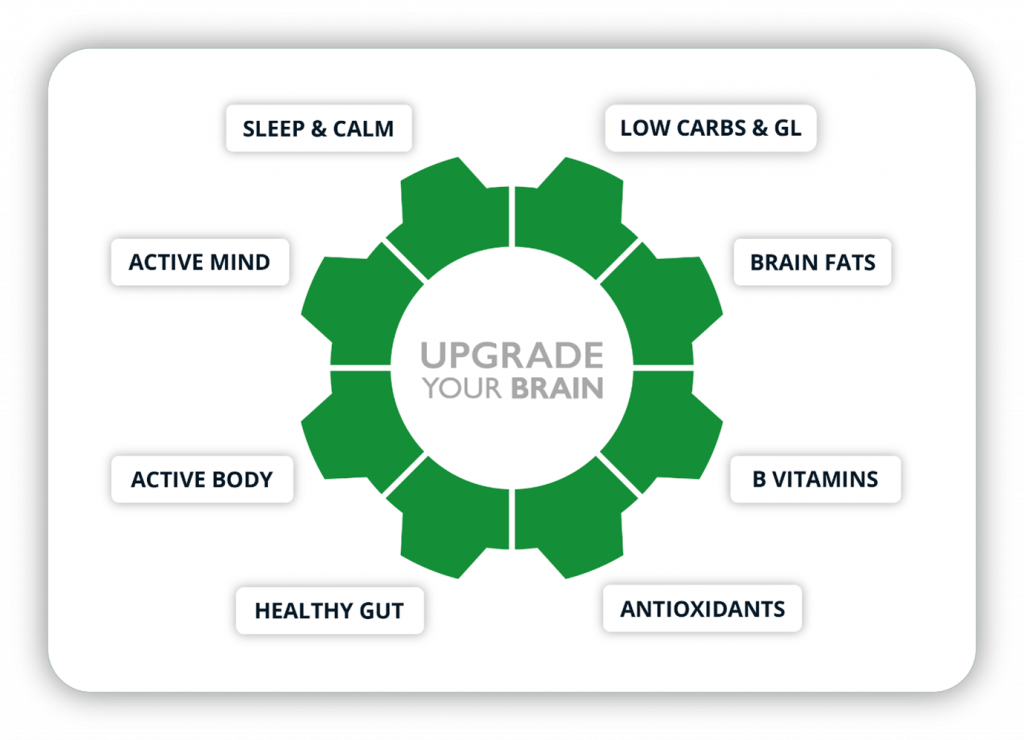
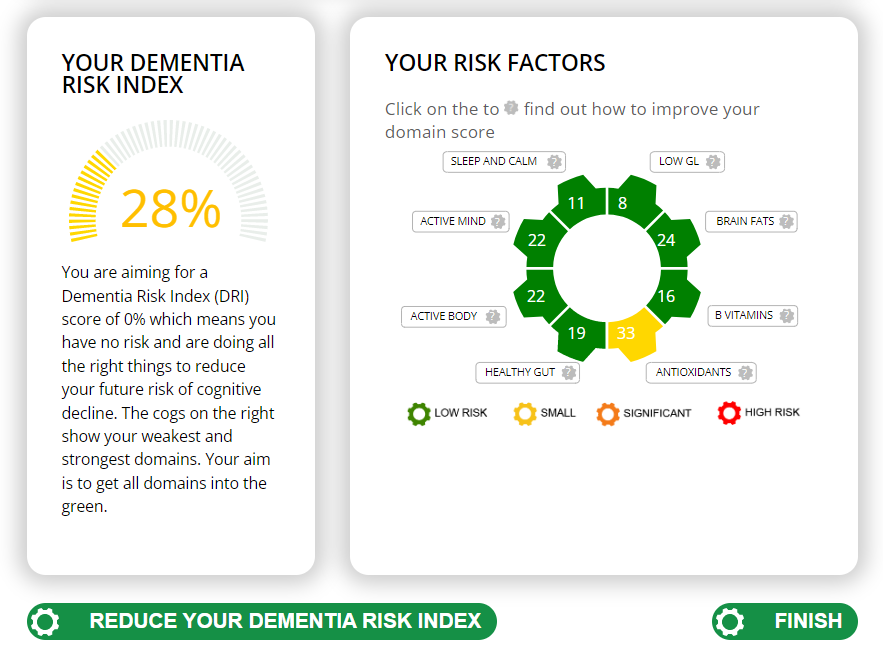
At Food for the Brain, we can organise all these risks above into eight domains shown below. It is certainly true that these eight domains of ‘risk’ cover much of what we know about the risks for heart disease, diabetes and arthritis, for example. This partly, but not fully. answers the question about what is actually driving dementia.
The Eight Domains of Dementia Risk
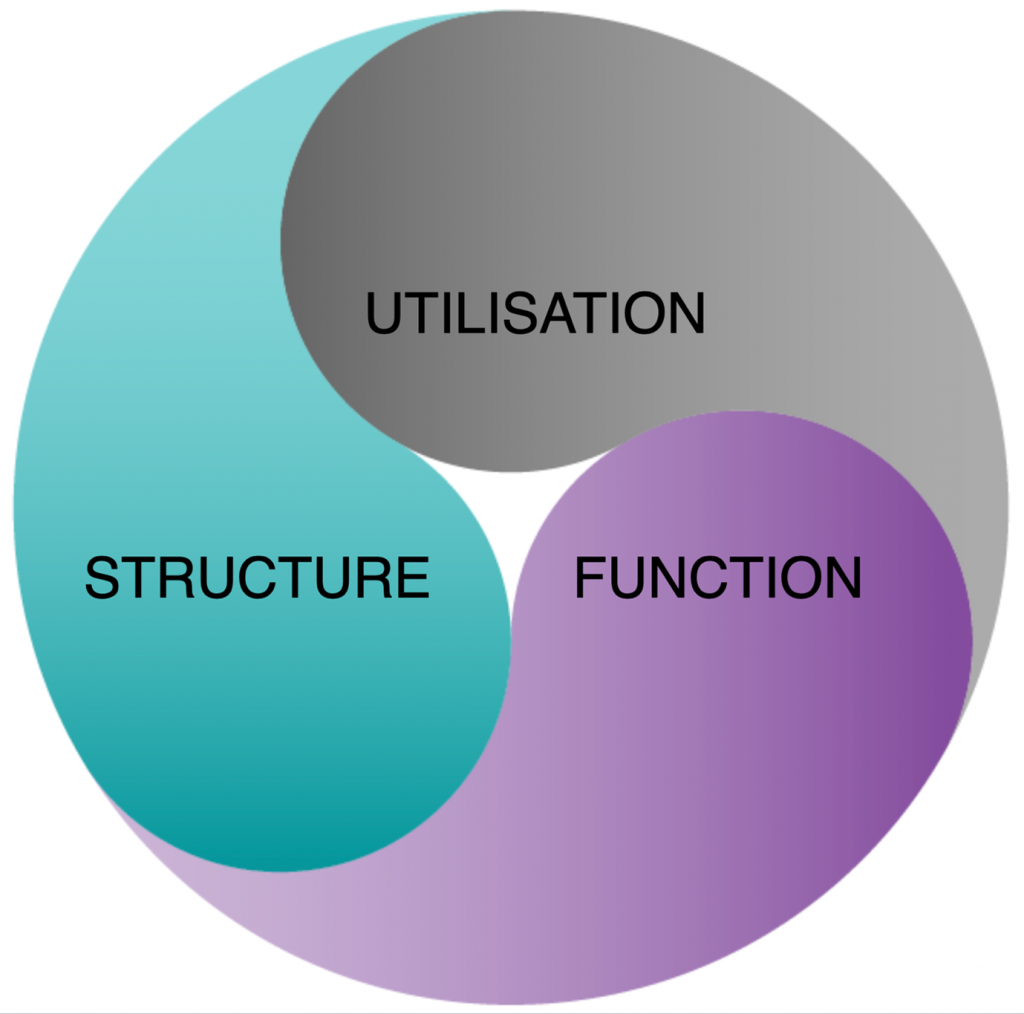
Another understanding within systems-based thinking is well illustrated by asking the question ‘what is the difference between an inanimate object, like a bicycle, and an animate organism, such as us?’ A bicycle has ‘parts’ and the parts related to each other, as in functioning together. So do we. But also, there is ‘life’ running through us. You can imagine your brain’s neural network lighting up, with ‘energy’ or signals shooting this way and that. If you have healthy parts, all functioning, but no signals, you’re kind of ‘switched off’.
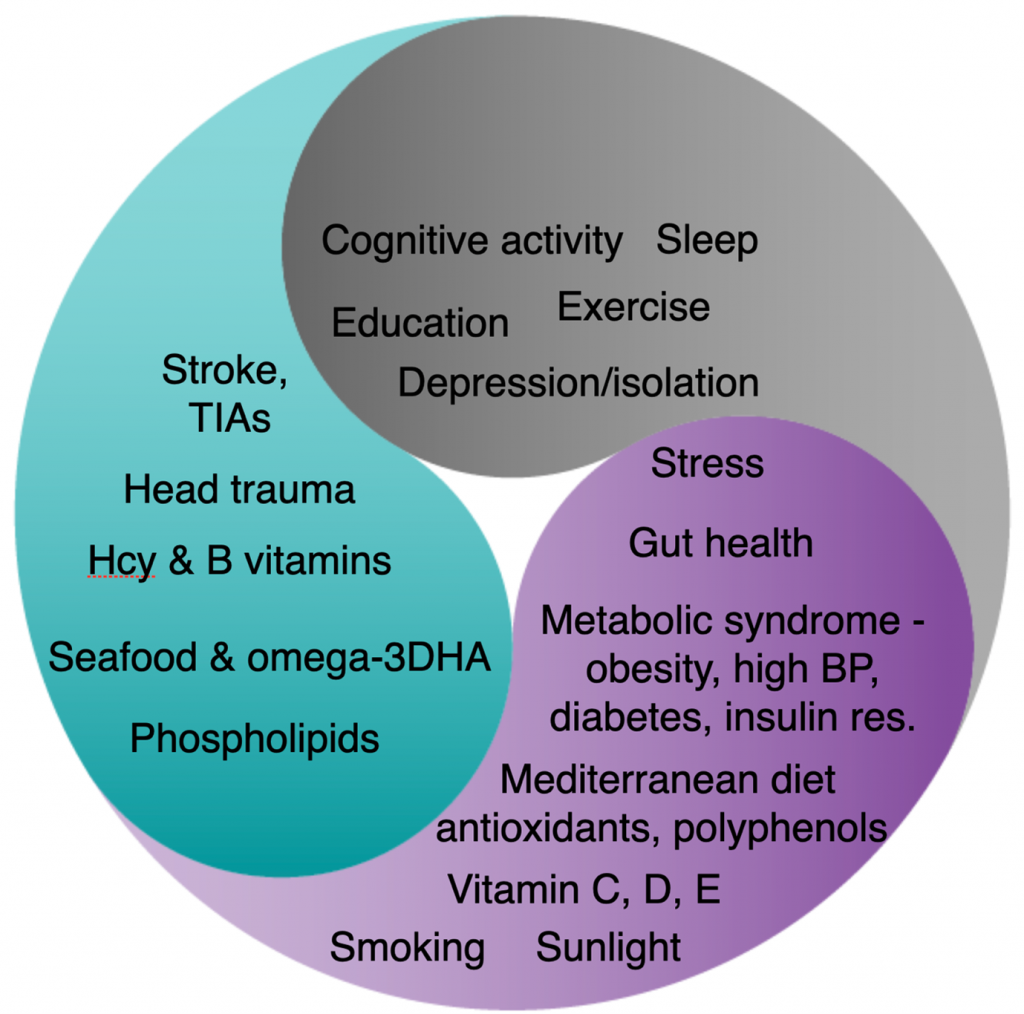
We call the parts – structure; the relationship of the parts – function; and the life running through the neural network – utilisation. These are shown visually below in a way to illustrate that they are integral, with each dependent on the other.
Now, let’s reorganise all those risk factors accordingly into whether they are primarily required for the structure or function of the neural network, or send messages across it.
Protecting the Structure of Your Brain
If you’ve watched the short animated film ‘how to keep building brain cells at any age‘ you’ll know that the membrane of every brain cell is made by binding omega-3 DHA, rich in seafood, to phospholipids and especially Phosphatidylcholine, rich in eggs and fish, to produce what called ‘phosphorylated DHA’. You need this to have a functioning brain. It actually makes up more than 90 per cent of the structure of your brain.
You’ll also know that the ‘binding’ of these two parts depends on B vitamins, which drive a process called methylation. So, without enough B vitamins your brain and nervous system fall apart. The best measure of methylation, and whether you are getting enough B vitamins, is your blood homocysteine level. If your homocysteine level is high, you’ve got a problem. Above 11mcmol/l and you’ve got a shrinking brain. More than half of all people over 70 have a homocysteine level above this. It should, therefore, be no surprise to find that, if you have a raised homocysteine level, and are given B vitamins, if you also have a low omega-3 DHA intake or blood level, the B vitamins won’t work. Conversely, if you supplement omega-3 fish oils, but have a raised homocysteine level or lack of B vitamins, the omega-3 won’t work. The full story of the dynamic duo of Omega-3 and B vitamins is explained here.
It is likely that choline deficiency, which is especially common in those who rarely eat fish or eggs, may also create a similar structural problem in the brain. In animals supplementing choline prevents Alzheimer’s related brain changes.[4]
Protecting the Function of Your Brain
There are many aspects of ‘function’ of the brain. Using a simple car analogy, one thinks of the need for fuel and the need for oil to lubricate the parts. The two main fuels of brain cells are either glucose, derived from carbs, or ketone derived from fat.
If you’ve watched the animated film ‘how to fuel your brain for better memory’, you’ll know about the need for slow-releasing carbs and ketones from a type of fat called a medium chain triglyceride (MCT) and specifically C8 oil.
Too much sugar, and especially fructose and high fructose corn syrup (now used by the food industry to sweeten foods), and too much refined carbohydrates interferes with fuel supply to brain cells by making you ‘insulin resistant’. Insulin receptors, embedded in neuronal membranes, transport glucose into brain cells. If these receptors, which are like doors, are largely shut down, the brain starves of clean fuel. Read professor Robert Lustig’s article “Is sugar killing your brain?’ for the full story.
The alternative brain fuel – ketones, which neurons actually prefer, can be made in the liver from a type of fat called C-8 (caprylic acid triglyceride) which makes up 7 per cent of coconut oil. In a study giving people with memory problems two tablespoons of C8 oil, their brains produced 230 per cent more energy from ketones and their memory improved. The article ‘Is fat the best brain fuel?’ gives you the full story.
The lubricating ‘oil’ in a car analogy would be both dealing with the ‘exhaust fumes’ of the brain’s energy production, namely oxidants. These are mopped up by antioxidants and polyphenols rich in plant foods. That where food such as blueberries and cacao, or vitamin C and E, come in. It’s also why smoking is such a big risk factor.
Another part of ‘function’ is circulation – anything that improves circulation helps the function. Many of the things we’ve mentioned – lowering homocysteine with B vitamins, omega-3, antioxidants, polyphenols – also help circulation.
Another part of ‘function’ is inflammation. Behind all those ‘metabolic’ diseases -diabetes, heart disease, arthritis to name a few – lies inflammation which doesn’t just affect the specific organ, be it heart of joint, but also the brain.
Use it or Loss it – Why Your Brain Needs Stimulation
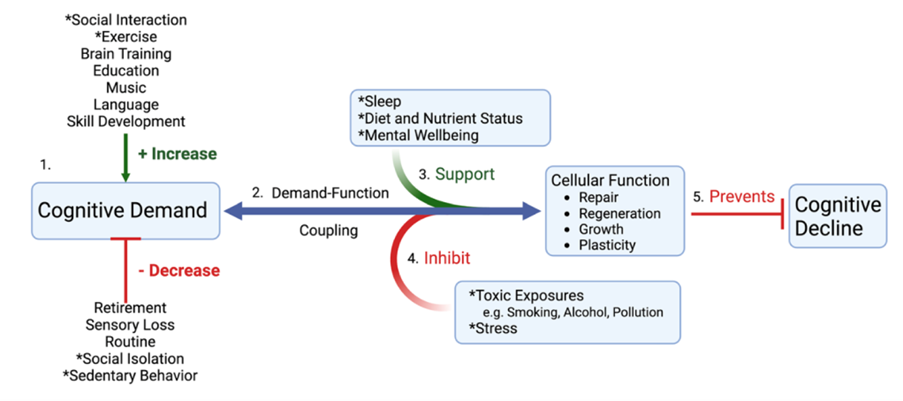
One of our experts, Tommy Wood, assistant research professor at the University of Washington in Seattle, focussing on neuroscience, has developed an excellent model for understanding the ‘use it or lose it’ principle. He’s big into exercise.
‘Exercise is important because it makes the brain do things that keep it healthy, such as growth and repair and maintaining temperature and weight,’ he says. ‘When they aren’t stimulated, the health of brain tissues deteriorates with a knock-on effect on memory and thinking.’
And it’s not just physical exercise that does this, we also benefit from the mental exercise involved in likes of solving puzzles or learning a new language. ‘For many people the worst thing they can do for their brain is to retire’, says Wood. ‘They lose much of the stimulation that kept it healthy.’
Sleep as a brain protector also fits in here. It’s vital for recovering from both physical and intellectual exercise and to store and organise what you have learnt in the day.
‘But sleep and exercise aren’t enough on their own,’ Wood continues. ‘All that repair and maintenance needs a good supply of nutrients.’
Taken from J.Turknett & T.Wood, Cells 2022, 11, 2789, used with permission.
Stress also fits in here because stress, as well as environmental and dietary ‘pollution’ be it from drinking and smoking, dirty air, moulds, even allergens like gluten with can induce ‘brain fog’ often experienced by those with coeliac disease, promote inflammation and inhibit repair and regeneration.
A Unified Model for the Drivers of Cognitive Decline
This systems-based approach to what’s potentially driving cognitive decline makes it obvious that there will never be a single drug or single factor that stops a person developing dementia. Instead, if a person has enough ‘interference’ with the structure, function or utilisation of their brain then there will, inevitably be cognitive decline with age.
At Food for the Brain, when you complete your Cognitive Function Test, you know objectively how you are doing and how much room for improvement there is. Then you are invited to complete the Dementia Risk Index questionnaire, which not only gives you a score out of 100% (you are aiming for a score closer to 0%) but also shows you in which domain you have the most room for improvement.
Cognitive Function Test Dashboard
You are then invited to join COGNITION, which is an interactive brain upgrade programme that targets your weakest areas and shows you the simplest changes that will make the biggest difference to reduce your risk.
The goal is to turn all your reds, oranges and yellows into green, then reassess your cognitive function. By joining you are becoming part of a group of hundreds of thousands of citizen health scientists helping to discover what really works to dementia-proof your diet and lifestyle.
[1] Peters R, Breitner J, James S, Jicha GA, Meyer PF, Richards M, Smith AD, Yassine HN, Abner E, Hainsworth AH, Kehoe PG, Beckett N, Weber C, Anderson C, Anstey KJ, Dodge HH. Dementia risk reduction: why haven’t the pharmacological risk reduction trials worked? An in-depth exploration of seven established risk factors. Alzheimers Dement (N Y). 2021 Dec 8;7(1):e12202. doi: 10.1002/trc2.12202. PMID: 34934803; PMCID: PMC8655351.
[2] Cummings JL, Goldman DP, Simmons-Stern NR, Ponton E. The costs of developing treatments for Alzheimer’s disease: A retrospective exploration. Alzheimers Dement. 2022 Mar;18(3):469-477. doi: 10.1002/alz.12450. Epub 2021 Sep 28. PMID: 34581499; PMCID: PMC8940715.
[3] Fritjof Capra (2009) The New Facts of Life: Connecting the Dots on Food, Health, and the Environment, Public Library Quarterly, 28:3, 242-248, DOI: 10.1080/01616840903110107
[4] Velazquez R, Ferreira E, Knowles S, Fux C, Rodin A, Winslow W, Oddo S. Lifelong choline supplementation ameliorates Alzheimer’s disease pathology and associated cognitive deficits by attenuating microglia activation. Aging Cell. 2019 Dec;18(6):e13037. doi: 10.1111/acel.13037. Epub 2019 Sep 27. PMID: 31560162; PMCID: PMC6826123.
A hugely significant study in the British Medical Journal into age-related cognitive decline and dementia has stated that changing your diet and lifestyle from bad to good cuts your future risk of developing dementia by a massive nine times [1]
The study shows, significantly, that whether or not you inherit the ApoE4 ‘Alzheimer’s gene’ that one in five people carry, it makes no difference to the positive reduction in risk achievable by simple diet and lifestyle changes [2].
Eating a healthy diet was also the most important prevention step, followed by an active lifestyle, with one’s intellectual life, then physical activity, then social interactions being the next most important steps. Eating a healthy diet was about twice as important as exercise in predicting cognitive decline.
This study, published on 25th January 2023, followed over 30,000 people over a decade and found that those with a healthy diet were about seven times less likely to have age-related cognitive decline or dementia than those with an ‘average’ diet and about nine times less likely to develop dementia than those with an unfavourable diet.
The assessment of a healthy diet was based on intake of fish, eggs, fruits, vegetables, legumes, nuts and tea, among other foods known to predict lower risk.
Increasing evidence that Alzheimer’s and Dementia are preventable
“These results provide an optimistic outlook, as they suggest that although genetic risk is not modifiable, a combination of more healthy lifestyle factors are associated with a slower rate of memory decline, regardless of the genetic risk,” wrote the study authors.
This study has been warmly welcomed by charity Food for the Brain, as it backs up their own research and the work they have been actively carrying out for 10 years, to help people reduce their risk of age-related cognitive decline.
Food for the Brain offers a free online assessment of a participant’s diet and lifestyle, called the Dementia Risk Index, which works out a person’s overall risk. The assessment also includes a cognitive function test to assess your memory. This charitable ‘citizen science’ action group have also just launched COGNITION, an interactive, personalised ‘brain upgrade’ programme that then shows you, week-by-week, how to make positive changes to bring your risk closer to zero.
Indeed, the on-line test assesses all the same risk factors the British Medical Journal study has shown impact a person’s future risk – diet, active physical, intellectual, social lifestyle, smoking and drinking habits.
According to Professor David Smith from the University of Oxford, one of the charity’s scientific advisors, “Genes can only exert effects via non-genetic mechanisms and these mechanisms are often susceptible to modification by, for example, improving one’s diet. This study shows that diet and lifestyle are much more important than inheriting a gene variant such as ApoE4. Less than 1% of Alzheimer’s is directly caused by genes. With no clinically effective drugs, and minimal role of genes, this study confirms that the focus must be on making diet and lifestyle changes that reduce risk of developing dementia, as foodforthebrain.org are doing. It also shows that switching from an average to a healthy lifestyle, with positive diet changes being key, can dramatically reduce a person’s future risk of developing cognitive decline and dementia.”
Another member of the science team, Dr Celeste de Jager Loots, Research Associate at Imperial College’s AGE Unit where she researches risk factors and prevention of Alzheimer’s and dementia, explains that “While having inherited certain genes can be used to predict risk of dementia, that risk is changed by making positive diet and lifestyle changes. The emphasis needs to be on changing diet and lifestyle, especially since one cannot change one’s genes. The earlier one starts with a healthy lifestyle the better the chance of preventing effects of genetic risk.”
Risk for dementia can be detected from the age of 35 and subtle changes, picked up by Food for the Brain’s cognitive function test, can be seen up to 40 years before a diagnosis. The charity wants anyone over 35 to take the test and start making positive diet and lifestyle changes. “The average person can cut their future risk by three quarters just by making simple diet and lifestyle changes.” says Patrick Holford, who is directing the Alzheimer’s prevention project. “This prevention approach, if we reach enough people, could cut cases of dementia in the UK by a third. That’s why we are urging everyone over 35 to tell everyone they know to take the free and scientifically – validated and free Cognitive Function Test. Alzheimer’s dementia, which accounts for the vast majority of dementia, is irreversible. But it is preventable, as this study shows.”
Two thousand people every month are joining this campaign, assessing and reducing their risk. Over 380,000 people have now taken the test.
References
Jia, J. et al. (2023) “Association between healthy lifestyle and memory decline in older adults: 10 year, population based, prospective Cohort Study,” BMJ [Preprint]. Available at: https://doi.org/10.1136/bmj-2022-072691. [1]
The evidence that only 1% of Alzheimer’s is caused by genes is here: Bekris, L.M. et al. (2010) “Review article: Genetics of Alzheimer Disease,” Journal of Geriatric Psychiatry and Neurology, 23(4), pp. 213–227. Available at: https://doi.org/10.1177/0891988710383571. [2]
Patrick Holford, founder of Food for the Brain and voluntary director of the Alzheimer’s Prevention Project and Jessica Ferrari-Wells, Chair of the Board of trustees are available for interview, as are members of the the Scientific Advisory Board are available for interview and comment.
In some countries, for example India and China, that proportion appears to be less than half that occurring in Britain. When people in one country suffer much more from a disease than people of a similar age in another country, this is a sure sign that the difference has something to do with diet, lifestyle or other environmental factors – or genetic variance. We can rule out genetic differences as the major factor, particularly because Chinese and Indian people who emigrate to Britain soon acquire a similar risk for developing dementia. In any event only one in a hundred cases of Alzheimer’s is caused by genes.2
How many people get diagnosed with dementia?
A decline in memory and concentration is not the same thing as a diagnosis of dementia or probable Alzheimer’s, although it does mean your chances of developing these conditions are higher. Every year roughly 10 million people are diagnosed with dementia – that is one person every 3 seconds3 . Currently, around 900,000 people in the UK have dementia.4 By 2050 this will be over 1.53 million. Globally over 50 million have dementia. By 2050 this is expected to increase to 152 million.5
Two in three people diagnosed with dementia will end up diagnosed with probable Alzheimer’s, while 17 per cent will be given a diagnosis of vascular dementia, caused by constricted blood flow to the brain due to blocked arteries, and 10% will be given a ‘mixed’ diagnosis, which is usually part Alzheimer’s, part vascular dementia. But the risk factors, and prevention treatments, for Alzheimer’s and vascular dementia are the same. So, combined, well over 80% of all dementia diagnoses should be preventable.
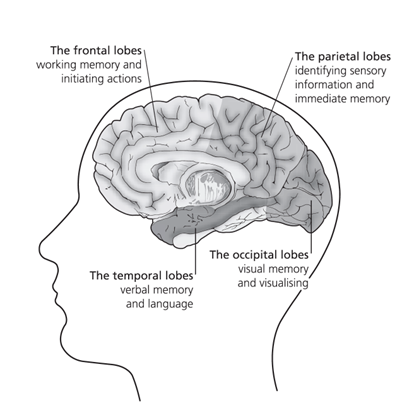
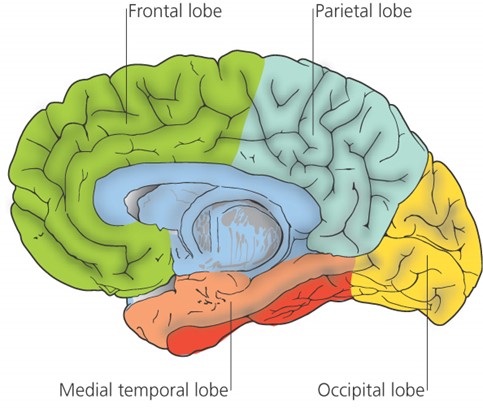
Brain regions
What is dementia?
There are other forms, such as dementia with Lewy bodies, fronto-temporal dementia and dementia caused by a stroke, a bleed in the brain or a brain tumour. But as Alzheimer’s is the most widespread, let’s look at it in depth.
Dementia – including Alzheimer’s – is an insidious condition. In the early stages, sufferers have increasing symptoms of absentmindedness, low mood and an inability to learn new things. Judgement, and their ability to function intellectually and socially, begin to go awry. The person may repeatedly forget to turn off the iron, or may not recall which medicines they took in the morning. They may start to show mild personality changes, such as a lack of spontaneity or a sense of apathy and a tendency to withdraw from social interactions.
Later on, there will be a loss of logic and memory, disorientation and poor coordination. Speech deteriorates and paranoia may appear. At this point, a diagnosis of probable Alzheimer’s disease may be given. Why ‘probable’? Because Alzheimer’s is properly diagnosed, not simply by symptoms, but by the presence of a specific kind of degeneration in a specific part of the brain – and this is difficult to see without the aid of expensive scans.
How was Alzheimer’s discovered?
The German neuropathologist Alois Alzheimer discovered this characteristic degeneration in the brain back in 1906. Using a technique known as silver stain, he examined the brain cells of a woman who died prematurely at 55 with signs of dementia, and found a tangled mess of proteins and clusters of degenerating nerve endings, called neurofibrillary tangles. This condition is associated with a gradual dying-off of neurons and poor communication between neurons. There is also often a build-up of something called beta-amyloid plaque, a protein-like substance that shouldn’t be there.
Since that time, research into Alzheimer’s has continued apace. Largely thanks to the pioneering work of Professor David Smith and colleagues in the University of Oxford’s pharmacology department, we now know that Alzheimer’s is a specific disease process, not just a random, gradual decline in brain cells, and that it originates in a particular brain region. Their Optima (Oxford Project to Investigate Memory and Ageing) study has been running since 1988 and has proved, among other things, that the damage leading to Alzheimer’s begins in a central part of the brain known as the medial temporal lobe.6-7
Pinpointing the problem area
The medial temporal lobe is vital for both mood and memory. Even though this lobe accounts for only 2 per cent of the brain’s total area, it is essential for the processing of everything we sense, feel or think.
Precisely because it’s in the middle of the head, it’s a difficult region to scan. This is also where there are more neurofibrillary tangles and beta-amyloid plaques – the hallmarks of Alzheimer’s. These indicate damage and chaos to the normal network of neurons and their connections.
Since information is passed from and to the medial temporal lobe from other parts of the brain, as this area becomes more damaged, fewer signals are sent to other parts of the brain. These then also start to decline, becoming more and more disconnected, with ever-decreasing blood flow. The beginning of damage is estimated to occur as early as 40 years before a person is diagnosed with dementia. That is why it is important to start your prevention plan young.
So far we’ve talked about the spread of damage seen in Alzheimer’s, starting with the medial temporal lobe, and radiating out to other areas of the brain, which are in effect starved of signals, much as a muscle atrophies through lack of use. Other indicators of Alzheimer’s are neurofibrillary tangles (p’tau), the lack of blood flow in the brain, and the presence of beta-amyloid plaques. There is also the presence of high levels of homocysteine in the blood.
Exactly which of these factors ‘causes’ Alzheimer’s, or kickstarts the process of damage, is the subject of much debate and ongoing research.
Clues to curbing the epidemic
Omega 3 fish oil soft gels
At the other end of the spectrum, scientists have been looking for ways to prevent Alzheimer’s disease, and are conducting more and more studies revealing the specific dietary and lifestyle factors that greatly increase or decrease risk. Around half of the risk can be prevented.8For example, having a high intake of omega-3 fats and B vitamins appears to reduce risk, while consuming a lot of sugar increases the risk. The National Institutes of Health attributes 22% of Alzheimer’s to high homocysteine and 22% to low omega-3/seafood consumption.9 What’s more people with pre-dementia with good omega-3 status, given extra B vitamins have a 73% less brain shrinkage than those on placebo.10
Somewhere in the middle, scientists are discovering how changes in diet could cause changes in the brain. An example of this is the discovery of an enzyme that both regulates insulin – the key hormone for keeping your blood sugar in balance – and beta-amyloid. There are, however, many other ways, and growing evidence, that sugar and high carb diet driven by eating junk food damages the brain.
Vitamin B Complex
The most exciting discovery is the role of B vitamins and how too little can lead to increases in homocysteine in the blood. Since neither beta-amyloid nor those neurofibrillary tangles can be measured before its too late, the discovery that levels of a simple chemical in your blood could be the best predictor of all is the most welcome news – and it should, in our opinion, have revolutionised the early diagnosis and preventative treatment of those most likely to develop Alzheimer’s. There is good evidence that homocysteine, a measure of faulty methylation, is a primary driver of Alzheimer’s for a number of reasons:
Giving people with raised homocysteine and pre-dementia (mild cognitive impairment or MCI) extra homocysteine lowering B vitamins has been shown to reduce the rate of shrinkage of the medial temporal regions by nine fold.
Amyloid blocking drugs have little to marginal effects on the actual disease. A meta-analysis of these drugs that did effectively lower amyloid found virtual no significant cognitive benefit from doing so.11 Measures of Clinical Dementia Ratings show that both homocysteine-lowering B vitamins and Omega-3 fish oil supplements surpass anti-amyloid drugs. (See our newsletter)
The formation of neurofibrillary tangles, associated with p-tau proteins, could be a consequence of faulty methylation (eg raised homocysteine). When p-tau is high so is homocysteine. There are three known ways whereby raised homocysteine would raise p-tau.
Homocysteine is found in the regions of brain damage and is capable itself of causing brain damage.
A raised homocysteine increases the risk of cerebral vascular dysfunction by a remarkable 17 times.11
Every study that has effectively lowered homocysteine in people at risk, eg with MCI or mild Alzheimer’s, has shown benefit, except in the later stages of the disease which may just be too late.
An International Consensus Statement in 2018 concluded that moderately raised plasma total homocysteine (>11mcmol/L), found in half of those over age 70 12, is a main cause of age-related cognitive decline and dementia.13 Two major meta-analyses of hundreds of studies conclude that raised homocysteine is one of the best evidenced risk factors for AD and accounts for around a fifth of all risk 14, 15.
The key to prevention is to understand the contributing factors and to do something about them as soon as possible. Right now, because the thought of Alzheimer’s is so terrifying, most people avoid even seeing their doctor and are usually diagnosed only in the late stages, usually reported by a relative who has found their partner becoming unmanageable. That’s why it is critical to look for the earliest possible signs of cognitive decline, then there’s time to reverse the trend.
The Cognitive Function Test
The Food for the Brain Foundation offer an excellent free online Cognitive Function test and a simple Dementia Risk Index questionnaire which also works out your risk factors and which simple changes will have the most effect. Do please do this yourself and encourage everyone you know over 50 to do the test as well. Prevention, in this case, is the only likely ‘cure’ for this terrible disease.
Food for the Brain is a non-for-profit educational and research charity that offers a freeCognitive Function Testand assesses your Dementia Risk Index to be able to advise you on how to dementia-proof your diet and lifestyle.
By completing theCognitive Function Testyou are joining our grassroots research initiative to find out what really works for preventing cognitive decline. We share our ongoing research results with you to help you make brain-friendly choices.
World Alzheimer Report. (2018). Available online at: https://www.alzint.org/resource/world-alzheimer-report-2018
Bradley K.M. et al., ‘Cerebral perfusion SPET correlated with Braak pathological stage in Alzheimer’s disease’, Brain, 125:1772-81 (2002); see alsp Jobst K.A. et al., ‘Detection in life of confirmed Alzheimer’s disease using a simple measurement of medial temporal lobe atrophy by computed tomography’, Lancet, 340:1179-83 (1992).
Jobst K.A. et al., ‘Association of atrophy of the medial temporal lobe with reduced blood flow in the posterior parietotemporal cortex in patients with a clinical and pathological diagnosis of Alzheimer’s disease’, J Neurol Neurosurg Psychiat, 55:190-4 (1992); see also Jobst K.A. et al., ‘Rapidly progressing atrophy of medial temporal lobe in Alzheimer’s disease’, Lancet, 343:829-30 (1994).
M. Beydoun et al, ‘Epidemiologic studies of modifiable factors associated with cognition and dementia: systematic review and meta-analysis BMC Public Health 2014, 14:64 [http://www.biomedcentral.com/1471-2458/14/643]
Jernerén F, Elshorbagy AK, Oulhaj A, Smith SM, Refsum H, Smith AD. Brain atrophy in cognitively impaired elderly: the importance of long-chain ω-3 fatty acids and B vitamin status in a randomized controlled trial. American Journal of Clinical Nutrition. 2015;102:215-21.
Teng Z, Feng J, Liu R, Ji Y, Xu J, Jiang X, Chen H, Dong Y, Meng N, Xiao Y, Xie X, Lv P. Cerebral small vessel disease mediates the association between homocysteine and cognitive function. Front Aging Neurosci. 2022 Jul 15;14:868777. doi: 10.3389/fnagi.2022.868777. PMID: 35912072; PMCID: PMC9335204.
Smith AD Effect of reductions in amyloid levels on cognitive change in randomized trials: instrumental variable meta-analysis BMJ 2021;372:n156
Smith AD, Smith SM, de Jager CA, Whitbread P, Johnston C, Agacinski G, et al. Homocysteine-lowering by B vitamins slows the rate of accelerated brain atrophy in mild cognitive impairment. A randomized controlled trial. PLoS ONE. 2010; 5: e12244.
Smith AD, Refsum H, Bottiglieri T, Fenech M, Hooshmand B, McCaddon A, et al. Homocysteine and dementia: An international consensus statement. J Alzheimers Dis. 2018; 62: 561-70
Beydoun MA, Beydoun HA, Gamaldo AA, Teel A, Zonderman AB, Wang Y. Epidemiologic studies of modifiable factors associated with cognition and dementia: systematic review and meta-analysis. BMC Public Health. 2014; 14: 643.
Yu JT, Xu W, Tan CC, Andrieu S, Suckling J, Evangelou E, et al. Evidence-based prevention of Alzheimer’s disease: systematic review and meta-analysis of 243 observational prospective studies and 153 randomised controlled trials. J Neurol Neurosurg Psychiatry. 2020; 91: 1201-9
A global conference of leading world experts in dementia prevention has today identified four easy ways that could reduce risk of dementia by half and eight that could cut your risk by two thirds.
The research was shared, for the first time, at the Alzheimer’s Prevention Conference, organised by the charitable foundation Food for the Brain.
The new research showed that there are four easy ways to cut your risk of dementia in half:
1. Supplementing omega-3 fish oils
According to a new study of almost half a million participants of the UK’s Biobank supplementing fish oils cuts dementia risk.[i] This new research was presented at the conference by China’s leading dementia prevention expert from Shanghai’s Fudan University, Professor Jin-Tai Yu, “Our current research, using data from the UK Bio Bank, shows that having a higher blood levels of omega-3, and supplementing fish oils, is associated with less risk of dementia.”
Other studies reported by Dr Simon Dyall, clinical neuroscientist at the University of Roehampton, showed that a higher intake of fish was associated with cutting risk of Alzheimer’s disease by a third.[ii] “Half your brain is fat, and a type of omega- 3 called DHA has a very important role in the communication between brain cells.” said Dyall.
2. B Vitamins
According to Professor Yu, another very promising prevention treatment is B vitamins.[i] “Lowering blood homocysteine levels, an established indicator of Alzheimer’s risk, with B vitamins is a most promising treatment.” Raised homocysteine is found in one in two people over 70.
In a trial at Oxford University by Professor David Smith, who was presenting at the conference, giving high dose B vitamins versus placebos, resulted in 52% less brain shrinkage and little further memory loss.[ii]
Combining omega-3 and vitamin B. The discovery of the synergistic role of omega-3 led the Oxford Professor to reanalyse blood samples taken at the start of the trial for omega-3. They found that those with low omega-3 DHA blood levels, one of the main nutrients found in fish and fish oil supplements, had no benefit from the B vitamins, while those with high omega-3 DHA had 73% less shrinkage and almost nine times less shrinkage of the Alzheimer’s related areas of the brain.[iii]
Furthermore, another study in Sweden, that had given omega-3 fish oil supplements, reanalysed their results and found those with good B vitamin status substantially reduced their dementia risk.[iv]
A third study in the US, called ‘B proof’, that had given B vitamins with marginal improvements, reanalysed their results and found that those with higher omega-3 levels also had a much greater improvement.[i]
“Research shows that you get impressive results if you give omega-3 and B vitamins together rather than on their own.” Says Professor Smith.
While US National Institutes of Health researchers attributed 22% to lack of seafood or omega-3 and another 22% to the B vitamin factor they also attributed 32% of risk to inactive lifestyle.[ii]
3. Exercise
“For many people the worst thing they can do for their brain is to retire”
Keeping your brain active. Another expert at the conference, Tommy Wood, Assistant Professor at the University of Washington, showed that your muscle mass predicts brain volume. “Exercise, especially resistance exercise, is important because it makes the brain do things that keep it healthy, such as growth and repair.” he says. “When they aren’t stimulated, the health of brain tissues deteriorates, with a knock-on effect on memory and thinking.”
And it’s not just physical exercise that does this, we also benefit from the mental exercise involved in activities like solving puzzles or learning a new language. “For many people the worst thing they can do for their brain is to retire”, says Wood. “They lose much of the stimulation that kept it healthy.”
4. Sugar
“Sugar levels at age 35 predict Alzheimer’s risk later in life”
While it has long been known that diabetics have a much higher risk for dementia, a recent study at Boston University School of Medicine, found that higher blood sugar levels at age 35, but still in the ‘normal’ non-diabetic range, predict Alzheimer’s later in life.[i] Talking at the conference Professor Robert Lustig, from the University of California, said, ”A high level of sugar and insulin in the blood – linked with a high carbohydrate diet – is definitely a driver for Alzheimer’s.”
The conference, hosted by the UK charity foodforthebrain.org, identified eight domains of risk, in other words, four more actions you can take to reduce your risk of dementia: eating antioxidants from fruit and veg; having a healthy gut; sleeping well; and controlling stress.
Targeting all eight risk factors earlier in life may reduce risk by two thirds.
But how do you know what your risk is and what and how to change to reduce your risk? That’s what the charity, the Food for the Brain Foundation has been working on for a decade. On their website, foodforthebrain.org, you can do a free Cognitive Function Test. Almost 380,000 people have taken the test and, according to research by NHS and University College London researchers, 88% find it useful. You then complete a questionnaire that works out your future dementia risk index. It also tells you exactly what’s driving your risk up and what to do about it. By downloading the COGNITION app you can tack your progress, get advice on how to reduce your risk further, and get support to help you dementia-proof your diet and lifestyle.
Do the test now and reduce your risk!
Food for the Brain is a non-for-profit educational and research charity that offers a freeCognitive Function Testand assesses your Dementia Risk Index to be able to advise you on how to dementia-proof your diet and lifestyle.
By completing theCognitive Function Testyou are joining our grassroots research initiative to find out what really works for preventing cognitive decline. We share our ongoing research results with you to help you make brain-friendly choices.
[1] Yu JT et al, Circulating polyunsaturated fatty acids, fish oil supplementation, and risk of incident dementia: a prospective cohort study of 440,750 participants, BMC medicine (pending publication)
[2] Wu S, Ding Y, Wu F, Li R, Hou J, Mao P. Omega-3 fatty acids intake and risks of dementia and Alzheimer’s disease: a meta-analysis. Neurosci Biobehav Rev. 2015 Jan;48:1-9. doi: 10.1016/j.neubiorev.2014.11.008. Epub 2014 Nov 21. PMID: 25446949.
[3] Yu JT, Xu W, Tan CC, Andrieu S, Suckling J, Evangelou E, Pan A, Zhang C, Jia J, Feng L, Kua EH, Wang YJ, Wang HF, Tan MS, Li JQ, Hou XH, Wan Y, Tan L, Mok V, Tan L, Dong Q, Touchon J, Gauthier S, Aisen PS, Vellas B. Evidence-based prevention of Alzheimer’s disease: systematic review and meta-analysis of 243 observational prospective studies and 153 randomised controlled trials. J Neurol Neurosurg Psychiatry. 2020 Nov;91(11):1201-1209. doi: 10.1136/jnnp-2019-321913. Epub 2020 Jul 20. PMID: 32690803; PMCID: PMC7569385.
[6] Jernerén F, Cederholm T, Refsum H, Smith AD, Turner C, Palmblad J, Eriksdotter M, Hjorth E, Faxen-Irving G, Wahlund LO, Schultzberg M, Basun H, Freund-Levi Y. Homocysteine Status Modifies the Treatment Effect of Omega-3 Fatty Acids on Cognition in a Randomized Clinical Trial in Mild to Moderate Alzheimer’s Disease: The OmegAD Study. J Alzheimers Dis. 2019;69(1):189-197. doi: 10.3233/JAD-181148. PMID: 30958356.
[7] van Soest, A.P.M., van de Rest, O., Witkamp, R.F. et al. DHA status influences effects of B-vitamin supplementation on cognitive ageing: a post-hoc analysis of the B-proof trial. Eur J Nutr (2022). https://doi.org/10.1007/s00394-022-02924-w
[8] Beydoun MA, Beydoun HA, Gamaldo AA, Teel A, Zonderman AB, Wang Y. Epidemiologic studies of modifiable factors associated with cognition and dementia: systematic review and meta-analysis. BMC Public Health. 2014 Jun 24;14:643. doi: 10.1186/1471-2458-14-643. PMID: 24962204; PMCID: PMC4099157.
[9] Zhang X, Tong T, Chang A, Ang TFA, Tao Q, Auerbach S, Devine S, Qiu WQ, Mez J, Massaro J, Lunetta KL, Au R, Farrer LA. Midlife lipid and glucose levels are associated with Alzheimer’s disease. Alzheimers Dement. 2022 . doi: 10.1002/alz.12641. Epub ahead of print. PMID: 35319157.
After 40 failed trials for drugs injecting anti-amyloid antibodies (AAAs) one, Lecanemab[i], has finally shown a modest benefit on cognitive function in those with early-stage Alzheimer’s. But they come with a terrible cost – adverse effects that include brain swelling and haemorrage which occurred in one in five trial participants.. When a similar drug, Aducanumab, was conditionally approved by the US FDA last year, despite nine out of ten of their experts voting against it, many resigned in protest[ii]. Yet the pressure on pharma to get an amyloid drug to market, having spent over $42 billion[iii], is immense.
Let’s consider the alternative
Prevention with simple, doable changes to diet, lifestyle and supplementation with B vitamins and omega-3 fish oils.
The two most relevant measures of success of any treatment are reduction in the rate of brain shrinkage and a reduction in clinical dementia symptoms which lead to a diagnosis.
In relation to brain shrinkage the best AAAs have achieved is 2% less brain shrinkage. In a landmark trial by Professor David Smith and colleagues at the University of Oxford, B vitamin supplements, given to those with pre-dementia (mild cognitive impairment) have achieved a reduction in the rate of brain shrinkage of 52%, up to 73% in those with sufficient omega-3.[i] This effect was shown in those with raised blood levels of homocysteine, a marker for B vitamin status that is raised in approximately half of pre-dementia patients and many more with Alzheimer’s. We now know that B vitamins need omega-3 to make the biggest difference, and vice versa.[ii]
Clinical Dementia Rating (CDR) with B vitamins and Omega 3’s
What about actual clinical improvement, called Clinical Dementia Rating (CDR), which is what counts for the person concerned? A CDR score of zero means no clinically significant cognitive impairment. In the Oxford trial on B vitamins 65% of participants on B vitamins with higher omega-DHA status ended the 2 year trial with a clinical dementia rating of zero compared with 25% receiving placebo.[i] It was more than twice as effective as the recent drug. In a Swedish omega-3 trial those with sufficient B vitamin status, also had a marked reduction in clinical dementia rating, which was reduced by 1.5 points compared with placebo after 6 month’s treatment with omega-3.[ii] The improvement in clinical dementia rating reported for Lecanemab, which was a modest 0.45 point reduction. This was marginally better than a 0.39 difference for Aducanumab, compared to placebo.[iii][iv] In other words, no AAA drug has even reduced a CDR score by 1 point but both B vitamins and omega-3 have.
A trial in Holland, called B-proof, which had shown no significant effects overall in those supplementing B vitamins, recently reported that those with higher Omega-3 levels had a significant improvement in cognitive function. A French[i] and Chinese study[ii] reported a similar finding – the combination of B vitamins and omega-3 shows clear improvements in cognitive function – better than achieved by AAA drugs, without adverse effects.
So, on all three counts – brain shrinkage, cognitive function and clinical dementia rating – B vitamins plus omega-3 – wins out at a fraction of the cost since nutrients cannot be patented which is the requirement for the scale of profitability required by pharma.
Blood Sugar Levels and their impact
But, there’s two other points to make. Firstly, B vitamin and omega-3 status are but two of eight known actions that reduce risk or improve these critical criteria. Others are sugar, antioxidant rich fruit and veg, vitamin D, exercise, cognitive stimulation, gut health, sleep and stress.[i] Having a high blood sugar level from age 35 predicts Alzheimer’s risk.[ii] Being diabetic or having high insulin levels, which is a consequence of eating too many refined sugar and carbs, doubles risk.[iii] Having a high carb intake is associated with increasing amyloid plaques in the brain – so why not tackle the upstream cause? One study reported that “Those who ate the healthiest diet had an 88% decreased risk of developing dementia and a 92% decreased risk of developing Alzheimer’s disease.”[iv]Increasing lean muscle mass with resistance exercise is associated with better cognitive function and brain volume.[v]The charity foodforthebrain.org have a free, validated online Cognitive Function Test, followed by a Dementia Risk Index questionnaire, that not only measures your cognitive function, but also shows you exactly what your risk is and how to reduce it by targeting your ‘weakest links’ in these eight known prevention steps.
Then, there’s the issue of side-effects. For each of these prevention steps there are none. Or rather, there are plenty – less risk for diabetes, heart disease, arthritis, premature ageing, better energy, sleep and weight control to name a few.
For the AAA drugs the side-effects are potentially devasting. Since one in five can be expected to experience brain swelling and microbleeds, regular brain scans will be necessary to monitor for these frequent complications. Is it right to expose an older person with cognitive decline to this scale of risk and medical intervention for such a modest benefit? The annual cost of treatment is expected to be above $10,000 but that doesn’t include the cost of medical monitoring or the cost of treatment when things go wrong. The cost benefit equation just doesn’t add up.
Early Intervention
Writing in the Financial Times last year Professor Smith says “ Your editorial is correct in saying ‘A resurrection of the amyloid approach must not divert resources and attention away from other ways to tackle dementia, which are in earlier stages of research and might give better results.’ These alternative approaches include identifying and then treating modifiable risk factors for dementia, of which about a dozen are already known. These account for about half of the cases of Alzheimer’s disease .” The high price proposed for the drug is disturbing, especially when a very much cheaper alternative treatment is available: high-doses of B vitamins and omega-3 from seafood or supplements. He estimates that early intervention , targeting all the prevention steps recommended by the Food for the Brain Foundation could cut a person’s risk by two thirds.
WE currently have 2 events on sale so that you can take a deep dive on this topic: ⭐️ MASTERCLASS – 4 hour conference with world leading experts on Alzheimer’s – Practitioner level. Book tickets here: https://foodforthebrain.org/aipmasterclass/
🧠 Upgrade Your Brain – 8 steps to reduce your Alzheimer’s risk with with Patrick Holford – A condensed version of the masterclass that is 90 minutes long and aimed at the general public. Book your tickets here: https://www.eventbrite.co.uk/e/upgrade-your-brain-tickets-415953948457
Food for the Brain is a non-for-profit educational and research charity that offers a freeCognitive Function Testand assesses your Dementia Risk Index to be able to advise you on how to dementia-proof your diet and lifestyle.
By completing theCognitive Function Testyou are joining our grassroots research initiative to find out what really works for preventing cognitive decline. We share our ongoing research results with you to help you make brain-friendly choices.
[1] Oulhaj A, Jernerén F, Refsum H, Smith AD, de Jager CA. Omega-3 Fatty Acid Status Enhances the Prevention of Cognitive Decline by B Vitamins in Mild Cognitive Impairment. J Alzheimers Dis. 2016;50(2):547-57. doi: 10.3233/JAD-150777. PMID: 26757190; PMCID: PMC4927899.
[2] Jernerén F, Cederholm T, Refsum H, Smith AD, Turner C, Palmblad J, Eriksdotter M, Hjorth E, Faxen-Irving G, Wahlund LO, Schultzberg M, Basun H, Freund-Levi Y. Homocysteine Status Modifies the Treatment Effect of Omega-3 Fatty Acids on Cognition in a Randomized Clinical Trial in Mild to Moderate Alzheimer’s Disease: The OmegAD Study. J Alzheimers Dis. 2019;69(1):189-197. doi: 10.3233/JAD-181148. PMID: 30958356.
[3] Cummings JL, Goldman DP, Simmons-Stern NR, Ponton E. The costs of developing treatments for Alzheimer’s disease: A retrospective exploration. Alzheimers Dement. 2022 Mar;18(3):469-477. doi: 10.1002/alz.12450. Epub 2021 Sep 28. PMID: 34581499; PMCID: PMC8940715.
[6] Oulhaj A, Jernerén F, Refsum H, Smith AD, de Jager CA. Omega-3 Fatty Acid Status Enhances the Prevention of Cognitive Decline by B Vitamins in Mild Cognitive Impairment. J Alzheimers Dis. 2016;50(2):547-57. doi: 10.3233/JAD-150777. PMID: 26757190; PMCID: PMC4927899.
[7] Jernerén F, Cederholm T, Refsum H, Smith AD, Turner C, Palmblad J, Eriksdotter M, Hjorth E, Faxen-Irving G, Wahlund LO, Schultzberg M, Basun H, Freund-Levi Y. Homocysteine Status Modifies the Treatment Effect of Omega-3 Fatty Acids on Cognition in a Randomized Clinical Trial in Mild to Moderate Alzheimer’s Disease: The OmegAD Study. J Alzheimers Dis. 2019;69(1):189-197. doi: 10.3233/JAD-181148. PMID: 30958356.
[9] Awaiting actual Lecanemab, trial – see press release ref 1 above
[10] Maltais M, de Souto Barreto P, Bowman GL, Smith AD, Cantet C, Andrieu S, Rolland Y. Omega-3 Supplementation for the Prevention of Cognitive Decline in Older Adults: Does It Depend on Homocysteine Levels? J Nutr Health Aging. 2022;26(6):615-620. doi: 10.1007/s12603-022-1809-5. PMID: 35718871.
[11] Li M, Li W, Gao Y, Chen Y, Bai D, Weng J, Du Y, Ma F, Wang X, Liu H, Huang G. Effect of folic acid combined with docosahexaenoic acid intervention on mild cognitive impairment in elderly: a randomized double-blind, placebo-controlled trial. Eur J Nutr. 2021 Jun;60(4):1795-1808. doi: 10.1007/s00394-020-02373-3. Epub 2020 Aug 28. PMID: 32856190.
[13] Zhang X, Tong T, Chang A, Ang TFA, Tao Q, Auerbach S, Devine S, Qiu WQ, Mez J, Massaro J, Lunetta KL, Au R, Farrer LA. Midlife lipid and glucose levels are associated with Alzheimer’s disease. Alzheimers Dement. 2022 Mar 23. doi: 10.1002/alz.12641. Epub ahead of print. PMID: 35319157.
What makes us humans so different to other apes is our larger brain, especially the cortex. It is three times larger than a chimpanzee. How did this happen? How did Homo Sapiens evolve our level of intelligence despite sharing almost the same genes?
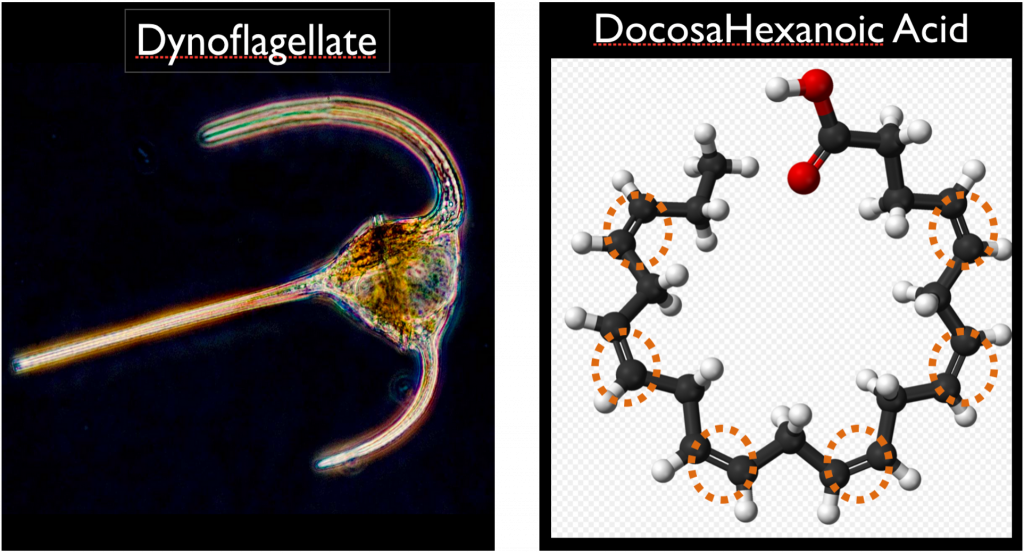
The brain’s origin, for all species, is from the ocean. It had to be as that is where life began. Millions of years ago the rudimentary eye cell, dinoflagellate, which is a type or marine phytoplankton, used a specific fat – the omega-3 fat docosahexanoic acid (DHA) – to convert solar photon energy into the first nerve impulse or twitch – a twitch towards food. That is the origin of the nervous system and brain.
Back in the ‘80’s, when zoologist Professor Michael Crawford analysed the types of fat in different animal’s organs and muscles they varied according to their dietary environment, except the brain. He discovered that the brain is always rich in DHA. The more DHA the brighter the animal, with the sea mammals and us humans having exceptionally high levels.
Recently it has been proven that DHA (docosahexanoic acid) has a unique structure involving six double bonds, arranged in a horseshoe shape, which actually makes it a semi-conductor with unique electrical properties. Its close cousins, ALA (alpha linolenic acid) in chia or flax, and EPA (eicosapentanoic acid) don’t have this potential. It’s all about DHA. While some EPA converts into DHA less than 1 per cent of ALA in plant-based sources of omega-3 such as chia seeds converts to DHA, the richest source of which is marine-based food from rivers and the sea.
Over 6 million years ago our hominid ancestors split from other apes (chimps, gorillas and bonobos), culminating in Homo Sapiens around 100,000 years ago. It clearly wasn’t genes that made us different. We share 98.5% of the same genome. It had to be the environment our ancestors exploited. During this time brain size steadily increased up to 1.45kg 10,000 years ago, roughly three times the size of a chimpanzee, at 384g.
Homo Aquaticus
We have over twenty profound anatomical, physiological and biochemical differences apart from our vastly different psychological advancement as in intelligence and language. More than anything, it is this, illustrated by our brain size, that makes us different. But, before looking closely at the circumstances, and diet, that almost certainly drove our gain in brain size and intelligence, let’s take a look at the fundamental differences we have. These have been so clearly delineated in an excellent book, The Waterside Ape, by Peter Rhys-Evans, and ear, nose and throat surgeon. He explores why we:
Stand upright
Have (virtually) no body hair
Have a layer of sub-cutaneous fat
A waxy, waterproof layer, the vernix, at birth
A diving reflex at birth, meaning we are able to swim before we can walk, and hold our breath underwater
A descended larynx, a precursor of being able to have complex language/speaking
Enlarged sinus cavities
A nose shape that is good for keeping the water out while swimming
Ears that actually form a protective boney protusion in those who spend a lot of time diving
Different kidneys, in how they filter salt and water
Manual dexterity
Crinkly fingers when in water for a few minutes
Of course, the story we’ve all been told is that we came out of the trees, into the savannah and stood upright for better hunting. Anyone who has been on safari will know that a) you don’t stand a chance catching anything by standing upright – you crawl; and b) all the good hunters can sprint much faster than man (lion 80kph, leopard 60kph, cheetah 100kph, man under 30kph) precisely because four legs are better than two. But, can you explain any one of these other changes, let alone our increase in intelligence, by moving from the trees into the savannah for hunting? If so, how did we suddenly develop manual dexterity, tools and spears overnight to even survive? Also, why do certain ‘sea nomad’ tribes exist, such as the Moken and Bajou, who can hold their breath for up to 10 minutes under water, spending up to five hours a day in the sea, giving birth in the sea? Their spleen is adapted to oxygenate tissue, as it is in dolphins, to enable long dives. Where did that evolutionary adaptation come from?
The only logical explanation that I have encountered, which eloquently fits all these adaptations, in that our hominid ancestors exploited the waterside – wetlands, swamplands, rivers, estuaries and coasts. In the process of so doing, became upright, and started to eat a diet high in marine foods, providing the essential nutrients for brain development, that is omega-3 DHA, phospholipids, plus vitamin B12, iodine, and all those other essential elements from magnesium to selenium. From this perspective let’s briefly examine all the changes listed above, between us and other apes:
Stand upright – better for wading in water, so gradually our anatomy adapts but, even so, we are prone to the problems of uprightness, eg hips and knees because it is anatomically inferior to walk on all fours, with better weight distribution.
Have (virtually) no body hair and a layer of sub-cutaneous fat – consistent with semi-aquatic mammals better for floating and insulation
A waxy, waterproof layer, the vernix, at birth – found in no land mammals, only other semi-aquatic mammals such as seals and chemically identical
A diving reflex at birth, meaning we are able to swim before we can walk, and hold our breath underwater
A descended larynx, a precursor of being able to have complex language/speaking – being upright, and diving, could have led to this vital adaptation. This, by the way, only occurs after a year or so, before which a baby’s language cannot develop the complexity of sounds and voice control only we have
Enlarged sinus cavities, which help to keep the head above water, but still have drainage holes in the ‘wrong’ place, eg good if on all fours but bad if upright, which is why we are prone to sinus problems.
A nose shape that is good for keeping the water out while swimming
Ears that actually form a protective boney protusion in those who spend a lot of time diving
Manual dexterity – if we were wading, and swimming, not walking on all fours, we have ‘free’ hands. Opening shells would develop manual dexterity.
Crinkly fingers when in water for a few minutes – perfect for catching fish.
Part of the idea of the ‘savannah’ theory is that food became scarce with climate changes so we switched to hunting. But the water’s edge was, until recently, abundant with easily accessible food. Even 200 years ago, in 1706, Daniel Dafoe wrote this regarding the Firth of Forth. “Off the Pentland Firth the sea was one third water and two thirds fish; the operation of taking them could hardly be call’d fishing, for they did little more than dip for them into the water and take them up.” Our estuaries were packed with mussels, oysters and crabs.
Historically, wherever early man is found so too is evidence of seafood consumption, with remains of shells, fish bones etc. from Pinnacle Point in South Africa, where early remains are found together with sea shells, to Wales. When a 40,000 year old Homo sapiens was found in the Gower peninsular DNA evidence showed that a quarter of their diet was seafood.
A marine food diet high in critical brain building nutrients, especially DHA, phospholipids and B12, is the best explanation for our cerebral expansion. “Docosahexaenoic acid (DHA), the omega-3 fatty acid that is found in large amounts in seafood, boosts brain growth in mammals. That is why a dolphin has a much bigger brain than a zebra, though they have roughly the same body sizes. The dolphin has a diet rich in DHA. The crucial point is that without a high DHA diet from seafood we could not have developed our big brains. We got smart from eating fish and living in water.” says Crawford.
The dry weight of the brain in 60 per cent fat and DHA makes up over 90 per cent of the structural fat of neurons (brain and nerve cells). The intelligent membrane that makes up all neurons is composed of phosphorylated DHA – that is DHA attached to phospholipids. The most abundant phospholipid is phosphatidyl choline, found predominantly in fish, eggs and organ meats. These are bound together by a process called methylation, itself dependent on vitamins B12, folate and B6. While folate and B6 is found in both plant foods and seafood, B12 is only found in foods of animal origin, and is especially high in all marine foods.
The evidence that exists suggests we were eating a diet rich in marine food, as well as plant foods along the water’s edge, enjoying the ‘fruité del mare’. We would have eaten much more than we do today – at least double the calories. Today’s convenience world has dramatically reduced the calories we need to expend hunting and gathering food, travelling and staying warm.
The idea that we were eating twice as much and at least a quarter from marine foods makes sense of what we know about the optimal intake of both omega-3 fats rich in DHA, phospholipids and vitamin B12, lack of which are the main drivers of today’s endemic dementia. This would be equivalent to at least half our diet today needing to be from marine foods rich in fats.
Optimal amounts of omega-3 from seafood is estimated at 2 grams a day by Joseph Hibbeln at the US National Institute’s of Health, while choline is estimated at 400mg to 800mg. An optimal intake of B12 is probably 10mcg. None of these can easily be achieved even by eating seven servings of oily fish a day. (Choline is rich in all fish, but DHA is only rich in oily fish, fish roe and liver.)
In the chart below the last column combines EPA and DHA and shows the amount provided in an 85g serving. None provide 2,000mg, although they do get close, suggesting that we would have needed to eat at least a serving of fish or seafood a day, if not more.
Fish and Seafood (per 85g)
EPAmg
DHAmg
EPA+DHAmg
Atlantic Salmon (farmed)
587
1238
1825
Atlantic Herring
773
939
1712
Atlantic Salmon (wild)
349
1215
1564
Bluefin Tuna
309
970
1279
Mackerel (canned)
369
677
1046
Sockeye Salmon (wild)
451
595
1046
Rainbow Trout (farmed)
284
697
981
Sardines (canned)
402
433
835
Albacore (or white) Tuna (canned)
198
535
733
Shark (raw)
267
444
711
Swordfish
117
579
696
Sea Bass
175
473
648
Pollock
77
383
460
Flat Fish (Flounder/Sole)
207
219
426
Halibut
77
318
395
Oysters (farmed)
195
179
374
Dungeness Crab
239
96
335
Scallops
141
169
310
Mixed Shrimp
145
122
267
Clams
117
124
241
Yellowfin Tuna
40
197
237
Catfish (wild)
85
116
201
Catfish (farmed)
42
109
151
Cod
3
131
134
Mahi-Mahi (dolphin fish)
22
96
118
Tilapia
4
111
115
Brain size remains reasonably constant from 100,000 to 10,000 years ago, then starts to shrink, perhaps coinciding with the birth of agriculture and diets based more on meat, milk and plants than marine foods. Today, average brain size is 1.35kg.
The evolution of intelligence and self-awareness
Apart from brain size and, more pertinently, brain to body size ratio, what sets us apart from other animals is self-awareness. Animals have the equivalent of thoughts and feelings but humans are relatively unique in being able to witness one’s own thoughts and feelings, that is self- awareness. This is not an easy thing to measure, but some other mammals, notably dolphins, gorillas and chimpanzees, also have a degree of self-awareness. Other contenders for higher cognition include octopuses and elephants, all large brained creatures. However, it isn’t just size that counts. In essence, there are three evolutions of the brain. First, the reptilian brain located on the brain stem, which programmes basic survival needs. Then there’s the mammalian brain, with more cognitive and emotive functions (think dog), then the neo-cortex, associated with higher cognition. But, while elephants have larger brains they have smaller neo-cortexes. It’s the neo-cortex that starts to grow in our hominid ancestors.
An indication of an advancing intelligence could be supposed from the earliest evidence of ancient rock art, as well as use of complex tools and adornments. The earliest rock art is found in South Africa, dating back 77,000 years ago, and in Western Europe about 37,000 years ago, and possibly in Australasia (Sulawesi) around that time.
The richest concentration of ancient rock art over 6,000 years ago, however, is found in sub-Saharan Africa, the Nile Valley and Red Sea hills, then a green belt with vast lakes, rivers and wetlands, hence abundant marine foods, which lasted until about 3,500 years ago when much of Egypt is becoming a desert. Whether the drying up of the Sahara was linked to the Younger Dryas (see below), a change in the Earth’s tilt or over grazing is a subject of debate.[i]
Meanwhile, groups of our early ancestors who had left Africa, living in Europe as far west as Ireland, north as Scandinavia, East as China and Australia, were also struck by cataclysmic weather changes. In Europe the Magdalenian culture, with advanced stonework, exists from 17,000 years ago, coinciding with the end of the Ice Age, until 12,000 years ago, coinciding with the Younger Dryas, a period of extreme cooling which lasted for circa 1,000 years, possibly triggered by a meteor shower[i]. One theory has ancestors migrating south, towards warmer climates with available water, possibly carrying with them the sticky grains they had previously gathered, and may have planted them in moist soil as a means to survive, thus giving birth to the agricultural age whereby mankind moves away from a hunter gatherer lifestyle towards an agricultural lifestyle. This also makes sense as these two pockets of humanity, in Mesopotamia (now Iraq), between the Tigris and Euphrates river, and Egypt, becoming more densely populated with the need for stored food, supplied by grains and domesticating animals. This stable food supply would have allowed expansion of these populations. (There is another evolutionary hotspot in Asia and China[i].)
Early Enlightenment
The likely existence of an ‘enlightened’ culture, Atlantis, is eluded to in the writings of Plato, possibly existing around the fertile region of the then much smaller Black Sea, which is thought to have flooded across the Bosphorus peninsular when the Mediterranean sea levels rose to a critical mass, dated back to around 7,000 years ago. This may also be the origin of the Flood myth, which occurs in ancient Sumerian lore dating back 5,000 years and later Hebrew lore.
Thus we have this triangle between the Black Sea to the North, Egypt to the South, and Mesopotamia to the East, all with evidence of evolved culture, including monotheism. The Sumerian culture appears over 6,000 years ago in the fertile crescent of Mesopotamia. Later, circa 2,500 years ago, we have the enlightened Zoroastra in Mesopotamia forming the Parsi culture in what is now Iran. Also,The Aryan-(Dru)Vedic culture, sometimes located east of the Black sea, migrated into the Indus valley in northern India as the main influence of the now Hindu culture, and the start of the Greek culture, considered to be the origin of our Western culture. The earliest hint of a Druidic culture dates back to this time. One stream of ancient druidic lore talks of a cataclysmic event, stones pouring from the sky, raising the possibility that early stone structures and barrows were built effectively as ‘bomb shelters’.[i] While the meaning of the word ‘dru’ is associated with oak (those who meet by the oak) and truth, it also may also mean worshippers of the red Sun (du rua). Sun and fire worship is shared by the early Egyptians (Ra), (dru)vedic culture (Agni and Surya), Zoroastrian culture(Mithra) and even Sumerian culture (Utu). The use of fire started much earlier, with it’s discovery a million years ago, and widespread use from 500,000 years ago, which expanded humanity’s ability to derive energy from previously indigestible carbohydrates, as evidenced in the DNA with the emergence of multiple variations in carbohydrate- digesting amylase enzymes. This is also linked to an expansion in brain size.[ii]
Is Homo Sapiens devolving?
Globally, there is an increase in mental illness which is fast becoming the biggest health threat, according to the World Health Organisation. There is also evidence that our brain size has reduced by 10 per cent, from 1.45kg 10,000 years ago[1] to an average now of 1.35kg, coinciding with a more land-based food supply. According to Scandinavian research, our IQ is also falling by 7 per cent a generation. Global rates of depression and dementia, suicide and stress-related disorders of anxiety and insomnia are escalating. One in six children in the UK are classified with ‘special educational needs’ (SEN). Suicide, globally, has become the most cause of violent deaths, ahead of all wars and murders. In the UK 790 people a day, nine double decker buses worth, are diagnosed with dementia. Global incidence will top 100 million this decade, already costing over 1% of GDP.
On the assumption that our brains still require at least the same supply of nutrients that our semi-aquatic ancestors were able to eat during the period of maximum brain evolution – although one could argue that the digital age has put more stress on our brain function, hence we might even need more nutrients – and the fact that we are simply not achieving anything like the same intake of the brain’s essential fats, phospholipids and micronutrients, is it any wonder that mental health is in sharp decline? With a growing population and declining available seafood, coupled with contamination with heavy metals, PCBs and micro-plastic particles, matters are likely to get much worse.
High sugar intake, in animals, has been shown to lead to shrinking of the brain’s hippocampal region. This is where the nucleus accumbens, the seat of the brain’s dopamine-based ‘reward’ system, stimulated by sugar, caffeine and tech addiction, (especially that based on variable rewards such as the ‘like’ button) resides. Marketeers have learnt how to create addiction to their products by stimulating the reward system, selling short-term pleasure, the dopamine-based feeling, in the guise of happiness. The happy hour, the happy meal, happiness in a bottle etc. Over-stimulation of the reward system ultimately leads to dopamine depletion and brain cell death, coupled with a decline in serotonin, the tryptamine associated with happiness, connection, love, empathy and other essential qualities of a harmonious society – and the very qualities that make us human.
We are therefore witnessing the devolution of the brain, the decline and fall of mental health and harmonious society, a situation that is likely to get worse as population expands, unless we rapidly find a way to optimally nourish the brain.
Building Healthy Brains
The emphasis in human nutrition has, for too long, been on the body. With more protein, meat and dairy products, we have grown taller, but not smarter. As director of the Institute of Brain Chemistry at the Chelsea and Westminster Hospital, Professor Michael Crawford has been able to accurate predict which pregnant women are most likely to have pre-term babies, with an increased risk of cognitive delay or impairment. This is based on determining the supply, by analysing the pregnant woman’s blood, of DHA. In its absence levels of a surrogate fat, oleic acid, rises to fulfil the requirement of the neonatal brain, when DHA is in short supply. It is, however, an inadequate substitute and thus cognitive development is impaired. Babies born of mothers with low blood DHA levels, compared to those supplementing DHA, have smaller brains.[2]
According to Crawford, with a growing population and shrinking fish supply, we must develop marine agriculture on a massive scale to survive and protect the brain. In the same way that man moved from hunter gatherer on the land to peasant farmer, we too must move from hunter gatherer in the oceans to marine farmer. In Japan he has been instrumental to the creation of artificial reefs in the estuaries to attract back the marine food web, from mussels to crustaceans, and fish, as well as farming seaweed on a massive scale. By processing seaweed it is possible to create DHA, the critical brain fat that is crucially lacking in a plant-based diet. As Crawford says “We now face a world in which sources of DHA – our fish stocks – are threatened. That has crucial consequences for our species. Without plentiful DHA, we face a future of increased mental illness and intellectual deterioration. We need to face up to that urgently.”
At the other end of the lifecycle, more and more older people are slipping into dementia, which is a preventable but not reversible condition. At the University of Oxford, Professor David Smith has shown that inadequate omega-3 fats (DHA and EPA) and B vitamins, especially vitamin B12, are the principle drivers of cognitive decline. Yet, by providing these nutrients to those with pre-dementia, further memory decline and brain shrinkage can be arrested. B12 is only found in animal foods and is especially rich in seafood. A plant-based diet alone does not provide sufficient DHA, B12 or phospholipids require for optimal brain development.
Therefore, it is vital that the needs for optimal brain function are put at the top of the health agenda to prevent the decline of our mental health and potentially the fall of Homo Sapiens. Without our fully functioning brains humanity will neither have the insight nor cooperation to face and resolve the challenges we face with a growing population, reducing food supply, increasing pollution, climate changes and ever-increasing energy demands.
Food for the Brain is a non-for-profit educational and research charity that offers a freeCognitive Function Testand assesses your Dementia Risk Index to be able to advise you on how to dementia-proof your diet and lifestyle.
By completing theCognitive Function Testyou are joining our grassroots research initiative to find out what really works for preventing cognitive decline. We share our ongoing research results with you to help you make brain-friendly choices.